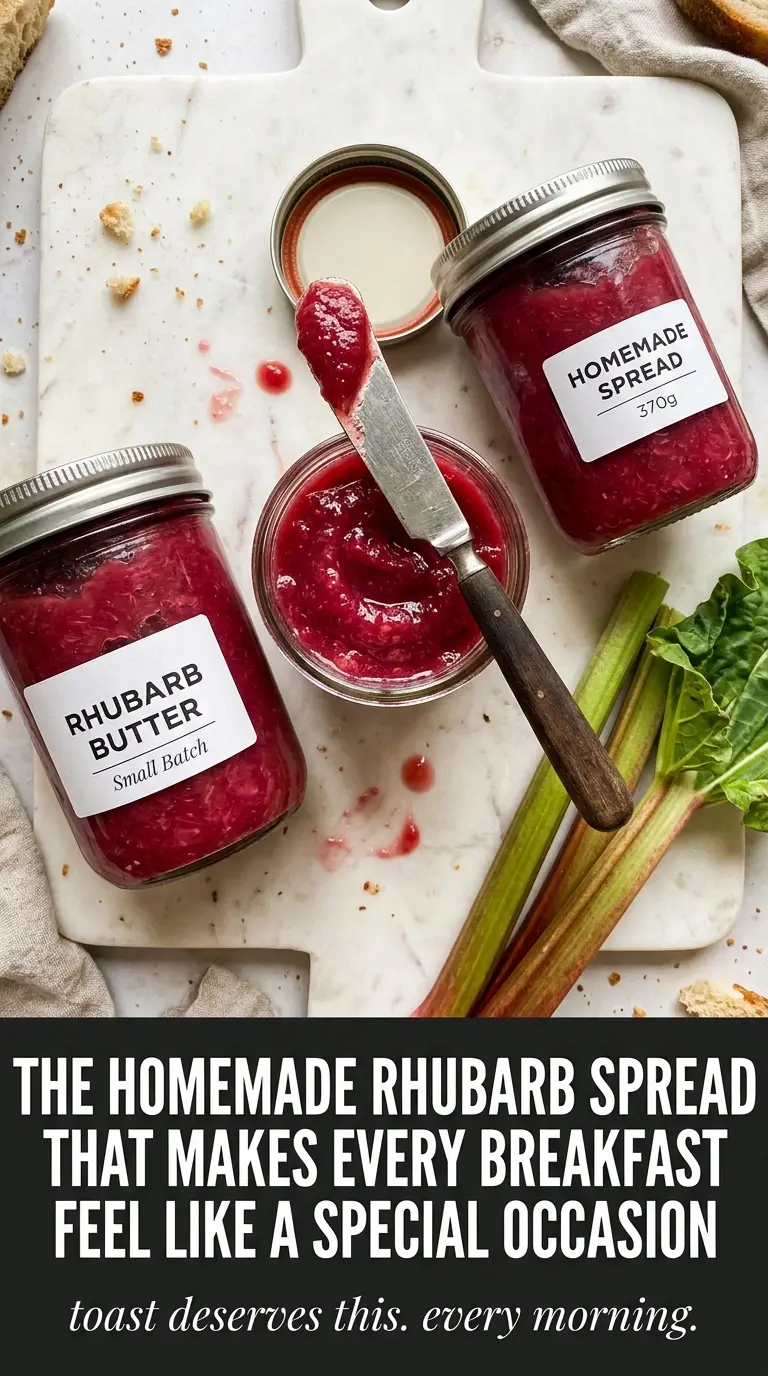
Rhubarb butter turns sharp, stringy stalks into a thick pink spread with a clean tang and a soft, jammy finish. Cook it long enough and the fruit loses that raw edge completely, leaving behind a concentrated rhubarb flavor that sits right between fruit preserve and apple butter in texture. It’s the kind of thing you start making for toast and then end up spooning onto biscuits, pancakes, and vanilla yogurt all week.
The trick here is patience. Rhubarb needs time to break down, and the sugar isn’t just for sweetness — it helps draw out moisture so the pot can reduce into something spreadable. Blending the cooked mixture gives it that smooth, velvety body, and the last few minutes on the stove are what turn it from loose purée into a true butter that mounds on a spoon instead of sliding off it.
Below, you’ll find the texture cues that matter most, the best way to get a silky finish without splattering hot fruit everywhere, and a few storage notes if you want to keep jars tucked away for later.
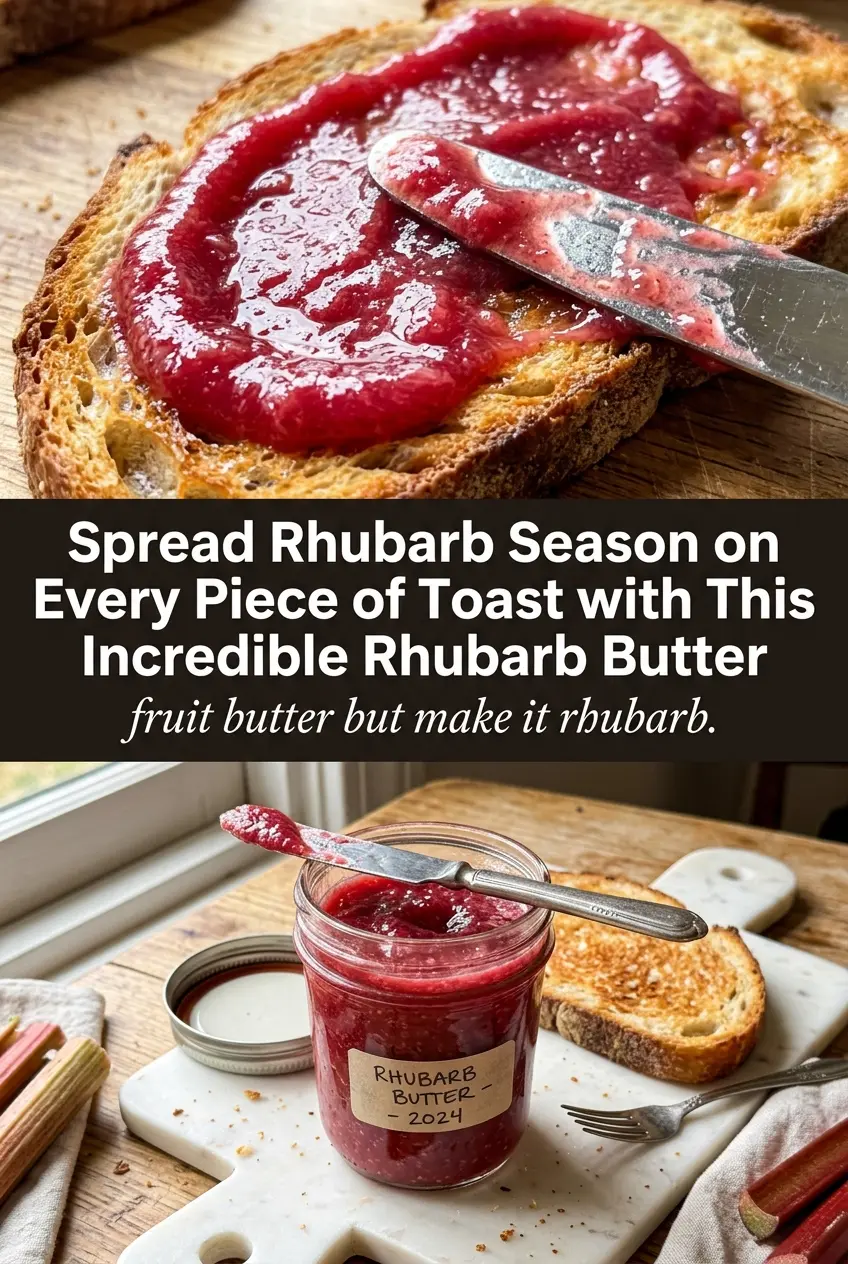
I cooked it down until it was glossy and thick, and after chilling overnight it spread beautifully on toast with no runniness at all. The cinnamon and vanilla round out the rhubarb without hiding that tart flavor.
Save this rhubarb butter for the day you want a thick, tart-sweet spread that turns plain toast into something special.
The Step That Keeps Rhubarb Butter Thick Instead of Watery
Rhubarb is mostly water, and that’s where most homemade fruit butters go wrong. If you rush the simmer, you end up with a loose purée that looks thick in the pot but turns thin again after it cools. The answer is to cook it uncovered until the bubbles get slower, the mixture darkens a little, and a spoon dragged through the center leaves a path that doesn’t fill in right away.
Blending also matters here. Rhubarb fibers can stay stringy even after a long simmer, and those strands keep the butter from feeling smooth on the tongue. Pureeing after the first reduction gives you a better texture and helps you judge the final thickness more accurately, because a smooth mixture shows its true consistency.
- Uncovered simmering — this is what evaporates the extra water. A lid traps steam and works against the thickening you need.
- Final reduction after blending — the mixture thickens again once it’s smooth, so don’t stop at the first point where it seems spoonable.
- Cooling test — hot fruit butter always looks looser than it will after chilling. A proper batch should mound on a spoon and cling instead of running off in a sheet.
What the Sugar, Vanilla, and Spices Are Doing Here
- Rhubarb — fresh stalks are best because they carry the sharp, clean flavor that defines the butter. Frozen rhubarb works if that’s what you have, but it can release more liquid, so expect a longer reduction time.
- Sugar — this balances the tartness and helps the mixture cook down into a glossy spread. Cutting it much lower changes the texture as well as the taste, because sugar supports the thick, spoonable finish.
- Water — just enough to get the pot going without scorching the fruit before it softens. If your rhubarb is especially juicy, you don’t need to add more.
- Vanilla, cinnamon, and nutmeg — these don’t make it taste like dessert; they round out the edges and give the rhubarb a warmer finish. Add them after the first cook so their flavor stays clear instead of disappearing in a long boil.
Cooking It Down Until the Spoon Stands Up
Starting the Pot
Combine the chopped rhubarb, sugar, and water in a large pot and bring it to a boil over medium-high heat. Stir as the sugar dissolves so it doesn’t sit in a heavy layer at the bottom and catch before the fruit starts releasing its own juice. Once the mixture comes up to a full boil, reduce the heat right away; a hard boil for the full cook time can splash thickening fruit all over the stove.
Letting the Rhubarb Collapse
Simmer uncovered for 30 to 40 minutes, stirring now and then so the bottom doesn’t scorch. You’re looking for the rhubarb to fall apart completely and the liquid to reduce to a glossy, soft mash. If it still looks soupy after 40 minutes, keep going — this stage is about evaporation, and the clock matters less than the visual cue of a dense, bubbling mixture.
Blending for a Silky Finish
Use an immersion blender right in the pot, or transfer the hot mixture to a blender in batches if that’s what you have. Blend until completely smooth; any leftover fibers will show up as a stringy texture later. If you use a regular blender, don’t fill it past halfway and hold the lid down with a towel, because hot fruit expands fast and can push the lid off.
Finishing the Butter
Stir in the vanilla, cinnamon, and nutmeg, then keep cooking for another 5 to 10 minutes until the butter is thick enough to mound on a spoon. This is the point where many people stop too soon, but the mixture still needs that last stretch on the heat to tighten up. When it’s ready, it should move slowly across the pot and leave a trail when you drag a spoon through it.
Make It a Little Warmer
Add a pinch more cinnamon or a strip of orange zest during the final simmer if you want a deeper, slightly brighter finish. The orange won’t make it taste citrusy; it just lifts the rhubarb and keeps the butter from leaning flat.
Lower-Sugar Version
You can reduce the sugar a bit, but don’t cut it aggressively unless you’re fine with a sharper, looser spread. Less sugar means less gloss and a shorter refrigerated life, so the tradeoff is a tarter flavor and a softer set.
Freezer-Friendly Batch
Rhubarb butter freezes well in small containers with a little headspace at the top. Thaw it in the refrigerator and stir after it softens; the texture may look a touch looser at first, but it comes back once fully chilled.
Water-Bath Storage
If you want shelf storage, process the filled jars in a water bath according to standard canning practice and use clean, sterilized jars. The butter needs to be thick before it goes into the jars, because a loose batch won’t improve in storage.
Storage and Reheating
- Refrigerator: Up to 3 weeks in a covered jar. It will thicken a little more as it chills.
- Freezer: Yes, it freezes well for longer storage. Leave space at the top of the container so the butter can expand slightly.
- Reheating: This is best served cold or room temperature. If it thickens too firmly, let the jar sit out for 10 to 15 minutes and stir; microwaving can make the texture uneven.
Questions I Get Asked About This Recipe
Rhubarb Butter
Ingredients
Equipment
Method
- Combine fresh rhubarb, sugar, and water in a large Dutch oven, then bring to a boil over medium-high heat (around 212°F/100°C). Look for vigorous bubbling across the surface.
- Reduce heat to maintain a gentle simmer and simmer uncovered for 30-40 minutes, stirring occasionally. Continue until the mixture is very thick and the bottom of the pot looks lightly coated when stirred.
- Use an immersion blender to puree the mixture until smooth, stopping to scrape the pot as needed. The texture should look uniformly pink and glossy with no visible chunks.
- Stir in vanilla extract, cinnamon, and nutmeg until fully incorporated. The spices should disappear evenly with no dark streaks.
- Continue cooking on a gentle simmer for 5-10 minutes more, stirring frequently, until very thick and mounds on a spoon. When lifted, the butter should hold its shape briefly before slowly relaxing.
- Pour the hot rhubarb butter into sterilized jars, leaving a small headspace at the top. Screw on lids right after filling, then let jars cool to room temperature before refrigeration.
- Store in the refrigerator for up to 3 weeks, or process in a water bath for longer storage. Use a hot-handled jar rack and make sure jars are sealed properly after processing.