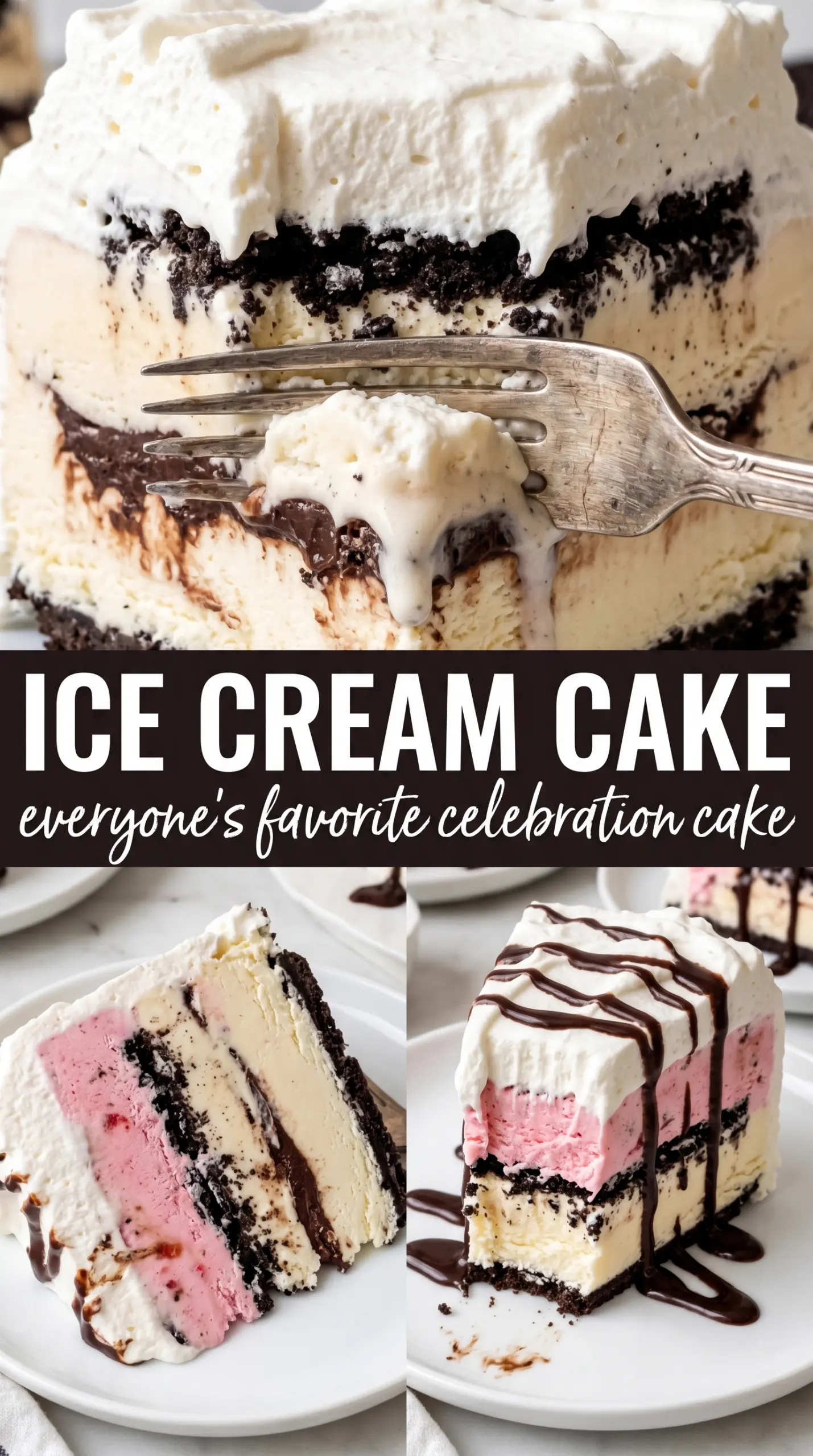
Ice cream cake hits the sweet spot between nostalgic and practical: crisp cookie crust, clean layers of real ice cream, a ribbon of fudge, and a chilled slice that holds together instead of melting into a puddle the second it leaves the freezer. The Oreo base gives you a sturdy bite at the bottom, while the two ice cream layers stay distinct enough to look special when you slice in.
What makes this version work is the timing. The crust gets a short freeze before the ice cream goes in, the fudge goes on only after the vanilla layer firms up, and the final freeze is long enough to lock everything in place. That means clean layers instead of a muddy middle. Slightly softened ice cream spreads without shredding the crust, but it still freezes back into a smooth, scoopable texture.
Below, I’ve included the one thing that matters most for neat slices, plus a few smart swaps if you want to change up the flavors or make it dairy-free. The whole cake is built for make-ahead ease, which is exactly what you want when dessert needs to come out already handled.
The layers stayed sharp and the fudge didn’t soak into the crust. I used a warm knife like you said and every slice came out clean, even after sitting out for a few minutes.
Save this Oreo ice cream cake for birthdays and make-ahead dessert nights when you want clean layers, fudge, and sprinkles without turning on the oven.
The Freezer Timing That Keeps the Layers Clean
The biggest mistake with ice cream cake is rushing the layers. If the crust doesn’t freeze first, the ice cream will drag crumbs through the whole cake. If the vanilla layer isn’t firm before the fudge goes on, the sauce sinks instead of staying in a neat ribbon.
This cake depends on short freezes between layers, not one long freeze at the end. That pause is what gives you definition when you slice. The final 4 hours is for setting the whole cake through the center, but those earlier 15- to 60-minute freezes are what keep the structure from collapsing.
- Crust freeze: 15 minutes is enough to set the butter in the cookies so the base stays compact.
- Vanilla layer: Smooth it quickly while it’s soft, then freeze it until the top feels firm to the touch.
- Fudge layer: Let the sauce cool slightly so it stays visible instead of bleeding into the ice cream.
- Final freeze: Give it the full time. Cutting too early is what causes the layers to slump.
What Each Layer Is Doing in the Cake
- Oreo cookies: They bring the chocolate-cookie base and enough structure to hold up under the ice cream. Finely crushed cookies pack better than chunky crumbs, so pulse them until they look like damp sand.
- Butter: This is what turns the crumbs into a sliceable crust. You need the full amount here; too little butter leaves the base loose and crumbly when you cut the cake.
- Vanilla ice cream: This is the neutral middle layer that lets the fudge stand out. Slightly softened ice cream spreads smoothly, but if it gets soupy it melts into the crust and loses that clean stripe.
- Strawberry ice cream: It gives the cake color and a bright, fruity finish that balances the chocolate and fudge. You can swap in another flavor, but choose one that freezes firm and doesn’t stay overly soft.
- Hot fudge sauce: A slightly cooled sauce stays in place between the layers instead of melting a tunnel through the vanilla. Warm is fine; hot is what causes problems.
- Whipped topping or stabilized whipped cream: This is for decoration, not structure, so use whichever version you like best. Stabilized whipped cream holds the best shape if the cake sits out for a few minutes.
Building the Cake So the Slices Stay Sharp
Pressing the Crust Tight
Mix the crushed Oreos with melted butter until every crumb looks evenly moistened, then press the mixture firmly into the bottom of a 9-inch springform pan. Use the bottom of a measuring cup to pack it down evenly, especially at the edges. A loose crust will break apart when you release the pan, and a packed crust cuts much cleaner.
Spreading the Ice Cream Without Tearing the Base
Slightly softened ice cream should spread like very thick frosting. If it’s still too hard, it will pull crumbs up from the crust; if it’s too soft, the layers blur together. Work quickly and smooth each layer with an offset spatula or the back of a spoon, then freeze until firm before adding the next layer.
Adding the Fudge in a Controlled Ribbon
Drizzle the fudge over the vanilla layer after it firms up, not before. A sauce that’s too warm will melt a trench through the ice cream, while one that’s too thick won’t spread evenly. Aim for a slightly cooled, pourable texture so it lands in a visible layer and freezes into a clean stripe.
Finishing and Slicing Cleanly
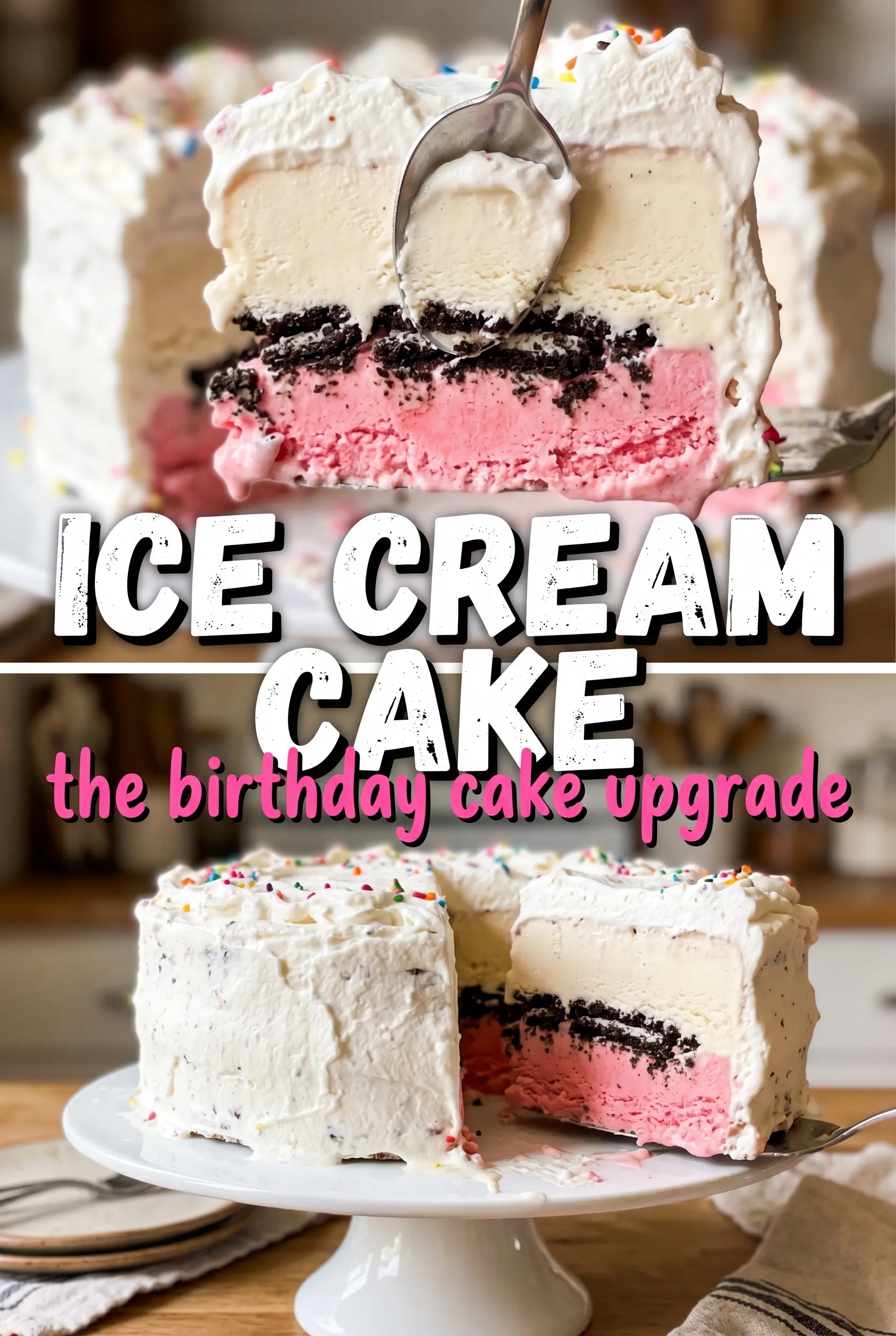
Let the finished cake freeze until it’s solid through the center, then run a warm knife around the inside edge of the springform before releasing it. Move it to a serving plate, pipe the whipped cream around the top edge, and add sprinkles right before slicing. Use a hot knife wiped clean between cuts, and the layers will stay crisp instead of dragging across one another.
How to Change the Cake Without Losing the Structure
Make It Dairy-Free
Use dairy-free ice cream in both layers, a plant-based butter for the crust, and a dairy-free fudge sauce. The texture can still be excellent, but the cake may soften a little faster once sliced, so keep it frozen until the last minute.
Swap the Flavors
Chocolate, mint, cherry, or cookies-and-cream all work here as long as the ice cream freezes firmly. Stick with one lighter layer and one darker layer so you still get a clear visual contrast when you slice the cake.
Make It Ahead for a Party
This cake can be built a day or two ahead and kept covered in the freezer. Add the whipped cream and sprinkles close to serving so the topping stays neat and the colors stay bright.
Use Gluten-Free Cookies
A gluten-free chocolate sandwich cookie works well for the crust and keeps the same crunchy base. Crush them fine and pack them tightly, since some gluten-free cookies crumble a little more loosely than Oreos.
Storage and Reheating
- Refrigerator: Not recommended; this cake softens fast and loses its structure outside the freezer.
- Freezer: Store tightly covered for up to 1 week for the best texture. After that, the ice cream can pick up freezer flavor.
- Reheating: Don’t reheat it. Let slices sit at room temperature for 5 to 10 minutes so the knife goes through cleanly without melting the layers.
Questions I Get Asked About This Recipe
Ice Cream Cake
Ingredients
Equipment
Method
- Mix the crushed Oreo cookies with the melted butter until evenly moistened, then press the mixture firmly into the bottom of a 9-inch springform pan. Freeze for 15 minutes until set, and the crust should look compact and solid.
- Spread the vanilla ice cream in an even layer over the Oreo crust, smoothing the top with a flat edge. Freeze for 1 hour until firm, so the layer holds its shape when you move the pan.
- Drizzle the hot fudge sauce over the vanilla layer in a thin, even ribbon. Freeze for 15 minutes until the fudge is slightly set and no longer runny.
- Spread the strawberry ice cream over the fudge layer, smoothing the top for an even finish. Cover with plastic wrap and freeze for at least 4 hours or overnight, until the cake is completely firm.
- Run a warm knife around the edge, release the springform, and transfer the cake to a serving plate. Work quickly so the sides stay clean and the edges don’t melt.
- Pipe whipped cream swirls around the top edge, then scatter sprinkles across the center. Slice with a hot knife and serve immediately, using quick, straight cuts for clean layers.