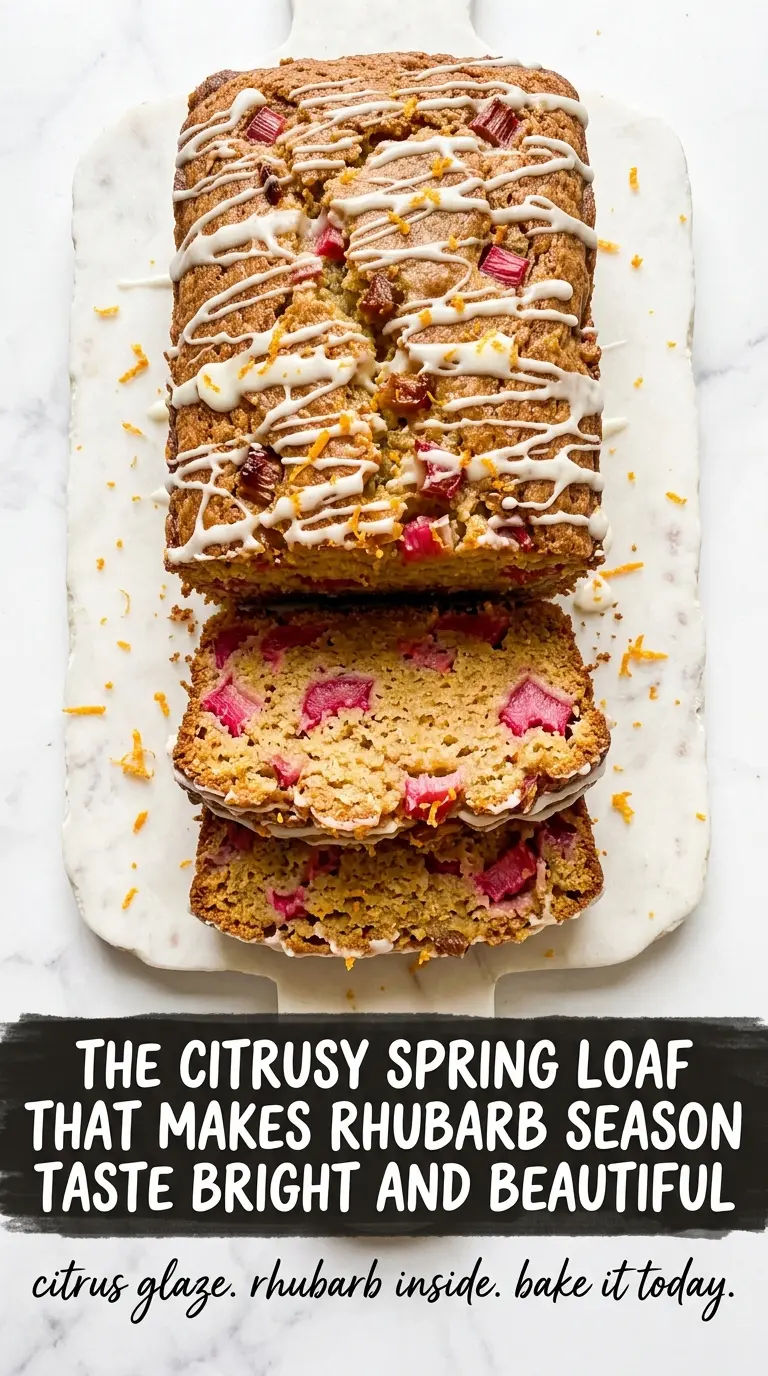
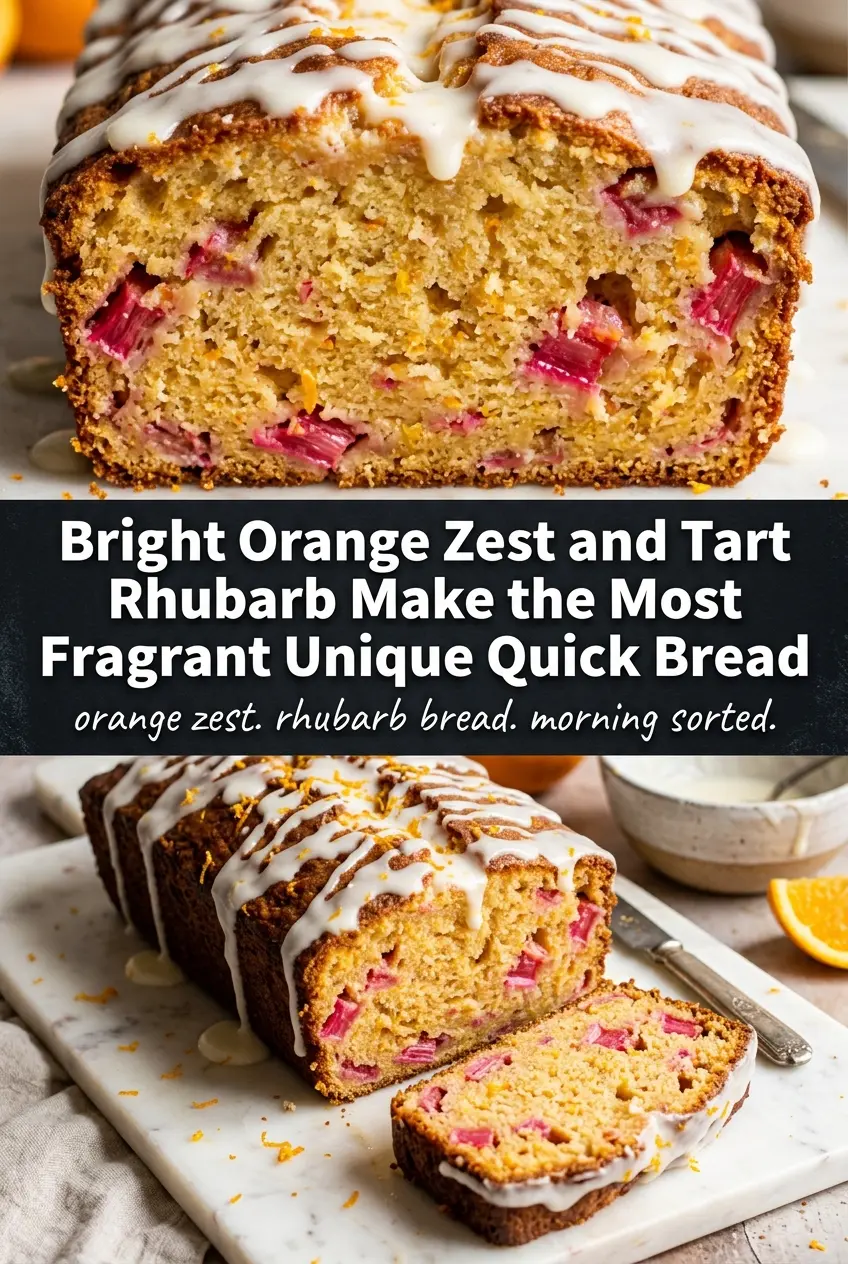
Orange rhubarb bread bakes up with a tender crumb, little pockets of tart rhubarb, and a bright citrus finish that keeps each slice from tasting heavy. The glaze on top soaks in just enough to add shine and a soft sweetness without hiding the fruit underneath. It’s the kind of loaf that disappears fast once people realize it’s not a plain quick bread.
The orange juice and zest do more than add flavor here. They soften the edges of rhubarb’s sharp tartness and make the loaf taste fresh instead of flat. Vegetable oil keeps the crumb moist for days, and because this is a quick bread, you don’t want to overmix once the wet and dry ingredients come together. A few streaks are better than a tough loaf.
Below you’ll find the small details that matter most: how to keep the rhubarb from sinking, why the glaze should go on while the bread is still warm, and the swap I’d use if you only have frozen rhubarb on hand.
The loaf came out incredibly moist, and the rhubarb stayed in little tender pieces instead of turning mushy. The orange glaze on top was just enough to pull everything together.
Love the bright orange glaze and tart rhubarb crumb? Save this Orange Rhubarb Bread for the mornings when you want a tender loaf with a fresh citrus finish.
The Part That Keeps Rhubarb Bread from Turning Dense
Most quick breads go wrong at the mixing stage, and this one is no exception. Once the wet ingredients hit the dry, the batter should come together with just a few strokes. Stirring until it looks perfectly smooth develops too much gluten and gives you a tight, bready loaf instead of that soft, tender crumb you want.
The other place people lose the texture is with the rhubarb itself. Dice it finely so it softens in the oven without leaving giant wet pockets, and fold it in at the very end so it stays distributed. If your rhubarb is especially juicy, toss it with a spoonful of the dry mixture before folding it in; that helps keep it from sinking.
What Each Ingredient Is Doing in This Loaf
- All-purpose flour — This gives the loaf its structure without making it heavy. Standard all-purpose flour is exactly right here; a bread flour version would make the crumb chewier than you want in a breakfast loaf.
- Sugar — It sweetens the batter and helps the crust brown. You need the full amount because rhubarb is tart enough to pull the loaf out of balance if you cut it back.
- Vegetable oil — Oil keeps quick bread moist longer than butter does. Melted butter would add a richer flavor, but it also sets firmer once cooled, so the loaf won’t stay as soft on day two.
- Orange juice and zest — The juice adds moisture and the zest brings the strongest citrus flavor. Don’t skip the zest; that’s where the orange actually shows up in the finished bread.
- Fresh rhubarb — Fresh rhubarb holds its shape better and gives you those tender pink bites throughout the loaf. If you use frozen rhubarb, thaw it first and pat it dry so extra liquid doesn’t water down the batter.
Building the Batter and Baking It to a Tender Crumb
Mix the Dry Ingredients First
Whisk the flour, sugar, baking soda, and salt together until the mixture looks even. That step matters more than it sounds like, because baking soda needs to be spread through the batter evenly or you’ll get uneven rising and a slight soapy taste in one section. A quick whisk is enough.
Whisk the Wet Ingredients Until Smooth
Beat the eggs with the oil, orange juice, and zest until the mixture looks fully combined and glossy. You’re not trying to whip in air here; you just want the eggs broken up and the zest distributed so the orange flavor runs through every slice. If you see streaks of oil, keep whisking for another few seconds.
Fold in the Rhubarb at the End
Pour the wet mixture into the dry ingredients and stir only until you stop seeing dry flour. Then fold in the rhubarb with a spatula, using broad strokes so the pieces stay intact. Overmixing at this point is the fastest way to make the loaf chewy, and it can also push the rhubarb down into the bottom of the pan.
Bake Until the Center Springs Back
Scrape the batter into a greased 9×5-inch loaf pan and bake at 350°F for 50 to 55 minutes. The top should be set and lightly golden, and a toothpick inserted into the center should come out clean or with a few moist crumbs, not wet batter. If the top is browning too fast, tent it loosely with foil for the last 10 to 15 minutes.
Glaze While the Loaf Is Still Warm
Cool the bread in the pan for 10 minutes, then turn it out onto a wire rack. Stir the powdered sugar with orange juice until smooth and drizzle it over the warm loaf so it melts slightly into the top instead of sitting in a hard shell. If the bread is fully cool, the glaze will stay more separate and won’t give you that soft finish on top.
How to Change Orange Rhubarb Bread Without Losing What Makes It Work
Make It Dairy-Free Without Any Extra Work
This loaf is already dairy-free as written, which is one reason it stays so tender. Keep the oil and orange juice base exactly as they are, and you won’t lose the soft crumb or the bright citrus finish.
Use Frozen Rhubarb When That’s What You Have
Thaw the rhubarb first, then pat it dry with paper towels before folding it in. Frozen rhubarb carries extra moisture, and if you add it straight from the freezer, the loaf can turn gummy in the middle and sink a little after baking.
Swap the Orange Glaze for a Lighter Finish
If you want less sweetness, skip the glaze and dust the cooled loaf with powdered sugar instead. You’ll lose the sticky orange top, but the bread itself still carries plenty of citrus flavor from the juice and zest.
Bake It as Muffins Instead of a Loaf
Divide the batter between lined muffin cups and start checking them around 18 to 22 minutes. The texture stays soft, but you’ll get more of the caramelized edge and less of the loaf-style slice, which is nice if you want grab-and-go breakfast portions.
Storage and Reheating
- Refrigerator: Store tightly wrapped at room temperature for up to 3 days, or refrigerate for up to 5 days if your kitchen is warm. The crumb stays moist, though the glaze will soften a bit.
- Freezer: This loaf freezes well. Wrap the cooled bread tightly in plastic wrap and then foil, or freeze individual slices for quick grab-and-go breakfasts.
- Reheating: Warm slices in the microwave for 10 to 15 seconds or in a 300°F oven for a few minutes. Don’t overheat it or the crumb will dry out and the glaze will turn sticky in the wrong way.
Questions I Get Asked About This Recipe
Orange Rhubarb Bread
Ingredients
Equipment
Method
- Preheat the oven to 350°F and grease a 9x5-inch loaf pan.
- Whisk together all-purpose flour, sugar, baking soda, and salt until evenly combined.
- In a separate bowl, beat eggs, vegetable oil, orange juice, and orange zest until combined.
- Pour the wet ingredients into the dry ingredients and stir until just mixed, then fold in the finely diced rhubarb (small pink flecks should be visible throughout).
- Pour the batter into the prepared loaf pan and smooth the top.
- Bake at 350°F for 50-55 minutes, until a toothpick comes out clean (the loaf should look set and lightly golden).
- Cool the bread in the pan for 10 minutes, then turn it out onto a wire rack.
- Mix powdered sugar with orange juice for the glaze until smooth and pourable (it should look glossy).
- Drizzle the glaze over warm bread, letting it run slightly down the sides before serving.