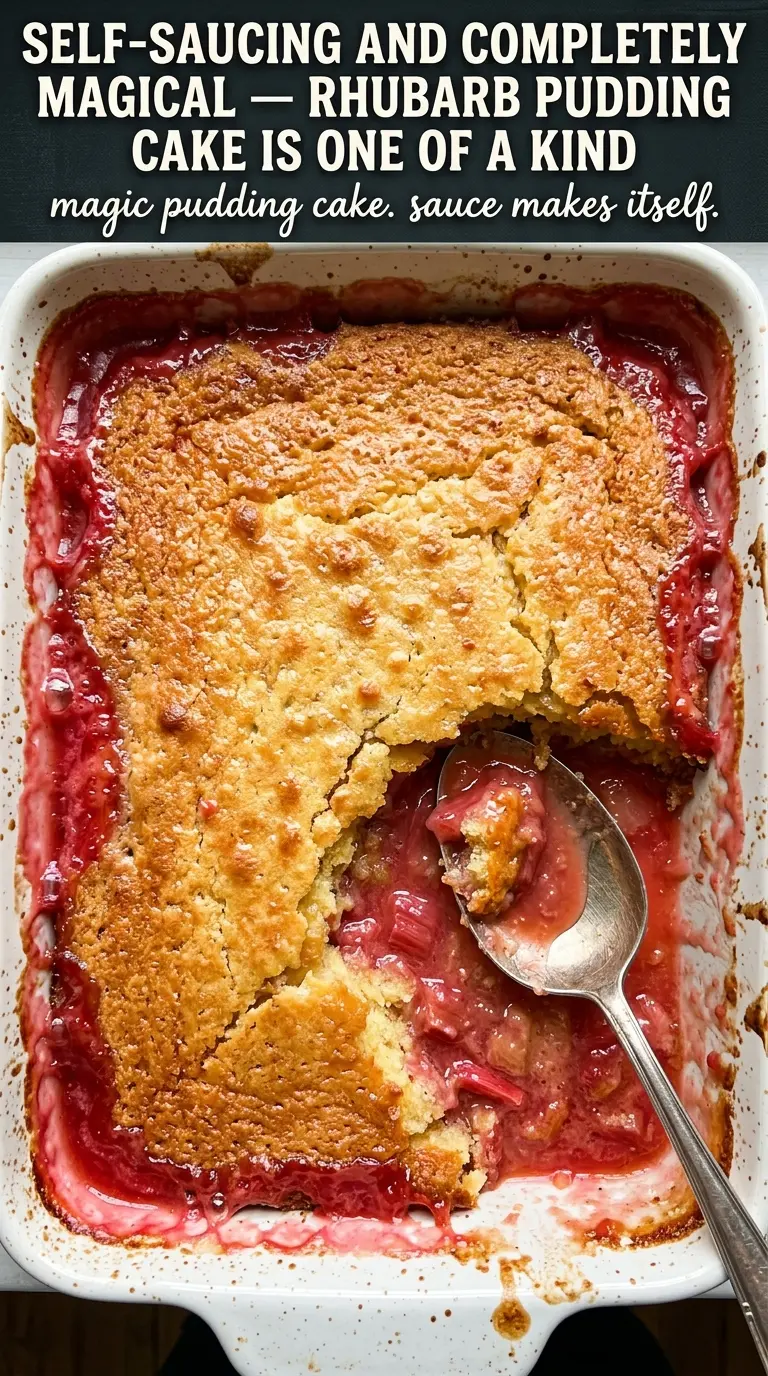
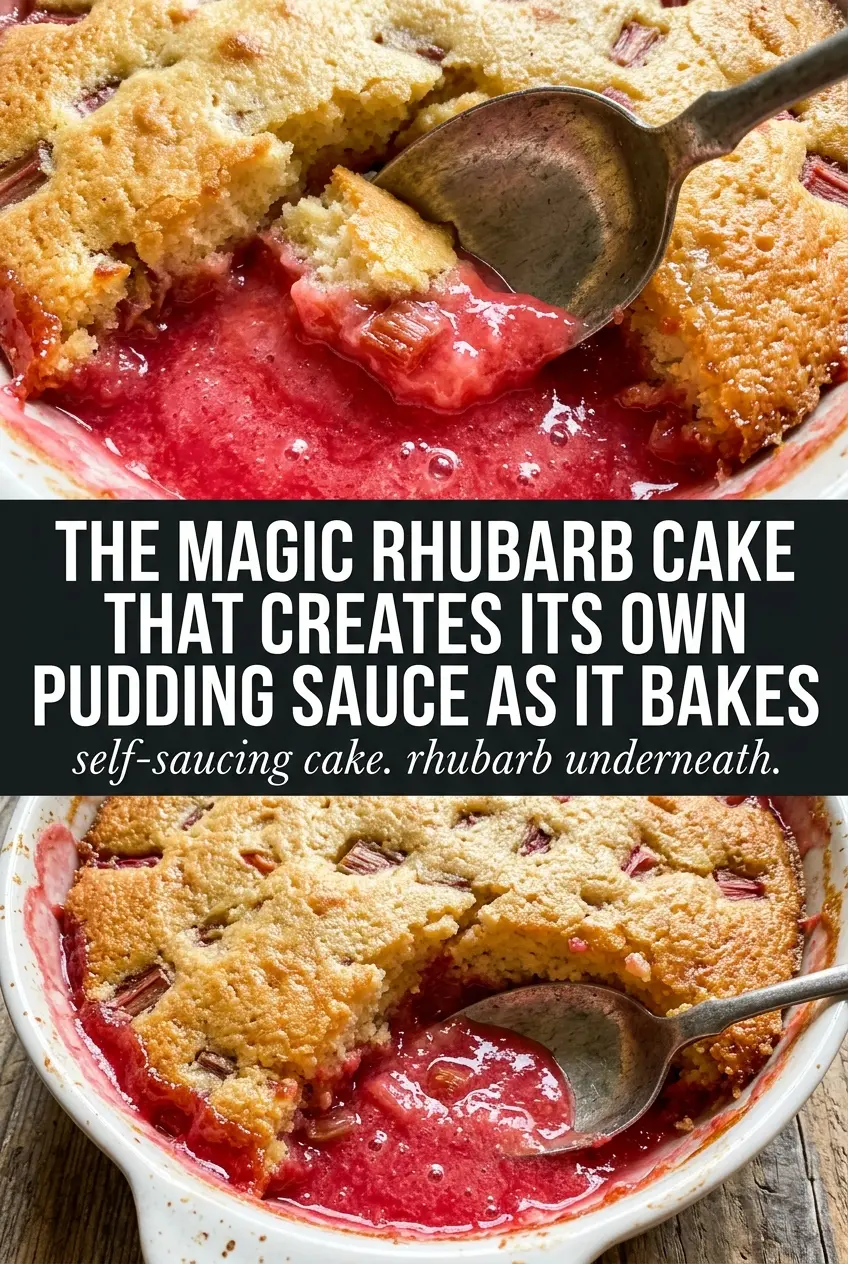
Rhubarb pudding cake bakes up with a soft, tender top and a sweet, spoonable sauce underneath, and that contrast is exactly what makes it worth putting on repeat. The rhubarb softens just enough to turn jammy at the edges while still keeping a little bite, so every serving lands somewhere between cake, cobbler, and warm pudding.
The trick is in the layering. The batter goes in first, the sugar-cornstarch mixture gets sprinkled over it, and the boiling water is poured on top without stirring. That looks wrong if you’ve never made a self-saucing dessert before, but it’s what lets the cake rise while the sauce sinks and thickens below. The result is a clean split between the light crumb on top and the glossy fruit sauce below.
Below, I’ve included the one part people tend to second-guess, plus a few smart swaps and storage notes so you can serve this warm without guessing your way through it.
The cake rose beautifully and the sauce settled underneath just like it should. I served it warm with vanilla ice cream and my husband went back for a second bowl before dinner was even cleared.
Save this rhubarb pudding cake for the days when you want that magic self-saucing layer with almost no extra effort.
The Boiling Water Isn’t the Problem — Stirring Is
The part that throws people is the sauce layer. It feels backwards to pour hot water over batter and leave it alone, but that is what creates the pudding underneath instead of a soggy cake. The cornstarch and sugar dissolve into the water, then the liquid slips down as the cake bakes and thickens below the crumb.
If you stir after adding the boiling water, you lose the layering and end up with a loose batter all through the dish. The batter should look uneven before it goes into the oven, and the sauce mixture should sit on top in a shallow pool. That separation is what gives you a cake that lifts on top and spoons through like pudding underneath.
What Each Ingredient Is Actually Doing In This Dessert
- Fresh rhubarb — This is the whole point of the dessert. Fresh rhubarb softens into tender, tart pockets as it bakes, and frozen rhubarb releases too much water for the same clean pudding layer. If you only have frozen, thaw it first and drain it well, but the texture won’t be quite as tidy.
- All-purpose flour — This gives the top its soft cake structure. Cake flour turns the crumb a little too delicate here, and the pudding layer can make it collapse faster. Regular all-purpose flour holds up best.
- Cornstarch — It thickens the sauce as the dessert bakes, which is what turns the bottom layer glossy instead of watery. Arrowroot can work in a pinch, but it can set a little differently and won’t give quite the same comforting spoonable texture.
- Boiling water — This is not just hot liquid; it activates the cornstarch layer and starts the sauce before the pan goes into the oven. Warm water won’t do the same job. It needs to be boiling when it goes over the top.
- Butter — The butter in the batter gives the cake a soft, rich crumb, and the little bit dotting the top adds a smoother finish to the sauce. Melted butter is fine here; there’s no need to cream anything.
The 15 Minutes That Decide the Texture
Mixing the Batter Just Until Smooth
Whisk the dry ingredients first, then stir in the milk and melted butter until the batter comes together with no dry streaks. Stop as soon as it looks smooth. Overmixing develops the flour and makes the top tougher, which is the opposite of what you want in a pudding cake. Fold in the rhubarb at the end so it stays evenly distributed without breaking down.
Layering the Sauce Without Disturbing the Batter
Spread the batter into the greased dish, then combine the sugar and cornstarch and sprinkle that mixture evenly over the top. Pour the boiling water over everything slowly, aiming for coverage instead of force. Don’t stir. If the top looks a little odd and separated, that’s correct. Dot the surface with butter and get it into the oven while the water is still hot.
Baking Until the Edges Bubble and the Center Sets
Bake until the top is golden and the sauce is bubbling around the edges. The center should look set but still soft, not dry or tight. If you overbake it, the sauce thickens too far and the cake loses that spoonable base. Let it rest for 15 minutes before serving so the sauce settles and the layers hold together when you scoop it.
How to Adjust This Rhubarb Pudding Cake Without Losing the Magic
Make it dairy-free
Swap the milk for an unsweetened plant milk and use a dairy-free butter substitute. The texture stays close, though the top will taste a little less rich. Choose a neutral milk like almond or oat so it doesn’t compete with the rhubarb.
Use strawberries for a sweeter fruit layer
Replace up to half of the rhubarb with sliced strawberries if you want a softer, sweeter filling. The cake will lean more jammy and less tart, and the sauce will taste rounder. Keep some rhubarb in the mix if you want that classic bright edge.
Make it gluten-free
Use a cup-for-cup gluten-free flour blend in place of the all-purpose flour. The dessert will still bake up tender, but it may be a little more delicate when spooned. Let it rest before serving so the structure has time to settle.
Bake it in ramekins for individual servings
Divide the batter and sauce mixture among buttered ramekins and reduce the bake time. The texture stays the same, but the edges set faster, so start checking early. This is the best move when you want a more polished dessert without changing the recipe itself.
Storage and Reheating
- Refrigerator: Store covered for up to 4 days. The sauce thickens more as it chills, so expect a denser, more pudding-like texture.
- Freezer: It freezes, but the sauce can separate a little after thawing. Freeze in portions, wrap well, and thaw overnight in the refrigerator for the best result.
- Reheating: Warm individual portions in the microwave or reheat the whole dish, covered, in a low oven until just heated through. High heat dries out the cake before the sauce loosens again.
Questions I Get Asked About This Recipe
Rhubarb Pudding Cake
Ingredients
Equipment
Method
- Preheat the oven to 350°F and grease an 8x8-inch baking dish, leaving no dry spots so the cake releases cleanly.
- Whisk together all-purpose flour, sugar, baking powder, and salt until evenly blended and no lumps remain.
- Stir in milk and melted butter until the batter is smooth and thick, with a glossy look.
- Fold in diced fresh rhubarb and mix just until the pieces are evenly distributed.
- Spread the batter into the prepared baking dish and smooth the top so the sauce layer forms evenly.
- For the sauce, mix sugar and cornstarch together until uniform.
- Sprinkle the sugar-cornstarch mixture evenly over the batter so it reaches the corners.
- Pour boiling water over the top slowly to cover the surface; the batter will look thin after adding water.
- Dot the surface with butter so it melts into the bubbling pudding sauce.
- Bake for 40-45 minutes at 350°F until the cake is golden and the sauce is bubbling around the edges.
- Cool for 15 minutes to let the sauce thicken slightly before serving warm.
- Serve warm straight from the baking dish, spooning out cake and sauce together in each portion.