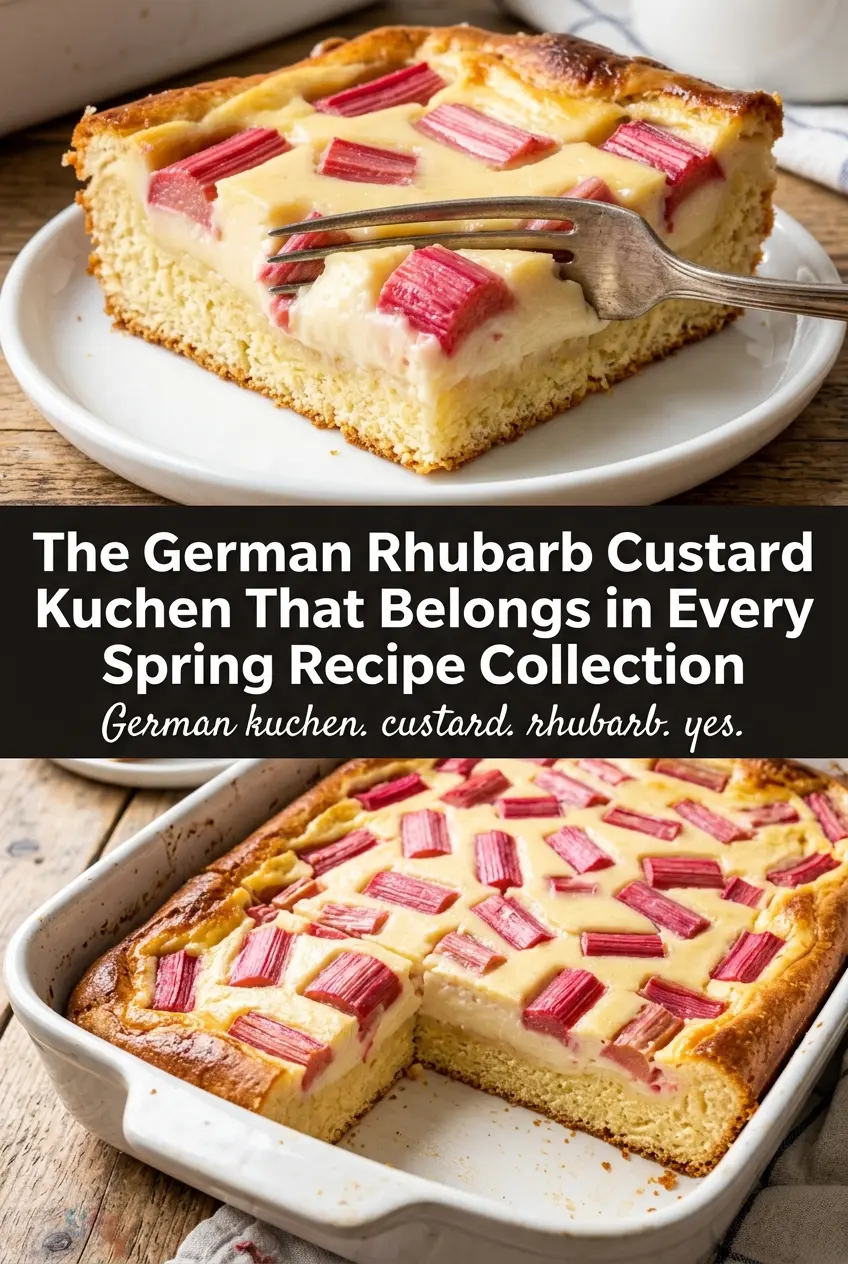
Rhubarb custard kuchen bakes into something that lands right between coffee cake and pie: a soft, tender yeast crust, tart rhubarb on top, and a creamy custard that sets into clean, spoonable slices. The contrast is what makes it memorable. You get a little chew from the base, brightness from the fruit, and that gentle vanilla richness holding everything together.
What makes this version work is the order. The yeast dough gets a short rise, just enough to relax and puff without turning fussy, then it’s pressed into the pan so it can carry the custard without becoming dense. The custard itself uses a little flour, which helps it bake up stable instead of loose and watery, especially once the rhubarb starts releasing juice in the oven.
Below you’ll find the detail that matters most with this kind of kuchen: how to keep the custard set and the crust from going heavy. There’s also a few notes on swaps and storage, because this one is just as good for a bake-ahead dessert as it is for an afternoon coffee table.
The custard set up beautifully and the rhubarb stayed bright instead of turning to mush. I let it cool all the way, and the slices held together like a dream.
Save this rhubarb custard kuchen for the days when you want a tender yeast cake, tart fruit, and silky custard in one pan.
The Custard Sets Because the Dough Stays Light
Rhubarb custard kuchen can go wrong in two predictable ways: the crust turns bready and heavy, or the custard bakes up loose and sloshing. The fix is balance. This dough is rich enough to stay tender, but it’s only risen once, so it won’t balloon up and fight the custard. That short rise keeps the base soft and gives the filling room to settle into the cake instead of sitting on top of it.
The other thing that matters is the flour in the custard. It looks old-fashioned because it is, but it earns its place here. Without it, the eggs and cream can bake into something too delicate once the rhubarb starts leaking juice. With it, the filling slices cleanly after cooling and still tastes creamy, not floury.
Patience matters at the end. If you cut it while it’s hot, the custard will look underdone even if it’s baked through, and the slices won’t hold. Letting it cool completely is part of the recipe, not an extra step.
What the Eggs, Cream, and Rhubarb Are Each Doing Here

- Active dry yeast — This gives the cake its classic kuchen texture: soft, slightly bready, and more substantial than a quick cake. If you use instant yeast, the result will still work, but active dry gives you a little more time to mix and helps prove the dough is alive before you commit the rest of the ingredients.
- Heavy cream — This is what makes the custard taste lush instead of thin. Half-and-half can work in a pinch, but the filling will be lighter and a little less set. If you want the most stable slice, use the full amount of cream.
- Fresh rhubarb — Fresh is worth using here because frozen rhubarb sheds more liquid and can water down the custard. If frozen is all you have, thaw it first and drain it well before layering it on the dough, or the center can turn loose.
- All-purpose flour in the custard — It’s not there to thicken like a gravy; it’s there to stabilize the eggs as they bake. Don’t skip it unless you’re changing the whole method, because this is what keeps the custard from collapsing into a puddle once it cools.
- Vanilla — It rounds out the tartness of the rhubarb. Use real vanilla extract if you can, since a strong vanilla note helps the custard taste intentional rather than eggy.
Getting the Dough, Rhubarb, and Custard Into the Pan in the Right Order
Waking Up the Yeast
Dissolve the yeast in warm water and let it stand for five minutes. You want it foamy and a little creamy on top, which tells you the yeast is active and ready to work. If nothing happens, the water was likely too hot, too cold, or the yeast is old, and the dough won’t rise properly. Add the warm milk, sugar, melted butter, egg, and salt, then stir in the flour until you have a soft dough.
Building the Base
Knead until the dough feels smooth and elastic, not sticky and shaggy. It only needs about 30 minutes of rising, so don’t chase a huge proof here; you’re aiming for a dough that relaxes enough to press easily into the pan. Grease the 9×13-inch pan well, then press the dough evenly into the corners. If it keeps shrinking back, let it rest for a few minutes and press again instead of fighting it.
Layering Without Flooding the Crust
Scatter the rhubarb over the dough in an even layer. Keep the pieces in a single layer as much as possible so the custard can flow around them and set evenly. Then whisk the eggs, cream, sugar, flour, and vanilla until smooth and pour it over the fruit. The filling should look loose and pale before baking; it will thicken in the oven, not on the counter.
Baking to the Set Point
Bake at 350°F until the top is golden and the center is just set, about 50 to 55 minutes. The edges will look firmer than the middle, and the custard may still wobble slightly when you nudge the pan, but it shouldn’t slosh. If the top browns too fast before the center is set, lay a loose piece of foil over it for the last part of baking. Cool it completely before slicing, because the custard finishes setting as it cools.
Three Ways to Adapt Rhubarb Custard Kuchen Without Losing the Texture
Make It Gluten-Free With a Flour Blend
Use a cup-for-cup gluten-free flour blend in both the dough and the custard. The texture will be a little more delicate and less chewy, but it still bakes into a sliceable dessert if you let it cool fully before cutting. Don’t swap in almond flour here; it won’t give you the structure this custard needs.
Use Frozen Rhubarb When That’s What You Have
Frozen rhubarb works, but it needs to be thawed and well drained first. If you skip that, the custard can turn loose and the center may take longer to set. The flavor stays bright, though the fruit will soften a little more than fresh.
Swap in a Slightly Lighter Custard
If you want a less rich filling, replace part of the heavy cream with whole milk. The custard will still set, but it won’t taste as velvety and it may slice a little less cleanly. That swap works best if you’re serving it the same day.
Storage and Reheating
- Refrigerator: Store covered for up to 4 days. The custard firms up more in the fridge, and the crust softens a little.
- Freezer: It freezes, but the custard texture changes and can turn a bit grainy after thawing. I don’t recommend freezing it if you want the best slice.
- Reheating: Serve it cold or let a slice sit at room temperature for 20 to 30 minutes. If you warm it, use low heat and keep it brief; high heat can make the custard weep and the crust lose its texture.
Answers to the Questions Worth Asking
Rhubarb Custard Kuchen
Ingredients
Equipment
Method
- Dissolve active dry yeast in warm water and let sit for 5 minutes, until foamy and active.
- Mix warm milk, sugar, butter, egg, and salt into the yeast mixture until combined and smooth.
- Gradually add all-purpose flour and knead until the dough is smooth and cohesive.
- Cover and let the dough rise for 30 minutes, until it looks slightly puffy and airy.
- Press the dough into a greased 9x13-inch pan, spreading it evenly across the bottom.
- Arrange fresh rhubarb pieces on top of the dough in an even layer.
- Whisk eggs, heavy cream, sugar, all-purpose flour, and vanilla extract until smooth and lump-free.
- Pour the custard over the rhubarb so it mostly covers the fruit.
- Bake at 350°F for 50-55 minutes, until the custard is set and golden at the edges.
- Cool completely before cutting and serving, so the custard firms into clean slices.