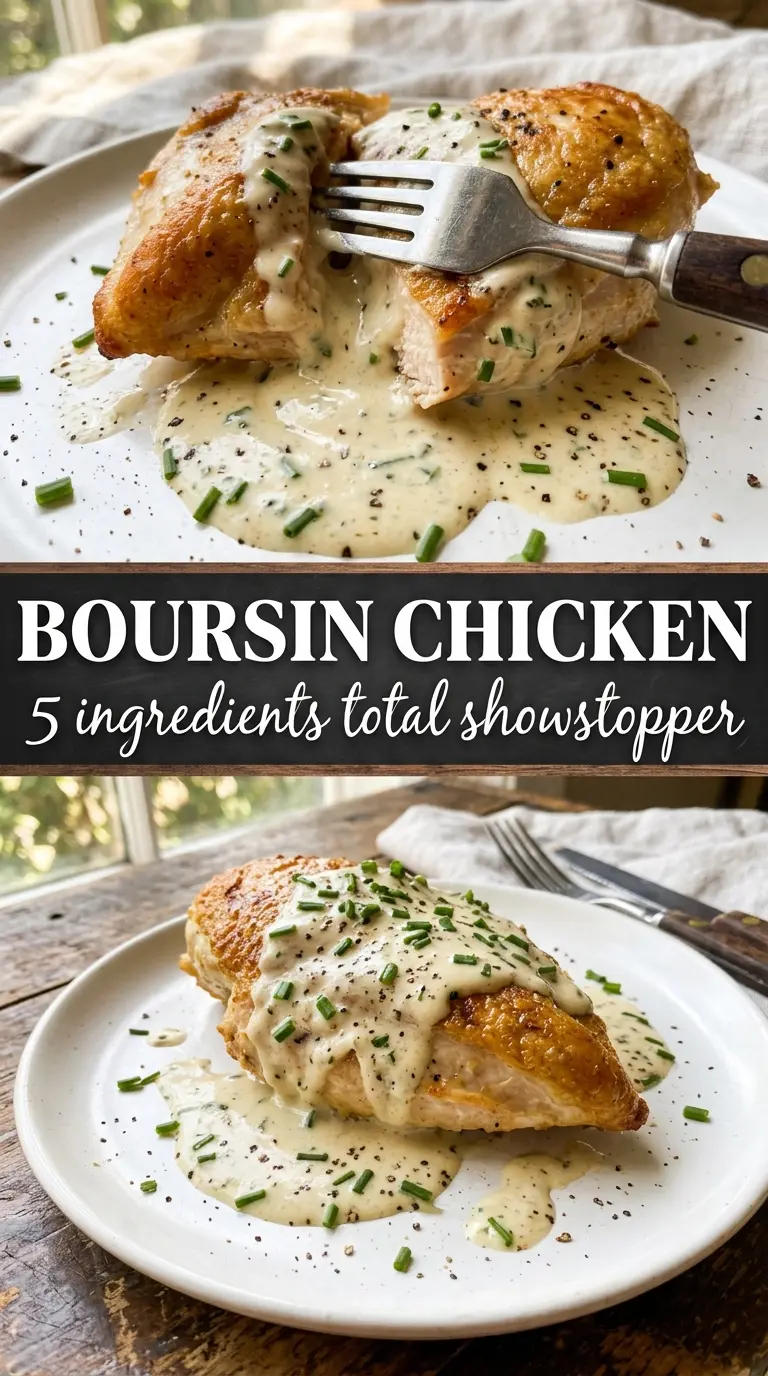
Golden-seared chicken breasts in a creamy Boursin sauce have a way of turning an ordinary skillet dinner into something that feels special without asking much from you. The chicken stays juicy, the sauce turns glossy and fragrant, and the garlic-herb cheese melts into every spoonful instead of sitting in little clumps. It’s the kind of meal that looks elegant on the plate and still lands on the table in under an hour.
What makes this version work is the order. The chicken gets a hard sear first, which builds flavor in the pan before the sauce ever starts. Then the garlic, wine, broth, and Boursin go in at the right moment so the cheese melts smoothly instead of breaking or getting grainy. A little heavy cream rounds everything out, and fresh thyme keeps the sauce from tasting heavy. Serve it with mashed potatoes, pasta, or crusty bread, because you’ll want something ready to catch the sauce.
The sauce turned out silky and thick, and the Boursin never got grainy even after I added the cream. I served it with mashed potatoes and my husband asked if we could put it on the weekly rotation.
Save this Boursin chicken for a glossy garlic-herb sauce that clings to every bite.
The Reason the Sauce Stays Silky Instead of Splitting
Boursin is already soft, seasoned, and designed to melt, but it still needs a gentle hand once it hits the pan. The biggest mistake is cranking the heat and letting the sauce boil hard after the cheese goes in. That’s when the dairy can separate and the texture turns greasy instead of velvety.
The other thing that matters here is the chicken fond left in the skillet. Those browned bits from searing are what keep the sauce tasting deep and savory. Deglazing with wine or broth lifts all of that flavor off the pan, and the cheese melts into that liquid instead of fighting against dry heat.
- Boneless skinless chicken breasts — These cook fast and slice cleanly, which makes them a great fit for a sauce like this. Pound thicker ends slightly if your breasts are uneven so they finish at the same time.
- Dry white wine or chicken broth — Wine gives the sauce a brighter edge and helps cut the richness, but broth works fine if that’s what you have. If you use wine, let it simmer long enough to lose the sharp alcohol smell before adding the broth and cheese.
- Boursin garlic and herb cheese — This is the engine of the sauce. A cheaper soft herbed cheese won’t melt with the same smooth, seasoned finish, so this is the one ingredient I wouldn’t swap casually.
- Heavy cream — This softens the sauce and helps it cling to the chicken. Half-and-half can work in a pinch, but the sauce will be thinner and a little less luxurious.
- Fresh thyme — Dried thyme can work, but use less of it and add it early. Fresh thyme gives the sauce a cleaner herbal lift at the end, which keeps the whole dish from tasting flat.
What Each Ingredient Is Actually Doing in This Recipe
- Primary ingredient (the star) — Quality matters most. Choose the best you can find.
- Cooking medium (oil, butter, or broth) — This carries flavors and prevents dryness.
- Seasonings (salt, pepper, spices, herbs) — Layer flavors so nothing overpowers. Build depth gradually.
- Aromatics (garlic, onion, herbs) — Cook with fat to bloom flavors. Become the foundation.
- Supporting ingredients — Complement the main ingredient without overpowering it.
- Sauce or liquid (if applicable) — Brings flavors together. Balance richness with acid.
- Acid (lemon, vinegar, wine, or other) — Brightens and prevents flat-tasting results.
- Final finish (garnish, glaze, or sauce) — Prevents one-dimensional taste and adds visual appeal.
Building the Pan Sauce in the Right Order
Season and Sear the Chicken
Season the chicken well with salt, pepper, and garlic powder before it hits the pan. You want a deep golden crust on the outside and an internal temperature of 165°F in the thickest part, which usually takes about 5 to 6 minutes per side depending on thickness. If the chicken sticks when you try to turn it, leave it alone a minute longer; once the crust forms, it releases cleanly. Move it to a plate while you build the sauce so it doesn’t overcook.
Cook the Garlic Without Burning It
The garlic only needs about 30 seconds in the hot skillet, just until it smells fragrant. If it browns, the sauce will pick up a bitter edge, and that’s hard to hide later. Stir it through the pan drippings so it picks up flavor, then pour in the wine or broth right away to stop the cooking.
Let the Boursin Melt into the Liquid
After the pan has been deglazed and the broth is simmering, add the Boursin and stir until the sauce turns smooth. Keep the heat at a gentle simmer, not a rolling boil. If you see little soft lumps at first, keep stirring; Boursin takes a minute to fully dissolve, and the sauce usually turns glossy once the cheese is fully warmed through.
Finish with Cream and Bring the Chicken Back
Stir in the heavy cream and thyme, then let the sauce thicken for a few minutes until it lightly coats a spoon. Return the chicken to the pan and spoon sauce over the top so it can warm through without drying out. This last simmer is short on purpose; too much time here can reduce the sauce too far and make it salty. Garnish with fresh thyme and cracked pepper right before serving.
How to Adapt This for Different Kitchens and Diets
Make it gluten-free without changing the texture
This recipe is naturally gluten-free as written if your broth and Boursin are certified gluten-free. The sauce gets its body from reduction and dairy, not flour, so you don’t need a thickener to make it work.
Use chicken thighs for a richer, juicier version
Boneless skinless thighs stay more forgiving if you’re worried about overcooking, and they bring a deeper chicken flavor. They may need a few extra minutes in the skillet, but the sauce stays the same.
Swap the wine for broth when you want a milder sauce
Broth keeps the dish family-friendly and a little softer in flavor. You lose the slight acidity wine adds, so let the pan sauce reduce a minute longer to concentrate the savory notes.
Storage and Reheating
- Refrigerator: Store leftovers in an airtight container for up to 3 days. The sauce thickens as it chills, so it will look a little tighter the next day.
- Freezer: Freezing isn’t ideal because the cream sauce can separate when thawed. If you must freeze it, cool it completely first and thaw slowly in the fridge before reheating.
- Reheating: Warm gently in a covered skillet over low heat with a splash of broth or cream. High heat is the fastest way to make the sauce break, so keep it slow and stir often.
Answers to the Questions Worth Asking

Boursin Chicken
Ingredients
Equipment
Method
- Season the chicken breasts with salt, pepper, and garlic powder to taste, then heat olive oil in a large skillet over medium-high heat until shimmering. Add chicken and sear 5-6 minutes per side until golden and internal temperature reaches 165°F, then remove to a plate.
- Reduce heat to medium and cook minced garlic in the same pan for 30 seconds, stirring until fragrant. Pour in white wine and cook 2 minutes, scraping up browned bits from the bottom.
- Add chicken broth and bring to a simmer, then reduce slightly. Add Boursin garlic and herb cheese and stir until completely melted and smooth.
- Stir in heavy cream and fresh thyme leaves, then simmer for 3-4 minutes until the sauce thickens slightly. Keep it at a gentle simmer, not a hard boil, so it stays glossy.
- Return the chicken breasts to the pan and spoon the Boursin sauce over each breast. Simmer 1-2 minutes to warm the chicken through and coat it in the sauce.
- Garnish with fresh thyme and serve immediately over mashed potatoes or pasta.