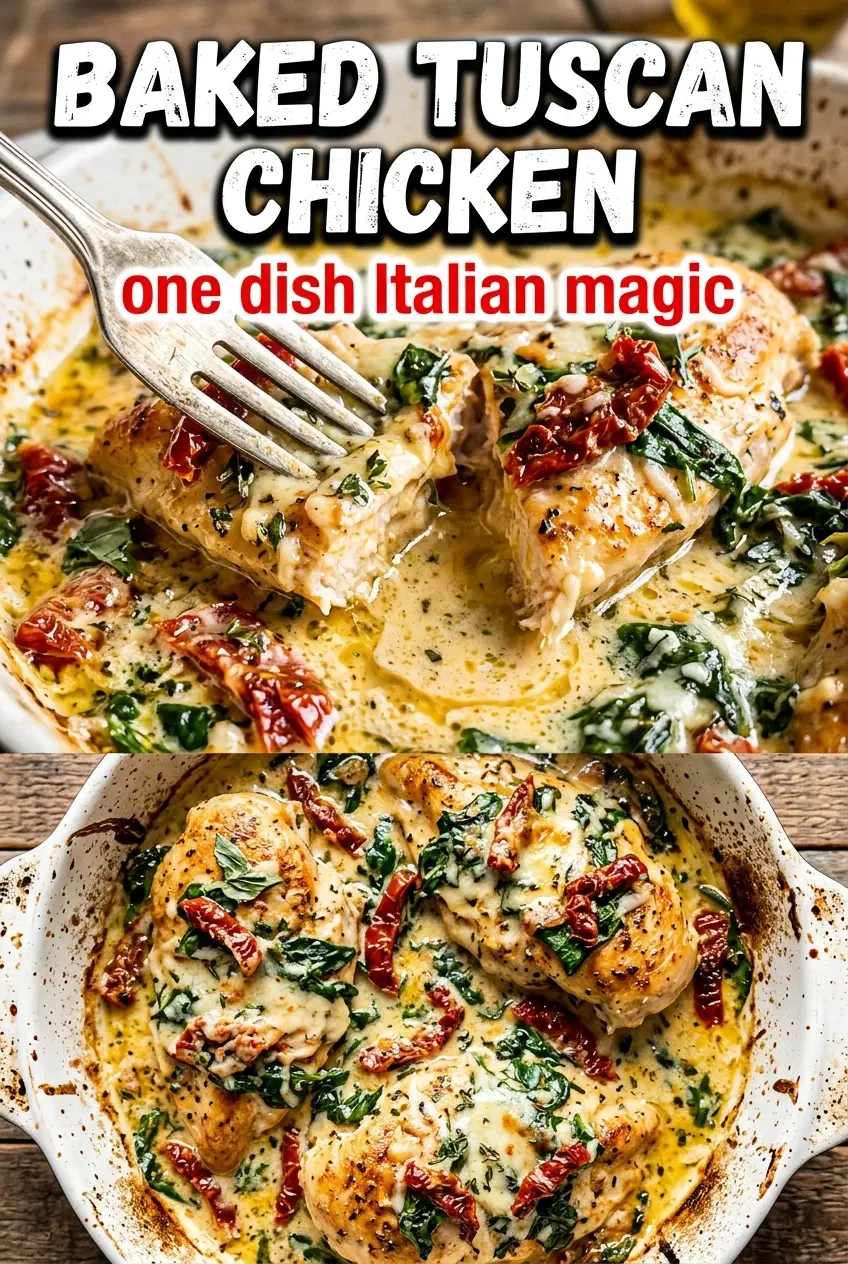
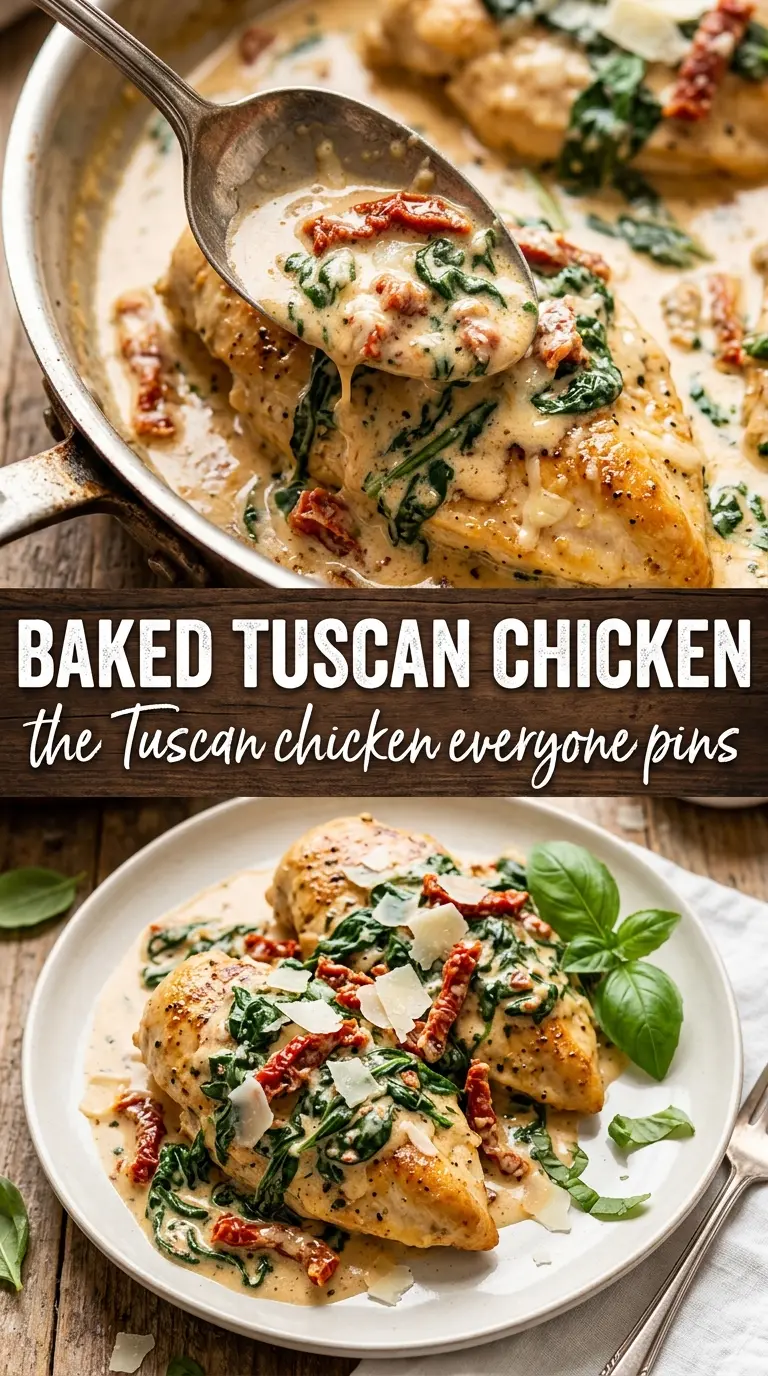
Golden-roasted chicken thighs tucked into a sun-dried tomato cream sauce make this baked Tuscan chicken the kind of dinner that gets scraped clean from the pan. The skin stays crisp on top while the sauce turns silky underneath, with Parmesan, garlic, and spinach giving every bite a rich, savory finish that tastes like much more work than it is.
The key is building the sauce in the same skillet you used for the chicken. Those browned bits left behind after searing carry a lot of flavor, and the quick splash of broth loosens them without watering down the cream. The chicken goes back in skin-side up, so the top stays golden while the sauce bubbles around the edges instead of softening that crust.
Below, you’ll find the small details that keep the sauce smooth, plus a few smart swaps if you need to work with what’s already in the kitchen.
The chicken skin stayed crisp even after baking, and the sauce thickened up beautifully without curdling. My husband kept going back for more of the sun-dried tomato sauce, and the leftovers were just as good the next day.
Creamy baked Tuscan chicken with crispy skin and sun-dried tomato sauce belongs on your dinner rotation.
The Trick Is Keeping the Chicken Skin Out of the Sauce Until the End
The biggest mistake with skillet-to-oven chicken dishes is nestling the meat back into the sauce too soon. That traps steam against the skin and turns all that hard-earned browning soft. Here, the chicken goes back in skin-side up only after the cream sauce is built, so the oven finishes the meat without sacrificing the crust.
That also means you want a real sear at the beginning. If the skin looks pale, the finished dish will taste flatter no matter how good the sauce is. Wait until the fat renders and the skin releases cleanly from the pan with deep amber edges before you flip it.
What Each Ingredient Is Actually Doing in This Baked Tuscan Chicken
- Bone-in, skin-on chicken thighs — These stay juicy in the oven and give you the best shot at crisp skin. Boneless thighs work in a pinch, but they won’t bring the same texture or richness.
- Sun-dried tomatoes in oil — The oil-packed kind are softer and more concentrated, which matters here because they melt into the sauce instead of staying leathery. Drain them, but don’t rinse them; a little of that oil helps bloom the garlic and deepens the base.
- Heavy cream — This is what keeps the sauce smooth through baking. Half-and-half can split more easily and won’t cling to the chicken the same way.
- Parmesan cheese — Freshly grated Parmesan melts more cleanly than the shelf-stable shaker stuff. If you use pre-grated Parmesan, expect a slightly grainier sauce and stir it in off the heat if possible.
- Baby spinach — It wilts fast and softens into the sauce without overpowering the other flavors. If you use regular spinach, chop off the thick stems first so you don’t end up with stringy pieces.
- Chicken broth — This loosens the browned bits in the pan and gives the sauce enough depth to keep from tasting heavy. Water works only if you have no other choice, but the flavor will be thinner.
The 20 Minutes That Build the Sauce and Finish the Chicken
Rendering the Skin First
Start the chicken skin-side down in a hot skillet and don’t move it until it releases on its own. You’re looking for deep golden skin and a good layer of fat in the pan, not just light browning. If the pan is crowded or the heat is too low, the thighs will steam instead of sear, and the sauce will never make up for that missing flavor. Flip them only when the skin is crisp and the color is even.
Cooking the Garlic and Tomatoes
Once the chicken comes out, the garlic only needs about 30 seconds before the sun-dried tomatoes go in. If the garlic browns, it turns bitter fast, especially under cream. The tomatoes should sizzle as they hit the oil, which tells you the pan is hot enough to pull flavor from the bottom without scorching anything.
Building the Cream Sauce
Add the broth first and scrape until the pan looks clean, then stir in the cream, Parmesan, Italian seasoning, and red pepper flakes. Keep the heat low enough that the sauce barely simmers; a hard boil can make the dairy grainy or split. The sauce should look glossy and lightly thickened before the spinach goes in.
Finishing in the Oven
Let the spinach wilt, return the chicken skin-side up, and bake uncovered until the thighs reach 165°F. Uncovered baking matters here because it keeps the skin from steaming in the sauce. If the sauce seems thin when it goes into the oven, it will tighten as the chicken finishes cooking and the Parmesan settles in.
How to Adjust This Dish Without Losing What Makes It Work
Make It Dairy-Free
Use a full-fat unsweetened coconut cream or a dairy-free cooking cream, then skip the Parmesan or replace it with a dairy-free Parmesan-style topping. The sauce will taste a little different — less sharp, a little rounder — but it still coats the chicken well if you keep the heat gentle.
Use Chicken Breasts Instead
Chicken breasts work, but they need less oven time and more attention so they don’t dry out. Sear them briefly, then pull the dish as soon as the thickest part hits 165°F. You’ll lose a little of the thigh meat’s richness, but the sauce still carries the dish.
Make It Gluten-Free
This recipe is naturally gluten-free as written, as long as your broth is certified gluten-free. That makes it an easy dinner to serve without changing the texture or technique.
Storage and Reheating
- Refrigerator: Store leftovers in an airtight container for up to 3 days. The sauce thickens as it chills, and the skin softens, but the flavor holds up well.
- Freezer: The chicken freezes better than the sauce. Cream sauces can separate after thawing, so freeze only if you’re fine with a slightly less silky texture.
- Reheating: Reheat gently in a covered skillet over low heat with a splash of broth or cream. High heat can make the sauce break and dries out the chicken before the center warms through.