Golden garlic butter chicken over creamy Parmesan rice hits the table with the kind of comfort that makes people quiet for a second before they start scooping up every last bit of sauce. The chicken stays juicy because it gets a hard sear first, then finishes right in the pan so the rice can absorb all those browned bits and buttery drippings. The rice turns rich without becoming heavy, which is exactly what makes this one worth putting on repeat.
The trick here is building the dish in layers instead of tossing everything together at once. Searing the chicken first gives you the deep savory base, and toasting the rice in the garlic butter keeps the grains distinct before the broth goes in. Parmesan and cream get stirred in after the rice has cooked, not before, so the sauce stays silky instead of turning grainy or clumpy.
Below, I’ve included the one pan timing that keeps the rice tender, the ingredient swaps that still work, and the questions people usually run into when they make chicken and rice in the same skillet.
The rice came out creamy without getting mushy, and the garlic butter on the chicken was just enough to flavor the whole pan. I liked that the chicken went back in at the end and stayed juicy instead of drying out.
Save this garlic butter chicken with Parmesan rice for the nights when you want one skillet, creamy rice, and golden chicken with almost no cleanup.
The Rice Needs the Pan Drippings, Not a Fresh Start
What makes this dish taste deeper than standard chicken and rice is that nothing gets wasted between the sear and the simmer. Those browned bits left in the skillet after the chicken cooks are concentrated flavor, and the garlic butter loosens them right back into the rice base. If you wipe the pan clean or move straight to boiling the broth in a separate pot, the dish loses the part that makes it taste like it cooked for hours.
The other common miss is rushing the rice. It needs a short toast in the butter and garlic before the broth goes in, which helps keep the grains from collapsing into a soft mass. The lid stays on while it simmers, and the heat stays low enough that the rice absorbs the liquid slowly instead of steaming itself mushy on the bottom and dry on top.
What Each Ingredient Is Actually Doing in This Skillet
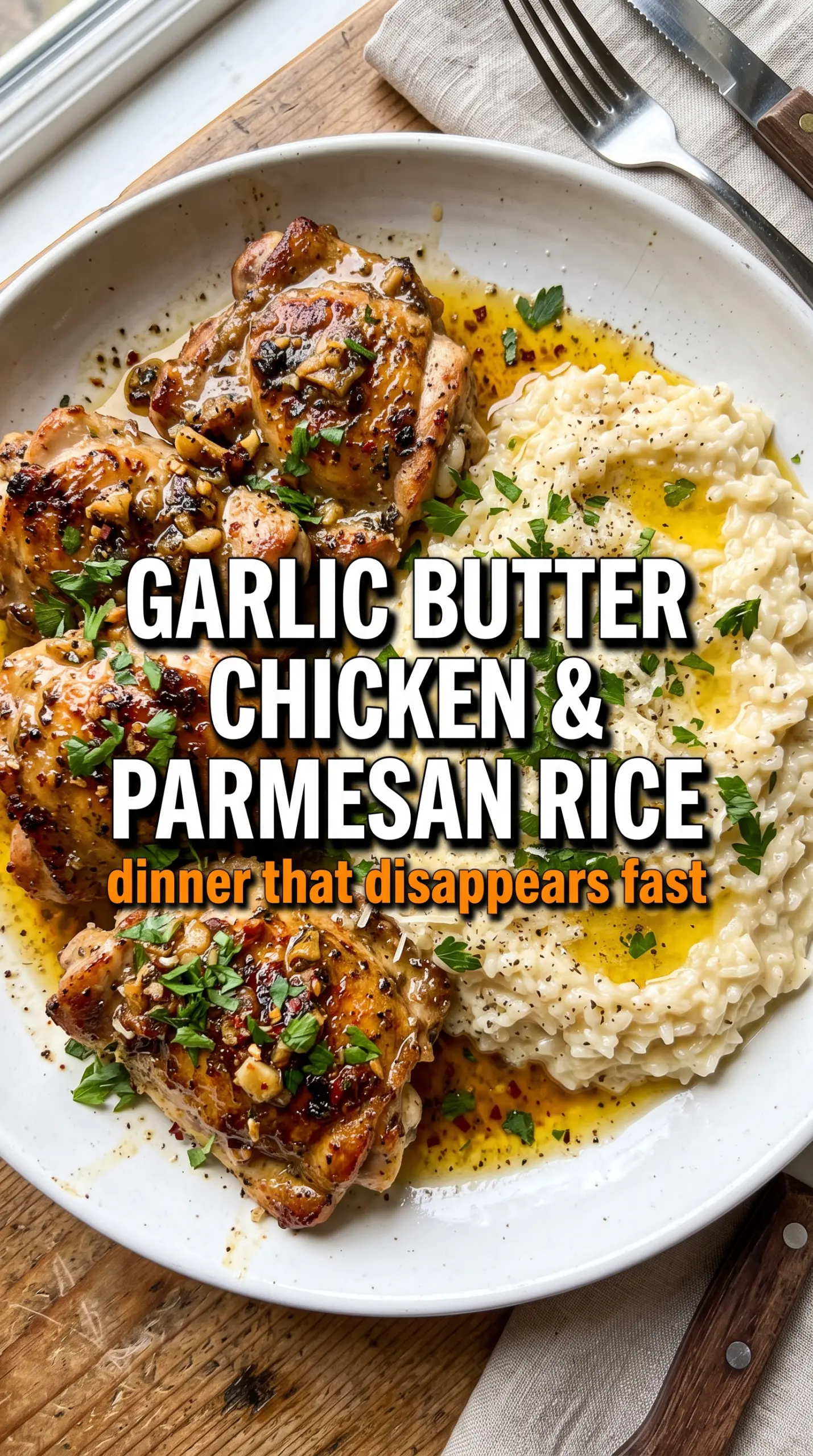
- Boneless skinless chicken thighs — Thighs stay juicier than breasts in a skillet like this, especially since they go back into the rice at the end. If you swap in chicken breasts, cut them thinner so they cook through before the rice finishes.
- Long-grain white rice — Long-grain rice holds its shape and soaks up the broth without turning gluey. Short-grain rice will make the finished dish much softer and more risotto-like.
- Parmesan cheese — Use finely grated Parmesan that melts cleanly into the rice. Pre-shredded cheese can leave the sauce a little sandy because of the anti-caking coating.
- Heavy cream — This gives the rice its silky finish without thinning out the flavor. Half-and-half can work in a pinch, but the sauce will be looser and less rich.
- Garlic and butter — These carry the whole dish. The garlic flavors both the chicken and the rice, and the butter helps the rice toast and the sauce turn glossy at the end.
How to Keep the Chicken Juicy and the Rice Creamy in the Same Pan
Seasoning and Searing the Chicken
Season the chicken well before it hits the pan so the surface starts tasting like something instead of plain meat. When the oil is hot, lay the thighs down and leave them alone until they release easily and the first side is a deep golden brown. If the pan is crowded or the heat is too low, the chicken steams and you lose that crust, which is the flavor base for the whole dish. Pull the chicken once it reaches 165°F and set it aside while you build the rice.
Toasting the Rice in Garlic Butter
Melt the butter in the same skillet, then cook the garlic just until fragrant, not browned. Add the rice and stir for a couple of minutes so every grain gets coated in fat. That quick toast keeps the rice from going soft too early and gives the final dish a more defined texture. If the garlic starts to brown hard, the rice will pick up a bitter edge, so keep the heat moderate.
Simmering Until the Liquid Disappears at the Right Pace
Pour in the broth, bring it up to a boil, then drop the heat low and cover the pan. The rice should simmer quietly, not bubble aggressively, or the bottom can scorch before the top is done. After about 18 minutes, the grains should be tender and the liquid mostly absorbed. If there’s still a little broth left, give it another minute or two with the lid on before you stir.
Finishing with Parmesan and Cream
Stir in the Parmesan, cream, and thyme after the rice has cooked. Adding dairy too early can make the sauce separate or turn the rice heavy before it’s finished absorbing liquid. Once it looks creamy and loose, nestle the chicken back into the skillet so it warms through and picks up the sauce. A final scatter of parsley lifts the richness and keeps the plate from looking flat.
How to Adapt This for a Different Pan, a Different Diet, or a Bigger Appetito
Use chicken breasts instead of thighs
Chicken breasts work if that’s what you have, but they dry out faster than thighs. Pound them to an even thickness and reduce the sear time a little so they finish tender, then return them to the rice only long enough to warm through.
Make it gluten-free without changing the texture
This recipe is naturally gluten-free as long as your broth is certified gluten-free. The texture doesn’t need any other adjustment, which makes this a straightforward one-pan dinner for that kind of meal plan.
Swap the cream for a lighter finish
Half-and-half can stand in for the heavy cream if you want a lighter sauce, but it won’t coat the rice quite as richly. Add it off the heat and stir gently so it blends without thinning the Parmesan too much.
Add vegetables without watering down the rice
Stir in cooked peas, spinach, or steamed broccoli at the very end so they warm through without releasing extra liquid into the rice. Raw vegetables tossed in too early can throw off the broth ratio and leave you with a watery pan.
Storage and Reheating
- Refrigerator: Store leftovers in an airtight container for up to 4 days. The rice will firm up as it chills, but it still reheats well.
- Freezer: You can freeze it, though the rice softens a bit after thawing. Cool it completely, pack it tightly, and freeze for up to 2 months.
- Reheating: Warm it gently on the stove or in the microwave with a splash of broth or water. The biggest mistake is blasting it over high heat, which dries out the chicken and turns the rice pasty before the center is hot.
Answers to the Questions Worth Asking

Garlic Butter Chicken with Parmesan Rice
Ingredients
Equipment
Method
- Season the chicken thighs with salt, black pepper, garlic powder, and smoked paprika to taste. Heat olive oil in a large skillet over medium-high heat until shimmering and lay chicken in the pan.
- Sear chicken for 5-6 minutes per side, until deeply golden and cooked through to 165°F. Remove chicken to a plate and rest while you cook the rice.
- Melt butter in the same skillet over medium heat. Cook the minced garlic for 1 minute, stirring, until fragrant and lightly golden.
- Add the long-grain white rice and toast for 2 minutes, stirring to coat and lightly dry-roast the grains. This helps the rice absorb flavor as it simmers.
- Pour in the chicken broth and bring to a boil. Cover, then simmer over low heat for 18 minutes until the rice is tender.
- Stir in Parmesan cheese, heavy cream, and dried thyme until the rice becomes creamy and saucy. Scrape any browned bits from the bottom to fold into the sauce.
- Return the chicken to the pan, nestling it into the Parmesan rice so the edges absorb the pan drippings. Simmer gently for 2-3 minutes to warm the chicken through.
- Garnish with fresh parsley and serve immediately. Spoon extra creamy rice around each chicken thigh.