Rigatoni coated in ranch-kissed cream sauce is the kind of dinner that disappears fast, especially when crispy bacon and shredded chicken get folded through every bite. The sauce clings to the pasta instead of pooling at the bottom of the bowl, and the cheddar gives it that thick, spoon-coating finish people expect from a proper comfort pasta.
What makes this version work is the order of operations. The ranch seasoning gets a chance to bloom in the hot cream and broth before the cheese goes in, which keeps the sauce from tasting flat. Using a sturdy pasta like rigatoni or penne matters too, because those tubes catch the bacon, chicken, and sauce in a way long noodles never quite do.
Below, I’m breaking down the part that keeps the sauce silky, the ingredient choices that actually matter, and the small fixes that help if your pasta feels too thick or the cheese doesn’t melt cleanly.
The sauce thickened up exactly right and coated the rigatoni without getting gluey. I added the pasta water at the end like you suggested, and it made the whole dish taste like it came from a restaurant.
Like this creamy chicken bacon ranch pasta? Save it for the nights when you need a thick, cheesy skillet dinner with barely any cleanup.
The Trick to Keeping the Sauce Thick Instead of Gritty
Most creamy pasta goes wrong when the cheese hits a sauce that is too hot. The proteins tighten, the fat separates, and you end up with a grainy coating instead of a smooth one. Here, the cream and broth simmer first, the ranch seasoning hydrates in that liquid, and the heat comes down just enough before the cheddar and parmesan go in.
The pasta water matters too. If the sauce looks too tight after you toss in the pasta, a splash of starchy water loosens it without thinning the flavor. That starch helps the sauce stay glossy and attached to the noodles instead of sliding off.
What Each Ingredient Is Actually Doing in This Pasta
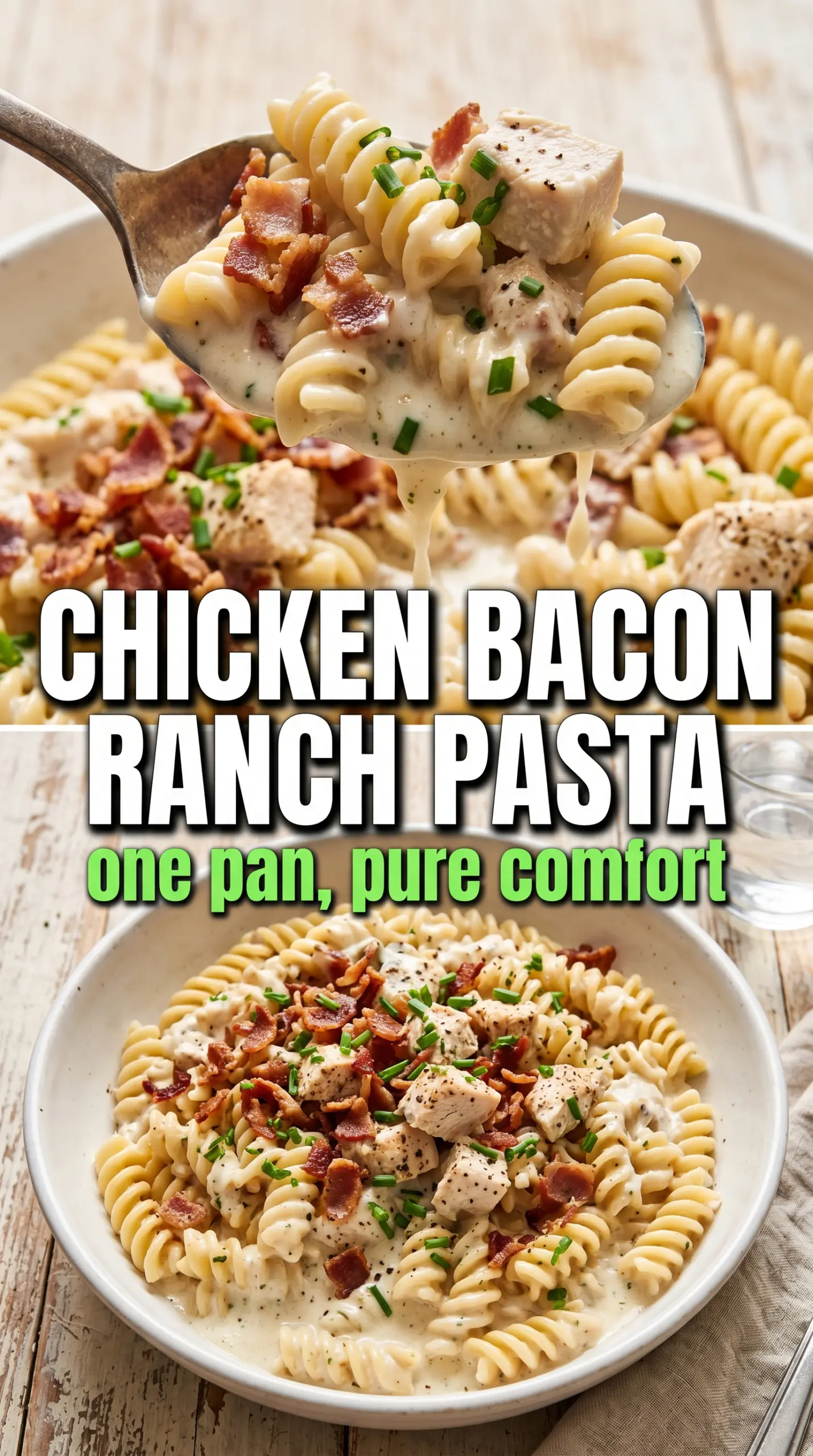
- Rigatoni or penne — You want a pasta with ridges and a shape that traps sauce inside. Long noodles won’t hold the bacon and chicken as well, and the dish feels less substantial.
- Heavy cream — This is what gives the sauce its body. Half-and-half will work in a pinch, but it won’t coat the pasta as richly or hold up as well once the cheese melts in.
- Chicken broth — It keeps the sauce from turning overly heavy and gives the ranch seasoning something savory to bloom into. If you use all cream, the dish gets thicker but flatter.
- Sharp cheddar and parmesan — Cheddar brings the melt and the familiar cheesy pull; parmesan adds salt and depth. Pre-shredded cheddar works, but block cheese melts smoother because it doesn’t carry the anti-caking starch that can make sauce a little pasty.
- Bacon — Cook it until crisp enough to crumble cleanly. If it stays chewy, it softens in the sauce instead of giving you those salty little pops of texture on top.
- Ranch seasoning — This is the shortcut that makes the whole dish taste like ranch pasta instead of plain cream sauce. The packet has herbs, onion, and garlic already balanced, so it needs only a short simmer to lose that raw powdery edge.
Building the Pasta So the Sauce Stays Smooth
Cooking the Pasta Right First
Boil the pasta in well-salted water and stop at al dente, because it finishes cooking once it meets the hot sauce. Reserve some pasta water before you drain it; that starchy liquid is the easiest way to fix a sauce that tightens up too much. If you rinse the pasta, the sauce won’t cling the same way.
Starting the Sauce in the Same Pot
Use the same pot after the pasta comes out. Sauté the garlic for just a minute until fragrant, not browned, then add the cream and broth and let them come to a gentle simmer. If the garlic gets dark, it turns bitter and you’ll taste it all the way through the finished pasta.
Melting in the Cheese Without Breaking It
Lower the heat before the cheddar and parmesan go in. Stir until the sauce turns smooth and glossy, then add the pasta and chicken while the burner stays at a low simmer or even off the heat. High heat is the fastest way to make a sauce look oily instead of creamy.
Finishing With Bacon and Chives
Toss in the chicken until it’s warmed through and everything is coated. If the sauce seems too thick, add pasta water a splash at a time until it loosens enough to move freely through the rigatoni. Top with bacon and chives right before serving so the bacon stays crisp and the herbs stay fresh.
How to Adapt This for a Lighter Bowl or a Bigger Crowd
Use rotisserie chicken for the fastest version
Rotisserie chicken saves time and gives you seasoned meat that folds into the sauce quickly. Shred it small so it warms through without leaving big dry chunks in the pasta.
Make it gluten-free without changing the flavor much
Use a sturdy gluten-free pasta made from rice or corn, and cook it just shy of done so it doesn’t turn soft in the sauce. The sauce itself stays naturally gluten-free as long as your ranch seasoning packet doesn’t contain wheat-based fillers.
Swap the bacon for a lighter smoky finish
Turkey bacon works if you want less richness, though it won’t give the same crisp, salty bite. A small pinch of smoked paprika can help replace some of the smoky note bacon usually brings.
Stretch it for more servings
Add an extra half pound of pasta and a splash more broth if you need to feed a bigger crowd. The sauce should still coat the noodles, so loosen it gradually instead of dumping in extra liquid all at once.
Storage and Reheating
- Refrigerator: Store in an airtight container for up to 4 days. The sauce thickens as it chills, so expect it to look a little tighter the next day.
- Freezer: It freezes, but the cream sauce can separate a bit on thawing. Freeze only if needed, and thaw overnight in the fridge before reheating gently.
- Reheating: Warm it on the stove over low heat with a splash of broth or milk, stirring often. Microwaving on high tends to make the cheese oily and the pasta dry at the edges.
Questions I Get Asked About This Recipe

Creamy Chicken Bacon Ranch Pasta
Ingredients
Equipment
Method
- Cook rigatoni or penne pasta in salted boiling water until al dente, then reserve 1/2 cup pasta water and drain.
- Keep the pasta water handy so you can loosen the sauce to a glossy coating consistency later.
- In the same pot over medium heat, sauté minced garlic for 1 minute, stirring until fragrant and not browned.
- Add heavy cream and chicken broth, bring to a simmer, and keep it at a steady gentle bubble.
- Stir in ranch seasoning mix and simmer for 3–4 minutes until slightly thickened, with a creamy look that coats a spoon.
- Reduce heat to low and add shredded sharp cheddar and grated parmesan, stirring until fully melted and smooth.
- Return drained pasta to the pot and add shredded cooked chicken, then toss to coat until the pasta is evenly slick with sauce.
- If needed, add reserved pasta water a splash at a time to loosen the sauce so it clings to the pasta tubes.
- Top the pasta with crumbled bacon and fresh chives and serve immediately.