Garlic Parmesan Chicken Skewers come off the grill with charred edges, juicy centers, and a buttery parmesan coating that clings to every bite. The chicken gets enough surface heat to pick up color, but the real payoff happens at the end when the warm skewers get brushed with garlic parmesan butter while they’re still hot. That’s what gives you the glossy finish and the salty, savory crust that makes people keep reaching for another piece.
This version works because the chicken is cut into even cubes and given a short marinade before it hits the heat. Olive oil carries the garlic and spices across the surface, while smoked paprika adds a little depth without turning the skewers heavy. The finishing butter is mixed separately, which keeps the parmesan from burning on the grill and lets it melt into the chicken instead of disappearing into the grates.
Below, I’ll walk through the small details that matter here: how to keep the chicken from drying out, why the skewering gap matters, and how to get the butter on at exactly the right moment so it melts into a coating instead of sliding off.
The chicken stayed juicy and the parmesan butter clung to every skewer instead of dripping off. I grilled them for about 6 minutes per side and the edges got that perfect char without drying out.
Save these garlic parmesan chicken skewers for the nights when you want juicy grilled chicken with a buttery parmesan finish.
The trick is finishing with butter, not grilling with it
Parmesan looks like it should go on the grill from the start, but that’s the fastest way to lose half of it to the grates. The cheese belongs in the finishing butter, where it melts into the hot surface of the chicken instead of scorching. That’s the difference between a coating that tastes rich and one that tastes bitter.
The other common mistake is crowded skewers. Leave a little space between each cube so the hot air can move around the chicken and the edges can char instead of steam. If the pieces are pressed tight together, the outside goes pale and the center takes longer than it should.
- Even chicken cubes — Cut the chicken breast into similar-size pieces so they cook at the same pace. Bigger chunks stay underdone in the middle while smaller ones dry out.
- Smoked paprika — This adds a grilled, savory note even if you’re cooking on a grill pan indoors. Sweet paprika works in a pinch, but the smoke note gives the skewers more depth.
- Freshly grated parmesan — Pre-grated cheese doesn’t melt as smoothly and can taste dusty. Freshly grated parmesan melts into the butter and clings to the chicken much better.
- Olive oil marinade — The oil helps the seasoning stick and keeps the chicken from drying out on the grill. Don’t skip the 30-minute rest; it gives the garlic and spices time to settle into the surface.
What each ingredient is actually doing in these skewers
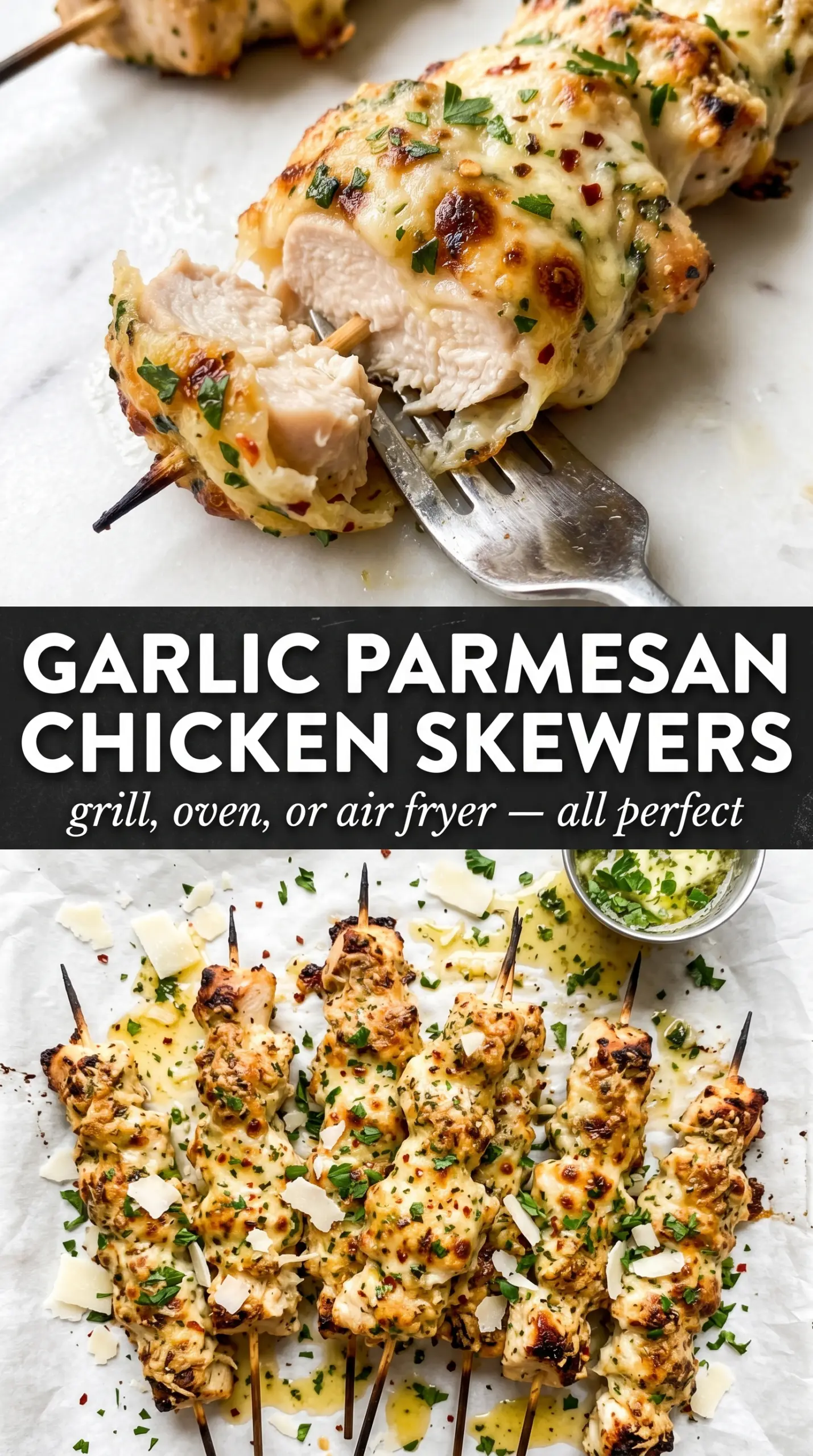
The chicken breast is the base here because it cooks fast and picks up the garlic parmesan coating cleanly. It needs to be cut into even 1.5-inch cubes; smaller pieces dry out before the grill marks develop, and bigger ones take too long to cook through.
Butter and parmesan are the finish that makes this recipe feel complete. Butter carries the garlic and helps the cheese melt into a glossy coating, while parmesan gives the salty edge that sticks to the hot chicken. If you need a lighter swap, use ghee instead of butter, but the flavor will be a little less rich and the parmesan won’t feel quite as lush.
Garlic shows up twice for a reason. The raw garlic in the marinade seasons the chicken early, and the garlic in the finishing butter gives you that fresh, warm hit right at the end. Using it in both places keeps the flavor from disappearing during grilling.
Getting the char without drying out the chicken
Building the marinade
Stir the olive oil, minced garlic, Italian seasoning, smoked paprika, salt, and pepper together before adding the chicken. The oil should coat every piece in a thin sheen, not pool at the bottom of the bowl. If the chicken sits in a dry pocket of seasoning, parts of it will taste under-seasoned once it hits the grill.
Threading the skewers
Leave a small gap between each piece of chicken so the heat can reach all sides. Pack them too tightly and the centers steam while the outside waits for color. Metal skewers work well, but wooden skewers need a soak first or the exposed ends will scorch before the chicken finishes.
Grilling to the right point
Preheat the grill or grill pan to medium-high before the chicken goes on. You want a steady sizzle the second the skewers touch the surface. Cook for 5 to 6 minutes per side, turning once, until the edges are charred and the center reads 165°F. If the outside is browning too fast, move the skewers to a slightly cooler spot instead of lowering the heat so much that you lose the sear.
Finishing while the chicken is hot
Mix the melted butter, garlic, parmesan, and parsley while the skewers finish cooking, then brush it on immediately after the chicken comes off the heat. The residual heat melts the cheese into the butter and helps it cling. If you wait too long, the butter sets up and the coating turns patchy instead of glossy.
How to adapt these skewers for different grills, diets, and dinner plans
Dairy-free version with the same grilled finish
Swap the butter for olive oil or ghee if dairy is the problem, but skip the parmesan only if you need to. Nutritional yeast can stand in for some of the savory finish, though it won’t melt the same way. The result is still garlicky and rich, just less creamy on the surface.
Use chicken thighs for a juicier bite
Boneless skinless thighs work well if you want more forgiving chicken and a little more flavor. They usually need another minute or two on the grill because they’re a bit thicker and richer than breast meat. The marinade and butter still work the same way, but the finished skewers will feel more succulent.
Oven broiler version when you can’t grill outside
Set the skewers on a foil-lined sheet pan and broil them a few inches from the heat, turning once halfway through. Broilers brown fast, so watch the chicken closely once the edges start to color. Brush on the garlic parmesan butter right after broiling, while the skewers are still hot enough to melt it into the surface.
Make-ahead for a fast dinner
You can marinate the chicken up to 8 hours ahead, which makes this an easy weeknight move. Don’t leave it in the garlic oil overnight, or the texture can turn a little soft around the edges. Thread the skewers just before grilling so the pieces stay neat and cook evenly.
Storage and Reheating
- Refrigerator: Store leftovers in an airtight container for up to 3 days. The parmesan coating softens a bit, but the chicken stays flavorful.
- Freezer: Freeze the cooked chicken off the skewers for up to 2 months. Wrap it well so the garlic butter doesn’t pick up freezer odors.
- Reheating: Warm gently in a 325°F oven or in a covered skillet over low heat. High heat dries out the chicken fast and can make the parmesan turn oily.
Answers to the questions worth asking

Garlic Parmesan Chicken Skewers
Ingredients
Equipment
Method
- Combine olive oil, garlic, Italian seasoning, smoked paprika, salt, and black pepper in a bowl, then add the chicken cubes and toss to coat.
- Marinate the chicken for at least 30 minutes until the cubes look evenly seasoned and lightly slick with oil.
- Thread the marinated chicken onto skewers, leaving a small gap between each piece so they cook through evenly.
- Preheat grill or grill pan to medium-high, then cook the skewers for 5–6 minutes per side until the chicken is cooked through and charred at the edges.
- Mix melted butter with garlic, parmesan cheese, and fresh parsley to make the finishing sauce, stirring until the parmesan is distributed.
- Brush the warm skewers generously with garlic parmesan butter immediately after removing from the grill so the sauce glistens and clings to the charred surfaces.
- Serve with extra parmesan and fresh parsley on top for a visible parmesan crust across each skewer.