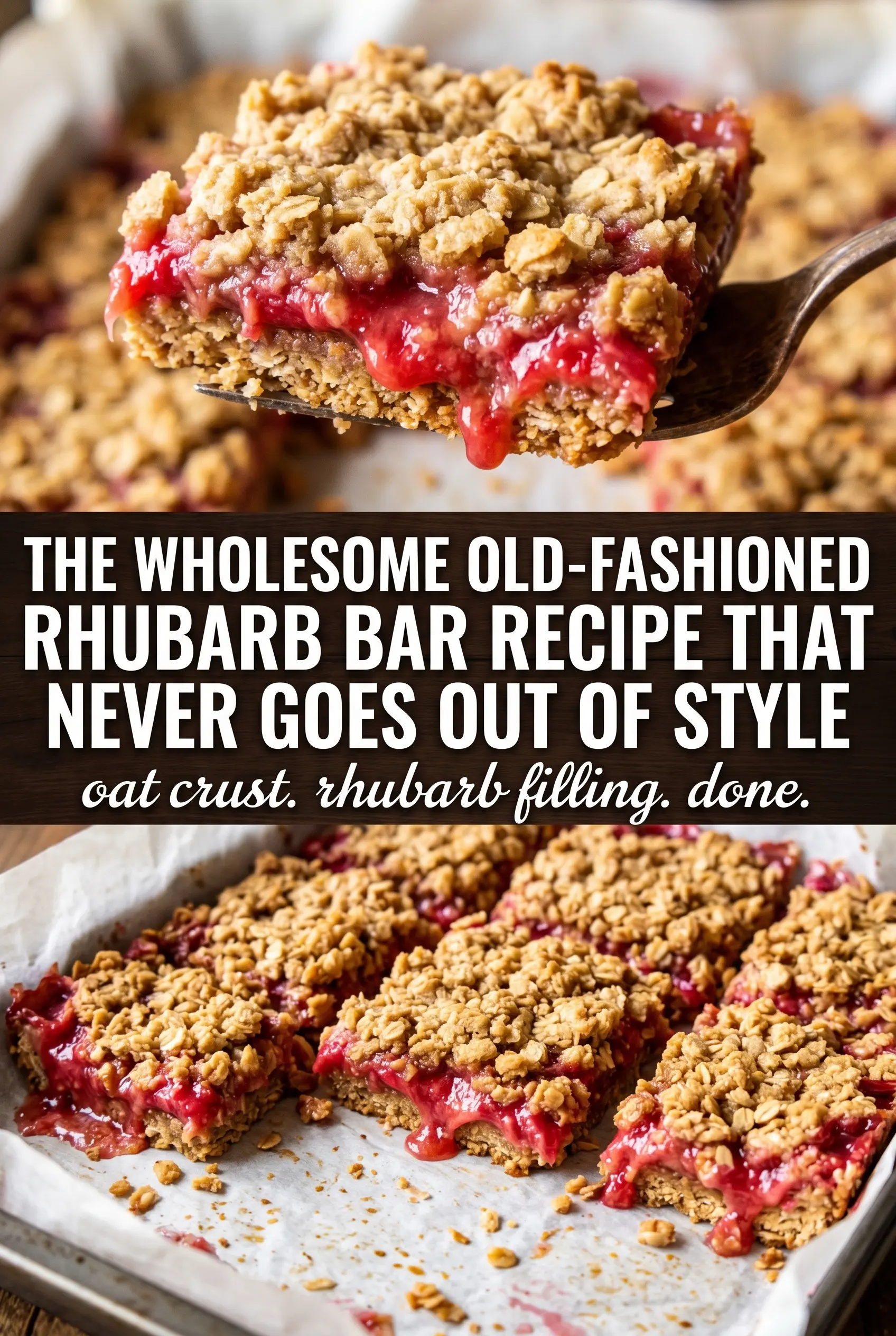
Thick rhubarb filling tucked between buttery oat layers gives these bars the kind of sweet-tart bite that disappears fast from a dessert plate. The bottom bakes up sturdy enough to hold the jammy center, while the top stays crumbly and golden instead of turning dry or hard.
What makes this version work is the way the filling gets cooked before it ever hits the pan. Rhubarb needs that head start with sugar, cornstarch, and water so it turns glossy and thick instead of leaking into the crust. Melted butter also matters here, since it coats the oats and flour evenly and gives the topping that sandy, pressable texture you want.
Below, I’ve included the timing that keeps the bars neat when you cut them, plus a few swaps and storage notes in case your rhubarb is especially tart or you want to make them a day ahead.
The rhubarb layer thickened up beautifully and didn’t soak into the crust. I waited until it was completely cool to cut, and the bars came out clean with those perfect crumbly edges.
Love a thick rhubarb center and buttery oat crumble? Save these Amish Oatmeal Rhubarb Bars for the next time you want a neat, sliceable dessert with a sweet-tart middle.
The Part That Keeps the Crust From Going Soggy
These bars live or die by the filling. Rhubarb throws off a lot of juice as it heats, and if that juice goes into the pan raw, it soaks the bottom crust before the oven has a chance to set it. Cooking the filling first with cornstarch gives you a thick layer that stays put and slices cleanly once cooled.
The other thing that matters is the butter. Melted butter coats the oats and flour fast, which gives you a crumb that presses into a firm base and then browns into a craggy topping. If the mixture looks dusty and won’t clump, it needs a little more mixing; if it looks greasy, the butter was too hot and the oats will bake up heavy instead of crumbly.
What Each Ingredient Is Actually Doing Here
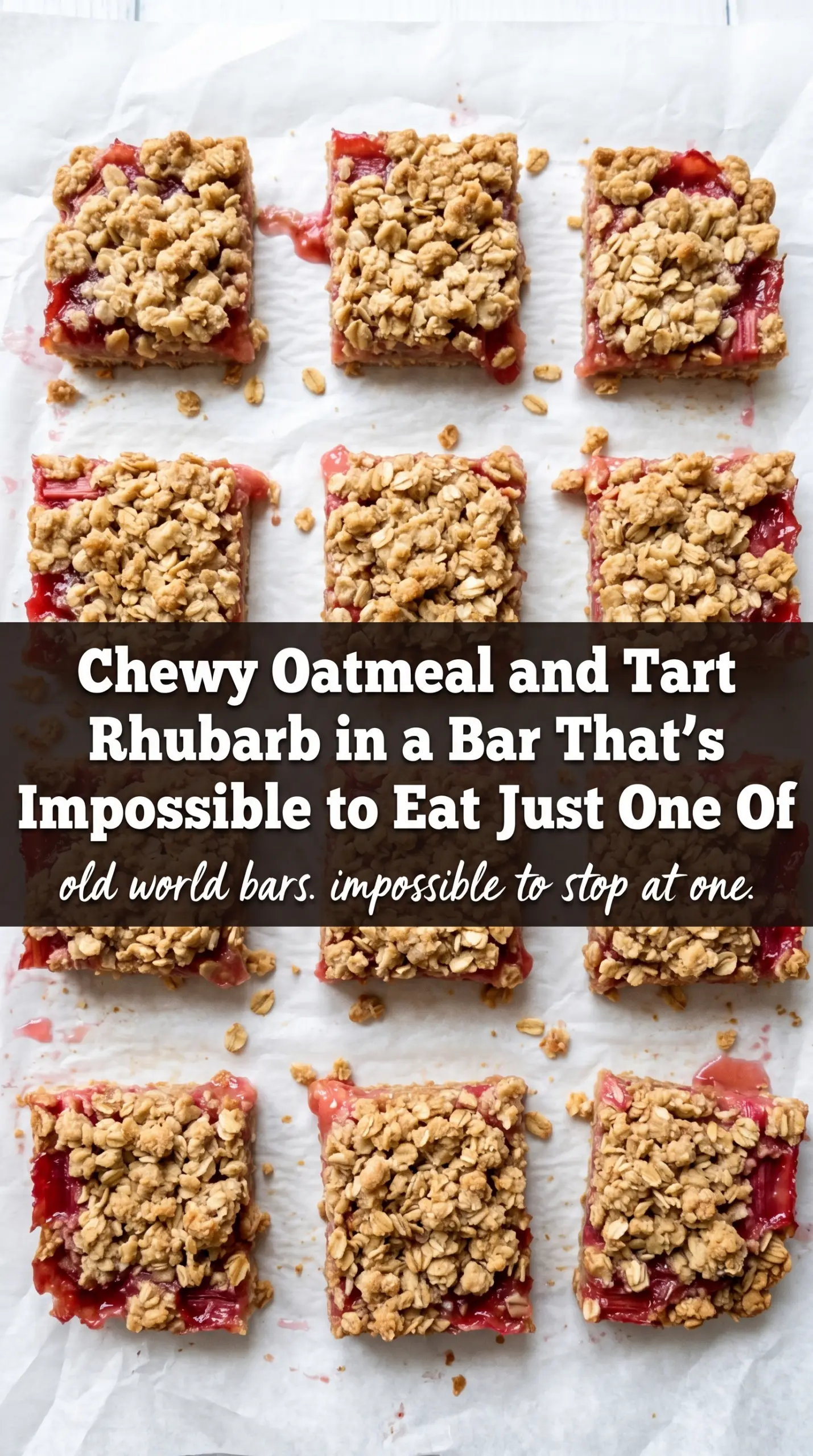
- Old-fashioned oats — These give the bars their chewy, rustic texture. Quick oats turn softer and can make the topping feel pasty, so stick with rolled oats if you want those distinct crumb layers.
- Brown sugar — This does more than sweeten. It melts into the butter and helps the crust bake with a caramel note that plays well against rhubarb’s sharp edge.
- Rhubarb — Fresh rhubarb gives the best texture because it softens into tender pieces instead of turning watery. If yours is especially thin or pale, the flavor will be milder, but the cornstarch filling still sets the same way.
- Cornstarch — This is what makes the filling sliceable. Flour won’t thicken as cleanly here, and you’ll lose that glossy, jam-like middle.
- Butter, melted — Melted butter helps bind the oat mixture without needing a mixer. If you use softened butter instead, the crust can bake up unevenly and the topping won’t crumble the same way.
Building the Layers So They Cut Cleanly
Mixing the Oat Crumble
Stir the flour, oats, brown sugar, baking soda, and salt together first so the leavening is evenly distributed. Then pour in the melted butter and work it through until the mixture looks like damp sand with some larger clumps. Those clumps matter because they bake into the golden, craggy top; if everything turns into paste, the bars lose that layered texture.
Cooking the Rhubarb Filling
Combine the rhubarb, sugar, cornstarch, water, and vanilla in a saucepan and cook over medium heat until the mixture turns thick and glossy, about 10 minutes. It should bubble and then tighten up enough to mound slightly on a spoon. If you stop too early, the filling will spread thin and leak into the crust; if you blast it over high heat, the sugar can scorch before the cornstarch finishes working.
Layering and Baking
Press half of the oat mixture into the pan in an even layer, then spread the hot filling over the top and scatter the remaining crumbs over that. The base should feel compact under your fingers, not loose, or it will break apart when you slice the bars. Bake until the top is deep golden and the filling is bubbling at the edges, which tells you the center has heated through and the cornstarch has fully set.
Cooling Before the Cut
Let the pan cool completely before you lift out the bars. Warm rhubarb filling stays soft for a long time, and cutting too early gives you messy edges even if the bars taste great. For the cleanest slices, let them cool for at least an hour, then use a sharp knife wiped clean between cuts.
How to Adjust These Bars Without Losing the Texture
Strawberry Rhubarb Version
Swap 1 to 2 cups of the rhubarb for chopped strawberries. The filling gets sweeter and a little softer, so keep the cornstarch as written and cook until it looks thick rather than runny. This version loses a little of rhubarb’s sharp bite, but it gives you a brighter, more familiar fruit layer.
Gluten-Free Oat Bars
Use a cup-for-cup gluten-free flour blend in place of the all-purpose flour, and confirm your oats are certified gluten-free. The texture stays close to the original, though the crust may be a touch more delicate when sliced. Cooling fully becomes even more important here so the layers can firm up.
Less-Sweet Filling
Drop the filling sugar by 1/4 cup if your rhubarb is tender and not overly tart. The bars will taste sharper and a little more grown-up, but the cornstarch still does the setting work. Don’t cut the sugar much further or the filling can taste flat and the fruit won’t have enough body.
Storage and Reheating
- Refrigerator: Store covered for up to 5 days. The oats soften a little over time, but the bars still hold their shape well.
- Freezer: They freeze well. Wrap the cooled bars tightly, then freeze in a single layer before moving them to a container; thaw in the fridge so the filling doesn’t weep.
- Reheating: These are best at room temperature, not warm. If you want to take the chill off frozen bars, let them thaw slowly instead of microwaving, which can make the filling loose and the topping greasy.
Answers to the Questions Worth Asking
Amish Oatmeal Rhubarb Bars
Ingredients
Equipment
Method
- Preheat oven to 350°F and grease a 9x13-inch baking pan so the bars release cleanly.
- In a bowl, combine all-purpose flour, old-fashioned oats, brown sugar, baking soda, and salt, then stir until evenly mixed.
- Pour in melted butter and mix until the mixture becomes crumbly.
- Press half of the oat mixture into the bottom of the prepared pan to form an even base layer.
- In a saucepan, combine rhubarb, sugar, cornstarch, water, and vanilla extract.
- Cook over medium heat for about 10 minutes, stirring, until thickened and glossy (visual cue: it should mound slightly on the spoon).
- Spread the rhubarb filling over the pressed crust in an even layer.
- Sprinkle the remaining oat mixture on top to create the crumble layer.
- Bake at 350°F for 35-40 minutes until golden brown, with crisp-looking edges (visual cue: the top should feel set when tapped).
- Cool completely before cutting into bars so the filling firms up and slices hold together.