Sticky rhubarb pudding hits that sweet spot between a tender sponge cake and a warm sauce-soaked dessert. The crumb stays moist without turning heavy, and the rhubarb brings enough sharpness to keep every bite from leaning too sweet. When the toffee sauce sinks into the warm cake and pools around the edges, the whole thing turns into the kind of dessert people go back to with a spoon for “just one more bite.”
The trick is keeping the batter light and not overworking it once the flour goes in. Buttermilk gives the sponge a gentle tang and helps the cake stay soft, while the rhubarb bakes down into little pockets of tartness that cut through the brown sugar. The sauce needs a short simmer only; if you push it too long, it gets sticky instead of pourable, and this pudding wants something that can soak in.
Below you’ll find the timing that keeps the sponge tender, the best way to get the sauce into every crack, and a few smart swaps if your rhubarb is especially sour or you need a dairy-free version.
The sponge came out so tender and the toffee sauce soaked in beautifully without turning the middle gummy. I served it warm with vanilla ice cream and everyone asked for seconds.
Save this baked sticky rhubarb pudding for the nights when you want a soft sponge, tart fruit, and a pour-over toffee sauce.
The Part That Keeps the Pudding Soft Instead of Dense
The most common mistake with a pudding like this is treating it like a quick bread and beating the batter too hard once the flour goes in. That builds structure you don’t want. You want a cake that can drink in sauce, not one that fights it.
Rhubarb also needs a light hand. Dice it small enough that it softens in the oven, but not so small that it disappears. If the pieces are too large, you’ll get sharp, undercooked bites; if they’re too fine, they can water down the sponge and leave the center a little pasty.
- Buttermilk — This is what keeps the crumb tender and gives the sponge a little lift alongside the baking soda. If you don’t have it, use milk with a small spoonful of lemon juice or vinegar and let it sit for 5 minutes.
- Brown sugar — Use it in both the cake and the sauce. The molasses note gives the pudding that deeper British-style warmth that white sugar can’t replace.
- Fresh rhubarb — Fresh is worth it here because you want the fruit to hold its shape as it bakes. Frozen rhubarb works in a pinch, but don’t thaw it first or you’ll add extra liquid to the batter.
- Heavy cream — It gives the sauce body and a silky finish. Half-and-half works, but the sauce will be thinner and a little less luxurious.
What Each Ingredient Is Actually Doing in Soft Rhubarb Pudding
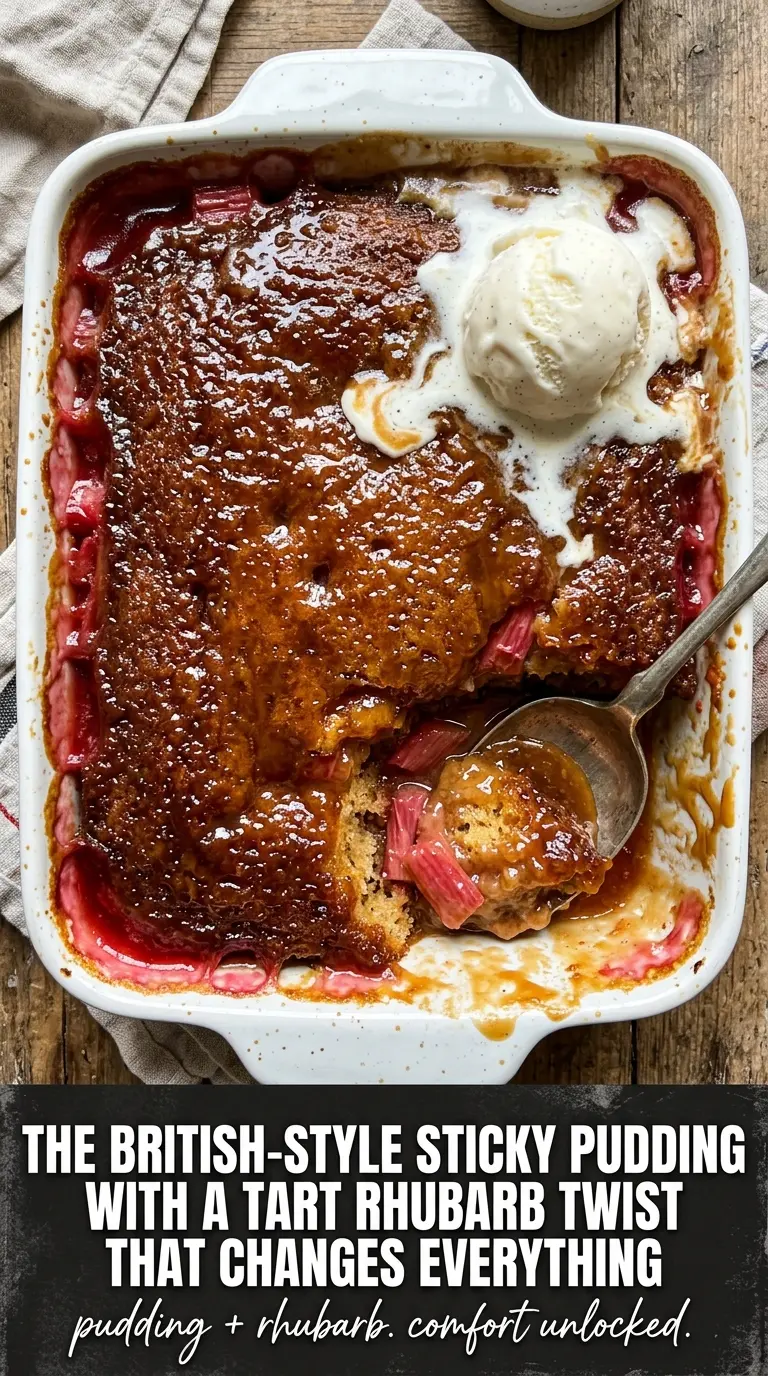
- Rhubarb puree (smooth or chunky) — The rhubarb should be cooked until soft and easy to blend. This creates a smooth texture for the pudding.
- Sugar for sweetness — The sugar balances the tartness and helps the pudding feel lush and creamy. Don’t reduce it or the pudding tastes thin.
- Milk or cream base — A creamy base makes the pudding soft and rich. The ratio of cream to other ingredients affects the final texture.
- Cornstarch or tapioca (for thickening) — Just enough thickener creates a soft, spoonable pudding. Too much makes it dense and starchy.
- Eggs (if using a custard base) — Eggs help create a soft, custardy texture. They need to be tempered so they don’t scramble.
- Vanilla or almond extract — These add flavor and help the pudding taste more complex. They also soften the raw rhubarb flavor.
- Cooling to room temperature before chilling — Let the pudding cool to room temperature first so it doesn’t create a skin. Then chill until serving.
- Whipping or stirring while cooling (optional) — For an extra-soft mousse-like texture, whip the pudding as it cools. This creates air and lightness.
Getting the Sauce to Soak In Without Turning the Top Mushy
Mix the Batter Just Until It Comes Together
Cream the butter and brown sugar until the mixture looks fluffy and a little paler, then add the eggs one at a time so the batter stays smooth. Once the flour mixture and buttermilk start going in, stop as soon as you no longer see dry streaks. Overmixing here makes the crumb tight, and a tight crumb won’t absorb the sauce evenly.
Fold in the Rhubarb Last
Stir the diced rhubarb in at the end so it stays in distinct pieces instead of breaking down into the batter. Scrape the batter into the greased dish and level it gently; don’t pack it down. A rough, airy surface gives the sauce little channels to run into later.
Bake Until the Center Springs Back
Bake until the top is set and lightly golden and a toothpick in the center comes out clean or with only a few moist crumbs. If you pull it too early, the middle collapses when the sauce goes on. If the top gets too dark before the center is done, lay a loose piece of foil over it for the last 10 minutes.
Pour the Sauce Over While Everything Is Warm
Simmer the sauce for just 5 minutes, until it thickens slightly and looks glossy. Poke holes all over the warm pudding, then spoon about half the sauce over the top so it sinks in instead of sitting on the surface. Save the rest for serving; that contrast between soaked cake and extra sauce on the plate is what makes the dessert feel complete.
Make It Dairy-Free
Use a plant-based butter in both the pudding and sauce, and swap the buttermilk for unsweetened non-dairy milk mixed with 1 teaspoon vinegar. Coconut cream can replace heavy cream, but it will add a faint coconut note and make the sauce a little richer and thicker.
Frozen Rhubarb Works, but Handle It Carefully
You can use frozen rhubarb straight from the freezer. Don’t thaw it first or it will leak too much juice into the batter and make the pudding heavier in the middle. Toss it straight into the batter and expect a slightly more pudding-like texture around the fruit.
Turn It Into Individual Puddings
Divide the batter among buttered ramekins and cut the bake time down to about 22 to 28 minutes. The edges should be set and the centers just springy. Individual puddings are especially good if you want more sauce-to-cake ratio on each plate.
Storage and Reheating
- Refrigerator: Store covered for up to 4 days. The sponge will tighten a little, but the flavor stays good.
- Freezer: Freeze the baked pudding without the sauce for up to 2 months. Wrap it well, thaw overnight in the fridge, then warm before adding fresh sauce.
- Reheating: Warm slices in a 300°F oven, covered loosely with foil, until heated through. Microwaving works for a quick fix, but it can make the crumb rubbery if you go too long.
Questions I Get Asked About This Recipe
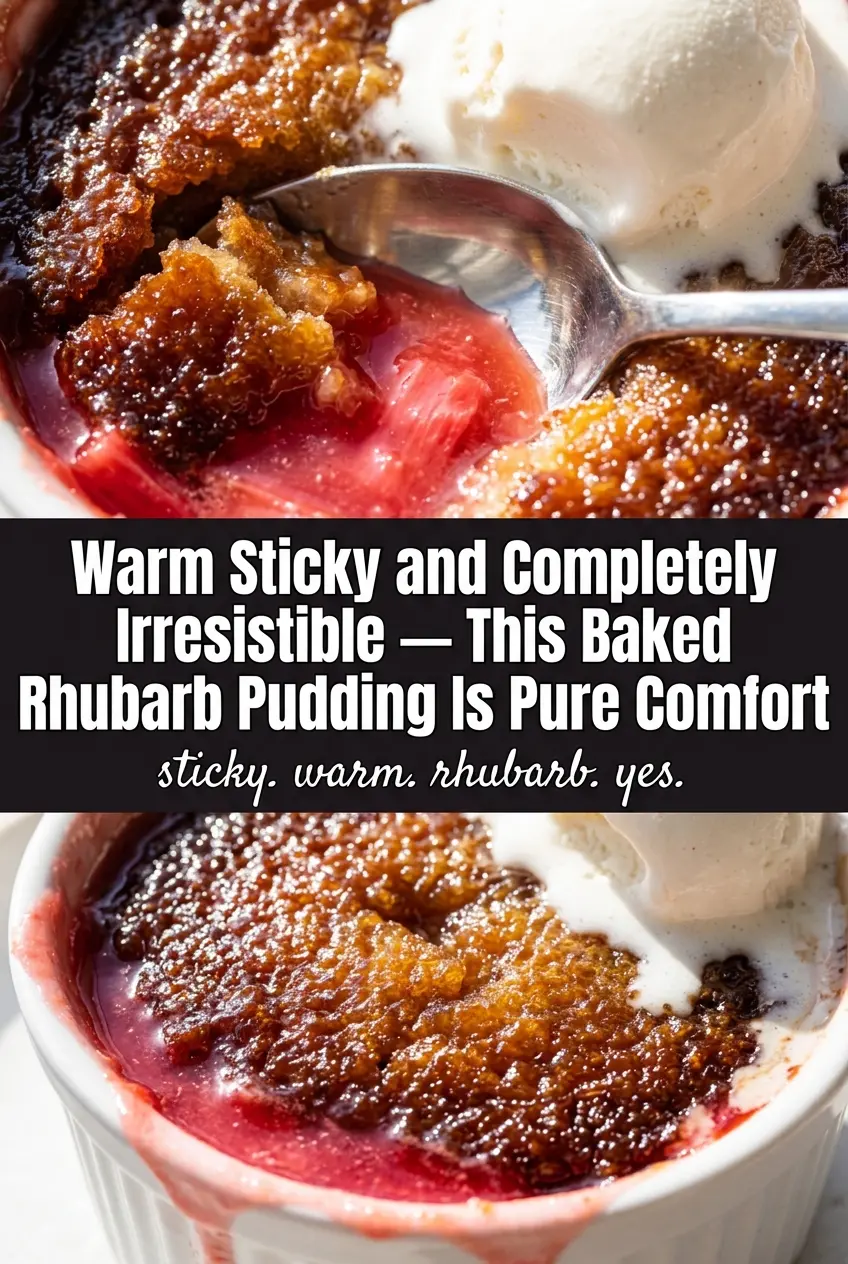
Baked Sticky Rhubarb Pudding
Ingredients
Equipment
Method
- Preheat the oven to 350°F and grease an 8x8-inch baking dish, keeping the dish ready so batter goes in immediately.
- Whisk together all-purpose flour, baking powder, baking soda, and salt until evenly distributed.
- Cream softened butter and brown sugar until fluffy, then beat in eggs and vanilla extract until smooth.
- Add the dry ingredients alternating with buttermilk, mixing just until incorporated so the sponge stays tender.
- Fold in diced fresh rhubarb until the pieces are evenly scattered through the batter.
- Pour the batter into the prepared dish and bake for 35-40 minutes at 350°F until a toothpick comes out clean.
- Let the pudding cool for 10 minutes so it firms up slightly before saucing.
- Combine brown sugar, heavy cream, and butter in a saucepan and simmer for 5 minutes, until the mixture thickens and looks glossy.
- Poke holes in the warm pudding so the sauce can soak down into the sponge.
- Pour half the toffee sauce over the pudding and let it sink in until the top looks coated.
- Serve with the remaining sauce, with vanilla ice cream melted on top if desired.