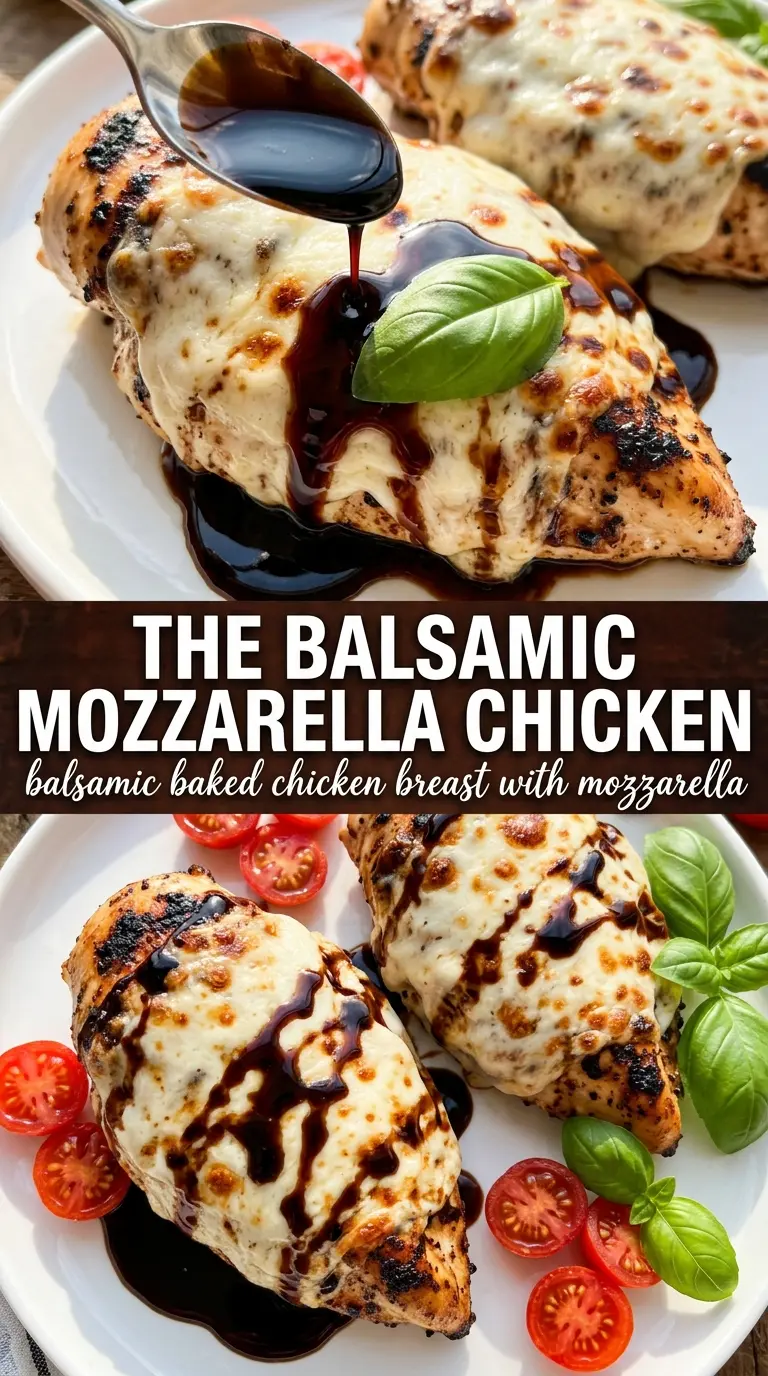
Juicy chicken breasts, a tangy balsamic glaze, and melted mozzarella turn an ordinary chicken dinner into something that tastes like you put in far more effort than you did. The sear gives the chicken a little color before it goes into the oven, and the final layer of cheese, tomatoes, and basil keeps every bite bright instead of heavy.
What makes this version work is the balance in the marinade. Honey softens the sharp edges of the balsamic, Dijon helps the mixture cling to the chicken, and garlic carries through both the pan sauce and the final bake. The chicken finishes in the oven with enough of that marinade to stay flavorful, but not so much that it turns soggy.
Below, I’ve included the one step that keeps the chicken from drying out, plus a few smart swaps if you need to work with what’s already in your kitchen.
The chicken stayed juicy, the balsamic thickened into a glossy glaze, and the mozzarella melted over the top without sliding off. I served it with roasted potatoes and everyone went back for seconds.
Save this balsamic baked chicken breast with mozzarella for a glossy, caprese-style dinner with juicy chicken and melted cheese.
The Step That Keeps Balsamic Chicken Juicy Instead of Dry
The biggest mistake with baked chicken breast is rushing straight into the oven with no color on the outside. That skipped sear leaves the chicken pale and underdeveloped in flavor, and it also makes the final sauce taste flatter than it should. A hot skillet gives you browned edges first, then the oven finishes the inside gently so the breasts stay juicy.
Marinating for just 20 minutes is enough here because the balsamic mixture is doing two jobs at once: seasoning the meat and coating the surface so it browns better in the pan. You don’t need an all-day soak, and you actually don’t want one with enough acid to make the texture mushy.
- Balsamic vinegar — This is the backbone of the dish, so use one you’d actually taste on salad. A harsh, cheap vinegar will read sharp after baking instead of rich and glossy.
- Honey — It softens the acidity and helps the glaze caramelize in the oven. Maple syrup works in a pinch, but it pushes the dish a little sweeter and less classic.
- Dijon mustard — It doesn’t make the dish taste like mustard; it helps the marinade emulsify so the oil and vinegar stay blended long enough to coat the chicken evenly.
- Fresh mozzarella — Use fresh, sliced mozzarella for the best melt and that milky Caprese-style finish. Pre-shredded cheese will melt, but it won’t give you the same soft, creamy top.
- Cherry tomatoes — They add brightness and a little burst of juice right at the end. Halve them so they soften in the oven instead of staying firm and slipping off the chicken.
What Each Ingredient Is Actually Doing in This Recipe
- Primary ingredient (the star) — Quality matters most. Choose the best you can find.
- Cooking medium (oil, butter, or broth) — This carries flavors and prevents dryness.
- Seasonings (salt, pepper, spices, herbs) — Layer flavors so nothing overpowers. Build depth gradually.
- Aromatics (garlic, onion, herbs) — Cook with fat to bloom flavors. Become the foundation.
- Supporting ingredients — Complement the main ingredient without overpowering it.
- Sauce or liquid (if applicable) — Brings flavors together. Balance richness with acid.
- Acid (lemon, vinegar, wine, or other) — Brightens and prevents flat-tasting results.
- Final finish (garnish, glaze, or sauce) — Prevents one-dimensional taste and adds visual appeal.
Building the Pan Sauce, Then Topping It at the Right Time
Mixing the Marinade
Whisk the balsamic vinegar, olive oil, honey, garlic, and Dijon until the mixture looks smooth and slightly thickened. Season the chicken well before it goes in, because the marinade won’t fully replace a proper layer of salt and pepper on the meat itself. Reserve a little marinade before the chicken touches it so you’re not tempted to use contaminated liquid later.
Searing for Color
Heat the oven-safe skillet over medium-high until the oil shimmers, then lay the chicken in without crowding the pan. You want a deep golden crust on each side, not a pale steam-marked surface; if the chicken sticks, leave it alone for another minute and it’ll release once it’s browned. If the pan is too cool, the chicken will leak liquid and stew instead of sear.
Finishing in the Oven
Transfer the skillet to the oven and bake until the thickest part reaches 165°F. Pulling it at the right temperature matters because chicken breast dries out fast once it goes past done, especially after searing. Let the reserved marinade cook around the chicken so it reduces a little instead of pooling watery at the bottom.
Melting the Cheese and Finishing Cleanly
Top the chicken with mozzarella and cherry tomatoes only after the chicken is fully cooked. That timing keeps the cheese soft and just melted instead of oily and split, and the tomatoes stay fresh-looking instead of collapsing. Finish with balsamic glaze and basil after it comes out, so the herbs stay bright and the glaze stays dramatic.
How to Adapt This for Different Kitchens and Different Moods
Dairy-Free Version
Leave off the mozzarella and finish with extra tomatoes and basil. You lose the creamy caprese effect, but the balsamic chicken still stands on its own because the glaze and sear carry the flavor.
Make It with Chicken Thighs
Boneless skinless thighs work well if you want a richer, more forgiving cut. Add a few extra minutes in the oven, and watch for the meat to feel supple and fully cooked rather than relying only on the timer.
Gluten-Free by Default
This recipe is naturally gluten-free as written, which makes it a reliable main when you’re serving a mixed table. Just check that your Dijon and balsamic glaze are certified gluten-free if cross-contact matters in your kitchen.
Prep Ahead for Faster Dinner
You can mix the marinade and slice the tomatoes earlier in the day, then sear and bake right before serving. Don’t marinate much longer than a few hours or the balsamic can start to make the chicken texture too soft on the outside.
Storage and Reheating
- Refrigerator: Store leftovers in an airtight container for up to 3 days. The mozzarella will firm up, but the flavor stays good.
- Freezer: Freeze the chicken without the basil or fresh tomatoes for up to 2 months. The texture is best if you freeze the chicken before adding the cheese topping, then add fresh mozzarella after reheating.
- Reheating: Warm covered in a 325°F oven until heated through, or reheat gently in a skillet with a splash of water. High heat will dry out the chicken and make the cheese oily, so keep it low and slow.
Answers to the Questions Worth Asking
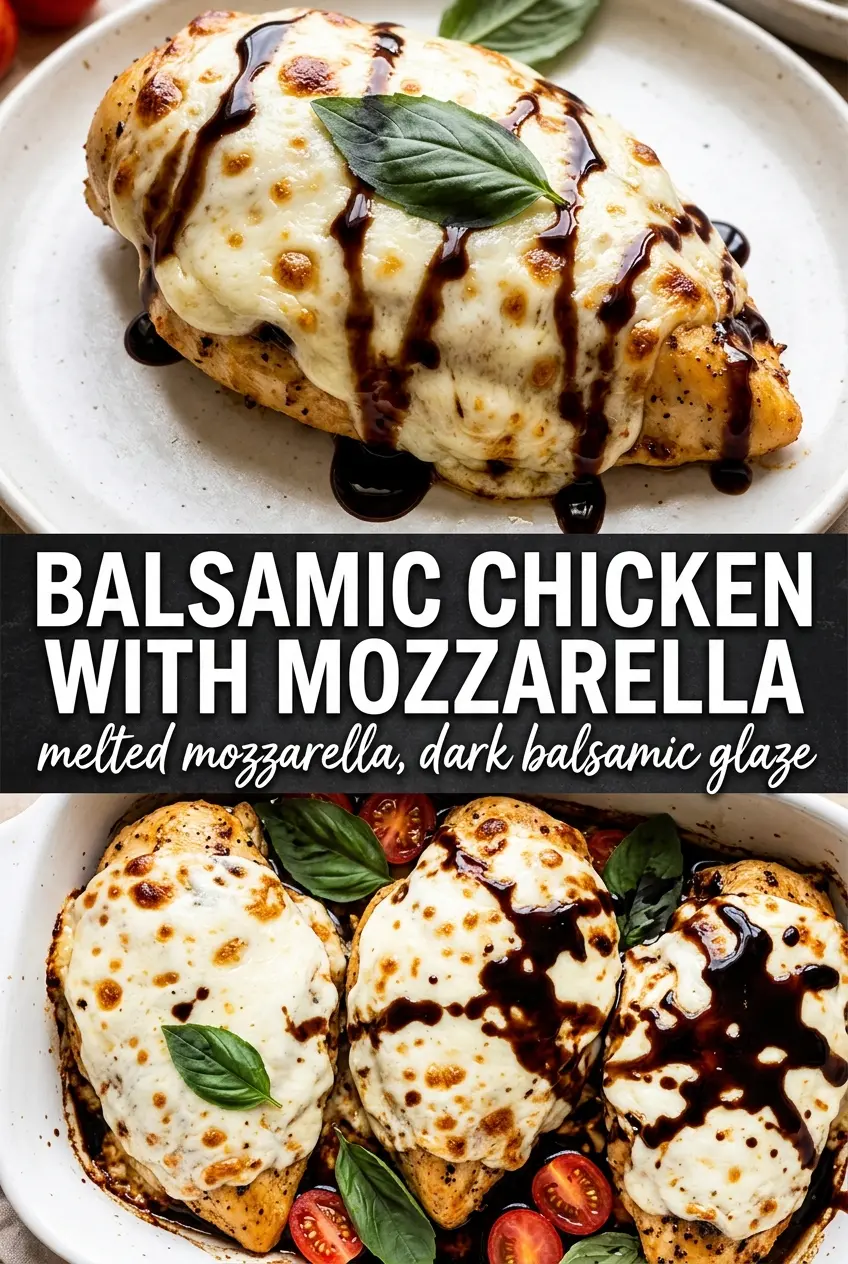
Balsamic Baked Chicken Breast with Mozzarella
Ingredients
Equipment
Method
- Whisk together balsamic vinegar, olive oil, honey, garlic, and Dijon mustard, then season the chicken with salt, pepper, garlic powder, and Italian seasoning.
- Marinate the chicken in the mixture for 20 minutes, reserving some marinade for baking.
- Preheat oven to 400°F while you heat an oven-safe skillet over medium-high heat.
- Sear the marinated chicken in the skillet for 3 minutes per side until golden.
- Transfer the chicken to the oven with the remaining marinade, then bake for 18-20 minutes until the internal temperature reaches 165°F.
- Remove the chicken from the oven and top each breast with mozzarella slices and cherry tomatoes.
- Return to the oven for 4-5 minutes at 400°F until the cheese is melted and just beginning to turn golden.
- Drizzle with balsamic glaze and garnish with fresh basil leaves.