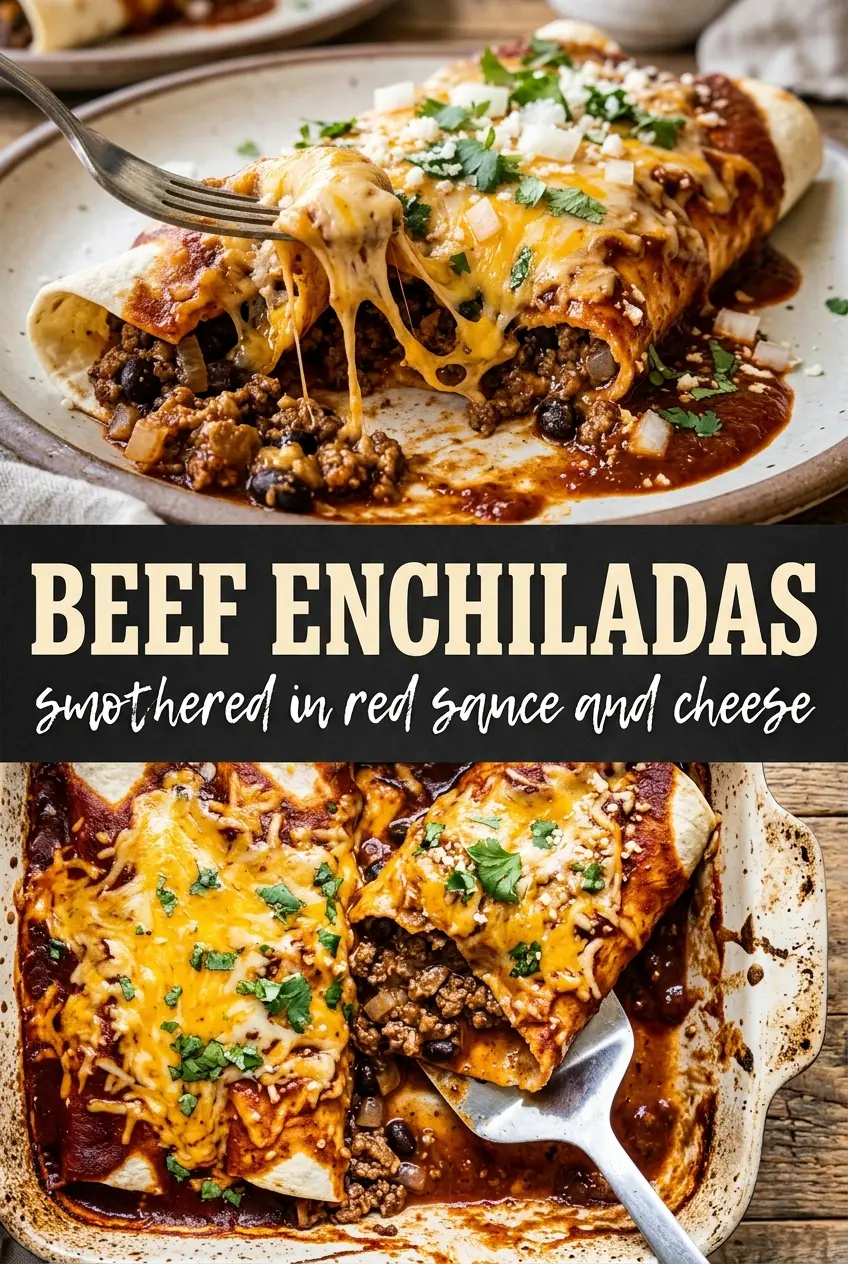
Tightly rolled beef enchiladas come out of the oven with the kind of edges you want to dig into first: soft tortillas underneath, a seasoned beef filling in the middle, and a blanket of red sauce and melted cheese on top that bubbles at the corners. The best part is that this version doesn’t turn soggy or fall apart when you serve it. The tortillas stay tender but hold their shape, and the filling has enough body to stay put inside each roll.
The trick is in the layering. A little sauce goes in the bottom of the baking dish before anything else, which keeps the enchiladas from sticking and starts them with moisture instead of dryness. Warming the corn tortillas before rolling matters too; cold tortillas crack, and once they split, the whole pan gets messy fast. The beef mixture is seasoned on the stove before it goes into the tortillas, so the filling tastes finished instead of relying on the sauce to do all the work.
Below you’ll find the detail that keeps the tortillas pliable, a few smart swaps if you need them, and the answers to the most common enchilada problems — from cracked tortillas to watery sauce.
The sauce settled into the tortillas just enough and the cheese browned around the edges without making the whole pan greasy. I used the tortilla-warming trick and they rolled cleanly for once.
Like these beef enchiladas? Save them for the nights when you want a saucy Tex-Mex dinner with bubbling cheese and no fragile tortillas.
The Tortilla Step That Keeps Enchiladas from Splitting
Corn tortillas are the point where a lot of enchiladas go wrong. Straight from the package, they crack as soon as you roll them, and once that happens the filling leaks into the sauce and the whole pan turns ragged. Warming them until they’re flexible changes everything. They should feel soft and bend easily, not dry and stiff.
The other thing that matters is not overfilling them. A modest spoonful of beef and a little cheese is enough. If you cram them full, they burst open in the oven and the sauce can’t hold the shape together anymore. Rolled snugly and placed seam-side down, they bake into neat little bundles instead of a loose casserole.
What Each Ingredient Is Actually Doing in These Enchiladas
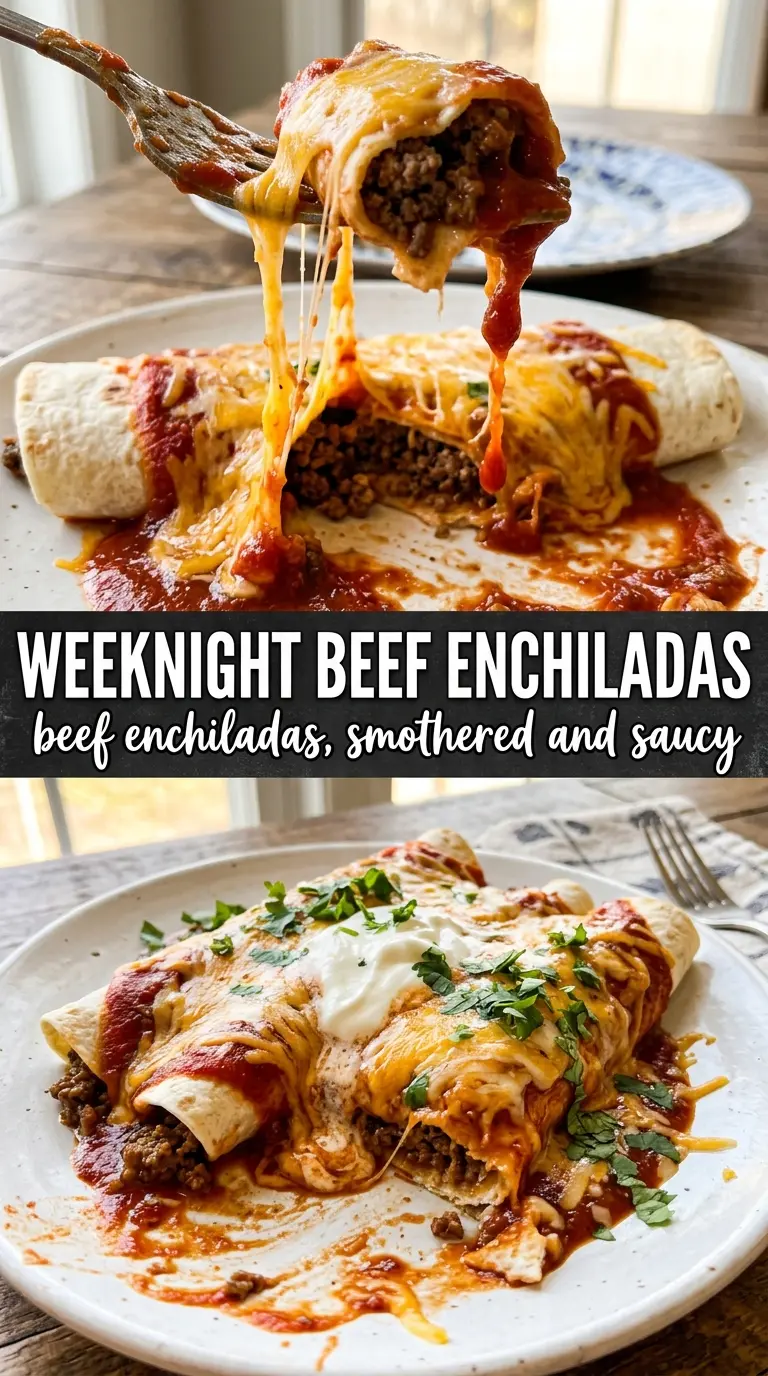
- Ground beef — This gives the filling its body and richness. An 80/20 blend has enough fat for flavor, but anything much leaner can taste dry unless you’re generous with the sauce.
- Onion and garlic — These build the savory base before the enchiladas ever hit the oven. Dice the onion small so it softens into the beef instead of staying chunky inside the tortillas.
- Taco seasoning — This is doing the heavy lifting on spice and salt, which is why the filling tastes complete without a long ingredient list. If you use a lower-sodium packet, the beef may need a little extra salt to taste balanced.
- Corn tortillas — These are the structure of the dish. Flour tortillas will work in a pinch, but they change the texture and turn this into something softer and less classic.
- Red enchilada sauce — This is what keeps the whole pan moist and ties the filling together. Use a sauce you actually like, because the flavor comes through in every bite.
- Mexican cheese blend — A shredded blend melts smoothly and gives you those browned, stretchy spots on top. Pre-shredded is fine here, though freshly grated melts a little better if you have the time.
Building the Pan So the Sauce Stays Bold and the Rolls Stay Neat
Cook the filling until it’s no longer wet
Brown the beef with the onion until the meat has lost its pink color and the onions have softened. Drain off extra fat before adding the garlic, seasoning, and water; if you leave too much grease in the pan, the filling can slide around and the enchiladas bake up oily. After the seasoning goes in, simmer the mixture until the liquid is mostly absorbed and the filling looks thick rather than soupy.
Warm the tortillas until they bend without cracking
Wrap the corn tortillas in a damp paper towel and heat them just long enough to make them pliable. They should bend easily when you pick one up, but they don’t need to be hot enough to dry out. If they still crack at the edges, give them a few more seconds; if they get too wet, they’ll tear instead of roll.
Roll with restraint and place them seam-side down
Spoon the beef mixture down the center of each tortilla and top it with a small sprinkle of cheese. Roll it up snugly, but don’t stretch the tortilla tight, or it can split later in the oven. Set each enchilada seam-side down in the sauced dish so it holds its shape while baking.
Bake until the cheese bubbles at the edges
Pour the remaining sauce evenly over the top and finish with the rest of the cheese. Bake uncovered until the sauce is hot and the cheese is melted, bubbling, and just starting to brown in spots. If the top looks pale after the timer goes off, give it a few extra minutes; you want the cheese fully melted, not just warmed through.
How to Adapt These Beef Enchiladas Without Losing the Texture
Make Them Gluten-Free the Right Way
Corn tortillas keep this dish naturally gluten-free, but the enchilada sauce and taco seasoning need a quick label check. Some packets use wheat starch or anti-caking ingredients that aren’t gluten-free. If you use certified gluten-free versions of both, the texture stays the same and you won’t lose anything in the bake.
Swap in Ground Turkey or Chicken
Ground turkey or chicken works well if you want a lighter filling, but the meat will be less rich than beef. Add a little extra oil while browning and keep the seasoning generous so the filling doesn’t taste thin. This swap makes the enchiladas a little cleaner and leaner, but you’ll still get the same saucy, cheesy finish.
Use a Vegetarian Filling
Black beans and sautéed peppers make a solid vegetarian version, especially if you season them the same way you would the beef. The filling will be softer and less dense, so don’t overstuff the tortillas or they’ll split more easily. Keep the sauce and cheese amounts the same for the best balance.
Storage and Reheating
- Refrigerator: Store leftovers covered for up to 4 days. The tortillas soften more as they sit, but the flavor gets even deeper.
- Freezer: These freeze well after baking. Cool completely, wrap tightly, and freeze in portions for up to 2 months.
- Reheating: Reheat covered in a 350°F oven until hot in the center, or microwave single portions with a damp paper towel over the top. The biggest mistake is blasting them uncovered, which dries out the edges before the middle is warm.
Questions I Get Asked About This Recipe
Beef Enchiladas
Ingredients
Equipment
Method
- Preheat oven to 375°F and spread 1/2 cup enchilada sauce in the bottom of a 9x13 dish, letting it form an even coating. You should see a thin red layer across the surface.
- Brown ground beef with diced onion over medium-high heat, stirring until no pink remains. You should see browned crumbles with onions turning translucent.
- Drain excess fat, then add minced garlic, taco seasoning, and water. The mixture should look evenly speckled and loosened.
- Simmer the beef mixture for 5 minutes to thicken slightly, stirring occasionally. You should notice the sauce clinging to the beef.
- Warm corn tortillas wrapped in a damp paper towel in the microwave for 1 minute to make them pliable. They should feel flexible and easy to roll.
- Fill each tortilla with the beef mixture and add a sprinkle of shredded cheese. The filling should be centered so the tortilla can roll tightly.
- Roll up the tortillas and place them seam-side down in the 9x13 dish. You should see neat rows of rolled enchiladas sitting in the red sauce base.
- Pour the remaining enchilada sauce evenly over the rolled enchiladas and top with the remaining cheese. The surface should be fully covered with a thick, melted-cheese layer.
- Bake uncovered for 20–25 minutes at 375°F until the cheese is bubbly. You should see bubbling, lightly golden cheese across the top.
- Serve immediately with sour cream, cilantro, and jalapeños on top. You should have visible dollops and fresh green flecks on the red sauce.