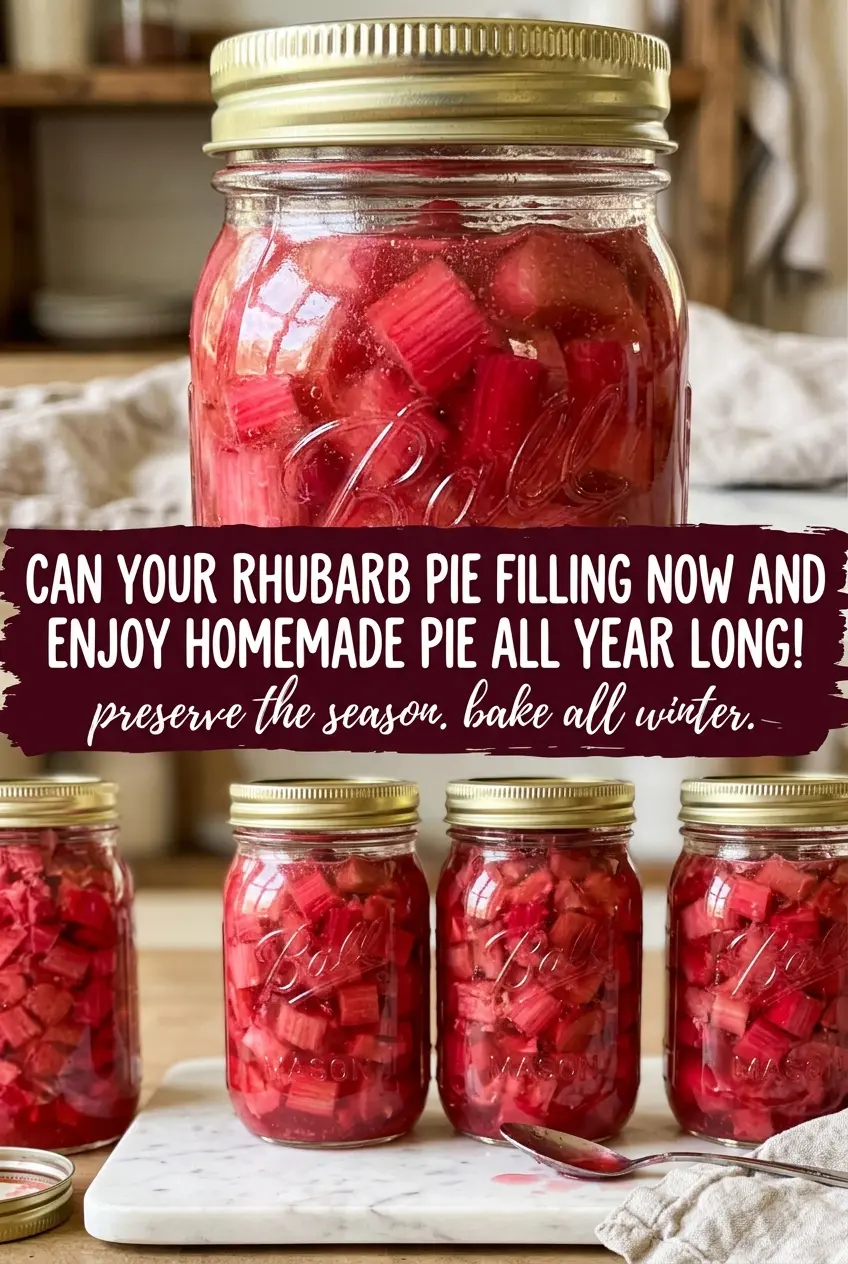
Thick rhubarb pie filling belongs in the pantry when the fruit is at its sharp, bright best. This version sets up with that glossy, spoonable texture you want for pie, not a runny fruit mixture that disappears into the crust. It pours hot into jars, but once it cools it turns into a filling that holds together on the plate and bakes up with a clean slice.
The key here is treating the rhubarb like fruit that needs help, not like a sauce that can reduce forever. Sugar pulls out the juice first, then Clear Jel steps in to thicken the mixture without turning it cloudy or gummy. That matters for canning because you want a filling that stays stable on the shelf and still tastes fresh when you open it months later.
Below, you’ll find the small timing details that keep the filling smooth, plus the one substitution to use if you’re freezing instead of water-bath canning. I also added storage notes for when you want to portion jars for quick pies later on.
The filling thickened beautifully once it came back to a boil, and my pies baked up with clean slices instead of a soupy middle. The jars sealed perfectly, too.
Save this thick rhubarb pie filling for jars that turn into homemade pie fast, with a glossy set and fresh tart flavor.
The Part Most People Get Wrong: Thickening Before the Boil
The biggest mistake with pie filling for canning is thickening it too early or at too low a heat. Clear Jel needs the mixture to come back to a full boil before it can set properly, and if you stop short of that stage, you’ll end up with jars of loose fruit syrup instead of filling. Rhubarb also throws off a lot of liquid as it cooks, so the mixture may look thin right up until the moment it suddenly tightens.
That shift is normal. Stir constantly once the thickener goes in, because the bottom of the pot will catch first and a scorched spot will ruin the clean tart flavor. You want a filling that mounds on a spoon and still moves as one heavy mass when you drag the spatula through it.
- Boil first, then count on the thickener. The final texture comes from heat as much as from the Clear Jel.
- Stir from the bottom. Rhubarb settles fast and can scorch before the top looks anywhere near done.
- Expect a glossy finish. That shine is a sign the filling has thickened correctly, not that it needs more cooking.
What the Rhubarb, Clear Jel, and Lemon Juice Are Each Doing
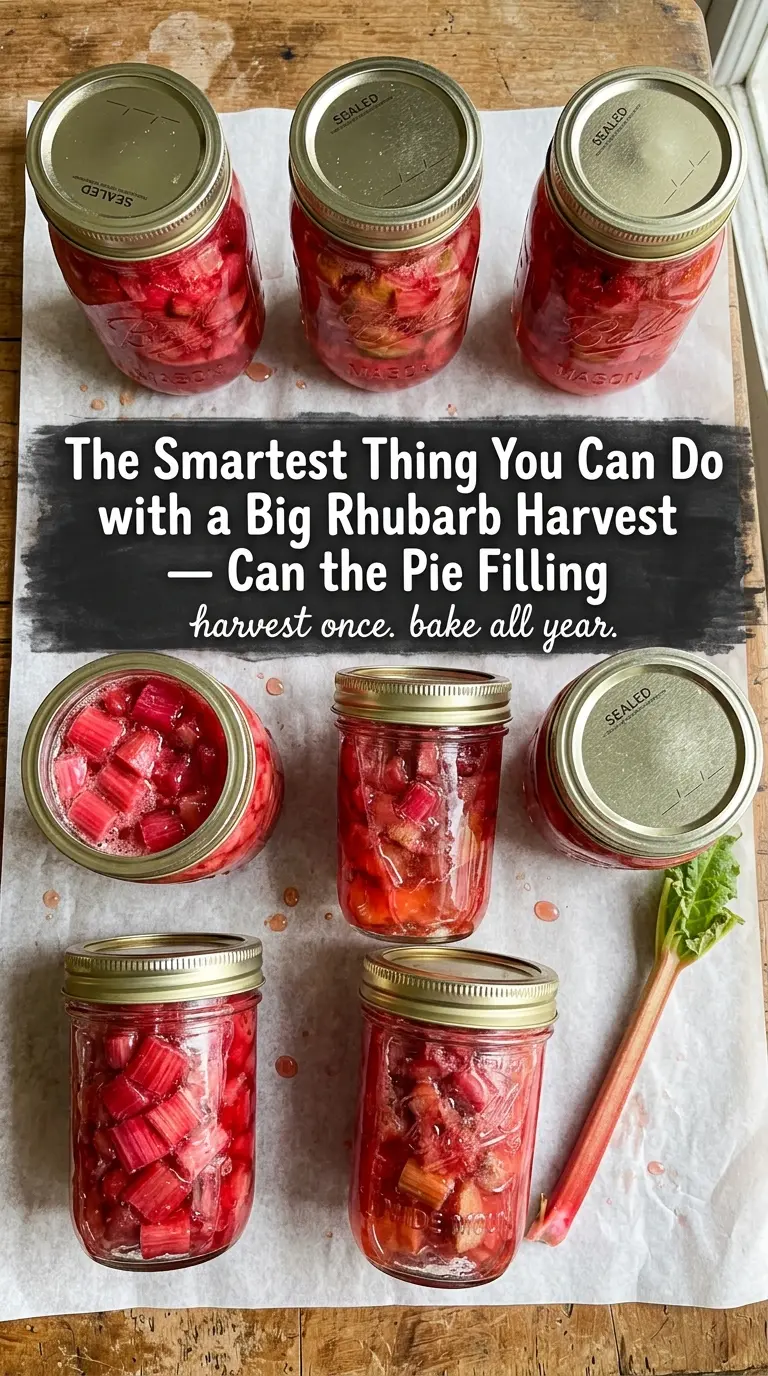
- Rhubarb — Use fresh stalks cut into even 1/2-inch pieces so they soften at the same pace. Smaller pieces break down too fast and can turn the filling mushy.
- Clear Jel — This is the thickener that keeps the filling stable for canning. Cornstarch works for freezing, but it isn’t the right choice for shelf-stable jars because it can break down during processing.
- Sugar — The sugar draws out juice from the rhubarb and balances the sharpness. It also helps the filling taste like pie filling instead of plain stewed fruit.
- Lemon juice — Don’t skip this. It adds brightness, but it also supports safe acidity in the finished jars.
- Pink food coloring — Optional, but useful if your rhubarb is pale and you want that classic rosy filling color. It doesn’t affect flavor or set.
Building the Filling So It Stays Smooth in the Jar
Letting the Rhubarb Release Its Juice
Start by tossing the chopped rhubarb with the sugar and letting it sit for 30 minutes. The fruit will look wet and shiny as the sugar pulls out liquid, and that early syrup gives you a head start on even cooking. If you rush this part, the sugar has to dissolve while the fruit is already boiling, which can leave the pot uneven and the texture less silky.
Bringing It Up to Heat
Once the fruit and sugar go onto the stove, stir often and keep the heat at medium. You want a lively boil, not a slow simmer, because the fruit needs enough heat to soften and the sugar needs to fully dissolve. The mixture will look loose at first, then thicker and more cohesive as the rhubarb breaks down.
Adding the Slurry Without Lumps
Mix the Clear Jel with cold water before it goes into the pot. A dry powder dumped into hot fruit clumps fast, and once that happens the texture is hard to fix. Stir the slurry in slowly, then keep stirring as the mixture returns to a boil and thickens into a glossy filling.
Jarring and Processing
Ladle the hot filling into sterilized quart jars, leaving 1-inch headspace so the contents have room to expand during processing. Wipe the rims clean before adding lids, because even a thin smear of filling can keep a jar from sealing. Process for the full 30 minutes in a boiling water bath; shorter processing risks a weak seal and a jar that won’t keep safely on the shelf.
Freezing Instead of Canning
Use cornstarch instead of Clear Jel if you plan to freeze the filling rather than process it. Cornstarch gives you a softer set after thawing, and it doesn’t hold up well to boiling-water canning, but it works fine when the filling will live in the freezer until pie day.
Adjusting the Sugar for a Sharper Pie
You can reduce the sugar a little if your rhubarb is especially sweet or you like a tarter filling, but don’t cut it aggressively. Sugar isn’t just there for sweetness; it helps the fruit release juice and gives the filling the right body for pie.
Making It Without Food Coloring
Skip the coloring if you want the filling to stay naturally pale and rustic. The flavor doesn’t change at all, and once the jars are baked into a pie, the texture matters far more than the color.
Storage and Reheating
- Refrigerator: Once opened, keep a jar in the refrigerator for up to 1 week. The filling will firm up a bit more as it chills.
- Freezer: Freeze only if you’ve used cornstarch instead of Clear Jel. Leave headspace in freezer containers because the filling expands.
- Reheating: Warm the filling gently in a saucepan or pour it straight into a crust and bake as directed. High heat can break down the texture, especially if the filling has already thickened fully in the jar.
Questions I Get Asked About This Recipe
Canning Rhubarb Pie Filling
Ingredients
Equipment
Method
- Place the fresh rhubarb in a large pot and sprinkle with sugar, then let sit for 30 minutes to release juices.
- Bring the rhubarb and sugar to a boil over medium heat, stirring frequently until actively boiling.
- Mix Clear Jel with 1 cup cold water to make a smooth slurry.
- Add the additional water and lemon juice to the rhubarb, then slowly stir in the Clear Jel slurry.
- Cook, stirring constantly, until the mixture thickens and comes back to a boil.
- If using, add pink food coloring and stir until evenly colored.
- Ladle the hot filling into sterilized quart jars, leaving 1-inch headspace.
- Process in a boiling water bath for 30 minutes.