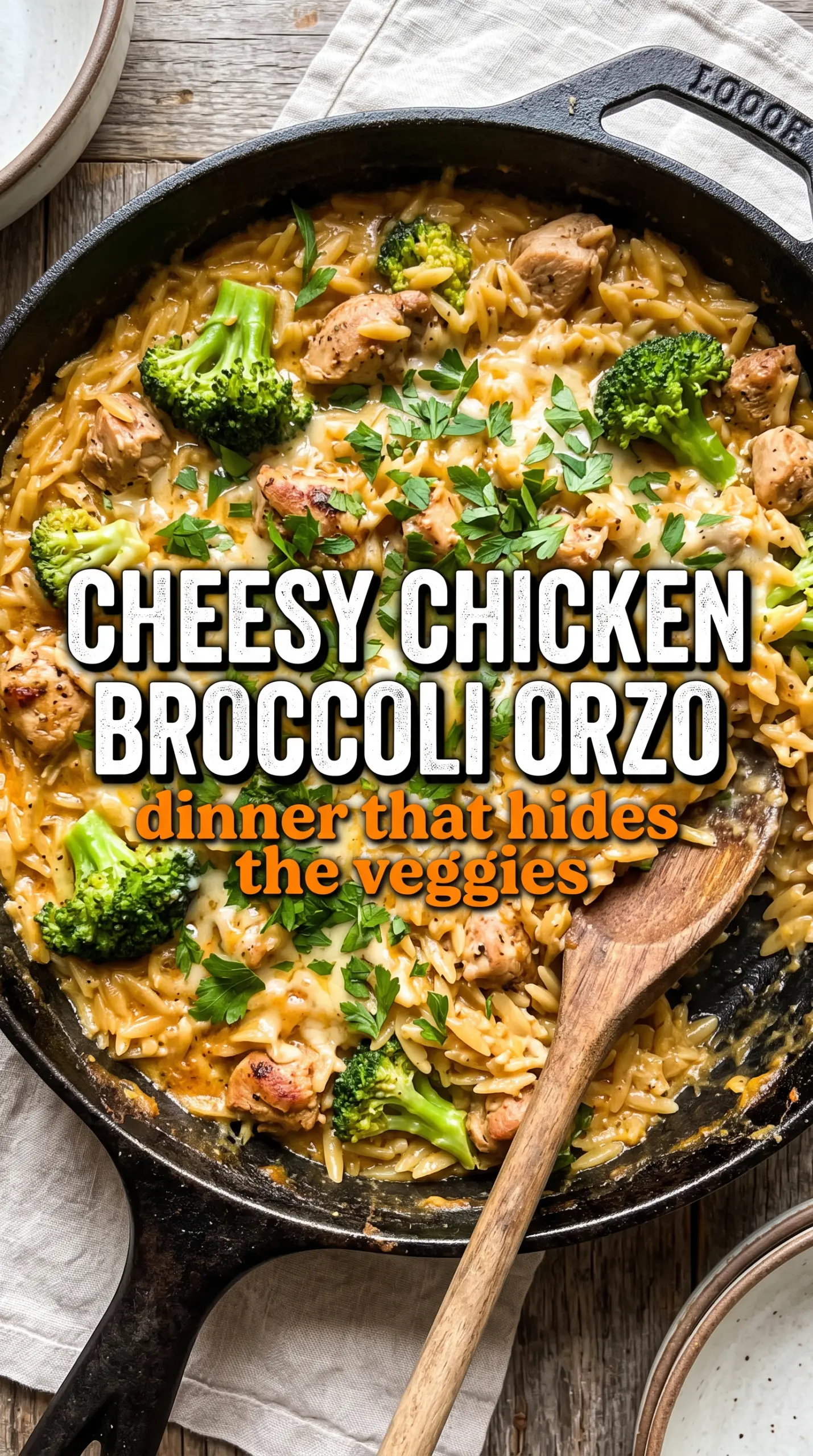
Cheesy chicken broccoli orzo lands in the sweet spot between comfort food and a fast one-pan dinner. The orzo turns creamy without needing a separate sauce, the broccoli stays bright instead of going dull and mushy, and the chicken gets folded back in just enough to stay juicy. Every bite has a little bit of everything: tender pasta, sharp cheddar, savory chicken, and enough green to keep it from feeling heavy.
What makes this version work is the order. Browning the chicken first leaves behind flavor in the pan, and that same pan becomes the base for the orzo. The broth and cream cook right into the pasta, so the starch thickens everything naturally while the cheese melts in at the end instead of fighting the heat. Broccoli goes in near the finish, which keeps it crisp-tender and vivid green.
Below, I’m walking through the part that matters most: how to keep the orzo creamy without letting it turn gluey, plus the small ingredient choices that make the sauce taste rich instead of flat.
The orzo got perfectly creamy and the broccoli stayed bright instead of turning mushy. My husband said it tasted like a fancy casserole, but it came together faster than takeout.
Save this cheesy chicken broccoli orzo for the night you want a creamy one-pan dinner with sharp cheddar, tender chicken, and bright broccoli.
The Reason the Orzo Stays Creamy Instead of Turning Starchy
The biggest mistake with orzo is treating it like plain pasta and draining it at the end. That throws away the starch that gives this dish its body. Here, the orzo cooks right in the broth and cream, which lets the liquid thicken naturally as it reduces and the pasta releases starch into the pan.
The other part that matters is heat control after the cheese goes in. Sharp cheddar and Parmesan melt best off direct high heat; if the pan is boiling hard when you add them, the sauce can turn grainy or oily. Pulling the pan down to a gentle simmer, or even off the burner for a minute, keeps the sauce smooth and glossy.
What Each Ingredient Is Actually Doing in This Dish
- Chicken breasts — Bite-sized pieces cook fast and give you more browned edges, which means more flavor in the pan. Chicken thighs work too if you want a little more richness and don’t mind a slightly longer cook.
- Orzo — This is what makes the dish feel creamy without needing a flour-thickened sauce. Regular rice won’t behave the same way, and larger pasta shapes need more liquid and more time.
- Heavy cream — It smooths out the broth and carries the cheese without breaking as easily as milk. Half-and-half can work, but the sauce will be thinner and a little less plush.
- Sharp cheddar — Sharp cheddar gives the dish its backbone. Mild cheddar melts fine, but the flavor gets lost fast once it’s mixed with cream and pasta.
- Broccoli florets — Cut them small so they cook through in the final few minutes. Big florets stay too firm while the orzo finishes, which can throw off the texture of the whole dish.
- Parmesan — This adds saltiness and helps the sauce taste more layered. Use grated Parmesan, not the shelf-stable powder, if you want it to melt cleanly.
How to Build the Pan So the Sauce Stays Smooth
Browning the Chicken First
Cook the chicken in a hot skillet until the outside turns golden and the center is just cooked through. You want real color here, not pale steaming, because those browned bits on the bottom are what give the final dish depth. If the pan looks crowded, work in batches; crowded chicken steams and the sauce will taste flatter later.
Toasting the Orzo in the Pan
After the garlic is fragrant, add the dry orzo and stir it for about a minute. The edges should start to look a little glossy and lightly toasted. That quick toast gives the pasta a nuttier taste and helps it hold its texture instead of going soft and tired.
Cooking in Broth and Cream
Pour in the broth and cream, then bring the pan to a gentle simmer, not a hard boil. Stir often, because orzo settles fast and can stick to the bottom before it has a chance to absorb the liquid evenly. If the pan looks dry before the pasta is tender, add a splash of broth; if it still looks soupy at the end, keep cooking for another minute or two and let the starch do its work.
Finishing with Cheese and Broccoli
Add the broccoli during the last few minutes so it turns bright green and stays just tender. Once the orzo is cooked, lower the heat before stirring in the cheddar and Parmesan. Then return the chicken and fold everything together until the cheese melts into a silky sauce that coats the pasta instead of sitting in strings on the spoon.
How to Adapt It for What’s in Your Kitchen
Dairy-Free Version
Use unsweetened oat cream or canned coconut cream in place of the heavy cream, then swap in a dairy-free shredded cheddar that melts well. The sauce won’t taste exactly the same, but it will still coat the orzo nicely. Add an extra pinch of salt at the end, since plant-based cheese usually needs help.
Gluten-Free Swap
Use a gluten-free orzo-style pasta if you can find one, but keep a close eye on the liquid because some gluten-free pastas break down faster than wheat orzo. Stir more gently near the end so the pasta stays intact. The texture can be a touch softer, but it still works well in a creamy one-pan dinner.
Swap the Chicken for Turkey or Sausage
Ground turkey or sliced chicken sausage both fit this dish well. Turkey keeps it lighter, while sausage adds more built-in seasoning and a smokier finish. If you use sausage, cut back a little on the smoked paprika at the start so the seasoning doesn’t get too heavy.
Storage and Reheating
- Refrigerator: Store in an airtight container for up to 4 days. The sauce will thicken as it chills.
- Freezer: It freezes, but the cream sauce can turn a little grainy after thawing. If you freeze it, do it in individual portions and expect the broccoli to soften more when reheated.
- Reheating: Warm it gently on the stove or in the microwave with a splash of broth or milk. High heat is the usual mistake here; it tightens the sauce and dries out the chicken before the center is hot.
Answers to the Questions Worth Asking

Cheesy Chicken Broccoli Orzo
Ingredients
Equipment
Method
- Season the chicken pieces with salt, pepper, garlic powder, and smoked paprika. Heat olive oil in a large skillet over medium-high heat and cook chicken for 5-6 minutes until golden and cooked through, then remove to a plate.
- In the same pan, cook minced garlic for 30 seconds until fragrant, scraping up browned bits. Add orzo and toast for 1 minute, then pour in chicken broth and heavy cream and bring to a simmer, with active bubbling around the edges.
- Cook the orzo uncovered for 8-10 minutes, stirring often, until most liquid is absorbed and the orzo is tender but still creamy. Add broccoli florets in the last 4 minutes of cooking so they turn bright green and become just tender.
- Stir in shredded sharp cheddar cheese and grated Parmesan until fully melted and the orzo looks glossy and creamy. Return the cooked chicken to the pan and stir to combine; taste and adjust seasoning to your preference.
- Garnish the cheesy chicken broccoli orzo with fresh parsley and serve hot.