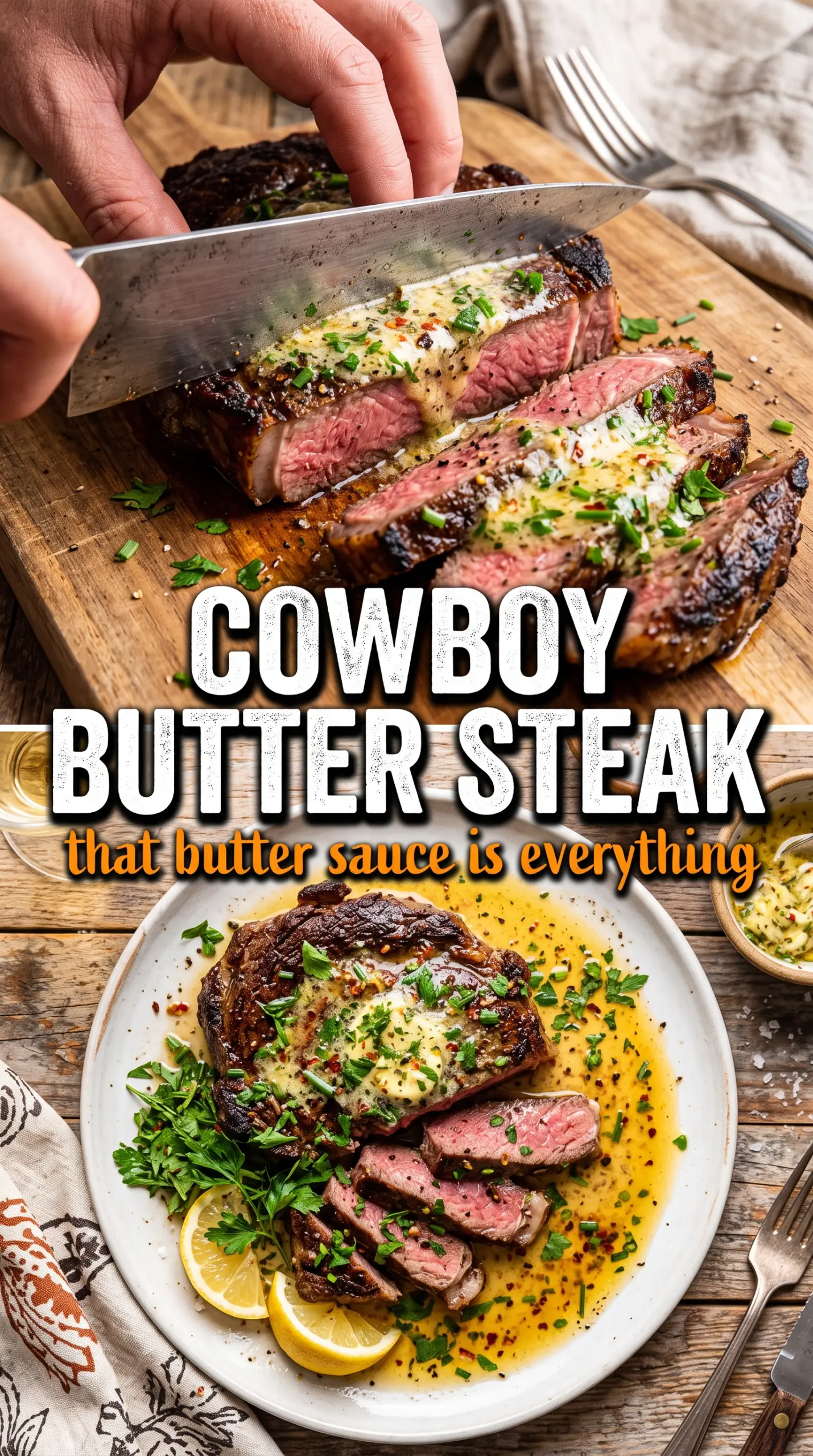
Cast iron-seared ribeye and cowboy butter are a hard combination to beat. The steak gets a deep crust from a screaming-hot skillet, then the butter melts over the top and runs into every slice with garlic, herbs, lemon, and a little heat. You end up with a steak that tastes bold and finished, not just salted and served.
This version works because the butter is mixed ahead of time and firmed up before it ever hits the pan. That keeps the garlic, herbs, and paprika evenly distributed, and it lets you drop a thick slice right onto the hot steak at the end without watering down the crust. The ribeye’s fat also plays nicely with the butter baste, which gives the meat a glossy finish and helps carry the seasoning all the way through each bite.
Below, I’ll walk you through the small timing details that matter most — especially when to add the butter, how hot the skillet should be, and how to keep the steak juicy after it leaves the pan.
The cowboy butter melted into the steak and made every bite taste like it came from a steakhouse. I loved that the crust stayed crisp even after I added the butter slice at the end.
Save this cowboy butter steak for the nights when you want a hard sear, a glossy garlic-herb finish, and almost no cleanup.
The Crust Comes First, Not the Butter
The biggest mistake with a butter-basted steak is getting impatient and adding the butter too early. Butter burns faster than oil, and once it goes dark in a ripping-hot pan, the flavor turns bitter before the steak has a chance to build a crust. The move here is simple: sear the ribeye in oil first, let the surface dry out and brown, then bring in the cowboy butter only for the last minute.
That order matters because ribeye already has enough fat to stay tender. What it needs is heat control. A dry, well-seasoned steak on a smoking-hot cast iron skillet will release more cleanly from the pan and give you those browned edges that taste like the whole point of the recipe.
- Ribeye — The marbling in ribeye keeps the meat juicy while the outside browns aggressively. Strip steak works too, but you lose some of that rich, beefy drape that makes cowboy butter taste especially good.
- Vegetable oil — Use a neutral oil with a high smoke point so the steak can sear hard without the pan filling with burnt flavor. Olive oil works in a pinch, but it smokes sooner and gives you less room to work.
- Softened butter — Soft butter blends into a smooth compound butter and melts evenly over the steak at the end. Cold butter won’t mix cleanly, and melted butter won’t hold the herbs and garlic the same way.
- Dijon, lemon, and smoked paprika — Dijon sharpens the butter, lemon keeps it from tasting heavy, and paprika gives it that warm, smoky edge. Don’t skip the mustard; it helps the butter taste more complete and less flat.
What Each Ingredient Is Actually Doing in This Recipe
- Primary ingredient (the star) — Quality matters most. Choose the best you can find.
- Cooking medium (oil, butter, or broth) — This carries flavors and prevents dryness.
- Seasonings (salt, pepper, spices, herbs) — Layer flavors so nothing overpowers. Build depth gradually.
- Aromatics (garlic, onion, herbs) — Cook with fat to bloom flavors. Become the foundation.
- Supporting ingredients — Complement the main ingredient without overpowering it.
- Sauce or liquid (if applicable) — Brings flavors together. Balance richness with acid.
- Acid (lemon, vinegar, wine, or other) — Brightens and prevents flat-tasting results.
- Final finish (garnish, glaze, or sauce) — Prevents one-dimensional taste and adds visual appeal.
How to Sear the Ribeye and Finish With Cowboy Butter
Mix the Butter Before the Pan Gets Hot
Stir the softened butter with garlic, lemon juice, parsley, chives, Dijon, smoked paprika, red pepper flakes, and salt until it looks evenly flecked and smooth. Roll it into a log and chill it until firm enough to slice. If the butter is too soft when it hits the hot steak, it will melt into a greasy puddle instead of sitting on top and slowly basting the meat.
Season the Steak Like You Mean It
Pat the ribeyes dry, then season every side generously with salt and coarse black pepper. Dry surface equals better browning, and generous seasoning gives the crust something to cling to. If the steak looks damp, keep blotting — moisture is what turns a sear into steam.
Build the Crust in the Smoking Pan
Heat the cast iron skillet over high heat until it is smoking, then add the oil and lay in the steaks. You should hear an immediate, loud sizzle. Let them sear without moving them for 3 to 4 minutes per side, or until a deep brown crust forms and the steak releases without force. If it sticks, it’s not ready to turn yet.
Baste at the End, Not the Beginning
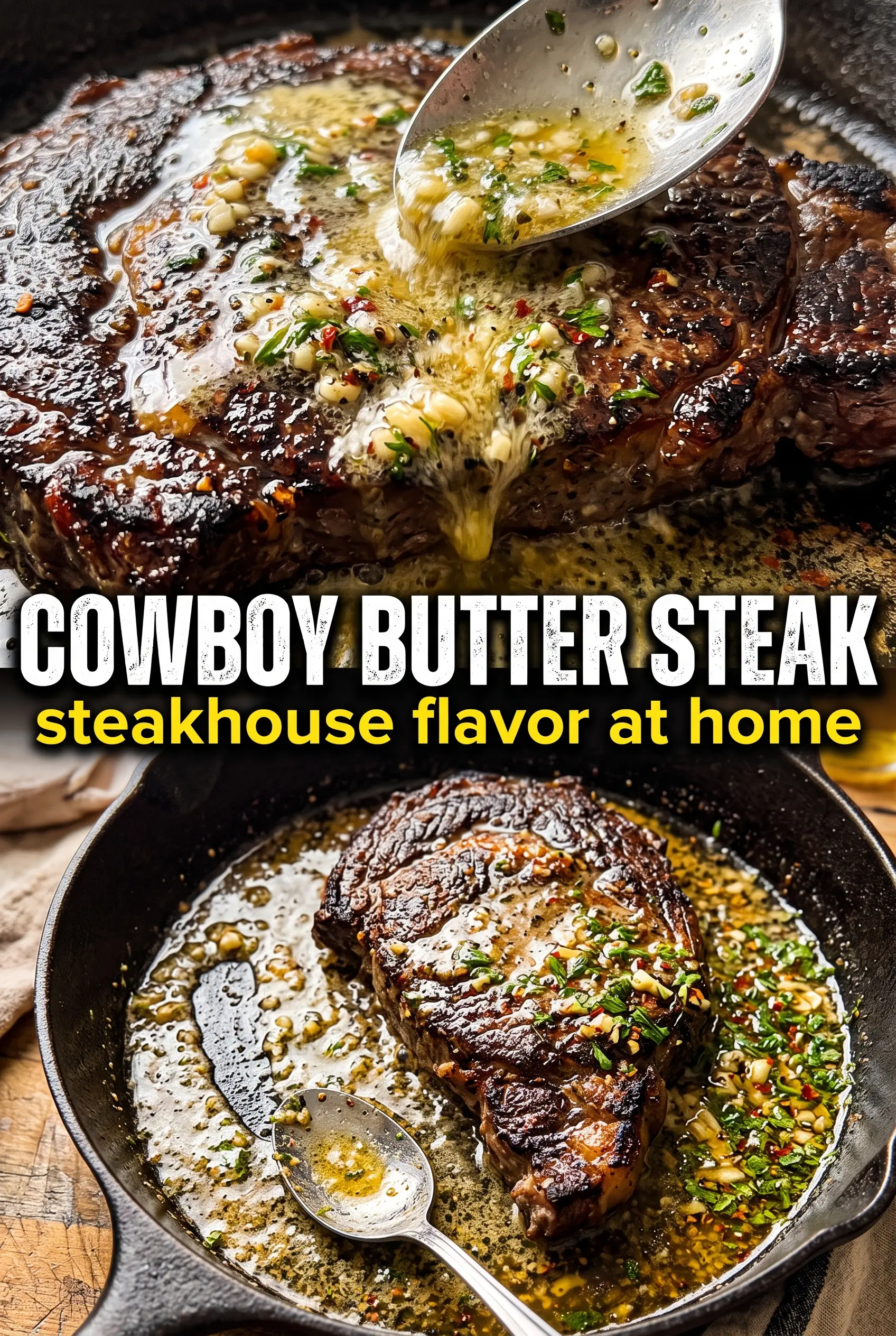
During the final minute, add a small pat of cowboy butter and tilt the pan so the melted butter pools. Spoon it over the steak as it finishes. This gives you the glossy, steakhouse-style finish without scorching the garlic or herbs. Pull the pan off the heat if the butter starts to darken too fast.
Rest, Slice, and Let the Butter Melt Over Top
Move the steaks to a plate and rest them for 5 minutes, tented loosely with foil. Resting keeps the juices in the meat instead of flooding your board the second you cut in. Put a thick slice of cowboy butter on each steak while it’s still warm, then serve with extra on the side for spooning over every slice.
What to Tweak When You Want a Different Kind of Finish
Dairy-Free Butter Steak
Use a high-quality plant-based butter with a firm texture and enough salt to taste. The flavor stays rich, but you lose a little of the classic dairy roundness, so the lemon and herbs matter even more.
Extra Smoky Cowboy Butter
Add a pinch more smoked paprika and a tiny extra pinch of red pepper flakes. This pushes the butter toward a deeper, grill-side flavor without changing the method.
Garlic-Forward Version
Increase the garlic by one clove and keep the basting time short so it doesn’t burn. Garlic is strongest when it blooms in the warm butter, but too much direct heat turns it sharp and bitter fast.
Storage and Reheating
- Refrigerator: Store leftover steak and cowboy butter separately for up to 3 days. The butter keeps well; the steak will lose some crust but stay juicy if wrapped tightly.
- Freezer: The compound butter freezes well for up to 2 months. Wrap it tightly in plastic, then thaw in the fridge before slicing; cooked steak freezes better in slices than as a whole piece, but the texture softens a bit either way.
- Reheating: Reheat the steak gently in a low oven or in a covered skillet over low heat until warmed through. High heat will drive out the juices and overcook the edges before the center comes up to temperature.
Questions I Get Asked About This Recipe
Cowboy Butter Steak
Ingredients
Equipment
Method
- Blend the softened unsalted butter, minced garlic, lemon juice, fresh parsley, fresh chives, Dijon mustard, smoked paprika, and red pepper flakes until smooth and flecked with herbs.
- Roll the cowboy butter mixture in plastic wrap into a log shape, then refrigerate until firm for 5 minutes.
- Pat ribeye steaks dry and season generously with salt and coarse black pepper on all sides.
- Heat a cast iron skillet over high heat until smoking, about 2 minutes, then add the vegetable oil.
- Sear the steaks for 3 to 4 minutes per side for medium-rare, and baste with a pat of cowboy butter in the final minute of cooking.
- Remove steaks and rest for 5 minutes tented with foil.
- Place a thick slice of cowboy butter directly on each steak while still warm so it melts into a glossy topping.
- Serve with extra cowboy butter on the side.