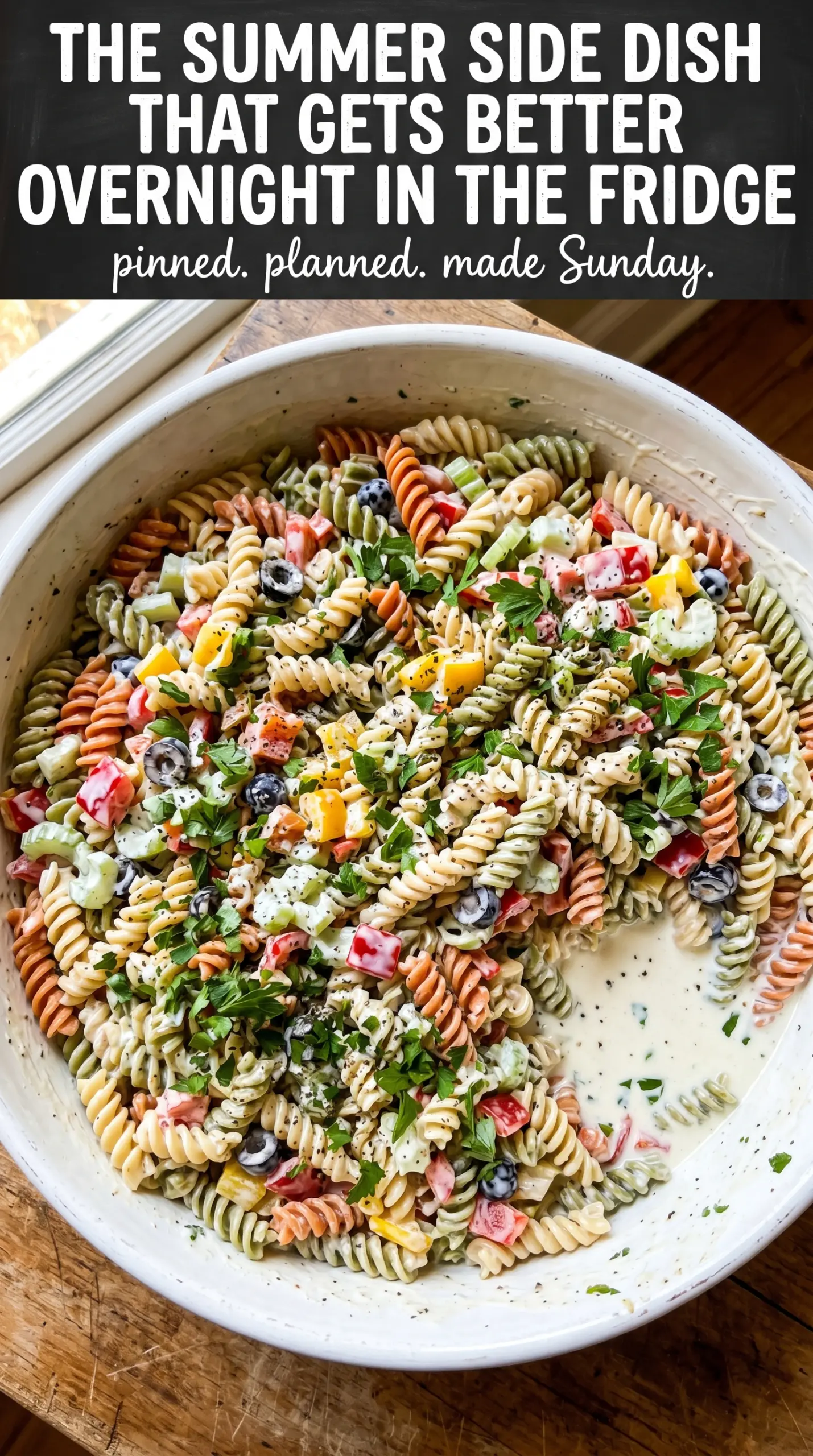
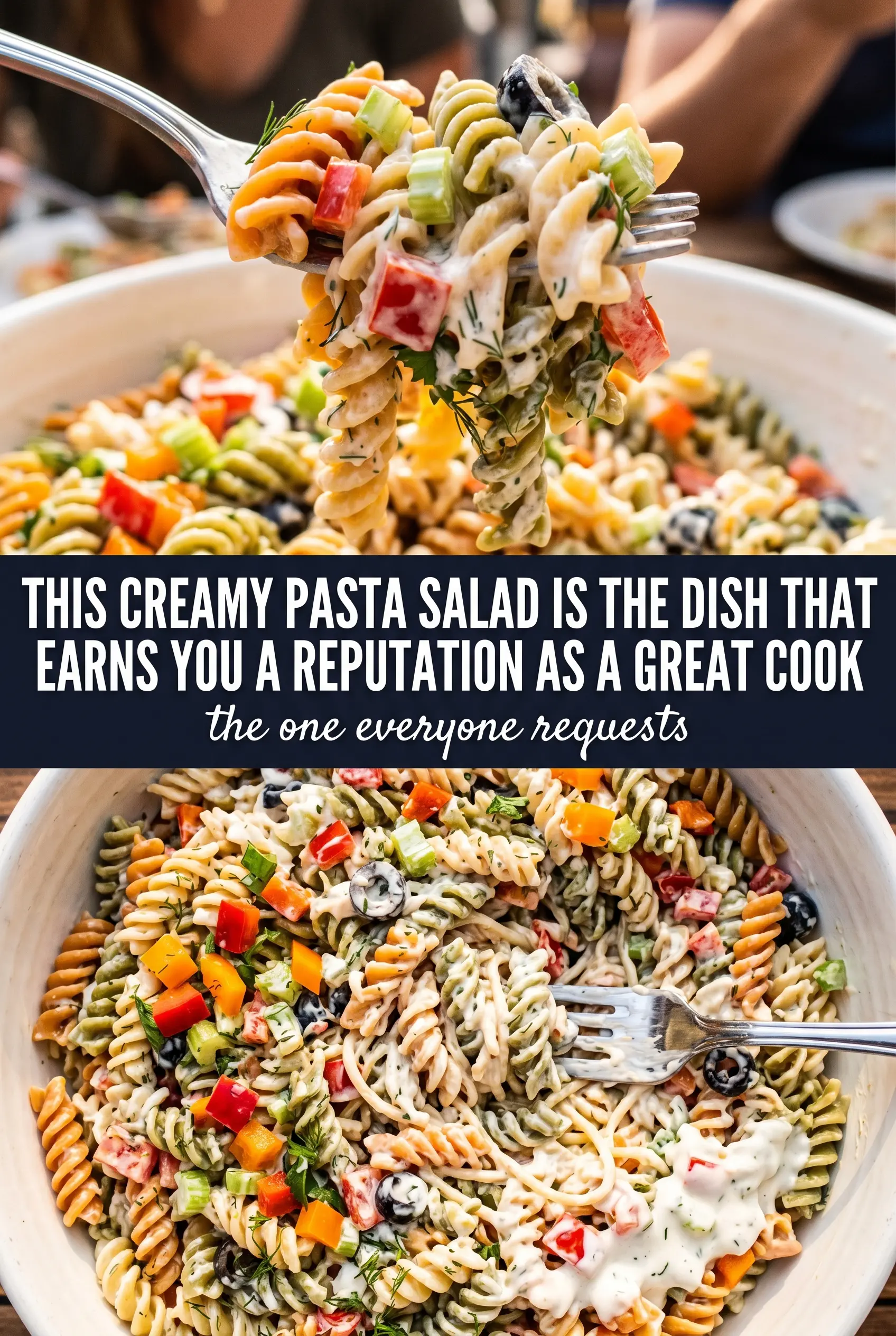
Cold, creamy pasta salad should taste bright, not heavy. The best versions cling to the pasta without turning gluey, and the vegetables still give a little crunch against that tangy dressing. This one lands exactly where it should: rich enough to feel satisfying, sharp enough to keep you going back for another forkful, and sturdy enough to sit on a picnic table without falling apart.
The trick is balancing the dressing before it ever meets the pasta. Mayonnaise gives body, sour cream adds a little looseness and tang, and the vinegar cuts through both so the salad tastes fresh after chilling. Rinsing the pasta under cold water stops the cooking and keeps the dressing from disappearing into hot noodles. I also like a mix of crisp vegetables here, because the salad needs more than color — it needs texture that stays interesting after an hour in the fridge.
Below, I’ll walk through the one step that keeps the dressing from tasting flat after chilling, plus a few useful swaps if you need to work with what’s in the fridge. The storage notes matter here too, because this is one of those dishes that gets better after a rest, but only if you handle it the right way.
The dressing clung to every piece after chilling, and the cucumbers stayed crisp instead of turning watery. I made it for a cookout and there wasn’t a spoonful left.
Love a creamy pasta salad with crisp vegetables and a tangy dressing? Save this one for cookouts and potlucks when you need a reliable make-ahead side.
The Dressing Has to Taste a Little Sharp Before It Hits the Pasta
The biggest mistake with creamy pasta salad is seasoning the dressing like it’s finished before it chills. Cold pasta dulls flavor, and the refrigerator softens the edge of vinegar and mustard, so the dressing should taste a touch more punchy in the bowl than you want in the final dish. That extra little bite is what keeps the salad from tasting flat two hours later.
The other thing people miss is temperature. Warm pasta melts and thins the dressing, which makes the whole salad greasy instead of creamy. Rinse the noodles until they’re fully cool, then let them drain well so you’re not watering down the sauce. Once the pasta and dressing meet, the salad needs time for the noodles to absorb that flavor instead of just sitting in a puddle of it.
- Vinegar — Apple cider vinegar brings the clean tang that keeps the mayonnaise from feeling heavy. White vinegar works in a pinch, but it tastes harsher, so use a little less if that’s what you have.
- Sour cream — This loosens the dressing just enough so it coats the pasta instead of pasting onto it. Full-fat sour cream gives the smoothest result; lower-fat versions work, but they can taste a little thinner after chilling.
- Dijon mustard — You won’t taste mustard in a loud way here. It sharpens the dressing and helps it taste more complete, especially after the salad sits in the fridge.
- Rotini or bow-tie pasta — Shapes with ridges and folds hold the dressing much better than smooth noodles. If you swap in another shape, pick something with texture so the sauce has somewhere to grab.
What Each Ingredient Is Actually Doing in Bold Pasta Dressing
- Acid (vinegar or lemon juice) at full strength — The dressing should taste noticeably sharp and tart. The pasta will absorb and soften this flavor as it sits.
- Oil as the base — Oil carries the acid throughout and prevents the dressing from being harsh. It should be equal or more than the acid.
- Mustard for body and emulsification — Mustard helps the oil and acid combine and stay combined. It also adds savory depth.
- Garlic and shallot (raw) — Raw aromatics taste sharp in the dressing. As they sit with the acid, they become mellow and integrated.
- Fresh herbs (especially hardy ones) — Herbs add flavor that’s distributed throughout the dressing. They should taste fresh and bright.
- Salt and pepper (generous) — The dressing should taste well-seasoned and bold. The pasta will absorb and distribute the seasoning.
- Optional: red pepper flakes or spice — A little heat adds complexity. It mellows slightly as the dressing sits.
- Ratio: dressing tastes bold enough that pasta will taste balanced — The dressing should taste almost too sharp when tasted alone. Once tossed with pasta, it will be perfectly balanced.
Building the Salad So the Dressing Stays Creamy After Chilling
Whisk the dressing until it looks smooth and loose
Start with the mayonnaise, sour cream, vinegar, sugar, Dijon, salt, and pepper in a large bowl and whisk until the mixture looks completely smooth. You’re aiming for a pale, pourable dressing with no streaks of sour cream left behind. If it tastes a little too tangy or a little too sweet at this stage, that’s fine — chilling will soften both sides.
Cool the pasta all the way down
Cook the pasta just until tender, then drain it and rinse under cold water until it feels cool to the touch. Let it sit in the colander for a minute so excess water can drip away. If you skip that draining time, the salad can turn watery as soon as the vegetables release their moisture.
Fold in the vegetables and coat every piece
Add the pasta, tomatoes, cucumber, onion, celery, and carrots to the bowl and toss until everything is evenly coated. The salad should look glossy, not soupy, and you should see the dressing clinging to the ridges of the pasta. If it looks dry right away, add a spoonful more mayonnaise or sour cream rather than a splash of vinegar, which can push the balance too far.
Chill long enough for the flavor to settle
Cover the bowl and refrigerate for at least 2 hours. That resting time is when the pasta absorbs flavor and the dressing thickens up into its final texture. Right before serving, give it another toss and taste for salt and pepper, because cold food almost always needs a little more seasoning than you expect.
How to Adapt This Pasta Salad for Different Crowds and Pantry Odds
Make It Dairy-Free
Use a dairy-free mayo and replace the sour cream with a plain unsweetened dairy-free yogurt or more mayo plus a teaspoon of extra vinegar. The texture stays creamy, but the flavor gets a little lighter and less rich, so taste and adjust the salt at the end.
Swap the Vegetables Based on What’s in the Fridge
Cherry tomatoes, cucumber, celery, and carrots are all about crunch and freshness, so you can swap within that lane. Bell pepper, peas, or diced broccoli all work well; just keep the pieces small and even so the salad eats cleanly instead of feeling bulky.
Use a Gluten-Free Pasta Without Losing the Texture
A sturdy gluten-free rotini works better than delicate shapes, since this salad gets tossed a few times and then chilled. Cook it just to tender and rinse gently, because overcooked gluten-free pasta can turn soft fast once the dressing goes on.
Stretch It for a Bigger Potluck
Double everything, but hold back a small spoonful of dressing and add it after the salad has chilled. Pasta drinks up dressing as it rests, and that final little bit brings the creamy texture back right before serving.
Storage and Reheating
- Refrigerator: Keeps well for 3 to 4 days in a covered container. The pasta will absorb some dressing over time, so expect the salad to look a little thicker on day two.
- Freezer: I don’t recommend freezing this one. The mayonnaise and sour cream separate after thawing, and the vegetables lose their crunch.
- Reheating: This salad is meant to be served cold. If it seems dry after chilling, stir in a spoonful of mayo or sour cream and a tiny splash of vinegar instead of warming it up.
Questions I Get Asked About This Recipe
Creamy Pasta Salad
Ingredients
Equipment
Method
- Cook rotini or bow-tie pasta according to package directions, then drain and rinse with cold water until chilled.
- Spread the drained pasta on a sheet pan and set aside until fully cooled before mixing.
- Whisk mayonnaise, sour cream, apple cider vinegar, sugar, Dijon mustard, salt, and pepper together in a large bowl until smooth.
- Add cooled pasta, cherry tomatoes, cucumber, red onion, celery, and shredded carrots to the dressing.
- Toss until everything is well coated so the vegetables are evenly distributed throughout.
- Refrigerate for at least 2 hours to allow flavors to meld.
- Toss again before serving and adjust seasonings if needed.