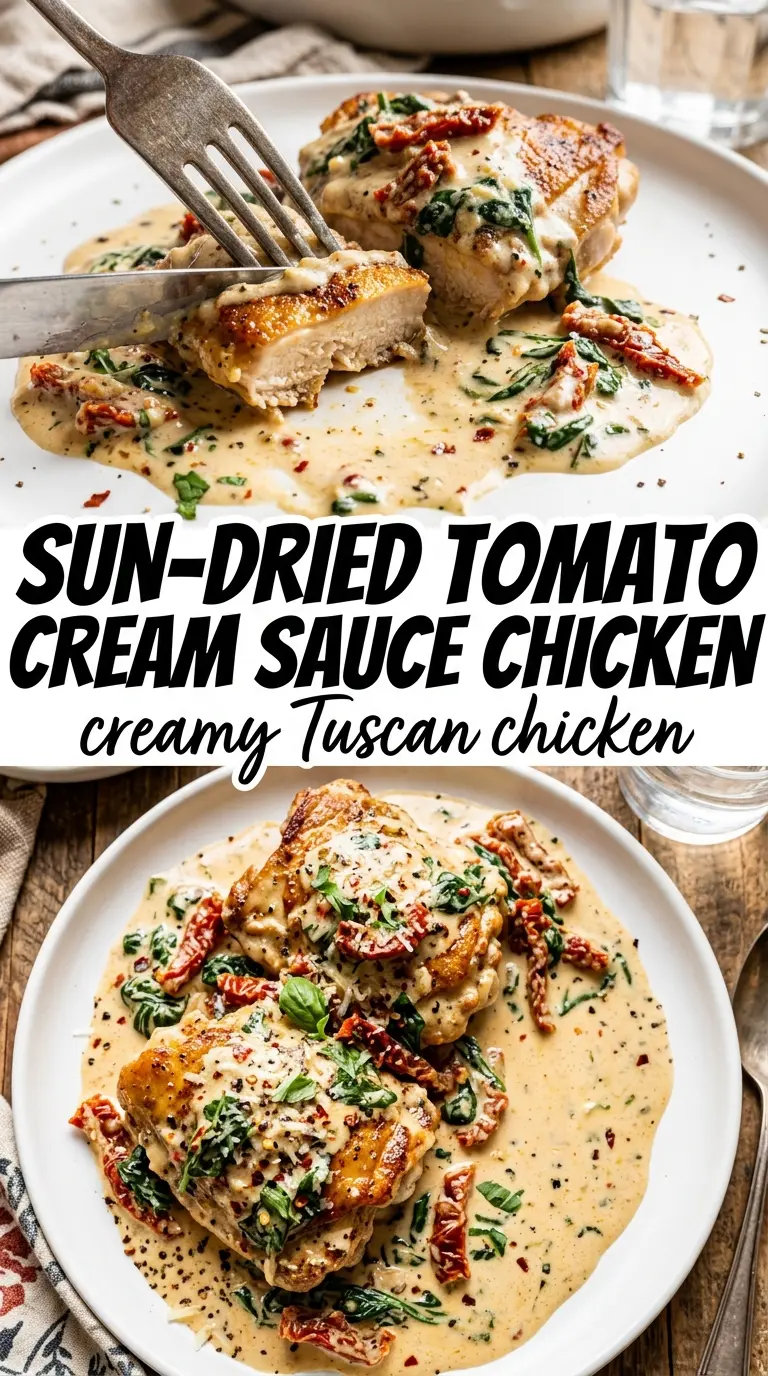
Golden seared chicken breasts in a silky sun-dried tomato and spinach cream sauce have a way of turning an ordinary dinner into the kind of meal people talk about after the plates are cleared. The sauce clings to the chicken instead of sliding off, the tomatoes bring a little sweetness and tang, and the spinach melts into the cream without turning the whole skillet heavy or dull. It tastes restaurant-style, but it cooks in one pan and stays grounded in ingredients you can keep on hand.
The part that makes this version work is the order. The chicken gets real color first, then the garlic and tomatoes bloom in the same pan so every browned bit gets pulled into the sauce. Cream and Parmesan go in after the broth has loosened the fond, which keeps the sauce smooth instead of grainy. A short simmer is enough to thicken it; if you cook it too hard, the dairy can separate and the sauce loses that glossy finish.
The sauce thickened up beautifully and coated the chicken instead of pooling at the bottom. I followed the timing exactly and the spinach stayed bright, not mushy.
Save this creamy Tuscan chicken for the nights when you want a silky Parmesan sauce, golden chicken, and one skillet on the stove.
The Sear Is What Gives This Tuscan Chicken Its Backbone
The biggest mistake with creamy skillet chicken is rushing past the browning step. Pale chicken tastes flat, and flat chicken makes a flat sauce. You want a deep golden crust on the outside before the chicken comes out of the pan; that crust becomes the foundation for everything that follows.
Another place people go wrong is simmering the cream too aggressively. Heavy cream can take heat, but Parmesan is less forgiving. Keep the sauce at a gentle simmer after the broth goes in, and pull the pan off the heat if it starts bubbling hard. That keeps the sauce smooth and gives the cheese time to melt in cleanly.
- Chicken breasts — Boneless, skinless breasts work well here because they sear fast and slice cleanly. If yours are thick, pound them to even thickness so they finish at the same time instead of drying out on the outside while the center catches up.
- Sun-dried tomatoes in oil — These bring concentrated sweetness and a little acidity that cuts through the cream. Dry-packed tomatoes won’t give you the same richness unless you soak them first, so the oil-packed kind is the better choice for this skillet.
- Heavy cream — This is what makes the sauce lush and spoon-coating. Half-and-half can work in a pinch, but it won’t thicken as smoothly and it’s more likely to look thin once the chicken goes back in.
- Parmesan — Use finely grated Parmesan, not a big dry shred, so it melts into the sauce instead of turning grainy. The cheese should disappear into the cream, not sit there as little clumps.
- Fresh spinach — Baby spinach wilts fast and keeps the sauce bright. Add it at the end so it stays green and tender; if you cook it too long, it turns dull and the sauce starts to taste overly cooked.
What Each Ingredient Is Actually Doing in This Recipe
- Primary ingredient (the star) — Quality matters most. Choose the best you can find.
- Cooking medium (oil, butter, or broth) — This carries flavors and prevents dryness.
- Seasonings (salt, pepper, spices, herbs) — Layer flavors so nothing overpowers. Build depth gradually.
- Aromatics (garlic, onion, herbs) — Cook with fat to bloom flavors. Become the foundation.
- Supporting ingredients — Complement the main ingredient without overpowering it.
- Sauce or liquid (if applicable) — Brings flavors together. Balance richness with acid.
- Acid (lemon, vinegar, wine, or other) — Brightens and prevents flat-tasting results.
- Final finish (garnish, glaze, or sauce) — Prevents one-dimensional taste and adds visual appeal.
Building the Sauce Without Breaking It
Getting the Chicken Browned First
Season the chicken generously and get it into a hot skillet with olive oil. You want to hear an immediate sizzle, then leave it alone long enough for a crust to form before flipping. If the pan is crowded, the chicken steams instead of browns, so cook in batches if you need to. Pull it when it reaches 165°F in the center and let it rest while you build the sauce.
Pulling the Flavor From the Pan
After the chicken comes out, add the garlic for just 30 seconds, long enough for it to smell sweet but not long enough to brown. The sun-dried tomatoes go in next so their oil and flavor soften into the pan drippings. When you pour in the broth, scrape up the browned bits at the bottom; that is where the depth comes from, and skipping it leaves the sauce tasting one-note.
Finishing the Cream Sauce
Stir in the cream, Parmesan, Italian seasoning, and red pepper flakes, then keep the heat low enough that the sauce barely shimmers. It should thicken in a few minutes and coat a spoon in a thin, glossy layer. If it looks separated or oily, the heat was too high; remove the pan from the burner and whisk gently until it comes back together.
Wilt, Return, and Serve
Add the spinach last and stir just until it collapses into the sauce. Return the chicken to the skillet and spoon sauce over the top so every piece picks up the tomatoes and basil. The sauce will thicken a touch more as it sits, so serve it right away once the chicken is hot through and the skillet looks glossy and full.
How to Adapt This Creamy Tuscan Chicken Without Losing What Makes It Work
Dairy-Free Version
Swap the heavy cream for full-fat canned coconut milk and use a dairy-free Parmesan-style cheese or leave the cheese out entirely. The sauce will be a little lighter and the coconut note will sit in the background, but the tomatoes and garlic still carry the dish. Keep the simmer gentle or the coconut milk can separate.
Chicken Thigh Swap
Boneless skinless thighs add more richness and stay juicier if you like a deeper, less lean result. They need a little longer in the pan, but they’re more forgiving than breasts and won’t dry out as fast. The sauce stays the same, though the final dish feels a bit more indulgent.
Make It Gluten-Free
This recipe is naturally gluten-free as written as long as your chicken broth is certified gluten-free. The texture and flavor don’t need any flour to thicken, so the sauce stays silky without extra starch. That’s one reason this skillet feels elegant without being fussy.
Lighter Sauce
Use half-and-half instead of heavy cream if you want a lighter finish, but keep the heat very low and expect a thinner sauce. It still tastes good, just less luxurious, and it’s more prone to reducing unevenly. If you go this route, let it simmer a little longer before adding the spinach.
Storage and Reheating
- Refrigerator: Store leftovers in an airtight container for up to 3 days. The sauce will thicken as it chills, and the spinach will soften a bit more.
- Freezer: It can be frozen, but cream sauces sometimes separate after thawing, so the texture won’t be as smooth as fresh. Freeze in a sealed container for up to 2 months if needed.
- Reheating: Warm it gently over low heat on the stove with a splash of broth or cream to loosen the sauce. High heat is the mistake here; it can split the dairy and turn the chicken tough.
Questions I Get Asked About This Recipe
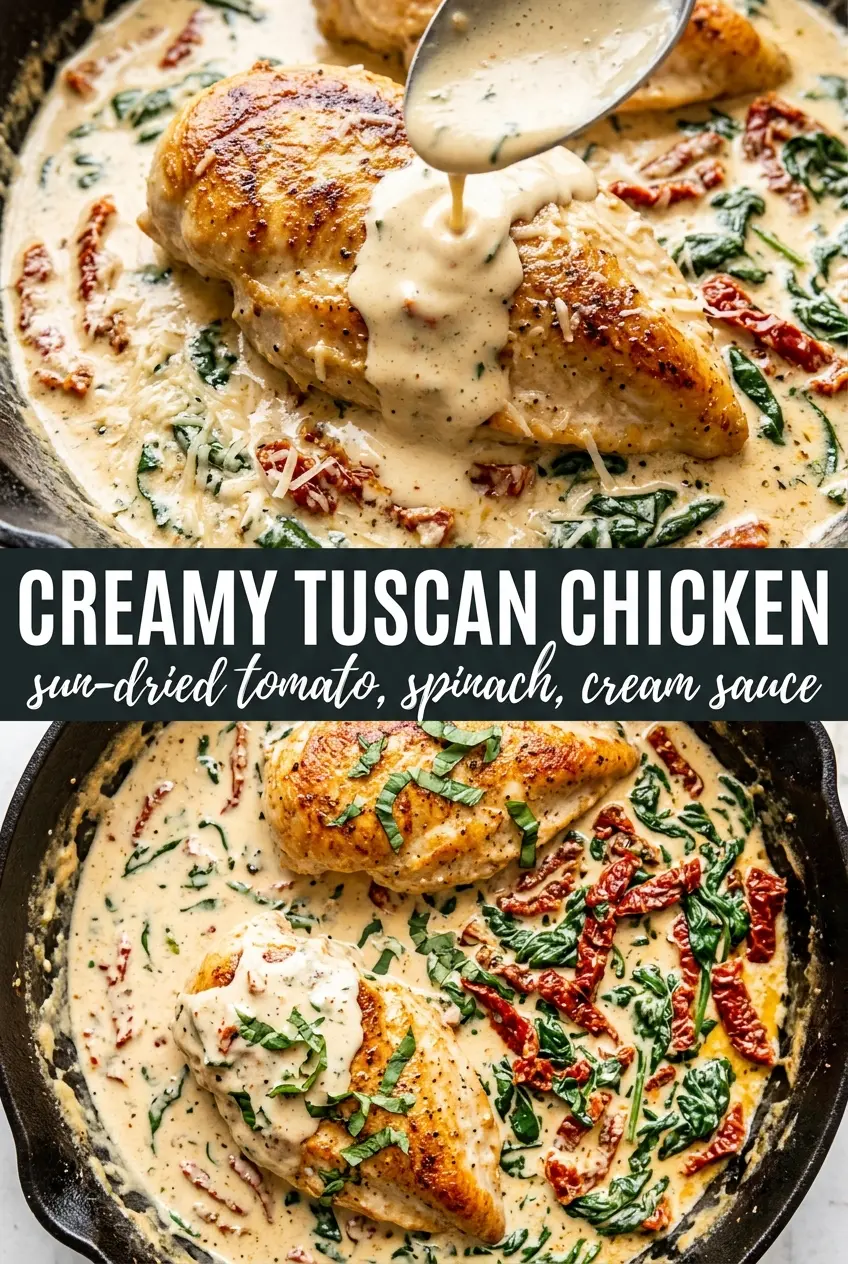
Creamy Tuscan Chicken
Ingredients
Equipment
Method
- Generously season the chicken breasts with salt, pepper, garlic powder, Italian seasoning, and smoked paprika. Heat the olive oil in a large skillet over medium-high heat until shimmering, then add the chicken and sear 5-6 minutes per side until golden and the internal temperature reaches 165°F.
- Remove the chicken from the skillet and keep it aside while you build the sauce. Scrape up any browned bits from the pan bottom so they dissolve back into the sauce later.
- Cook the minced garlic in the same skillet for 30 seconds, stirring until fragrant. Add the drained and sliced sun-dried tomatoes and cook for 1 minute.
- Pour in the chicken broth and deglaze, stirring to lift the browned bits from the pan. Stir in the heavy cream, Parmesan cheese, Italian seasoning, and red pepper flakes, then simmer 4-5 minutes until thickened and glossy.
- Stir in the fresh baby spinach until wilted, 30-60 seconds. Keep the sauce at a gentle simmer so it stays silky.
- Return the chicken breasts to the skillet and spoon the sauce over each breast. Simmer just until the chicken is warmed through, about 1-2 minutes.
- Garnish with fresh basil and serve right away with extra sauce from the skillet.