Slow-cooked beef short ribs turn deeply tender in the Crockpot, with meat that slides from the bone and a braising sauce that tastes like it worked all day because it did. The long cook softens the connective tissue, and the red wine broth picks up the richness from the ribs instead of drowning them out. What you end up with is the kind of dinner that feels sturdy and special at the same time.
The part that makes this version worth keeping is the sear at the start and the way the vegetables and wine build the sauce underneath the meat. Browning the ribs first gives the finished dish that dark, savory edge you can’t get from the slow cooker alone, and the tomato paste plus Worcestershire add body without making the sauce taste tomato-heavy. I also keep the seasoning simple here so the beef stays front and center.
Below, I’ve included the exact spots where people usually go wrong with short ribs, plus the small adjustments that help if you want to make the dish ahead or stretch it for a bigger dinner.
The ribs were fall-apart tender and the sauce thickened up beautifully at the end. I served them over mashed potatoes and my husband asked if we could put this in the regular dinner rotation.
Save these crockpot beef short ribs for the night you want deeply tender ribs and a rich red wine gravy over mashed potatoes.
The Sear Is What Keeps These Ribs From Tasting Flat
Short ribs can go gray and one-note in the slow cooker if they go in raw. The hot skillet step changes that. Once the surface has a deep brown crust, the braising liquid has something to build on, and the final sauce tastes rounder and more savory instead of just beefy.
The other common mistake is crowding the pan or rushing the browning. Give each side enough time to develop color before turning it. If the ribs steam instead of sear, they’ll still cook through, but they won’t have the same depth in the sauce.
- Browned bits matter. Those stuck-on pieces left in the skillet become part of the finished braising flavor once the liquid goes in.
- Fat renders as you sear. Don’t wipe the pan clean before adding the vegetables unless there’s an excessive amount of grease.
- Layering starts early. The onions, carrots, celery, tomato paste, and wine all do different work, but they depend on that first browned foundation.
What Each Ingredient Is Actually Doing In This Dish
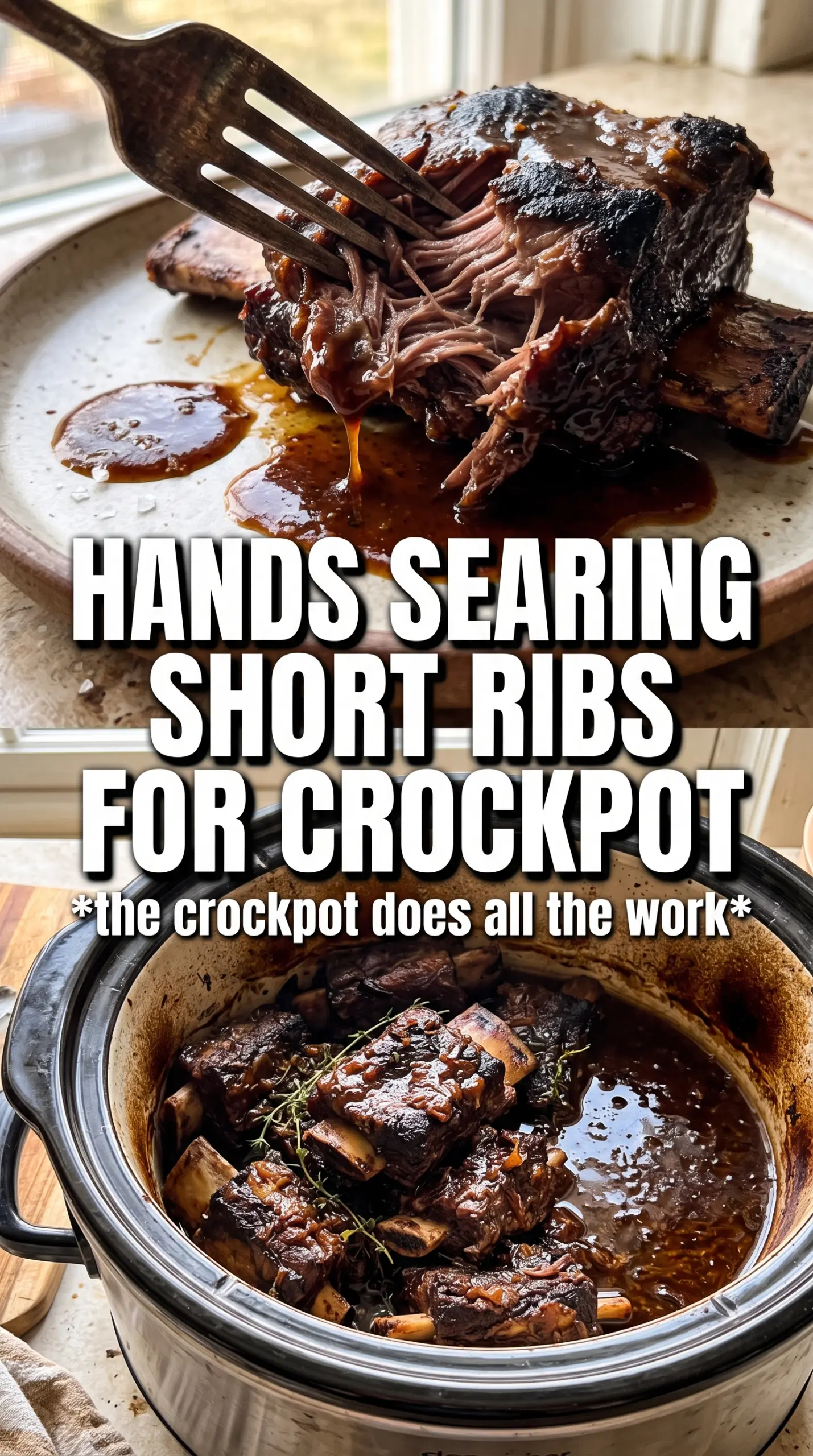
- Bone-in beef short ribs — Bone-in ribs bring more flavor and hold up better during the long cook. Boneless will work in a pinch, but the sauce loses some of that deep, roasted beef character.
- Red wine — This is what gives the sauce its backbone. Use something dry and drinkable; expensive wine is wasted here, but overly sweet wine will make the braising liquid taste muddled.
- Tomato paste — A small amount gives body and a subtle sweetness that helps the sauce taste like it simmered for hours. Cooking it briefly with the aromatics before the liquid goes in makes it taste less sharp.
- Worcestershire sauce — It adds fermented depth and a little tang that keeps the sauce from tasting heavy. There isn’t a perfect substitute, but a small splash of soy sauce plus a touch of vinegar gets you close.
- Cornstarch — Use it at the end for a clean, glossy finish. If you add it too early, it can thin out again during the long cook.
The Slow Cooker Timeline That Gives You Tender Ribs, Not Shreds
Getting the Browning Right
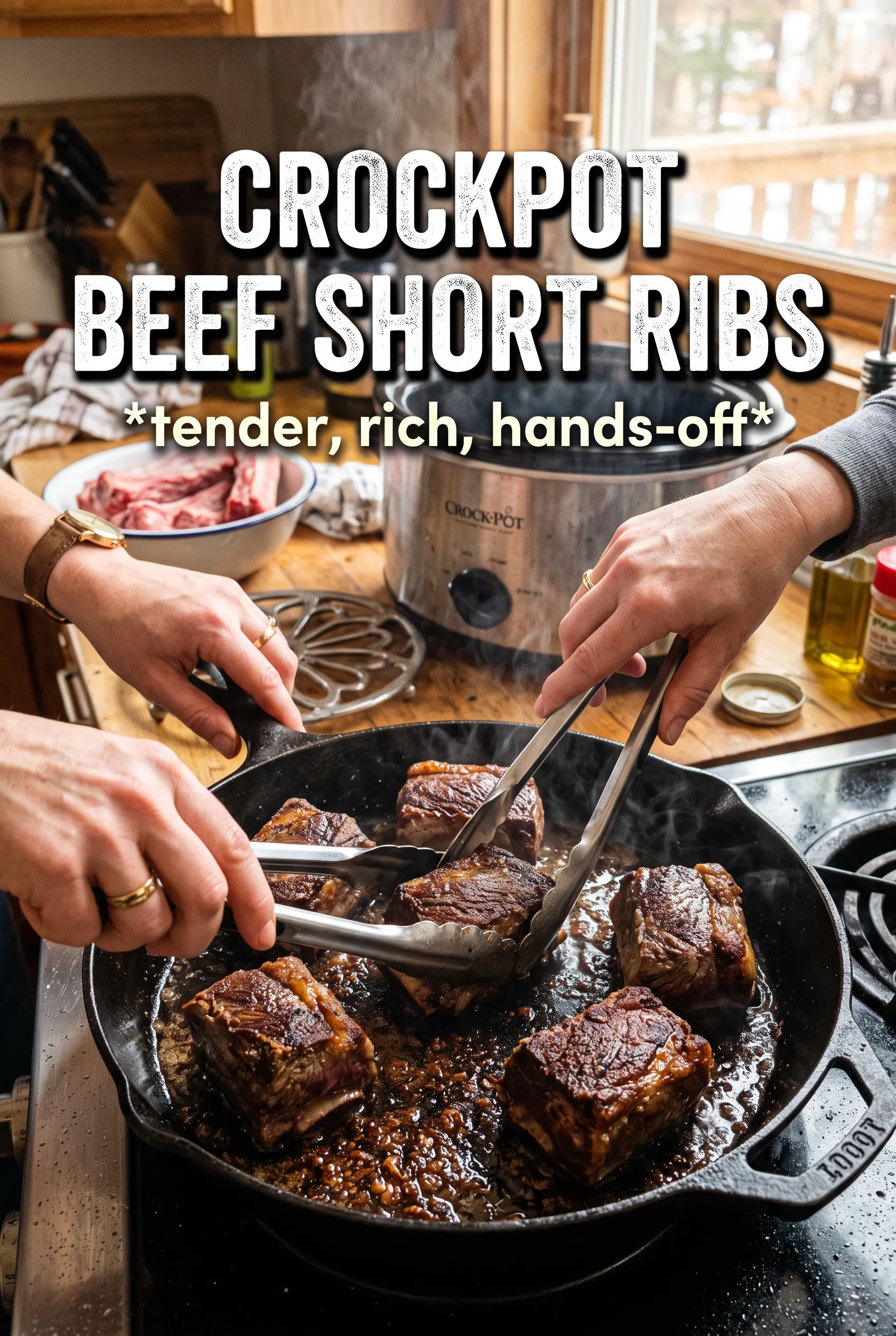
Season the ribs well before they hit the skillet, then sear them in hot oil until each side is deeply browned. You’re looking for a crust, not just a tan surface. If the pan is too crowded, the ribs release moisture and stop browning, so work in batches if needed.
Building the Braising Base
Put the onion, garlic, carrots, and celery in the slow cooker first, then set the ribs on top. That lets the vegetables soften under the meat and keeps the ribs lifted slightly so they braise instead of sitting flat in a heavy stew. Whisk the broth, wine, tomato paste, and Worcestershire together before pouring so the paste doesn’t clump in one corner.
Letting the Low Heat Do Its Job
Add the thyme, rosemary, and bay leaves, then cook on Low for 7 to 8 hours until the meat pulls back from the bone and yields easily with a fork. If you cook them on High, they can still get tender, but the sauce usually tastes less developed and the texture can turn stringy around the edges. Don’t lift the lid again and again; every peek steals heat and slows the braise.
Finishing the Sauce
Lift out the ribs and bay leaves, then skim off excess fat from the surface of the liquid. Stir in the cornstarch slurry and cook on High for about 15 minutes until the sauce coats a spoon. If it looks thin at first, keep going — it should thicken as the heat activates the starch and the liquid stops bubbling so aggressively.
Make It Without Wine
Replace the red wine with an equal amount of beef broth plus 1 tablespoon of red wine vinegar or balsamic vinegar. You’ll lose a little of the sauce’s depth, but you still get a rich braise with enough acidity to keep the flavor from turning flat.
Gluten-Free Short Ribs
This recipe is naturally close to gluten-free, but check your Worcestershire sauce and beef broth labels. Use a certified gluten-free version of both if needed, and the texture and finish stay the same.
Make It Ahead for Company
Cook the ribs a day ahead, chill them in the sauce, then reheat gently before serving. The flavor actually improves overnight, and the fat lifts off more cleanly once it’s cold, which makes the sauce easier to finish.
Stretching the Dish for More Guests
Add a few extra carrots and celery stalks, then serve the ribs over mashed potatoes or polenta so the sauce goes further. The braise itself doesn’t need much adjustment, but the extra vegetable base gives you more spoonable sauce and a fuller platter.
Storage and Reheating
- Refrigerator: Store the ribs and sauce for up to 4 days. The texture stays excellent, and the sauce often tastes even better the next day.
- Freezer: Freeze for up to 3 months in an airtight container. Let it cool first, then thaw overnight in the fridge so the sauce doesn’t separate as much when reheated.
- Reheating: Warm gently on the stove or in a covered baking dish at low heat until hot throughout. Don’t boil it hard, or the meat can dry out at the edges and the sauce can turn greasy.
Answers to the Questions Worth Asking
Crockpot Beef Short Ribs
Ingredients
Equipment
Method
- Season the short ribs generously with salt and pepper. Heat olive oil in a hot skillet and sear the ribs until deeply browned on all sides.
- Sear each side until the surface is dark and caramelized, about 3–4 minutes per side. Transfer the ribs to the Crockpot once browned.
- Add the onion, garlic, carrots, and celery to the Crockpot. Nestle the seared ribs on top of the vegetables for even braising.
- Whisk beef broth, red wine, tomato paste, and Worcestershire together, then pour over the ribs. Make sure the liquid comes partway up the sides of the meat.
- Add thyme, rosemary, and bay leaves to the Crockpot. Cook on Low for 7–8 hours, until the meat is falling off the bone.
- Remove the ribs and bay leaves from the Crockpot, then skim visible fat from the braising liquid. Return the braising liquid to the heat so it can thicken evenly.
- Stir cornstarch into a small amount of cold water to make a slurry, then whisk it into the hot braising liquid. Cook on High for 15 minutes, until the sauce turns glossy and coats the back of a spoon.
- Serve the ribs over mashed potatoes and spoon the thickened braising sauce on top. Garnish with thyme if desired, and serve immediately while hot.