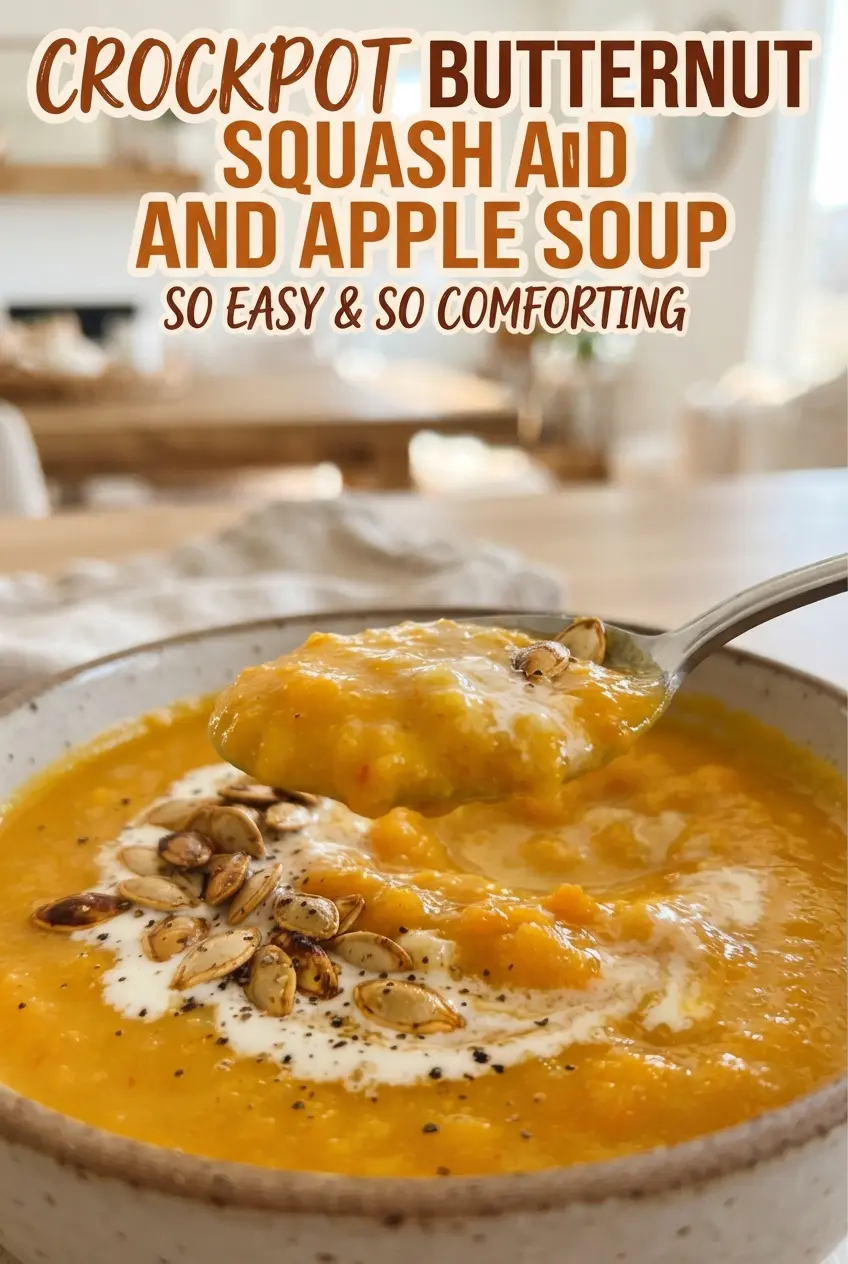
Silky butternut squash and apple soup has a way of tasting like it simmered all day in the best possible way, because it did. The squash turns velvety, the apples soften into the background, and the whole pot finishes with a sweet-savory balance that feels a little more interesting than standard squash soup. A swirl of cream on top and a handful of toasted pepitas give it just enough contrast to keep every spoonful lively.
What makes this version worth keeping around is the slow cooker method. The squash, apples, onion, carrots, and garlic all cook together until they’re soft enough to blend into a smooth base, and that long, gentle heat keeps the soup from tasting sharp or underdeveloped. The cinnamon, nutmeg, and thyme work best here because they have time to settle in without getting loud. The result is mellow, layered, and cozy without turning overly sweet.
Below, I’ve included the small details that matter most: how to keep the soup from tasting flat, which ingredient swaps actually work, and what to do if you want to make it dairy-free without losing that creamy finish.
The soup blended into the smoothest texture, and the apple gave it a gentle sweetness that wasn’t too much. I loved how the cinnamon and thyme tasted balanced instead of pumpkin-pie sweet.
Save this crockpot butternut squash and apple soup for a smooth, cozy bowl with sweet apple notes and a creamy finish.
The Step That Keeps This Soup From Tasting Flat
The biggest mistake with squash soup is seasoning it like a vegetable purée instead of a finished soup. Butternut squash and apples both bring sweetness, and if the broth and salt don’t have enough presence, the whole pot tastes soft and one-note. The fix is simple: season before cooking, then taste again after blending and after the cream goes in. That last check matters because dairy can dull the salt and spice a little.
Blending is the other place people lose the texture they wanted. If the squash isn’t fully tender, the soup turns gritty instead of silky, and no amount of blending will hide that. Cook until the cubes collapse easily when pressed with a spoon. If you’re using a regular blender instead of an immersion blender, work in batches and vent the lid carefully so the steam doesn’t build up.
What Each Ingredient Is Doing in the Pot

- Butternut squash — This is the body of the soup. It blends into a naturally creamy base and gives the finished bowl that deep golden color. Precut squash saves time, but cubes that are too large will take longer to soften, so keep them fairly even.
- Apples — They add brightness and a gentle sweetness that lifts the squash without making the soup taste like dessert. Tart-sweet apples such as Honeycrisp or Granny Smith both work, but if you want a softer, rounder flavor, use Fuji or Gala.
- Onion, carrots, and garlic — These build the savory backbone. Carrots echo the squash’s sweetness in a way that makes the soup taste fuller, while the onion and garlic keep it from drifting too far into baby-food territory.
- Broth — Use vegetable broth if you want the soup vegetarian, or chicken broth for a deeper, slightly richer finish. A broth with decent flavor matters here because there isn’t a long stovetop reduction to concentrate it later.
- Heavy cream or coconut milk — This is the finish that makes the soup taste polished. Heavy cream gives the smoothest, richest result, while coconut milk keeps it dairy-free and still creamy. Stir it in after blending so it stays velvety instead of cooking down.
How to Build the Soup So It Stays Velvety
Layer Everything in the Crockpot
Add the squash, apples, onion, carrots, and garlic first, then pour the broth over the top and season it right away. That early seasoning gives the vegetables a chance to absorb flavor as they cook instead of tasting seasoned only at the end. Cut the squash into even chunks so the pieces finish at the same time; uneven cubes leave you with some mush and some firm edges.
Cook Until the Vegetables Collapse Easily
Set the slow cooker on LOW for the most even result, especially if your squash pieces are on the larger side. You’re looking for vegetables that break apart with almost no resistance when pressed with a spoon. If they still feel a little firm in the center, the soup will blend up with tiny grainy bits instead of that clean, silky texture.
Blend Before Adding the Cream
Use an immersion blender right in the crockpot if you have one. Blend until the soup looks smooth and glossy, with no visible chunks of squash or onion. If you’re using a countertop blender, work carefully in batches and never fill it all the way with hot soup, because steam pressure can push the lid loose.
Finish With Cream and a Final Taste
Stir in the cream after blending, then taste again for salt. This is the point where the soup either wakes up or falls flat, and a pinch more salt usually fixes it. Ladle it into bowls while it’s hot, then finish with pepitas for crunch and a little cream swirl if you want the contrast to show up in every spoonful.
How to Adapt This for Different Diets and Different Pantries
Make It Dairy-Free Without Losing the Creamy Finish
Use full-fat coconut milk instead of heavy cream. It keeps the soup lush and smooth, though it adds a faint coconut note that works especially well with the cinnamon and nutmeg. If you want the flavor to stay more neutral, choose an unsweetened barista-style oat cream instead.
Make It Vegetarian With a Broth Swap
Vegetable broth works cleanly here and keeps the flavor lighter. Choose one with decent body, not a thin, flat-tasting one, because it’s carrying a lot of the seasoning underneath the squash. If your broth is low-sodium, expect to add a little extra salt at the end.
Use Pears Instead of Apples for a Softer Sweetness
Pears give the soup a gentler fruit note and make it taste a little softer and rounder. They won’t add the same bright edge as apples, so the finished soup leans more mellow, but the texture stays just as smooth once blended.
Storage and Reheating
- Refrigerator: Store in an airtight container for up to 4 days. It thickens a bit as it sits, which is normal.
- Freezer: Freezes well for up to 3 months, though soups with dairy can sometimes separate slightly. For the smoothest result, freeze it before adding the cream and stir the cream in after reheating.
- Reheating: Reheat gently on the stove over low heat, stirring often. High heat can make the cream split and can dull the squash flavor, so warm it slowly until it’s steamy, not boiling.
Answers to the Questions Worth Asking
Crockpot Butternut Squash and Apple Soup
Ingredients
Equipment
Method
- Add the butternut squash, apples, onion, carrots, and garlic to the crockpot. Spread them out in an even layer so they cook uniformly.
- Pour in the chicken or vegetable broth, then add ground cinnamon, nutmeg, dried thyme, salt, and black pepper. Stir just enough to combine the seasonings into the liquid.
- Cover and cook on LOW for 6-8 hours until everything is very tender, or on HIGH for 3-4 hours. Look for a soft squash texture that breaks easily when pressed.
- Blend the soup smooth with an immersion blender. Blend until no chunks remain, using short bursts and keeping the blender submerged to avoid splatter.
- Stir in the heavy cream or coconut milk, then taste and adjust salt to your preference. Keep stirring until the color looks consistently golden and creamy.
- Ladle the soup into bowls and top with a swirl of cream. Finish with toasted pepitas and, if you want, an extra light pinch of cinnamon.