Sweet-tart rhubarb turns tender in the oven while the custard bakes up around it, and the whole thing lands somewhere between pie and pudding in the best possible way. The top sets into a delicate golden layer, the center stays creamy, and every slice holds together just enough to feel neat on the plate.
What makes this version work is the balance of eggs, flour, and melted butter. The rhubarb sits in the pan first, so it softens from the bottom up and gives off just enough juice to flavor the custard without making it watery. Whisking everything until smooth keeps the texture even, and cooling the pie completely matters more than people think because the custard finishes setting as it chills.
Below you’ll find the small details that keep the filling silky, plus a few smart swaps and storage notes for when you want to make it ahead. If you’ve ever had a rhubarb dessert that sliced messy or baked up gummy, this one solves both problems.
The custard set up beautifully and the rhubarb stayed bright and tender instead of sinking into a soupy mess. I chilled it overnight and the slices came out clean with whipped cream on top.
Save this crustless rhubarb custard pie for the days when you want a creamy, old-fashioned dessert with a golden top and no crust to roll.
The Custard Sets Best When the Rhubarb Stays on the Bottom
This pie looks simple, but the order matters. Rhubarb goes into the pan first so the custard can flow around it and bake into the fruit instead of getting diluted by juice on top. If you stir the rhubarb into the batter, the pieces tend to float and the texture gets uneven.
The other thing that saves this pie is the cooling time. When it comes out of the oven, the center should have a gentle wobble, not a slosh. The custard firms up as it cools and then tightens fully in the fridge, which is why a warm slice will always seem softer than a chilled one.
- Rhubarb — Fresh rhubarb gives the cleanest tart flavor and the best texture. Frozen rhubarb works in a pinch, but thaw it first and drain off excess liquid so the custard doesn’t turn loose.
- Eggs — These do the setting work. Four eggs give enough structure to hold the pie together without turning it rubbery.
- Melted butter — Butter adds richness and helps create that slightly golden, almost self-crusting top. You don’t need browned butter here; plain melted butter keeps the flavor clean.
- Flour — The flour is what keeps this from baking up like a thin custard. It gives the pie a soft, sliceable body, so don’t swap it out unless you know the texture will change.
- Vanilla — Vanilla rounds out rhubarb’s sharp edge. It won’t hide the tartness, but it keeps the filling from tasting flat.
What Each Ingredient Is Actually Doing in Custard with Rhubarb
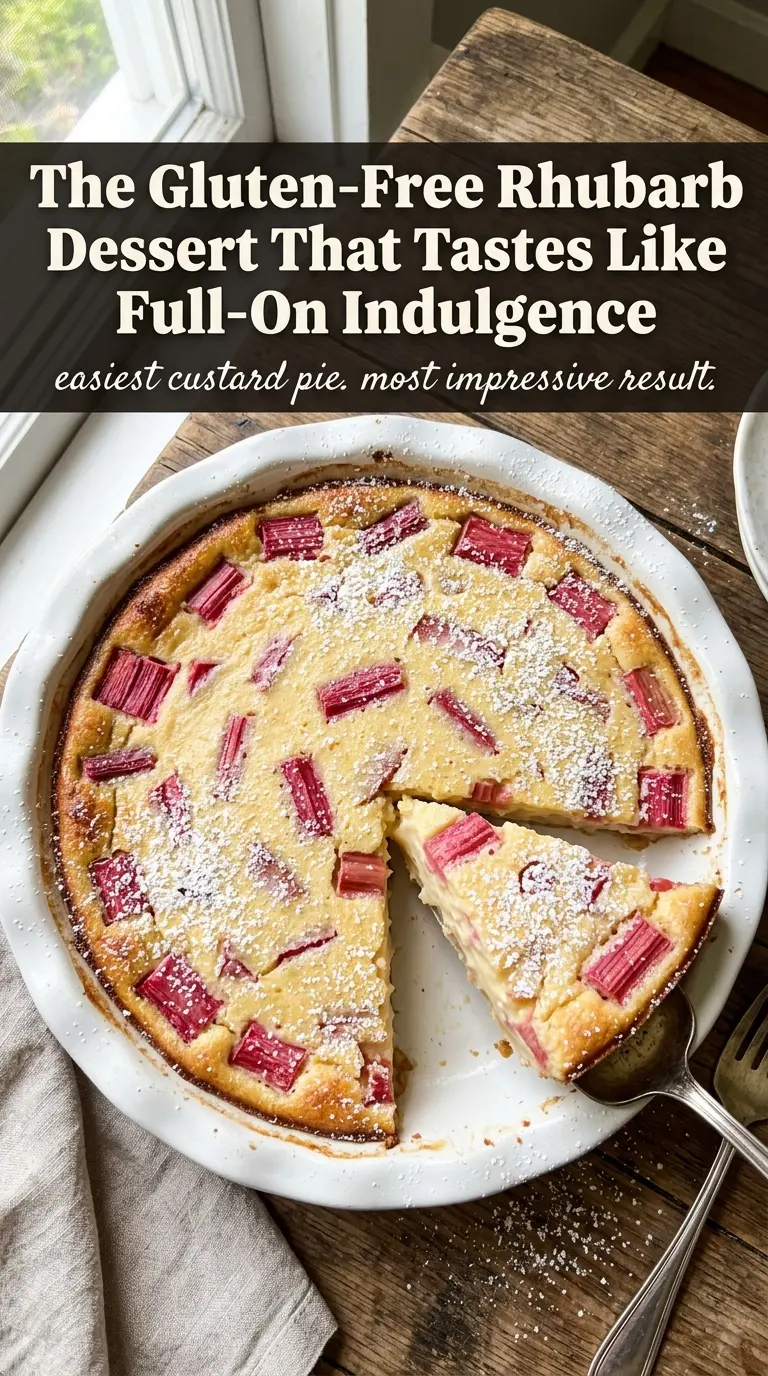
- Custard base (eggs, milk, sugar) — The custard should be silky and smooth. The rhubarb on the bottom helps support the custard as it sets.
- Rhubarb layer (on the bottom) — The rhubarb provides structure and helps the custard set evenly. It also adds flavor to the whole dessert.
- Eggs (tempered properly) — The eggs need to be warmed gradually so they don’t scramble. Proper tempering creates smooth custard.
- Heat (gentle, controlled) — The custard needs to be heated to just the right temperature (around 170-175°F) to set. Too hot and it scrambles; too cool and it won’t set.
- Rhubarb preparation (cooked and drained) — The rhubarb should be cooked slightly and excess liquid drained. This prevents the bottom from being too watery.
- Setting time (full chilling) — The custard needs at least 4 hours to set properly with the rhubarb. The rhubarb at the bottom helps anchor the custard as it firms.
- Sugar for sweetness and body — The sugar helps the custard have the right texture. It also sweetens the rhubarb layer.
- Vanilla or almond extract — These add flavor that complements the rhubarb. They also help mask any raw egg flavor.
Whisk the Batter Until It Looks Completely Smooth
Start by spreading the diced rhubarb evenly in the greased pie plate. That even layer matters because crowded fruit can bake in clumps and leave dry patches of custard elsewhere. In a bowl, whisk the sugar, eggs, melted butter, flour, milk, vanilla, and salt until no flour streaks remain and the mixture looks glossy and pale.
Pour it slowly over the rhubarb so the fruit stays mostly in place, then tap the pan once or twice on the counter to release any air bubbles. Bake until the top is deeply golden and the center is set with just a slight jiggle when you nudge the pan. If the middle still sloshes, give it a few more minutes; pulling it too early is the fastest way to end up with a runny middle after cooling.
Preparing the Pan and Rhubarb
Grease a 9-inch deep-dish pie plate well so the custard doesn’t grab the sides as it bakes. Dice the rhubarb into even pieces so it softens at the same rate; larger chunks can stay a little crunchy while the rest of the pie is already done. Spread it in one layer across the bottom, not piled in the center.
Mixing the Custard Base
Whisk the eggs and sugar first, then add the melted butter, flour, milk, vanilla, and salt. Keep whisking until the flour disappears completely, because any dry pockets will show up as little gummy spots in the baked pie. The batter should pour like a thin cake batter.
Baking Until the Center Just Sets
Bake at 350°F for 45 to 50 minutes, watching for a golden brown top and edges that look set. The center should still have the faintest wobble when you gently shake the pan. If the top browns before the middle is done, tent it loosely with foil for the last part of baking.
Cooling Before the First Slice
Let the pie cool completely on the counter, then chill it for at least 2 hours before slicing. That rest isn’t optional if you want clean pieces, because the custard tightens as it cools. Serve it chilled with whipped cream so the tart rhubarb and creamy filling stay balanced.
Small Swaps That Still Keep the Pie Creamy and Sliceable
Make it gluten-free with a 1:1 baking blend
A good 1:1 gluten-free flour blend works here because the flour is supporting the custard, not building a tall structure. The texture will be a little softer, but the pie still slices well once chilled. Skip almond flour or coconut flour; they won’t thicken the batter the same way.
Use frozen rhubarb when fresh isn’t available
Frozen rhubarb can work, but thaw it fully and drain off the liquid before adding it to the pan. If you skip that step, the custard has to fight extra moisture and may bake up softer in the middle. The flavor stays bright, though the fruit will be a little less firm.
Cut the sugar back for a sharper finish
If you like a tarter dessert, reduce the sugar slightly, but don’t cut it too far or the custard loses body and the rhubarb can taste harsh. Sugar here does more than sweeten; it helps the filling bake up tender and balanced.
Swap the whipped cream for vanilla yogurt
A spoonful of thick vanilla yogurt on top adds tang and keeps the dessert a little lighter. The topping becomes more breakfast-brunch friendly, but it won’t melt as fast as whipped cream, so the contrast stays nice on a warm plate.
Storage and Reheating
- Refrigerator: Store covered for up to 4 days. The custard stays best chilled and may soften slightly after the second day.
- Freezer: Freezing isn’t ideal for this pie because the custard can turn watery after thawing. If you must freeze it, wrap slices tightly and thaw in the refrigerator overnight.
- Reheating: Serve it cold or let a slice sit at room temperature for 15 to 20 minutes. Microwaving can make the custard weep, so it’s better to avoid heat unless you want a warm slice with a softer set.
Questions I Get Asked About This Recipe
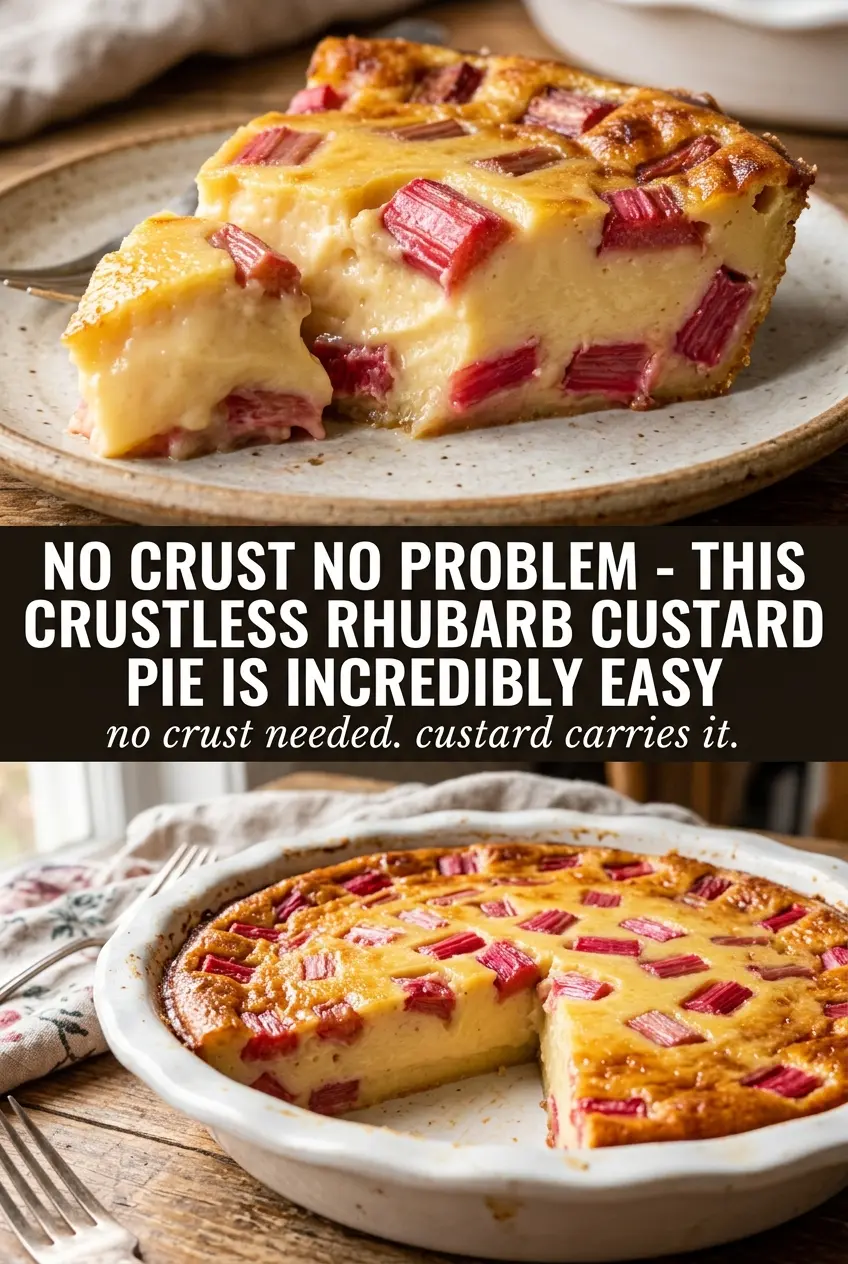
Easy Crustless Rhubarb Custard Pie
Ingredients
Equipment
Method
- Preheat oven to 350°F and grease a 9-inch deep-dish pie plate to prevent sticking and promote easy release.
- Spread diced fresh rhubarb evenly in the bottom of the prepared pie plate so the rhubarb distributes throughout the custard.
- Whisk together sugar, eggs, melted butter, all-purpose flour, milk, vanilla extract, and salt until smooth.
- Pour the egg mixture over the rhubarb and tap the pan gently to release air bubbles for a smoother custard texture.
- Bake at 350°F for 45-50 minutes until the custard is set and the top is golden brown.
- Cool the pie completely at room temperature before slicing to keep the custard from breaking.
- Refrigerate for at least 2 hours to firm the custard for clean slices.
- Serve chilled with whipped cream.