Caramelized onions, tender chicken, and creamy orzo bake together under a golden Gruyere crust that tastes like French onion soup turned into dinner. The onions melt into the broth as they cook, the orzo absorbs all that savory flavor, and the finished casserole lands in that sweet spot between spoonable and sliceable. It’s the kind of one-pan meal that feels calm on a weeknight but still looks like you put real thought into it.
The key is giving the onions enough time to go deep brown before anything else goes in. That slow caramelization is what gives the dish its backbone, and the Worcestershire, wine, and beef broth build that rich, onion-soup style base without making the casserole heavy. Cream cheese smooths everything out at the end, while Gruyere gives you the nutty, stretchy top that makes this feel finished.
Below, I’ve included the timing cues that keep the orzo from turning mushy and the chicken from drying out. There’s also a note on swaps that still keep the casserole creamy and balanced.
The onions turned out deeply caramelized and the orzo stayed creamy instead of turning gluey. I followed the timing exactly, and the Gruyere on top baked into the best golden crust.
Save this French Onion Chicken Orzo Casserole for the nights when you want deep caramelized flavor, creamy orzo, and a golden Gruyere top in one pan.
The Onion Layer You Can’t Rush Without Paying for It Later
This casserole only works if the onions go all the way to deep golden brown before the liquids go in. Pale onions give you sweetness; properly caramelized onions give you depth, body, and that French onion flavor that makes the whole dish taste built, not merely mixed. If you stop too early, the broth tastes flat and the topping ends up carrying all the interest.
The other place people stumble is the orzo. It cooks right in the pan, so it’s pulling liquid from the broth and the chicken at the same time. That’s why the simmer before the bake matters: you want the pasta moving, not boiling hard, so it thickens the casserole instead of breaking apart. If the pan looks too dry before it goes into the oven, the orzo will finish ahead of the chicken and the texture will go past creamy into clumpy.
What Each Ingredient Is Actually Doing in This Casserole

- Onions — These are the backbone of the dish, not a background note. Slice them thin and give them time; a quick sweat won’t replace the deep savoriness you need here.
- Beef broth — It reinforces the French onion soup flavor and gives the orzo a richer base than chicken broth would. If you only have chicken broth, the casserole still works, but the finished dish will taste lighter and less robust.
- Dry white wine — The wine lifts the sweetness of the onions and deglazes the pan so nothing useful gets left behind. Cook it for the full couple of minutes so the sharp edge disappears.
- Cream cheese — This is what turns the liquid into a creamy sauce without needing flour. Cube it so it melts evenly; a cold block dropped in whole will take longer and can leave small soft lumps.
- Gruyere — Gruyere gives you that nutty, melty top that belongs on French onion anything. Swiss can stand in, but it won’t brown with the same depth or taste as rounded.
- Chicken breast — Dice it evenly so it cooks at the same rate as the orzo. If the pieces are too large, the pasta will be done before the chicken is fully tender.
Building the Casserole So the Orzo Stays Creamy
Caramelize the onions until they taste sweet, not just soft
Melt the butter in a large oven-safe skillet and cook the onions over medium heat until they turn deep brown and smell almost jammy. Stir often enough to keep the bottom from scorching, but don’t keep the heat too high or the onions will burn before they finish softening. This stage takes time, and that’s the point. The color in the pan becomes the flavor in the casserole.
Cook the wine off before the broth goes in
Once the garlic and thyme are fragrant, add the wine and let it bubble until the pan smells less sharp and more rounded. If you rush this, the casserole can taste boozy instead of balanced. The wine should leave behind a little sheen, not a puddle, before you add the broth and Worcestershire.
Let the orzo simmer gently before it bakes
Stir in the broth, Worcestershire, orzo, and chicken, then bring the pan just to a simmer. You want the liquid moving in small bubbles, not a hard boil, because a full boil can make the orzo break down too quickly and tighten the sauce too much. Stir in the cream cheese once the simmer settles so it melts cleanly into the sauce. Then season, top with Gruyere, and bake until the cheese is golden and the chicken is cooked through.
How to Adapt It for Different Kitchens and Different Nights
Make It Gluten-Free Without Losing the Creamy Finish
Use a gluten-free orzo that holds up to baking, and check the broth and Worcestershire label since those are the usual hidden sources of gluten. The texture may be a touch softer than wheat-based orzo, so pull it from the oven as soon as the pasta is tender and the cheese is browned.
Dairy-Free Version That Still Tastes Rich
Swap the butter for olive oil and use a plain dairy-free cream cheese that melts smoothly. For the topping, use a good dairy-free shredded mozzarella-style cheese rather than skipping it entirely, because the top layer helps lock in moisture while the casserole finishes.
Use Rotisserie Chicken for a Faster Weeknight Shortcut
Stir in shredded cooked chicken during the broth stage instead of using raw diced chicken. That cuts the bake time down a bit and keeps the meat tender, but the sauce still needs the full simmer so the orzo can cook properly.
Storage and Reheating
- Refrigerator: Store covered for up to 4 days. The orzo will thicken as it sits, which is normal for a casserole like this.
- Freezer: It freezes, but the texture softens a little after thawing because of the cream cheese and pasta. Freeze in portions for best results and thaw in the fridge before reheating.
- Reheating: Reheat covered in the oven at 325F with a splash of broth or water stirred in first. The common mistake is blasting it in the microwave until the chicken turns dry and the pasta gets tight.
Questions I Get Asked About This Recipe
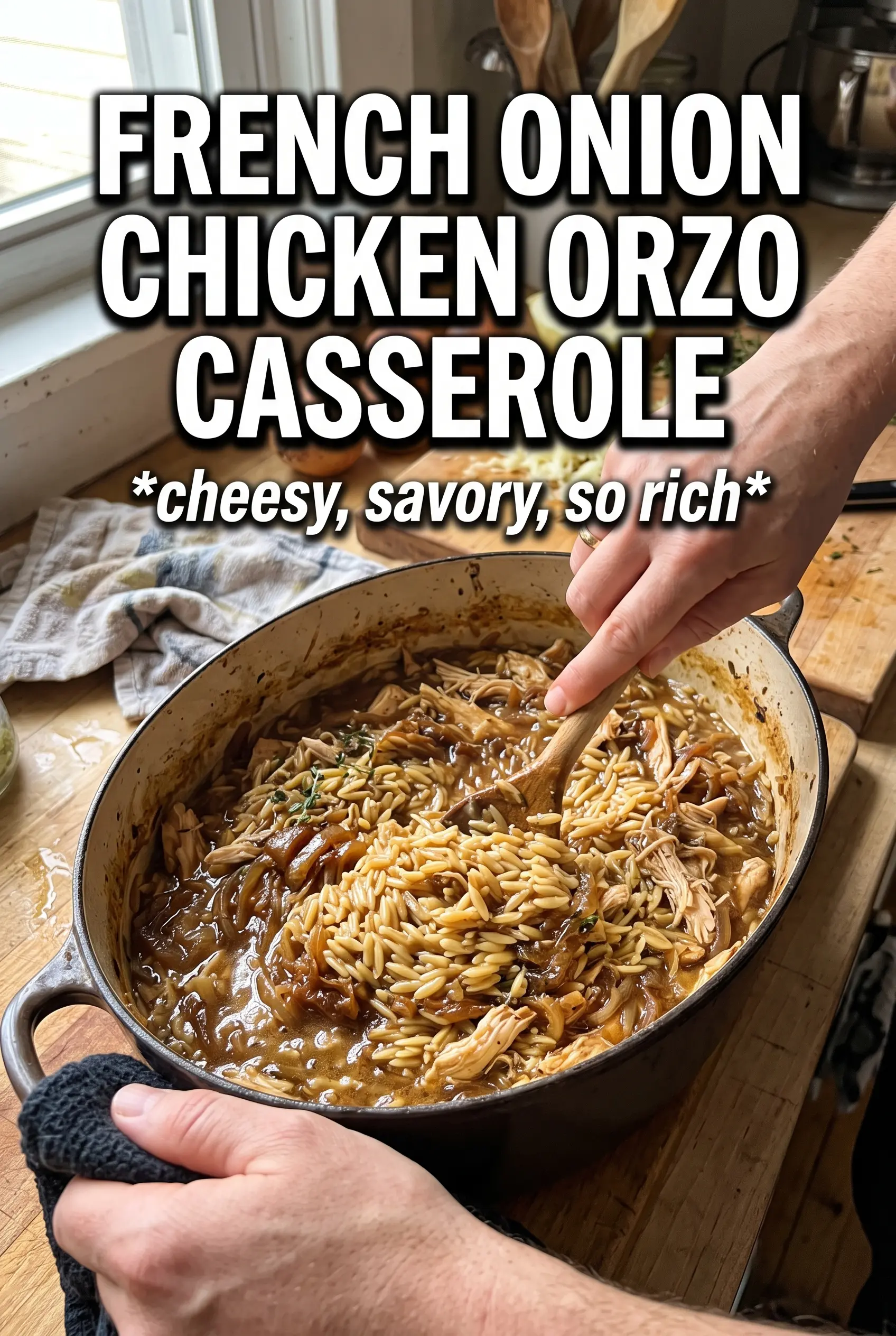
French Onion Chicken Orzo Casserole
Ingredients
Equipment
Method
- Preheat the oven to 375F so it’s ready for baking once the orzo is simmered. Keep the oven closed until the skillet goes in.
- Melt the butter in a large oven-safe skillet over medium heat. Add the onions and cook 30-35 minutes, stirring now and then, until deeply caramelized (dark golden-brown with sticky browned bits).
- Add the garlic and dried thyme and cook 2 minutes. Stir until fragrant and lightly toasted.
- Pour in the white wine and cook 2 more minutes. Let it reduce slightly while scraping up browned onion bits.
- Add the beef broth, Worcestershire sauce, and uncooked orzo, then stir in the diced chicken. Make sure the orzo and chicken are evenly distributed throughout the onion mixture.
- Bring the mixture to a simmer, stirring occasionally. Cook until the cream cheese melts in.
- Scatter the cubed cream cheese into the simmering skillet and stir until fully melted and creamy. You should see a smooth, lightly thickened sauce coating the orzo.
- Season with salt and pepper to taste. Then spread the shredded Gruyere evenly over the top.
- Bake 25-30 minutes at 375F, until the orzo is cooked, the chicken is done, and the cheese is golden. If needed, broil 1-2 minutes to deepen the browned crust, keeping a close eye.
- Garnish with fresh thyme right before serving. The leaves should look bright green against the golden cheese surface.