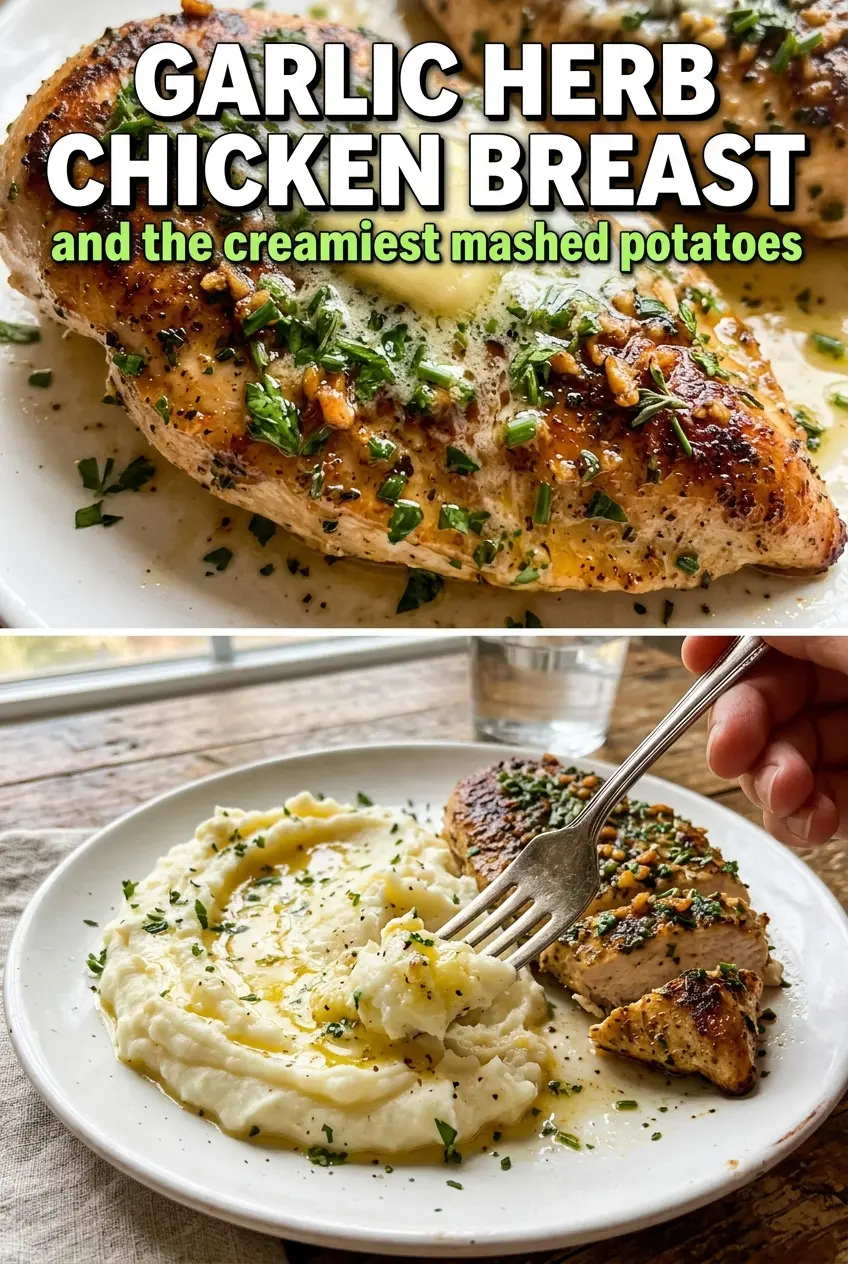
Golden-seared chicken breast with a garlicky herb pan sauce and a pile of buttery mashed potatoes is the kind of dinner that lands on the table looking like you spent all day on it, even when you didn’t. The chicken stays juicy because it gets a hard sear first, then finishes in the pan sauce instead of drying out in the oven. The potatoes stay clean and creamy, not gluey, so they hold up under the sauce instead of dissolving into it.
What makes this version work is the order. The chicken gets seasoned before it hits the pan, so the crust has actual flavor, and the sauce starts with the browned bits left behind after searing. Those bits matter. They carry most of the savory depth in the dish, and once you add broth and cream, they melt into a pan sauce that tastes like it simmered longer than it did. Warm cream in the potatoes also keeps the texture smooth, which is one of those small details that makes the whole plate feel pulled together.
Below you’ll find the exact cues I watch for when the chicken is ready, the potato texture that tells you to stop mashing, and the swaps that still keep this dinner balanced and comforting.
The chicken stayed juicy and the pan sauce thickened just enough to coat the potatoes without turning watery. I used the full 4 minutes on the sauce and it tasted like something from a restaurant.
Save this garlic herb chicken with mashed potatoes for a dinner that gives you juicy chicken, silky pan sauce, and buttery potatoes on one plate.
The Sear That Keeps the Chicken Juicy Before the Sauce Ever Starts
The biggest mistake with pan-seared chicken breast is trying to rush it on heat that’s too high, then walking away before the crust can form. You want a steady medium-high sear that gives the outside color without scorching the garlic powder and dried herbs. Once the chicken releases easily from the pan, that’s your signal that the crust has set and the browning is where it should be.
Another common failure is slicing in too early. Let the chicken rest while you build the sauce so the juices settle back into the meat instead of running out onto the cutting board. That short rest matters here because the sauce is thin enough to work with, and you want the chicken to stay the main event, not turn stringy under the knife.
What the Chicken, Herbs, and Cream Are Each Doing Here

- Boneless skinless chicken breasts — These cook quickly and slice neatly over the potatoes. If yours are very thick, pound them to an even thickness so the thinner end doesn’t dry out before the center is done.
- Fresh thyme and rosemary — Dried herbs season the chicken well enough, but the fresh herbs in the sauce give it a brighter finish. If rosemary is strong for you, use a little less than you think; it can take over fast.
- Chicken broth — This pulls the browned bits off the pan and turns them into the base of the sauce. Use a low-sodium broth if you want more control, since the pan will already have salt from the chicken seasoning.
- Heavy cream — This gives the sauce its body and keeps it from tasting thin. Half-and-half can work in a pinch, but the sauce will be lighter and a little less stable.
- Yukon gold potatoes — They mash up smooth and buttery without turning chalky. Russets will work, but they’re drier and need a little more cream to stay plush.
Building the Pan Sauce While the Potatoes Stay Creamy
Getting the Potatoes to the Right Texture
Start the potatoes first so the timing lines up with the chicken. Boil them in salted water until a fork slides through without resistance, and don’t stop at barely tender; undercooked potatoes leave tiny lumps that never mash out. Drain them well before adding butter and warm cream, because extra water is what makes mashed potatoes heavy and loose at the same time.
Seasoning and Searing the Chicken
Pat the chicken dry, then season it on both sides with salt, pepper, garlic powder, and dried herbs. When it hits the pan, you should hear an even sizzle, not a frantic pop, and the chicken should lie flat without curling too much. If the pan is crowded or the heat is too low, the chicken steams and you lose the crust that makes the sauce taste richer later.
Deglazing Into the Sauce
After the chicken comes out, lower the heat and add the butter, garlic, broth, and cream to the same pan. Stir and scrape until the browned bits dissolve; that’s where the savory depth comes from. If the garlic starts browning hard before the liquid goes in, the heat is too high and the sauce will taste sharp instead of round.
Finishing and Serving
Simmer the sauce just until it coats a spoon lightly, then stir in the fresh thyme and rosemary. Spoon the mashed potatoes onto the plate first, set the chicken beside them, and drizzle the sauce over both while it’s still hot and glossy. If the sauce looks thin, give it another minute; if it gets too thick, a splash of broth loosens it right back up.
How to Adjust This Dinner Without Losing the Comfort Food Feel
Make it dairy-free with olive oil and a non-dairy mash
Use olive oil instead of butter for the sauce and swap the cream in the potatoes for warm unsweetened oat milk or cashew milk. The sauce will be a little lighter and less velvety, but the garlic and herbs still carry it. Keep the heat low when you add the non-dairy milk so it doesn’t separate.
Use chicken thighs for a richer, more forgiving version
Boneless skinless thighs stay juicier and give you a little more wiggle room on timing. They take a few extra minutes to cook through, but the payoff is a darker, richer pan sauce because the drippings are a little more pronounced.
Make it gluten-free without changing the texture
This recipe is naturally gluten-free as written as long as your broth is certified gluten-free. The sauce doesn’t rely on flour, so it stays silky without needing any extra thickener.
Storage and Reheating
- Refrigerator: Store the chicken, sauce, and mashed potatoes in separate airtight containers for up to 4 days. The potatoes may tighten a bit, but they’ll loosen again with gentle reheating.
- Freezer: The chicken freezes well for up to 2 months, though the cream sauce may separate a little after thawing. The mashed potatoes freeze better than the sauce if they were made with plenty of butter and cream.
- Reheating: Warm the chicken and sauce slowly in a skillet over low heat with a splash of broth, and reheat the potatoes with a little cream or milk. High heat is the mistake here; it dries out the chicken and can make the sauce break.