Cold pasta salad lives or dies by the texture of the noodles, and this gluten-free Italian pasta salad gets that part right. The pasta stays tender without turning mushy, the salami brings salt and chew, and the mozzarella softens just enough after chilling to make every bite feel balanced. It’s the kind of side dish that disappears fast because it tastes like a full meal, not an afterthought.
The key here is treating gluten-free pasta gently. It usually needs a careful boil, a cold rinse to stop the cooking, and enough dressing time to soak up flavor without falling apart. A rotini or penne with ridges holds onto the Italian dressing better than a smooth shape, and chilling the salad for at least two hours gives the cucumbers, onions, and herbs time to settle into the pasta instead of sitting on top of it.
Below, I’m breaking down the one step that keeps gluten-free pasta salad from going gummy, plus the ingredient swaps that still give you a bright, sturdy salad you can serve with confidence.
The pasta held up beautifully after chilling, and the dressing soaked in without making it soggy. I added a little extra Italian seasoning before serving and it tasted even better the next day.
Save this gluten-free Italian pasta salad for picnics, potlucks, and make-ahead lunches.
The Trick to Keeping Gluten-Free Pasta from Falling Apart
Gluten-free pasta can go from firm to fragile fast, especially once it sits in dressing. The fix is a little more control during the boil and a little less handling after it’s drained. Cook it only to the point where it’s tender but still has a slight bite in the center, then rinse it under cold water so the cooking stops immediately. That rinse also helps remove surface starch, which is part of what makes gluten-free noodles clump or turn sticky.
The other mistake is tossing it too aggressively while it’s warm. Once the pasta is drained, let it sit a minute so excess water drains off, then fold everything together with a light hand. The dressing will continue to work as the salad chills, and the pasta will absorb flavor without collapsing.
- Cold rinsing is non-negotiable here. It protects the texture and keeps the salad from steaming itself into mush.
- Short, sturdy shapes like rotini and penne hold dressing better than long noodles or delicate shells.
- If your gluten-free pasta package gives a wide time range, start checking early. Overcooked GF pasta breaks apart faster than regular pasta.
What Each Ingredient Is Actually Doing in This Salad
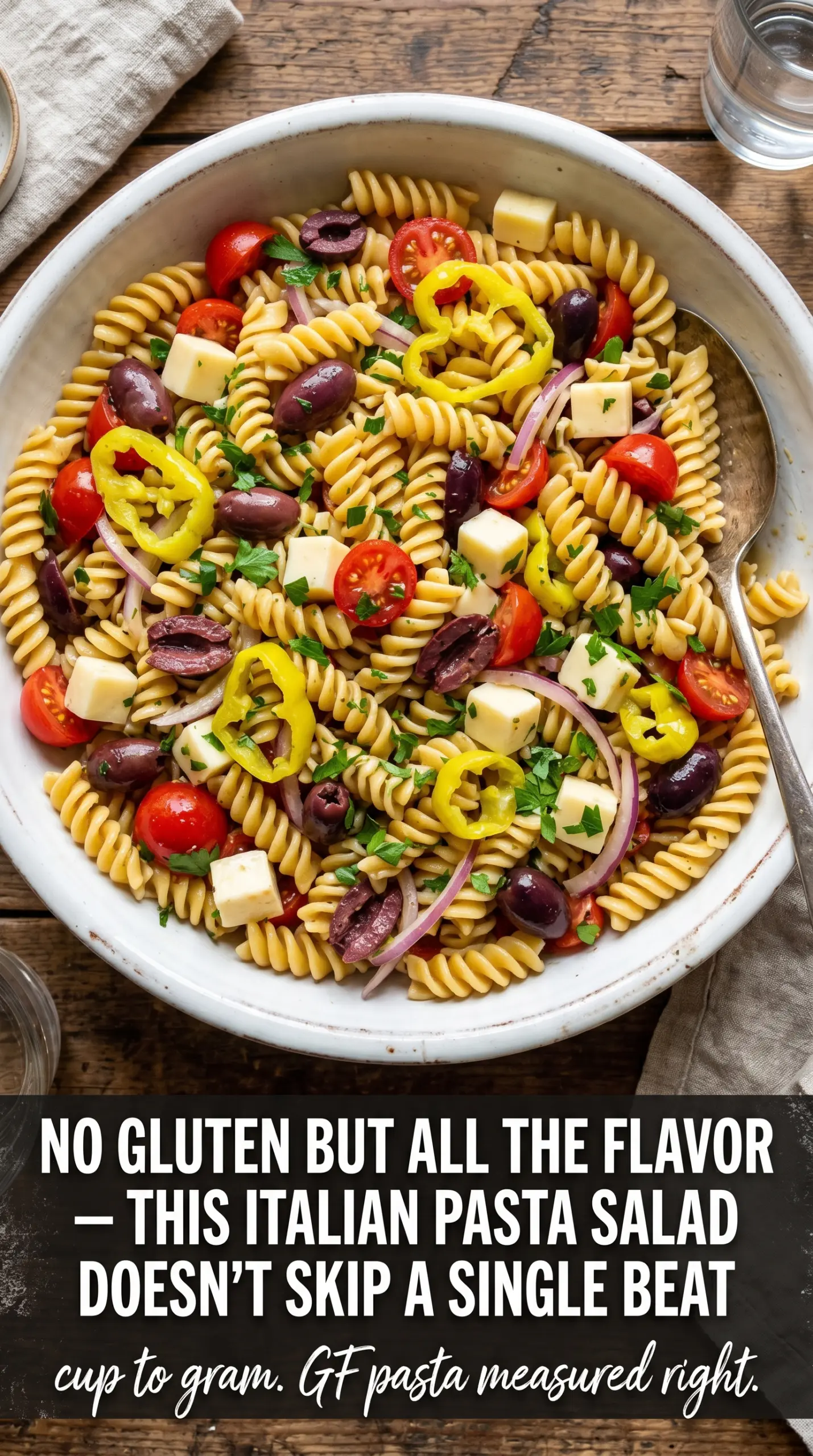
- Gluten-free pasta — This is the base, so pick a brand that holds its shape after chilling. Rice- and corn-based blends usually work better than very soft legume pastas for this kind of salad because they stay more neutral and less crumbly.
- Gluten-free Italian dressing — This gives the salad its backbone. A good bottled dressing is fine here, but it should be bold enough to season the cold pasta; a weak dressing disappears once the salad chills.
- Salami — Adds salt, fat, and chew. Cubing it small keeps the bites balanced so the salad doesn’t eat like a meat platter.
- Mozzarella — Mild, creamy cubes keep the salad from tasting sharp or one-note. Use a firmer mozzarella if you can, since fresh mozzarella can weep and soften the salad more than you want.
- Cucumber, tomatoes, red onion, and olives — These give crunch, acidity, and briny depth. Dice the cucumber small enough to blend in, and slice the onion thin so it seasons the salad without taking over.
- Parmesan and Italian seasoning — Parmesan adds a salty finish that bottled dressing alone can’t cover, while the seasoning boosts the herb note after chilling. If the dressing you use is already heavily seasoned, add the Italian seasoning gradually so it doesn’t get muddy.
Building the Salad So the Dressing Actually Clings
Cooking the Pasta with a Little Cushion
Boil the pasta in well-salted water and start checking it a minute or two before the package says it should be done. You want it tender with a slight firmness in the center, because it will soften more as it sits in the dressing. If the pasta is already soft in the pot, it won’t survive the chill.
Cooling and Draining Without a Sticky Mess
Drain the pasta, then rinse it under cold water until it’s no longer warm to the touch. Shake off as much water as you can so the dressing doesn’t get watered down. A little surface moisture is fine, but puddles in the bowl will dilute the flavor and make the salad bland.
Layering in the Mix-Ins
Add the salami, mozzarella, vegetables, and olives before the dressing so everything gets coated evenly. Toss gently with a spatula or large spoon instead of stirring hard, which can tear the pasta. The bowl should look glossy and evenly dressed, not soupy.
Letting the Chill Time Do the Work
Refrigerate the salad for at least 2 hours before serving, then toss again right before it goes to the table. That rest time lets the pasta absorb the dressing and gives the onion a chance to mellow. If the salad looks dry after chilling, add a splash more dressing instead of trying to fix it with extra cheese or seasoning alone.
Three Ways to Adjust This Pasta Salad Without Losing the Point
Dairy-Free Version That Still Tastes Complete
Skip the mozzarella and Parmesan, then add a few extra olives and a little more Italian dressing to keep the salad bold. You’ll lose the creamy, mellow notes from the cheese, but the briny elements and salami still carry the dish well.
Vegetarian Pasta Salad With the Same Italian Feel
Leave out the salami and add chickpeas, roasted red peppers, or extra mozzarella cubes for body. Chickpeas add the most staying power, while roasted peppers bring sweetness that helps replace the savory depth you lose from the meat.
Make It Ahead for a Crowd
This salad actually improves after a few hours in the fridge, which makes it a good potluck choice. If you’re making it the day before, hold back a little dressing and toss it in right before serving so the pasta doesn’t soak up every drop overnight.
Storage and Reheating
- Refrigerator: Store covered for up to 4 days. The pasta will absorb more dressing as it sits, so expect it to soften a little.
- Freezer: Don’t freeze this salad. The pasta, cucumber, and mozzarella all change texture in a way that makes the whole bowl watery and grainy.
- Reheating: This salad is meant to be served cold. If it tightens up in the fridge, let it sit at room temperature for 10 to 15 minutes and add a spoonful of dressing before tossing again.
Questions I Get Asked About This Recipe
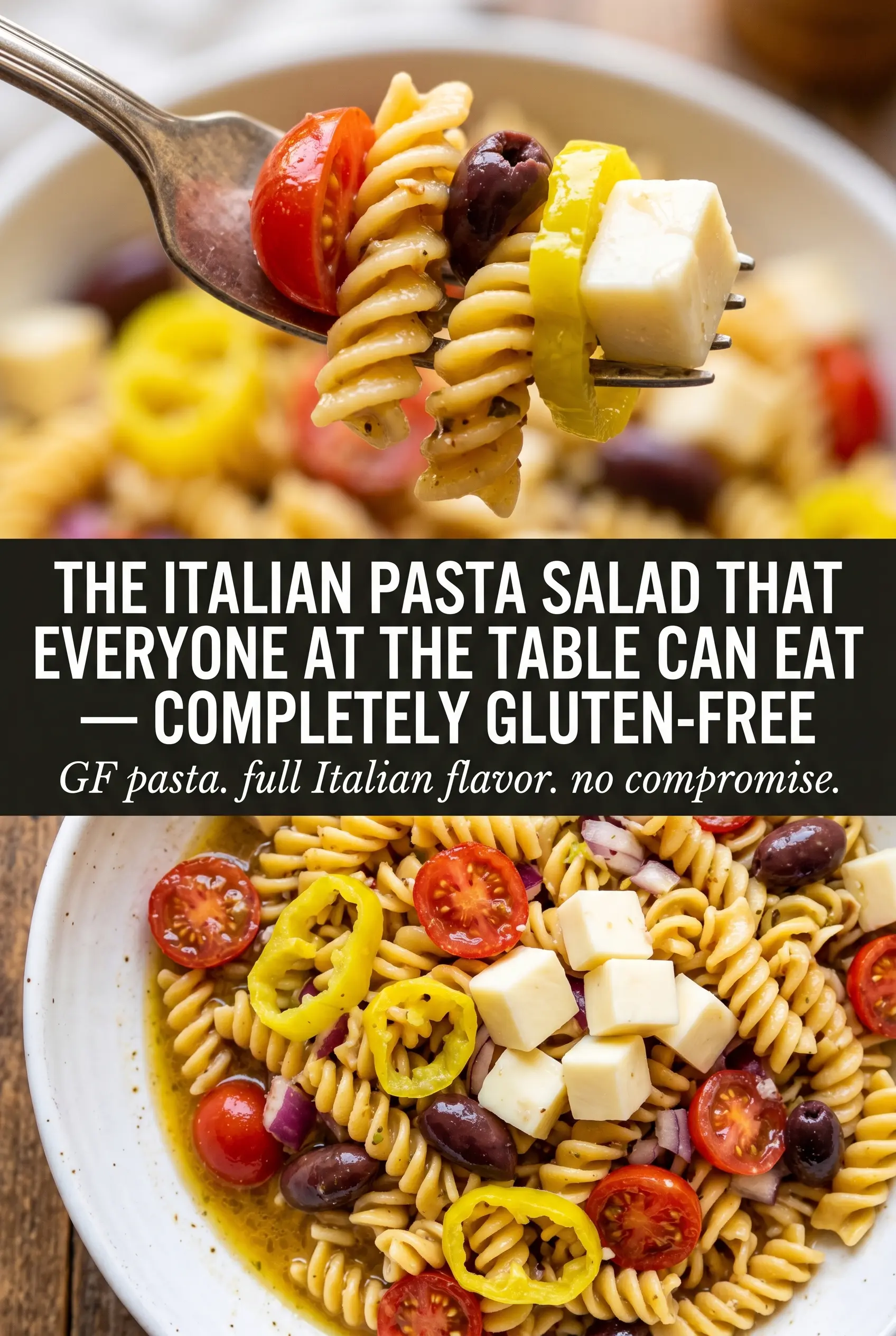
Gluten-free Italian Pasta Salad
Ingredients
Equipment
Method
- Cook the gluten-free pasta according to package directions (it may take longer than regular pasta) until tender. Drain and rinse with cold water to stop cooking and cool it fast.
- Combine pasta, salami, mozzarella, cherry tomatoes, cucumber, black olives, and red onion in a large bowl. Toss gently so the mix is evenly distributed.
- Add Italian dressing, Parmesan, and Italian seasoning, then toss to coat thoroughly. Make sure no dry pasta remains on the bottom of the bowl.
- Season with salt and black pepper to taste. Cover and refrigerate for at least 2 hours to let flavors meld and the pasta firm up.
- After chilling, toss again and adjust dressing if needed for the right consistency. Serve cold, with any extra dressing added a splash at a time.