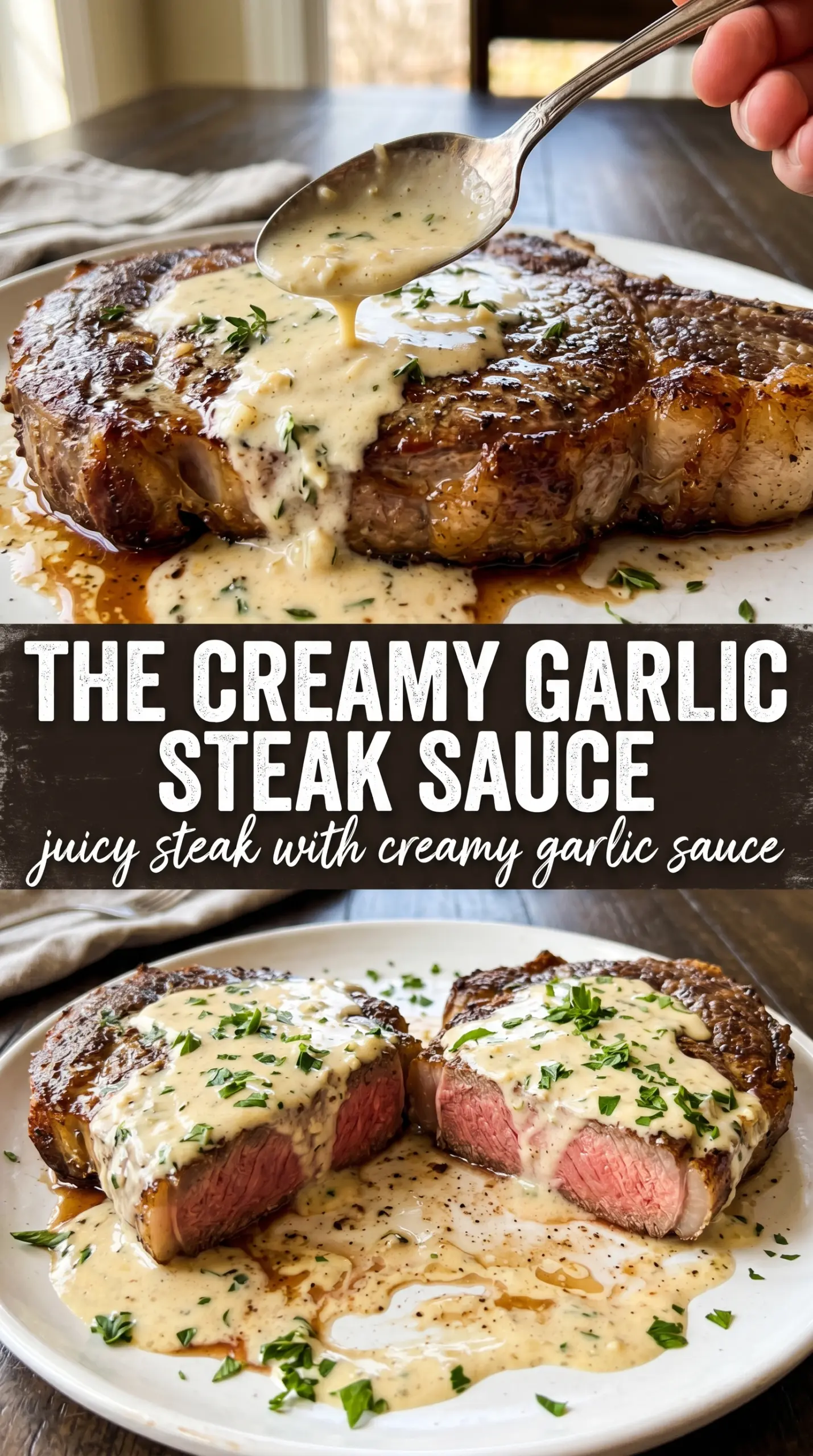
Juicy steak with creamy garlic sauce earns its spot when you want a pan-seared crust, a tender center, and a sauce that tastes like it came from a steakhouse kitchen. The ribeye or New York strip picks up deep browning fast in a hot cast iron skillet, then the garlic cream sauce picks up every bit of flavor left in the pan. What lands on the plate is rich without feeling heavy, with just enough thyme and parmesan to keep the sauce from tasting flat.
The key is treating each part separately. The steaks need time at room temperature so they sear instead of steaming, and the pan needs to be hot enough that the oil shimmers before the meat goes in. The sauce starts with garlic in butter, then beef broth gets reduced before the cream goes in, which keeps everything from turning thin or bland. That order matters.
Below, I’ve included the small details that make a steak like this turn out consistently: how to get a dark crust without overcooking the center, when to add the butter for basting, and how to know when the sauce has reduced enough to coat the spoon.
The steak came out with a deep crust and the garlic sauce thickened beautifully in the same pan. I used ribeyes and the sauce clung to every slice without getting greasy.
Save this juicy steak with creamy garlic sauce for the night you want a hard sear, a silky pan sauce, and dinner on the table fast.
The Crust Has to Happen Before the Sauce Does
The biggest mistake with pan-seared steak is crowding the pan or moving the meat too soon. A ribeye or strip steak needs direct contact with a very hot skillet so the surface dries and browns instead of turning gray and leathery. If the steak sticks when you first set it down, leave it alone for another 20 to 30 seconds; once the crust forms, it releases on its own.
That browned fond in the pan is what gives the sauce depth. Don’t wipe it out after the steak comes off. The butter, garlic, and beef broth will lift it from the bottom of the skillet and turn it into the backbone of the sauce.
- Ribeye or New York strip — Ribeye gives you the richest, most forgiving steak because the fat bastes the meat as it cooks. Strip steak is a little leaner and a touch firmer, but it still works beautifully at the same timing.
- Cast iron skillet — This matters. It holds heat better than a thin pan, which is what gives you that deep brown crust without overcooking the center.
- Heavy cream — Half-and-half won’t give you the same body. Heavy cream reduces into a silky sauce that clings to the steak instead of running off the plate.
- Parmesan — Use finely grated parmesan, not big shreds. Fine cheese melts cleanly into the sauce; larger pieces can leave it grainy.
- Fresh thyme — Dried thyme works in a pinch, but fresh thyme gives the sauce a cleaner, brighter finish that keeps the cream from tasting flat.
What Each Ingredient Is Actually Doing in This Recipe
- Primary ingredient (the star) — Quality matters most. Choose the best you can find.
- Cooking medium (oil, butter, or broth) — This carries flavors and prevents dryness.
- Seasonings (salt, pepper, spices, herbs) — Layer flavors so nothing overpowers. Build depth gradually.
- Aromatics (garlic, onion, herbs) — Cook with fat to bloom flavors. Become the foundation.
- Supporting ingredients — Complement the main ingredient without overpowering it.
- Sauce or liquid (if applicable) — Brings flavors together. Balance richness with acid.
- Acid (lemon, vinegar, wine, or other) — Brightens and prevents flat-tasting results.
- Final finish (garnish, glaze, or sauce) — Prevents one-dimensional taste and adds visual appeal.
Building the Steak and Sauce in the Right Order
Seasoning and Resting the Steaks
Season the steaks generously with salt and coarse black pepper on all sides, then let them sit at room temperature for 30 minutes. That short rest helps the meat cook more evenly from edge to center. If you skip it and cook straight from the fridge, the outside can overbrown before the middle has a chance to catch up.
Getting the Sear
Heat the cast iron skillet over high heat until it’s smoking, then add the oil and lay in the steaks. You want a loud sizzle right away. Sear for 3 to 4 minutes per side for medium-rare, and resist the urge to press the steaks down; pressing squeezes out the juices you’re trying to keep. In the last minute, add 2 tablespoons butter and spoon the melted butter over the tops for extra color and flavor.
Resting Before the Sauce
Pull the steaks out and tent them loosely with foil for 5 minutes. That rest keeps the juices in the meat instead of flooding the cutting board when you slice. If you make the sauce too soon and leave the steak sitting in the pan, it keeps cooking and can cross from medium-rare into medium.
Reducing the Garlic Cream Sauce
Lower the heat to medium, melt the remaining butter, and cook the garlic for about a minute until it smells sweet and mellow, not sharp. Add the beef broth and let it reduce by half before you pour in the cream. That reduction concentrates the flavor and keeps the sauce from tasting thin. Stir in the parmesan and thyme, then simmer until the sauce lightly coats the back of a spoon; if it looks loose, give it another minute or two before seasoning.
Slicing and Serving
Slice the steaks against the grain and spoon the sauce over the top while both are still warm. Cutting against the grain shortens the muscle fibers and makes each bite more tender. If you slice with the grain, even a perfectly cooked steak can eat tougher than it should.
What to Change When You Want a Different Finish
Make It Dairy-Free
Use dairy-free butter and a plain unsweetened coconut cream or cashew cream in place of the heavy cream. The sauce will still be rich, but it won’t taste quite as sharp or savory as the parmesan version, so you’ll want a heavier hand with salt and pepper at the end.
Swap the Steak Cut
Sirloin works if you want something leaner, but it cooks faster and can dry out if you chase the same timing as ribeye. Trim the sear time by a minute or so per side and slice it thin across the grain so it stays tender under the sauce.
Go Lighter on the Sauce
Cut the cream to 3/4 cup and add a splash more broth if you want a thinner sauce with less richness. You’ll lose some of the cling and body, but the garlic and thyme still carry the flavor without making the dish feel heavy.
Storage and Reheating
- Refrigerator: Store the steak and sauce separately in airtight containers for up to 3 days. The sauce may thicken as it chills.
- Freezer: The cooked steak freezes okay for up to 2 months, but the cream sauce doesn’t freeze well and can split when thawed. Freeze the steak on its own if needed.
- Reheating: Warm the steak gently in a low oven or in a covered skillet over low heat so it doesn’t turn gray and tough. Reheat the sauce slowly over low heat with a splash of broth or cream, stirring often; high heat is what usually breaks it.
Answers to the Questions Worth Asking

Juicy Steak with Creamy Garlic Sauce
Ingredients
Equipment
Method
- Generously season the ribeye (or NY strip) all over with salt and coarse black pepper, then let the steaks rest at room temperature for 30 minutes.
- Pat off any excess surface moisture so the steaks sear evenly and develop a deeper crust.
- Heat a cast iron skillet over high heat until smoking, then add the vegetable oil and place the steaks in the pan.
- Sear for 3–4 minutes per side for medium-rare; in the last minute, add 2 tablespoons butter and baste constantly until the crust is deep golden-brown.
- Transfer the steaks to a plate, tent loosely with foil, and rest for 5 minutes to keep the juices in the meat.
- In the same pan over medium heat, melt the remaining butter, then add the minced garlic and cook for 1 minute until fragrant.
- Add the beef broth and reduce by half, scraping up any browned bits from the pan.
- Stir in the heavy cream, parmesan, and fresh thyme, then simmer until the sauce coats the back of a spoon.
- Slice the steaks and serve immediately with creamy garlic sauce spooned generously over the top.