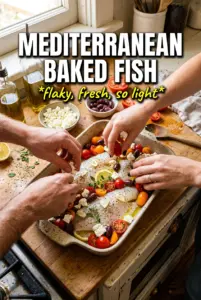
Flaky baked fish, spooned over with blistered tomatoes, briny olives, and capers, is the kind of dinner that tastes like far more work than it is. The fish stays tender because it bakes in the same pan with a shallow layer of seasoned vegetables and olive oil, so every fillet picks up flavor without drying out. The tomatoes collapse just enough to make a light pan sauce, and the lemon at the end keeps the whole dish bright instead of heavy.
What makes this version work is the two-stage bake. The vegetables get a head start so they can soften, concentrate, and give off some juice before the fish goes in. That means the fillets roast gently instead of sitting on top of raw tomatoes that are still trying to cook. A little white wine or broth gives the sauce depth, while the capers and olives bring enough salt and bite that you don’t need much else.
Below you’ll find the ingredient notes that matter, the timing that keeps the fish from overcooking, and a few smart variations for different diets or what you already have in the pantry.
The tomatoes got jammy, the fish stayed flaky, and the pan juices were perfect over rice. I added a little extra lemon at the end and it made the whole dish pop.
Love the flaky fish, briny olives, and lemony pan juices? Save this Mediterranean Baked Fish for an easy dinner with a built-in sauce.
The Trick to Keeping the Fish Tender Under the Tomato Layer
The biggest mistake with baked fish is putting it into a dish that hasn’t finished cooking underneath. Raw tomatoes, cold peppers, and whole garlic cloves need a little time in the oven first, or the fish ends up steaming on top of a cold vegetable mix instead of roasting gently. That first 10 minutes lets the tomatoes burst, the garlic mellow, and the pan juices start moving.
Once the fish goes in, the goal is a hot oven and a short stay. Cod and other mild white fish should flake when nudged with a fork but still look pearly and moist in the thickest part. If the fillets are thin, check them early, because even a couple of extra minutes can turn them stringy.
- Cherry tomatoes — Halving them helps them release juice fast, which builds the sauce in the pan.
- Capers and olives — These do the heavy lifting for salt and briny flavor. Don’t rinse them unless they taste aggressively salty.
- Dry white wine or broth — Wine adds a little edge and complexity; broth gives you a milder pan sauce. Use broth if you’re cooking for someone who doesn’t want alcohol flavor.
- White fish fillets — Cod is the easiest to find and holds together well. Halibut and sea bass both work, but keep an eye on the bake time because thicker fillets can go from perfect to dry fast.
What Each Ingredient Is Doing in the Pan
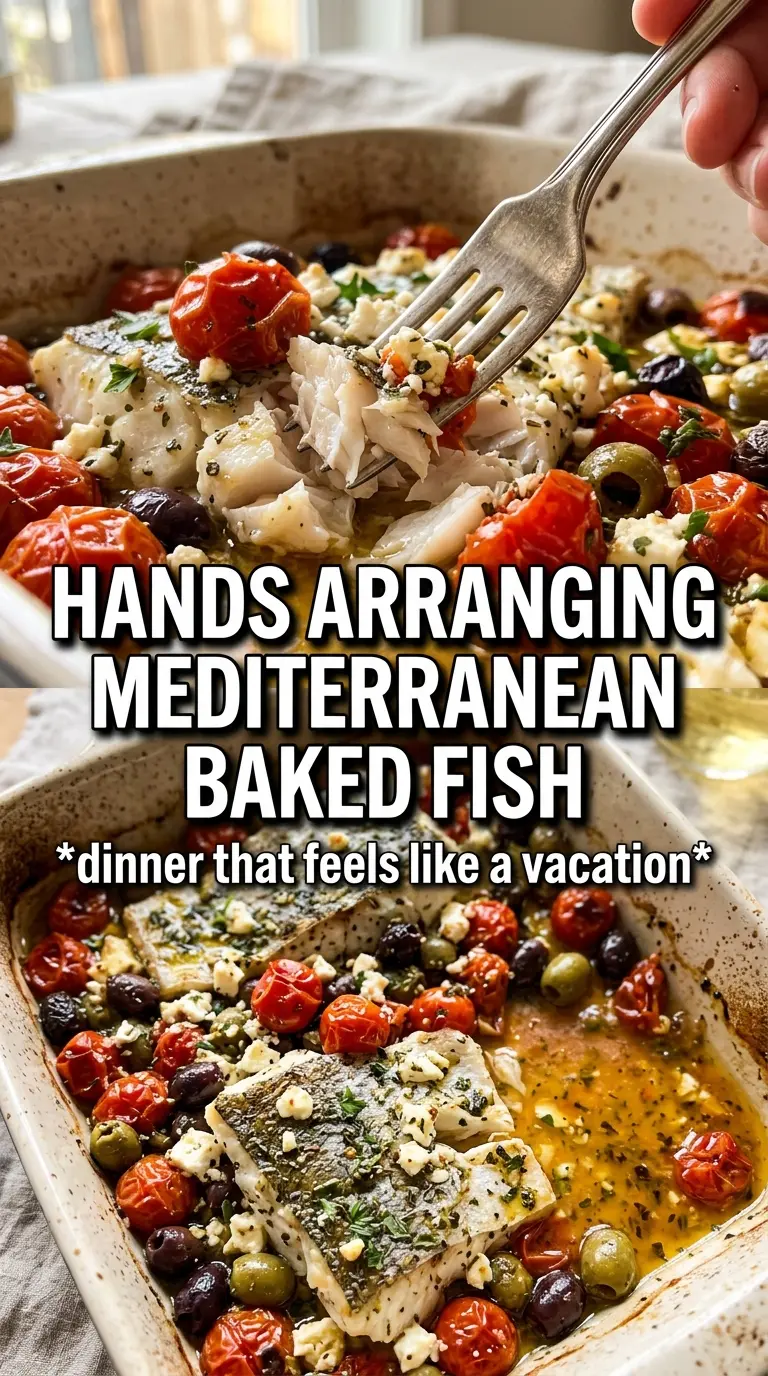
- White fish — Choose fillets that are evenly thick so they finish at the same time. If one end is much thinner, tuck it under a little of the vegetable mixture so it doesn’t overcook.
- Olive oil — This carries the flavor and helps the tomatoes and peppers roast instead of drying out. Use a good one if you have it, but this isn’t the place for your most expensive bottle.
- Roasted red peppers — They add sweetness and a soft, smoky note that balances the brine from the olives and capers. Jarred peppers are perfect here because they’re already tender.
- Garlic — Thin slices soften in the oven and perfume the whole dish. If you mince it, it can scorch before the fish is done.
- Oregano and red pepper flakes — Oregano gives the dish its Mediterranean backbone, while the flakes add just enough heat to keep the sauce from tasting flat.
- Lemon and parsley — Add these at the end, not before. Fresh citrus and herbs wake up the pan juices after the oven has done the heavy lifting.
Roasting the Vegetables First, Then Sliding in the Fish
Build the pan base
Start by mixing the tomatoes, olives, capers, peppers, garlic, wine or broth, olive oil, oregano, and red pepper flakes directly in the baking dish. The liquid should look light and loose at this point, not saucy yet. Spread everything into an even layer so the tomatoes can hit the heat and start collapsing. If the dish looks dry before it goes in the oven, add another splash of wine or broth.
Give the vegetables a head start
Roast the vegetable mixture for 10 minutes at 400°F. You want the tomatoes blistered at the edges, the garlic softened, and the oil shimmering around the sides of the pan. This stage is what keeps the fish from tasting like it was steamed in a cold topping. If the pan comes out looking watery, that’s fine; the fish will finish in that liquid and the sauce will tighten as it bakes.
Finish with the fish
Season the fillets with salt and pepper, then nestle them into the hot vegetables. Spoon some of the mixture over the top so the fish stays moist, but don’t bury it completely or it won’t roast properly. Bake for 12 to 15 minutes, depending on thickness, until the fish flakes cleanly and looks opaque all the way through. Pull it the moment the center turns from translucent to pearly white, because it keeps cooking in the hot pan after it comes out.
Brighten and serve
Scatter parsley over the top and bring lemon wedges to the table. The lemon is not garnish here; it’s the final seasoning that makes the briny sauce taste complete. Spoon the pan juices over the fish when serving, especially if you’re putting it over rice, couscous, or crusty bread. That liquid is where the whole dish comes together.
How to Adapt This for What’s in Your Kitchen
Dairy-Free and Naturally Light
This recipe is already dairy-free, which is part of why it stays so clean and bright. Keep the olive oil in place and don’t add butter at the end unless you want a richer, softer sauce.
Broth Instead of Wine
Use broth if you don’t cook with wine or don’t want the sharper edge it brings. The sauce will be a little milder and less layered, so a squeeze of lemon at the end matters even more.
Switching Up the Fish
Cod gives you the most forgiving texture, but halibut or sea bass make this feel a little more special. If you use a delicate fillet like tilapia, shorten the bake time and check early so it doesn’t fall apart in the sauce.
Storage and Reheating
- Refrigerator: Store leftovers in an airtight container for up to 2 days. The fish will firm up a bit, but the sauce stays useful.
- Freezer: I don’t recommend freezing this dish. Baked white fish turns watery and grainy after thawing.
- Reheating: Warm gently in a covered skillet over low heat with a splash of broth or water. The common mistake is blasting it in the microwave, which dries out the fish and makes the tomatoes collapse into nothing.
Answers to the Questions Worth Asking
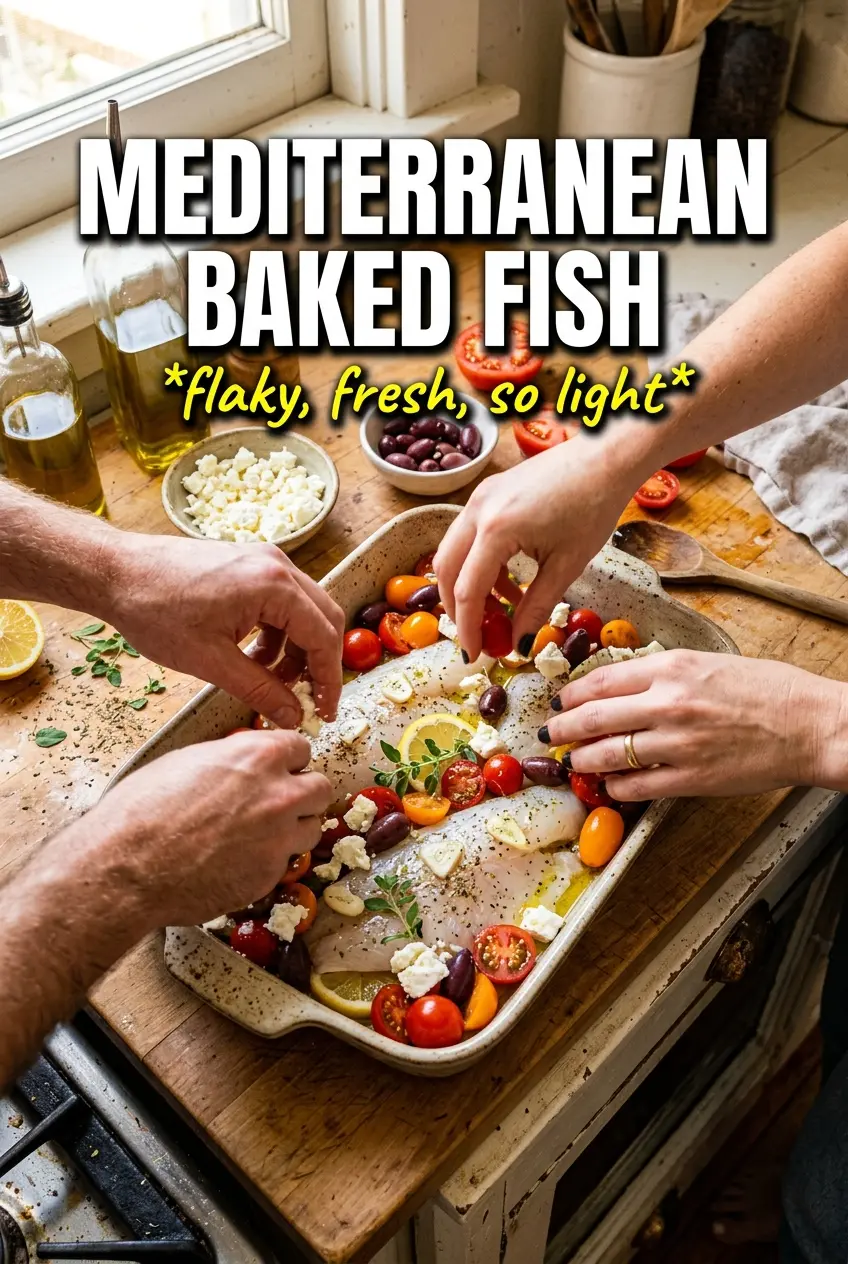
Mediterranean Baked Fish
Ingredients
Equipment
Method
- Preheat the oven to 400°F, then grease a 9x13 baking dish so the fish releases easily.
- Add cherry tomatoes, olives, capers, roasted red peppers, garlic, white wine or broth, olive oil, dried oregano, and red pepper flakes to the baking dish and stir to combine.
- Roast the vegetable mixture at 400°F for 10 minutes until the tomatoes start to soften and the garlic is fragrant (visual cue: glossy tomatoes and bubbling edges).
- Season the fish fillets with salt and pepper, then nestle them into the hot vegetable mixture in the baking dish.
- Bake at 400°F for 12-15 minutes, until the fish flakes easily with a fork (visual cue: opaque flakes separating along the thickest part).
- Garnish with fresh parsley and serve with lemon wedges for brightness.