Cold pasta salad can be bland and heavy, but this Mediterranean chicken pasta salad stays bright, savory, and sturdy enough to hold up after a full chill in the fridge. The pasta soaks up the lemon-herb dressing without turning mushy, the feta brings salt and creaminess, and the chicken turns it from a side dish into a proper meal. Every bite gets a little crunch from cucumber, a burst of tomato, and that briny hit from Kalamata olives.
The key is in the balance. Rinsing the pasta after cooking stops the carryover heat and keeps the salad from clumping, while the dressing goes in while the pasta is cool enough to absorb it but not ice-cold. That gives you flavor all the way through instead of oil sitting on the outside. Fresh oregano and lemon juice do a lot of the heavy lifting here, so the dressing tastes clean instead of flat.
Below, I’ve included the one timing step that makes the biggest difference, plus a few smart swaps if you want to change the protein or make it ahead for lunches.
I made this for lunch meal prep and the pasta stayed tender after chilling overnight. The lemon dressing soaked into everything and the feta didn’t turn gummy at all.
Save this Mediterranean Chicken Pasta Salad for a fresh meal prep lunch that stays bright, tangy, and satisfying after chilling.
The Chill Time That Keeps This Pasta Salad Fresh, Not Soggy
The biggest mistake with pasta salad is serving it right away and wondering why it tastes thin and disconnected. This version improves after a short rest because the dressing has time to cling to the pasta and soften the sharp edge of the onion. One hour in the fridge is enough to bring everything together, but the salad should still taste lively, not heavy.
Cold pasta salads also fail when the pasta keeps absorbing dressing after it cools. Rinsing the penne under cold water stops the cooking fast and keeps the grains separate, which matters here because you want each piece coated, not packed into a dense block. If the salad seems a little dry after chilling, it usually needs a small splash of lemon juice or olive oil, not more salt.
What Each Ingredient Is Actually Doing In This Dish
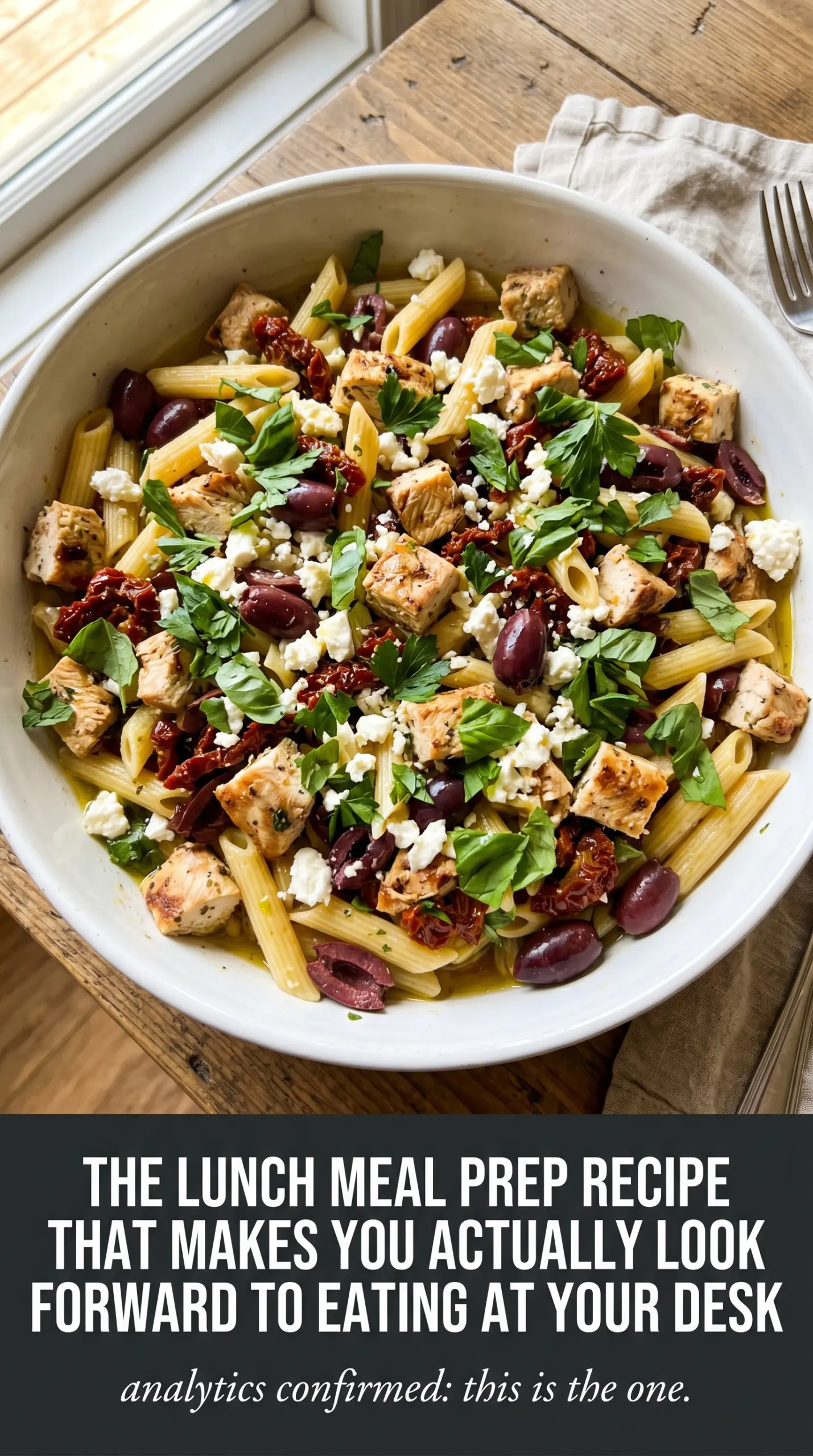
- Penne pasta — The ridges catch the dressing and the shape holds up better than delicate pasta. Short pasta is the right call here because it mixes cleanly with chopped vegetables and sliced chicken. If you swap it, pick another sturdy shape like rotini or fusilli.
- Grilled chicken breast — This is the protein that turns the salad into lunch or dinner. Plain roasted chicken works too, but grilled chicken adds a little char and more flavor against the lemon dressing. Slice it after it cools so it stays juicy instead of shredding.
- Feta cheese — Feta gives salt, tang, and a creamy finish without making the salad heavy. Crumble it in gently at the end so it doesn’t disappear into the dressing. A block of feta tends to taste better than pre-crumbled, which can be drier.
- Lemon juice and olive oil — This is the backbone of the dressing, and both matter. Use a good olive oil if you can taste the difference, because there’s nowhere for it to hide. Bottled lemon juice works in a pinch, but fresh lemon gives the salad a sharper, cleaner finish.
- Kalamata olives, cucumber, tomatoes, and red onion — These are the texture and brightness in every forkful. The olives add brine, the cucumber adds crunch, the tomatoes add juiciness, and the onion gives bite. Dice the cucumber small enough that it distributes evenly, and slice the onion thin so it doesn’t overwhelm the bowl.
How to Build the Salad So Every Bite Tastes Seasoned
Cooking the Pasta the Right Way
Boil the penne until it is just tender, then drain and rinse it under cold water until it feels cool to the touch. That rinse stops the cooking and removes some surface starch, which keeps the salad from turning sticky. If the pasta goes in hot, it will melt the feta and soften the vegetables too much.
Whisking a Dressing That Clings
Combine the olive oil, lemon juice, garlic, oregano, salt, and pepper in a bowl and whisk until the mixture looks slightly thickened and cloudy. That little bit of emulsion helps the dressing coat the pasta instead of sliding to the bottom of the bowl. If the garlic tastes sharp, let the dressing sit for a few minutes before adding it to the salad.
Combining Without Crushing the Good Stuff
Add the pasta, chicken, tomatoes, cucumber, olives, and red onion to a large bowl and toss with the dressing until everything looks evenly glossy. Fold in the feta at the end with a light hand so it stays in distinct crumbles. If you toss too aggressively, the tomatoes break and the feta turns pasty.
Giving It Time to Settle
Cover the bowl and refrigerate the salad for at least an hour before serving. That resting time lets the pasta absorb the dressing and the flavors settle into each other. Stir once before serving, because the dressing tends to collect at the bottom and the vegetables release a little moisture as they chill.
How to Adapt This for Lighter Meals, Dairy-Free Plates, or a Bigger Batch
Dairy-Free Version
Leave out the feta and add a handful of chopped parsley or extra cucumber for freshness. You’ll lose the salty creaminess that feta brings, so taste the salad after chilling and add a little more salt if needed. A few spoonfuls of chopped artichoke hearts can also help replace that briny note.
Gluten-Free Swap
Use a sturdy gluten-free pasta that holds its shape after chilling, and cook it just until al dente so it doesn’t soften too much in the fridge. Rice-based pasta usually works better here than very soft legume pastas, which can get dense and chalky once dressed.
Make It Meatless
Swap the chicken for chickpeas or white beans if you want a vegetarian version. Chickpeas keep the Mediterranean feel and add enough heft to stand in for the protein, though the salad will be a little less smoky and a little more pantry-friendly. Rinse and dry the beans well so they don’t water down the dressing.
Storage and Reheating
- Refrigerator: Store covered for up to 4 days. The pasta will keep soaking up dressing, so the salad may need a small refresh before serving.
- Freezer: Don’t freeze this one. The cucumber and tomato lose their texture after thawing, and the feta turns crumbly in a way that doesn’t help the salad.
- Reheating: This salad is meant to be served cold or at cool room temperature. If it has been chilled hard, let it sit out for 15 to 20 minutes and stir before serving instead of heating it, which would wilt the vegetables and dry out the chicken.
Answers to the Questions Worth Asking
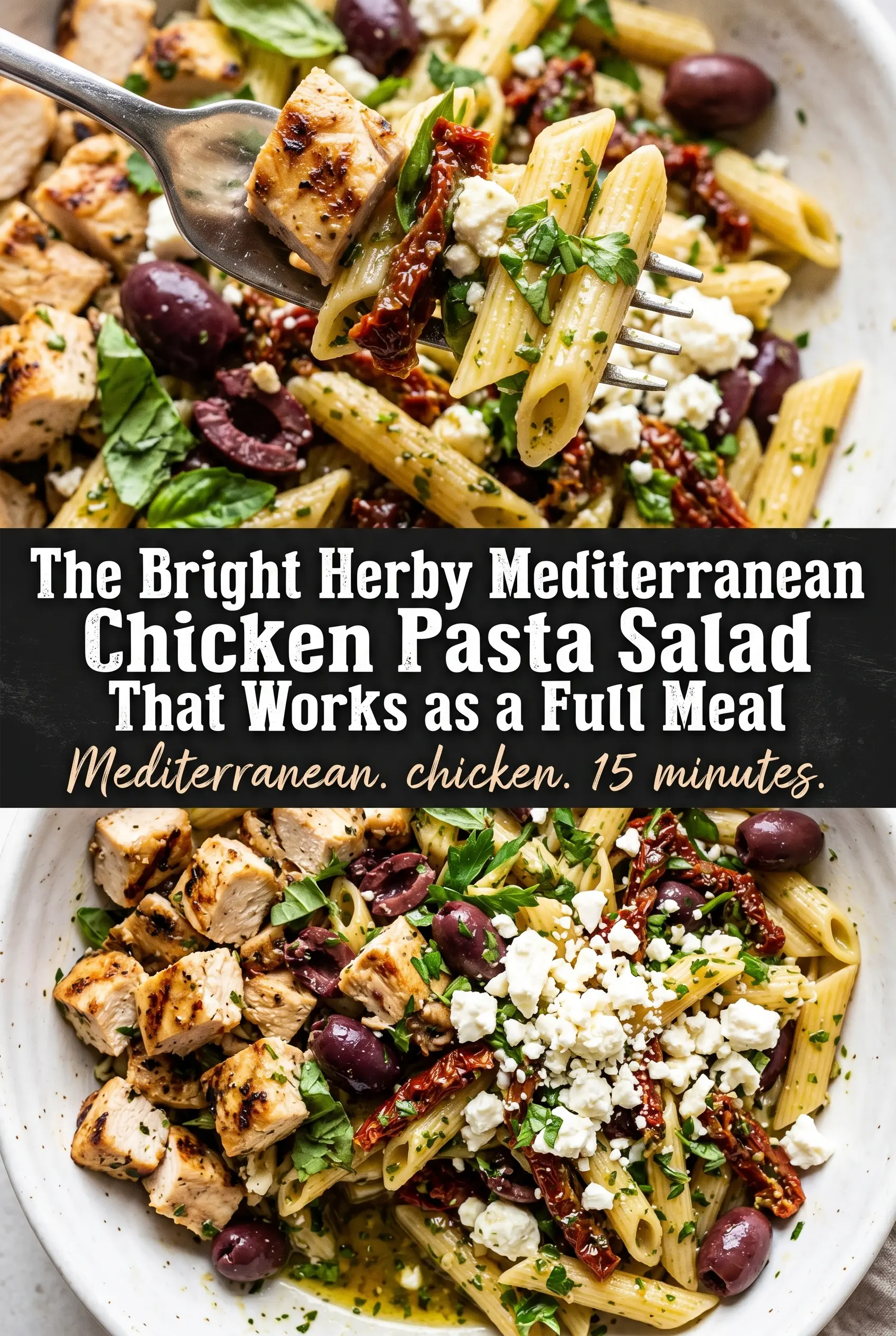
Mediterranean Chicken Pasta Salad
Ingredients
Equipment
Method
- Cook penne pasta according to package directions until al dente, then drain and rinse with cold water so it cools quickly and stays firm.
- Whisk olive oil, lemon juice, garlic, oregano, salt, and pepper together until the dressing looks evenly combined and glossy.
- Combine pasta, chicken, cherry tomatoes, cucumber, Kalamata olives, and red onion in a large bowl for even distribution.
- Pour dressing over the salad and toss to combine, coating everything lightly without crushing the vegetables.
- Gently fold in feta cheese so it stays in soft crumbles and doesn’t fully melt into the pasta.
- Refrigerate for at least 1 hour before serving so flavors meld and the salad is fully chilled.