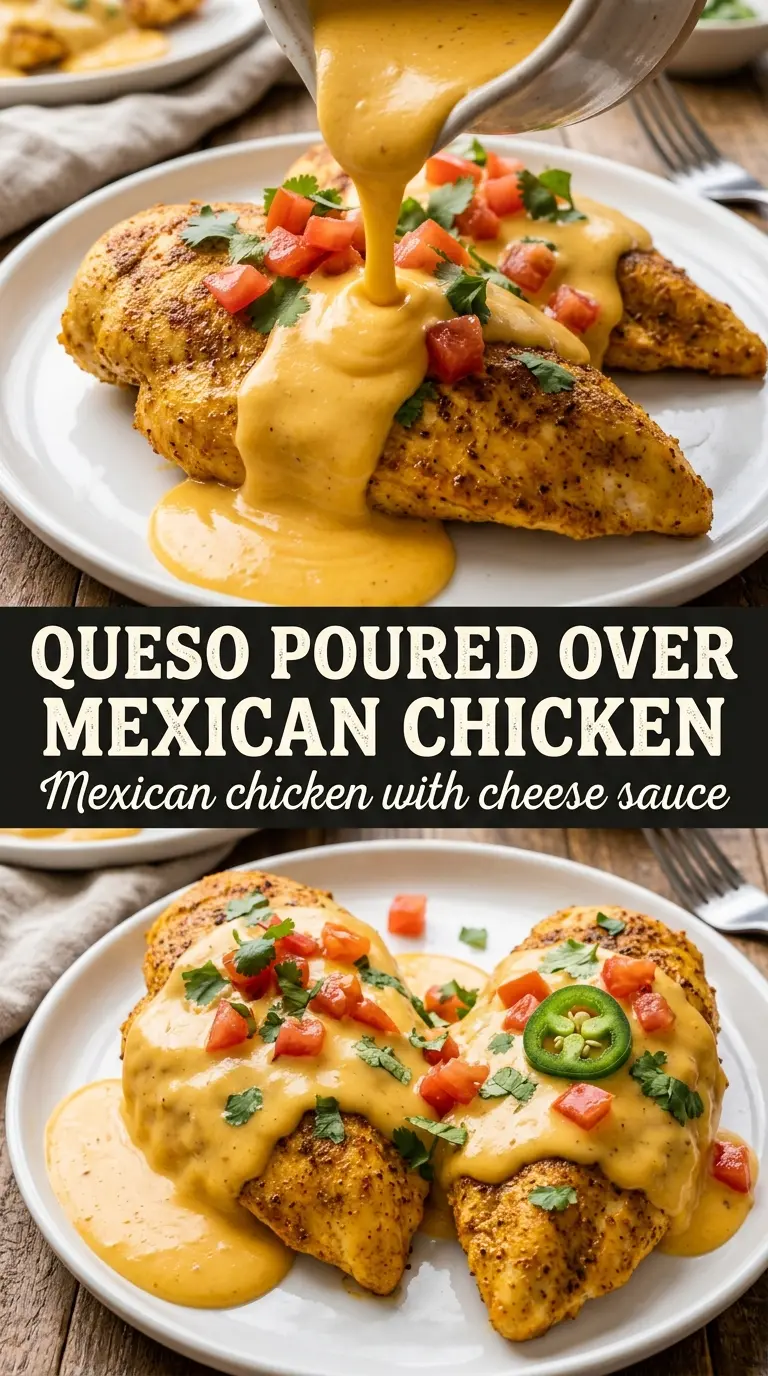
Juicy chicken topped with a thick queso sauce is the kind of dinner that disappears fast, especially when the sauce clings to every slice instead of running off the plate. The best versions hit that balance between smoky, savory chicken and a glossy cheese sauce with just enough jalapeño and tomato to keep each bite lively.
What makes this one work is the layering. The chicken gets seasoned first so the outside has real flavor before it even hits the pan, and the sauce starts with a proper roux so it turns smooth instead of grainy. The Velveeta brings stability, the Mexican cheese blend adds sharper flavor, and the drained tomatoes keep the sauce from turning watery.
Below, I’ll walk through the part that matters most: getting the sauce thick enough to spoon over the chicken without breaking. There are also a few smart swaps if you want to adjust the heat or stretch it into a meal with rice, tortillas, or nachos.
The chicken stayed juicy and the cheese sauce thickened up perfectly without getting grainy. I used the lime at the end and it made the whole dish taste brighter instead of heavy.
Love this creamy queso chicken? Save it to Pinterest for the nights when you want seared chicken and a thick jalapeño cheese sauce in one skillet.
The Sauce Breaks When You Rush the Heat
The most common mistake with cheese sauce is cranking the heat once the dairy goes in. That’s how you end up with a sauce that looks oily or grainy instead of smooth. Keep the milk mixture at a steady, gentle simmer and pull the pan off the burner before the cheese goes in if the heat feels aggressive.
The other place people lose the texture is with the tomatoes. Rotel adds great flavor, but if it isn’t drained, the sauce turns loose and thin. You want the cheese sauce to coat the back of a spoon and move slowly when you stir it.
- Blackened or well-seasoned chicken — The taco seasoning does more than season the surface. It gives the chicken enough backbone to stand up to the rich sauce, which is why plain chicken tastes flat here.
- Velveeta — This is the stabilizer. It melts smoothly and keeps the sauce together, especially if the dish sits for a few minutes before serving.
- Mexican cheese blend — Use a good shredded blend for flavor, but shred it yourself if possible. Pre-shredded cheese can work, though it melts a little less cleanly because of the anti-caking coating.
- Drained diced tomatoes with green chiles — Drain them well. You want the chile flavor and tomato brightness, not extra liquid that thins the sauce.
What Each Ingredient Is Doing in the Skillet
- Chicken breasts — Boneless, skinless breasts cook fast and slice neatly under the sauce. Pound them to an even thickness if one end is much thicker than the other, or the thin side will overcook before the center is done.
- Taco seasoning — This gives you spice, salt, and a little smokiness in one step. If your blend is very salty, cut back a bit and season to taste after the chicken cooks.
- Whole milk — The fat in whole milk helps the sauce turn silky. Lower-fat milk works in a pinch, but the sauce will be less luxurious and a little more likely to seem thin.
- Butter and flour — This is the base that thickens the sauce. Whisk the flour into the butter for a full minute so the sauce doesn’t taste raw or chalky later.
- Jalapeño and cumin — These are what keep the sauce from tasting one-note. Seed the jalapeño if you want gentle heat, or leave some ribs in if you want a sharper bite.
How to Keep the Chicken Juicy and the Queso Smooth
Searing the Chicken First
Heat the oil in a skillet over medium-high heat until it shimmers, then lay in the seasoned chicken breasts without crowding the pan. You want a deep brown crust and cooked-through centers at 165°F, which usually takes 5 to 6 minutes per side depending on thickness. If the pan smokes heavily, the heat is too high and the outside will scorch before the inside catches up. Let the chicken rest before slicing so the juices stay in the meat instead of running into the plate.
Building the Roux
Melt the butter in a saucepan and whisk in the flour until it looks smooth and slightly foamy. Give it a full minute, stirring constantly, so the raw flour cooks off and the sauce thickens cleanly later. If you stop too soon, the final sauce can taste pasty. The goal is a pale, nutty base, not browning.
Melting the Cheese Without Breaking It
Add the milk slowly, whisking until the mixture looks smooth before you add the next splash. Once the sauce starts to thicken, lower the heat and stir in the shredded cheese and Velveeta gradually. If the pan is too hot, the cheese can seize or turn oily, so take your time here. Stir in the drained Rotel, jalapeño, and cumin, then simmer just until the sauce is glossy and spoonable.
Finishing the Plate
Slice the chicken against the grain and spoon the sauce over the top while both are still hot. The sauce should spread thickly and settle into the slices instead of pooling thin around the edges. A little cilantro and a squeeze of lime lift the richness and make the whole dish taste brighter. Serve it right away over rice, tucked into tortillas, or piled onto nachos.
How to Adapt This for a Different Crowd
Make it milder for kids
Use a mild taco seasoning, skip the jalapeño, and choose plain diced tomatoes with green chiles if your Rotel is too spicy. You’ll still get the creamy orange sauce and tomato flavor, just without the heat that can overwhelm smaller eaters.
Gluten-free version
Swap the all-purpose flour for a gluten-free 1:1 blend that’s meant for thickening sauces. The texture stays close, though the roux may need an extra minute in the butter before you add the milk.
Turn it into a cheesy chicken skillet dinner
Slice the cooked chicken and return it to the skillet with the sauce, then serve the whole thing over rice. This stretches the meal a little farther and turns the sauce into a full pan dinner instead of just a topping.
Storage and Reheating
- Refrigerator: Store leftovers for up to 3 days. The sauce will thicken as it chills, but it still reheats well.
- Freezer: The chicken freezes fine, but the cheese sauce can separate after thawing. If you must freeze it, freeze the chicken and sauce separately and expect the sauce to need whisking back together.
- Reheating: Rewarm gently over low heat on the stove or in short bursts in the microwave, stirring between each one. High heat is what makes the dairy split, so patience matters here.
Answers to the Questions Worth Asking

Mexican Chicken with Cheese Sauce
Ingredients
Equipment
Method
- Rub boneless skinless chicken breasts with taco seasoning, then heat olive oil in a skillet over medium-high heat until sizzling. Sear for 5-6 minutes per side, until cooked through to 165°F, creating browned edges and juicy centers.
- Rest the seared chicken breasts briefly, then slice them so the cheese sauce can coat every cut surface.
- Melt butter in a saucepan over medium heat, then whisk in all-purpose flour and cook for 1 minute to form a smooth roux. Keep the mixture moving so it stays pale and doesn’t brown.
- Gradually add whole milk while whisking until the mixture is smooth and free of lumps. Whisk continuously until it thickens slightly.
- Stir in shredded Mexican cheese blend and Velveeta cheese until fully melted, then add diced tomatoes with green chiles (Rotel), jalapeño, and cumin. Continue whisking for an even melt with visible jalapeño and tomato flecks.
- Simmer the sauce for 3-4 minutes until it becomes smooth and thick enough to cling to the chicken. Turn off the heat and keep the sauce glossy.
- Plate the sliced chicken and pour the cheese sauce generously over the top until the surface looks like a vivid orange pool. Make sure sauce reaches the sides of the slices.
- Garnish with fresh cilantro and lime wedges, then serve with rice, tortillas, or over nachos.