Mini pumpkin pie croissants bake up with flaky edges, a soft spiced center, and just enough sweetness to feel like a treat without turning heavy. The crescent dough puffs around the filling and crisps at the seams, while the pumpkin mixture stays creamy instead of leaking out and turning the pan sticky. The cinnamon sugar on top gives each one a thin crackly shell, and the glaze finishes them with that bakery-style look people notice right away.
What makes this version work is balance. Pumpkin puree on its own can taste flat and watery, so the brown sugar, cream cheese, and warm spices give the filling body and keep it from running when the dough bakes. Rolling from the wide end to the point keeps the filling tucked in, and brushing with butter before the cinnamon sugar helps the tops brown evenly and pick up a little extra crunch.
Below, you’ll find the small details that keep the filling smooth, the croissants sealed, and the glaze just thin enough to drizzle instead of puddle.
The filling stayed put and the bottoms browned up instead of getting soggy. I baked them until the tops were deep gold, and the glaze over warm croissants was the best part.
Like these mini pumpkin pie croissants? Save them to Pinterest for a flaky breakfast pastry with spiced pumpkin filling and cinnamon glaze.
The Filling Needs More Structure Than Pumpkin Alone
Pumpkin puree looks harmless, but it turns loose fast in the oven. If you spoon it straight into crescent dough, it tends to seep from the seams before the pastry has time to set. The cream cheese changes that. It thickens the filling just enough to keep it in place, and it also softens the edges of the pumpkin so the finished croissants taste rich instead of thin and one-note.
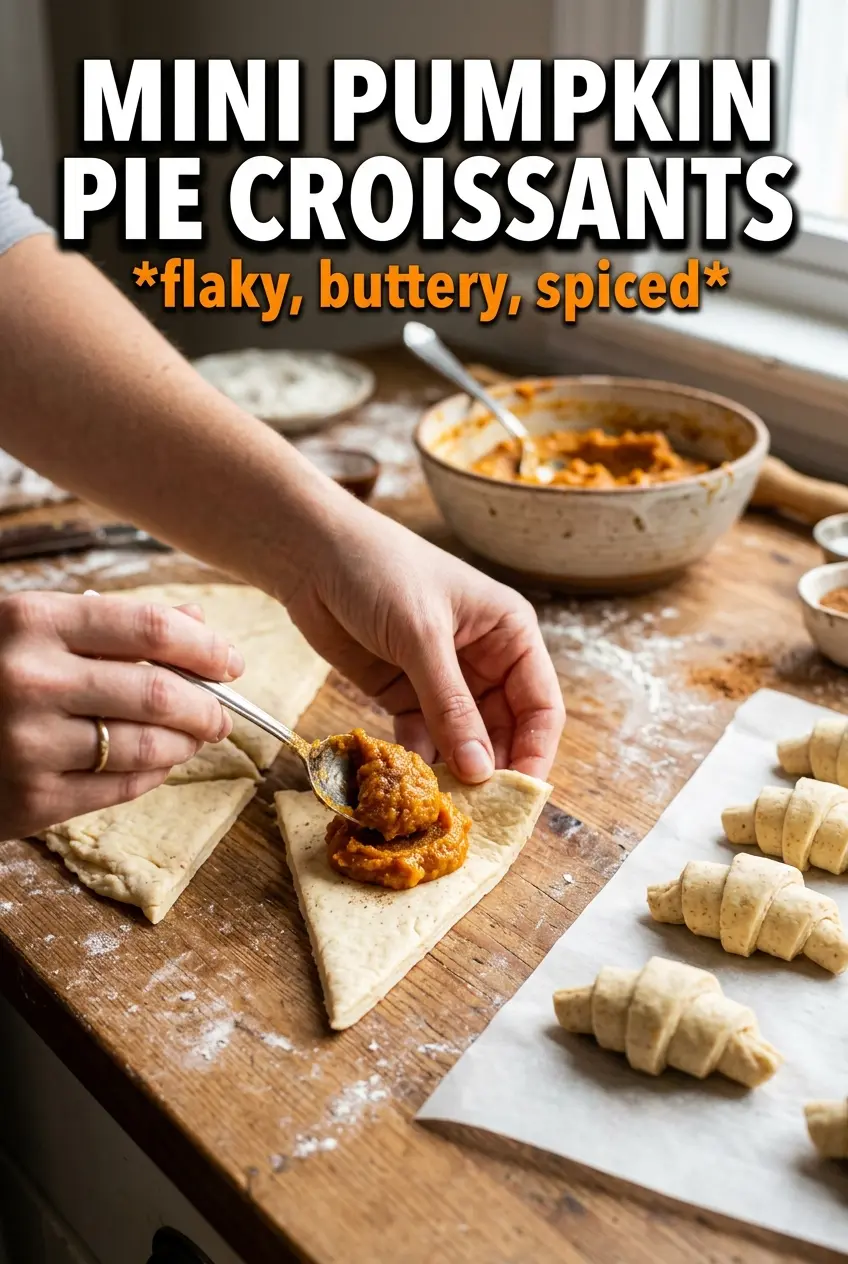
The other thing that matters here is portion size. A heaping teaspoon is enough. More than that and the dough will split open while it bakes, especially at the pointed end where the seam is weakest. These are meant to be filled, not packed. You want a little spillover at the ends, but not a flood on the pan.
- Pumpkin puree — Use plain puree, not pie filling. Pie filling is already sweetened and spiced, which throws off the balance and makes the croissants taste cloying.
- Cream cheese — This is the ingredient that gives the filling body. Softened cream cheese blends smoothly and keeps the pumpkin from running.
- Crescent dough — Refrigerated dough is the shortcut that makes these work fast. Let it stay cold until you’re ready to roll so it doesn’t tear and stick.
- Cinnamon sugar topping — The butter helps the sugar adhere and brown. Without it, the sugar stays patchy and falls off after baking.
What Each Ingredient Is Actually Doing in This Recipe

- Primary ingredient (the star) — Quality matters most. Choose the best you can find.
- Cooking medium (oil, butter, or broth) — This carries flavors and prevents dryness.
- Seasonings (salt, pepper, spices, herbs) — Layer flavors so nothing overpowers. Build depth gradually.
- Aromatics (garlic, onion, herbs) — Cook with fat to bloom flavors. Become the foundation.
- Supporting ingredients — Complement the main ingredient without overpowering it.
- Sauce or liquid (if applicable) — Brings flavors together. Balance richness with acid.
- Acid (lemon, vinegar, wine, or other) — Brightens and prevents flat-tasting results.
- Final finish (garnish, glaze, or sauce) — Prevents one-dimensional taste and adds visual appeal.
Rolling and Baking Them So the Filling Stays Put
Mixing the pumpkin filling until smooth
Beat the pumpkin puree, brown sugar, spices, vanilla, and softened cream cheese until the mixture looks completely smooth and thick, with no streaks of cream cheese left behind. If the filling looks grainy, the cream cheese was too cold. Let it sit at room temperature before mixing so it blends instead of leaving little lumps that bake into uneven pockets.
Shaping the croissants without overfilling them
Separate the crescent dough into 8 triangles and keep the triangles cold as you work. Place the filling on the wide end, then roll toward the point with steady pressure so the dough wraps snugly around the filling. If the seams seem loose, pinch them gently before they go on the baking sheet. The goal is a tight spiral, not a loose roll that opens in the oven.
Baking to deep gold, not pale and soft
Brush each croissant with melted butter and sprinkle on the cinnamon sugar before baking at 375°F. Bake until the tops are deeply golden and the edges look crisp, usually 14 to 18 minutes. If they come out too early, the centers stay doughy and the bottoms never get that light crunch. The filling should look set and a little puffy, not wet.
Finishing with glaze while they’re still warm
Whisk the powdered sugar, milk, and cinnamon until the glaze falls in a slow ribbon from the spoon. Drizzle it over warm croissants, not piping hot ones, or it will disappear into the crust instead of sitting on top. Warm pastries catch the glaze best and leave you with that glossy finish that hardens just enough as they cool.
Three Ways to Make These Croissants Fit the Morning You’re Having
Dairy-free version with one swap
Use a dairy-free cream cheese and brush the tops with melted coconut oil or a neutral plant-based butter. The filling will still hold together, but it may taste a little lighter and less tangy. Let the substitute cream cheese soften fully so it blends smoothly.
Gluten-free pastry option
Swap in gluten-free crescent-style dough if you can find it, but work gently because the dough usually cracks more easily than standard dough. Chill it only as long as the package directs and patch any tears before baking. The texture will be a little less flaky, but the pumpkin filling and cinnamon glaze still carry the flavor well.
Extra-spiced filling for a stronger pumpkin pie feel
Add another pinch of cinnamon and a small pinch of ginger if you want the filling to taste more like classic pumpkin pie filling. Don’t overdo it, or the spice will drown out the cream cheese and make the inside taste sharp instead of balanced.
Make-ahead assembly for busy mornings
Assemble the croissants, cover the tray tightly, and refrigerate them for a few hours before baking. Don’t add the butter or cinnamon sugar until right before they go in the oven, or the topping turns damp and the dough doesn’t brown as evenly.
Storage and Reheating
- Refrigerator: Store leftovers in an airtight container for up to 3 days. The pastry softens a bit as it sits, but the flavor stays good.
- Freezer: Freeze baked croissants in a single layer, then transfer to a freezer bag for up to 1 month. Thaw in the refrigerator before reheating for the best texture.
- Reheating: Warm in a 325°F oven or toaster oven until heated through and the pastry crisps back up. The microwave works in a pinch, but it turns the dough soft and sticky.
Answers to the Questions Worth Asking
Mini Pumpkin Pie Croissants
Ingredients
Equipment
Method
- Preheat the oven to 375F and line a baking sheet for easy transfer. Visual cue: a lined sheet ready for the rolled pastries.
- Beat the pumpkin pie filling ingredients together until smooth. Visual cue: a thick, uniform orange mixture with no cream cheese lumps.
- Separate the crescent dough into 8 triangles. Visual cue: evenly sized triangles lined up on the counter.
- Place a heaping teaspoon of pumpkin filling at the wide end of each triangle. Visual cue: filling sits in the corner where you’ll roll.
- Roll from the wide end to the point, keeping the seam tucked as you shape each croissant. Visual cue: neat golden crescent forms.
- Arrange the croissants on the baking sheet and brush with melted butter. Visual cue: a light sheen of butter over the tops.
- Sprinkle the cinnamon sugar over the pastries. Visual cue: a dusting of brown-speckled cinnamon sugar across each croissant.
- Bake for 14-18 minutes at 375F until deeply golden. Visual cue: tops are dark-golden with crisp edges and filling slightly oozing.
- Drizzle the glaze over the warm croissants. Visual cue: thin white ribbons that set slightly on the hot pastry.