Moist, tender, and full of tart pink rhubarb, Oma’s Rhubarb Cake is the kind of sheet cake that disappears faster than you expect. The crumb stays soft from the buttermilk, the top bakes into a delicate golden layer, and every slice gives you little bursts of fruit that hold their shape instead of melting into the batter. A dusting of powdered sugar is all it needs.
What makes this version work is the balance. The rhubarb gets tossed with sugar first, which pulls out a little juice and takes the sharp edge off without making it bland. Then the batter stays simple: butter for richness, buttermilk for tenderness, and baking soda to give the cake a gentle lift and keep it from baking up heavy. The result is old-fashioned in the best way — straightforward, reliable, and good with coffee or after dinner.
Below, I’ve included the small details that matter most, from keeping the rhubarb from sinking to the way I like to cool and finish the cake so the slices stay neat.
The rhubarb stayed in nice little pockets instead of disappearing into the batter, and the cake was still moist the next day. I loved how the powdered sugar finished it off without covering up that tart edge.
Save Oma’s Rhubarb Cake for the days when you want a tender German sheet cake with tart rhubarb and a simple powdered sugar finish.
The Trick to Keeping Rhubarb From Vanishing Into the Crumb
Rhubarb can do two annoying things in cake: bleed too much juice and sink to the bottom. Tossing it with sugar first helps with the first problem because it draws out some of the sharp moisture before the fruit hits the batter. The second problem is about batter texture. This one is thick enough to suspend the rhubarb pieces, so they stay scattered through the cake instead of collecting in a soggy layer at the bottom.
The other piece that matters is not overmixing once the flour goes in. If you beat the batter until it looks perfectly smooth, the cake can bake up dense. Stop as soon as the flour disappears, then fold in the rhubarb gently. That keeps the crumb soft and gives you the kind of slice that holds together cleanly.
What the Butter, Buttermilk, and Rhubarb Each Bring to the Pan
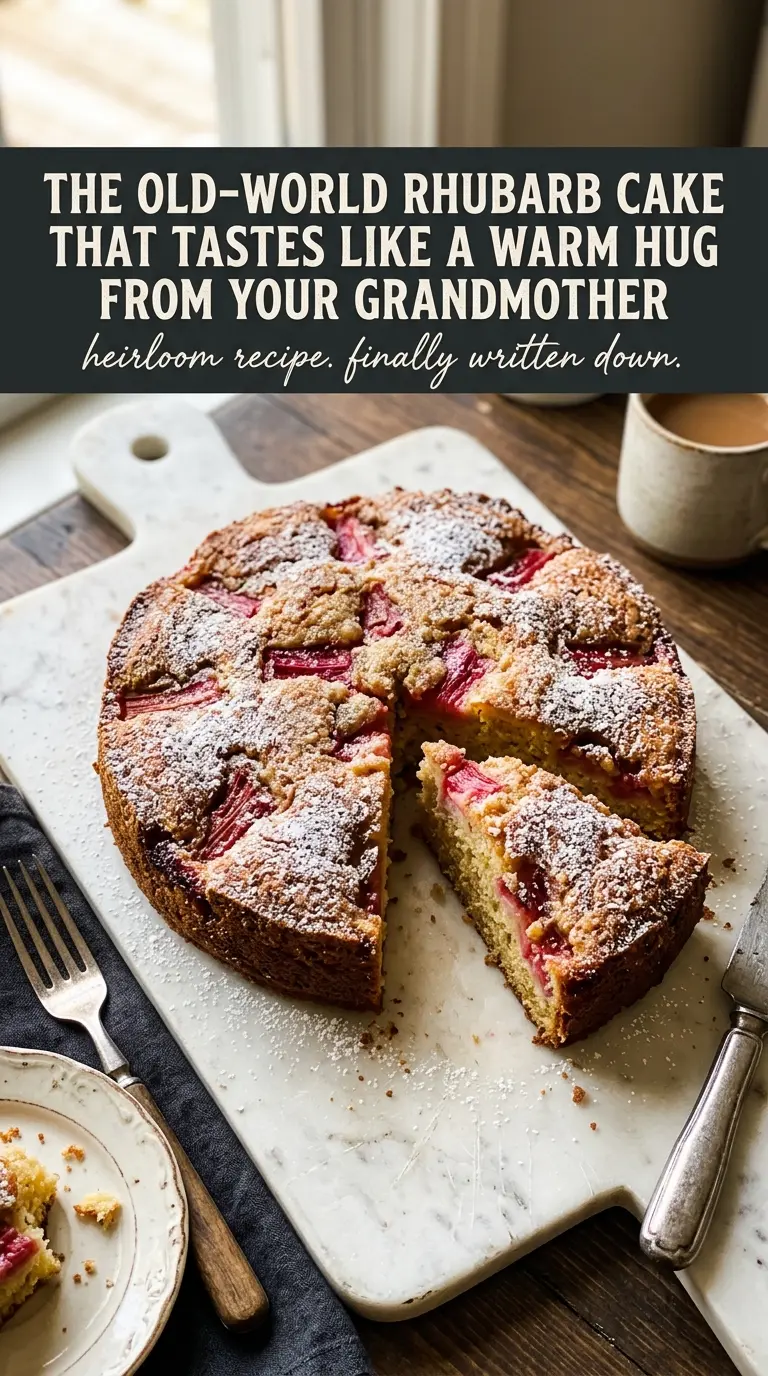
- Rhubarb — Fresh rhubarb gives the cake its tart, clean bite and those pink pockets that make every slice look homemade in the best way. Frozen rhubarb works too, but thaw and drain it first or the batter can get watery.
- Buttermilk — This is what keeps the crumb soft and a little plush. If you don’t have it, stir 1 tablespoon lemon juice or vinegar into 1 cup milk and let it sit for 5 minutes.
- Butter — Softened butter creams with the sugar to build the cake’s structure and give it a rich, old-fashioned flavor. Use real butter here; margarine won’t give the same texture.
- Baking soda — It reacts with the buttermilk to help the cake rise and keeps the crumb from tasting flat. Don’t swap in baking powder one-for-one here, because the balance of acid and lift changes.
- Powdered sugar — It’s only for the finish, but it matters. Add it after the cake has cooled completely so it sits on top instead of dissolving into the surface.
Building the Batter So the Cake Stays Tender, Not Tough
Macerating the Rhubarb
Toss the diced rhubarb with the sugar and let it sit for the full 15 minutes. The fruit will look glossy and a little juicy, which is exactly what you want. If you skip this step, the rhubarb can taste too sharp and the cake may bake up unevenly where the fruit releases its moisture in the oven.
Creaming the Base
Beat the butter and sugar until the mixture looks pale and fluffy, not just combined. That air you whip in here gives the cake its lift before the baking soda even starts working. Add the eggs one at a time if you can, then mix in the vanilla; if the batter looks slightly curdled at this point, it usually smooths out once the flour and buttermilk go in.
Finishing the Batter
Alternate the dry ingredients and buttermilk, mixing only until the flour disappears. The batter should be thick and spoonable. Fold in the sugared rhubarb at the end, then spread it into the pan without packing it down, or the fruit can clump in one section and bake unevenly.
Baking and Cooling
Bake until the center is set and a toothpick comes out clean or with just a few moist crumbs. If the top starts browning too quickly, the oven is running hot, and a loose sheet of foil over the pan for the last 10 minutes will protect it. Let the cake cool completely before dusting it; if you add powdered sugar while it’s warm, it disappears into the top instead of staying pretty.
How to Make Oma’s Rhubarb Cake Fit Your Kitchen
Make It with Frozen Rhubarb
Frozen rhubarb works if fresh isn’t available, but thaw it first and drain off the liquid before tossing it with sugar. That extra moisture is the main thing that can throw off the cake texture. The flavor stays tart and bright, but the fruit pieces are a little softer.
Dairy-Free Version
Use a plant-based butter that bakes well and swap the buttermilk for unsweetened non-dairy milk mixed with 1 tablespoon lemon juice or vinegar. The cake will still be tender, though it loses a little of the classic dairy richness that makes the original taste so old-fashioned.
Extra Tang, Less Sweet
If your rhubarb is especially mild, hold back 2 to 3 tablespoons of the sugar from the fruit mixture and add a little lemon zest to the batter. That keeps the cake from tipping too far into sweet and makes the rhubarb taste brighter.
Storage and Reheating
- Refrigerator: Store covered for up to 4 days. The crumb stays moist, and the rhubarb flavor deepens a little by the second day.
- Freezer: This cake freezes well. Wrap individual slices tightly and freeze for up to 2 months, then thaw at room temperature while still wrapped so the top doesn’t get sticky.
- Reheating: Serve it at room temperature or warm a slice for 10 to 15 seconds in the microwave. Don’t overheat it, or the rhubarb can turn mushy and the cake dries out at the edges.
Answers to the Questions Worth Asking
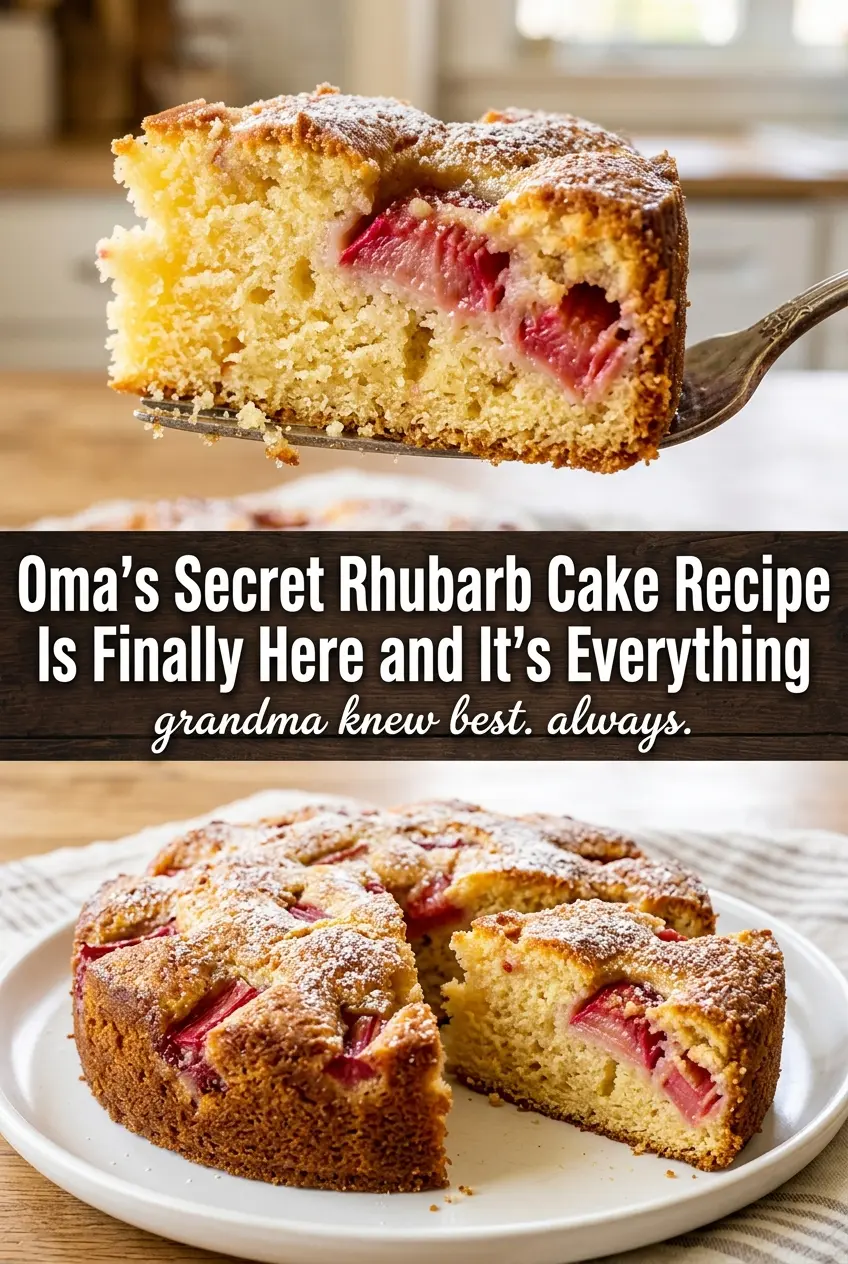
Oma's Rhubarb Cake
Ingredients
Equipment
Method
- Toss the diced rhubarb with 1/2 cup sugar and set aside for 15 minutes to macerate, until it releases juices and looks glossy.
- Preheat the oven to 350°F and grease a 9x13-inch baking pan so the cake won’t stick.
- Cream the softened butter with 1 1/2 cups sugar until light and fluffy, then beat in the eggs and vanilla until smooth.
- Combine the flour, baking soda, and salt in a bowl so the leavening distributes evenly.
- Add the dry ingredients to the butter mixture alternating with the buttermilk, mixing just until combined and no dry streaks remain.
- Fold in the sugared rhubarb, then pour the batter into the prepared pan so the pink pieces are evenly dispersed.
- Bake at 350°F for 40-45 minutes, until a toothpick inserted in the center comes out clean.
- Cool the cake completely for 30 minutes, so it sets for clean slices.
- Dust with powdered sugar right before serving for a light, snowy finish.