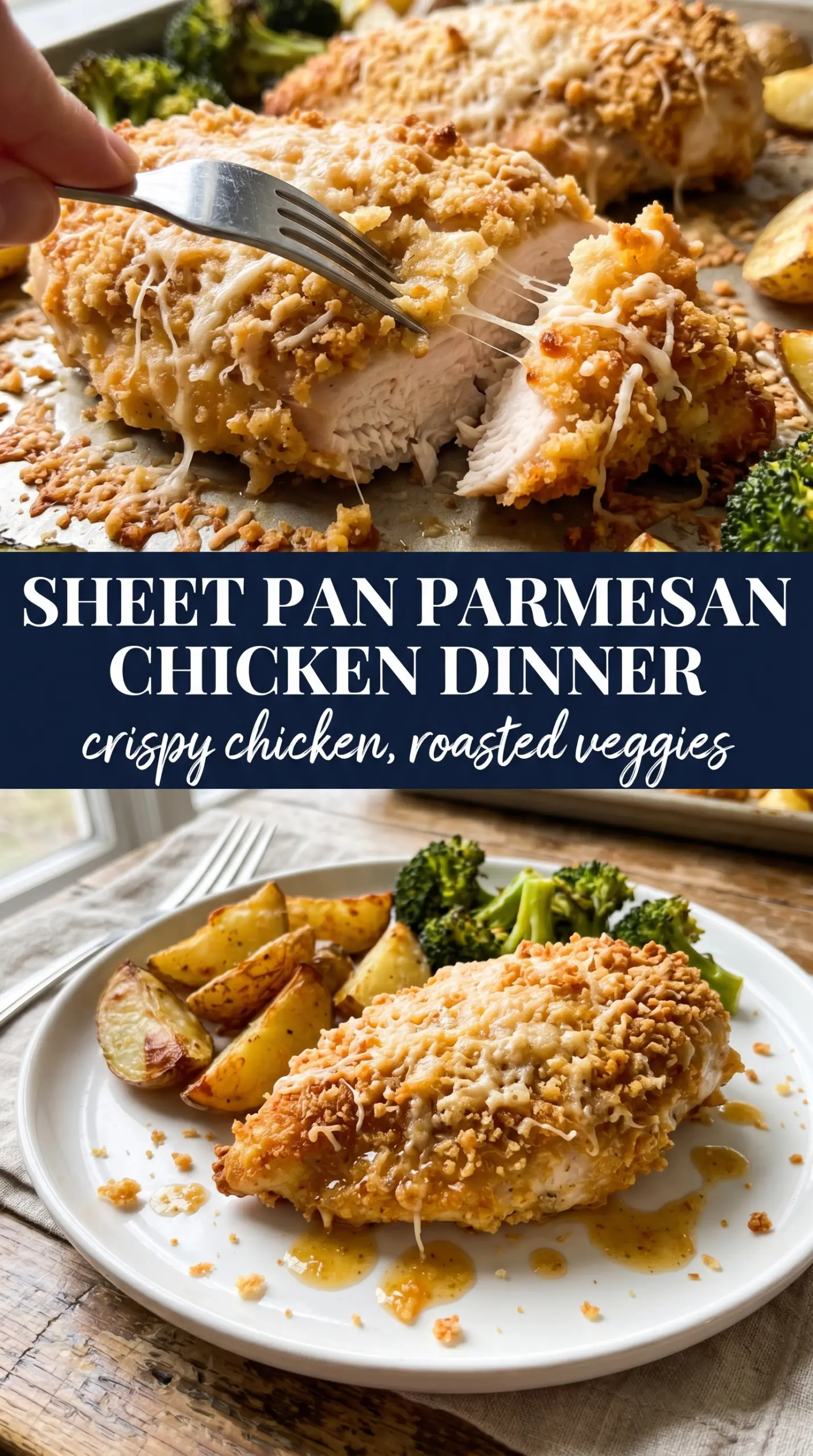
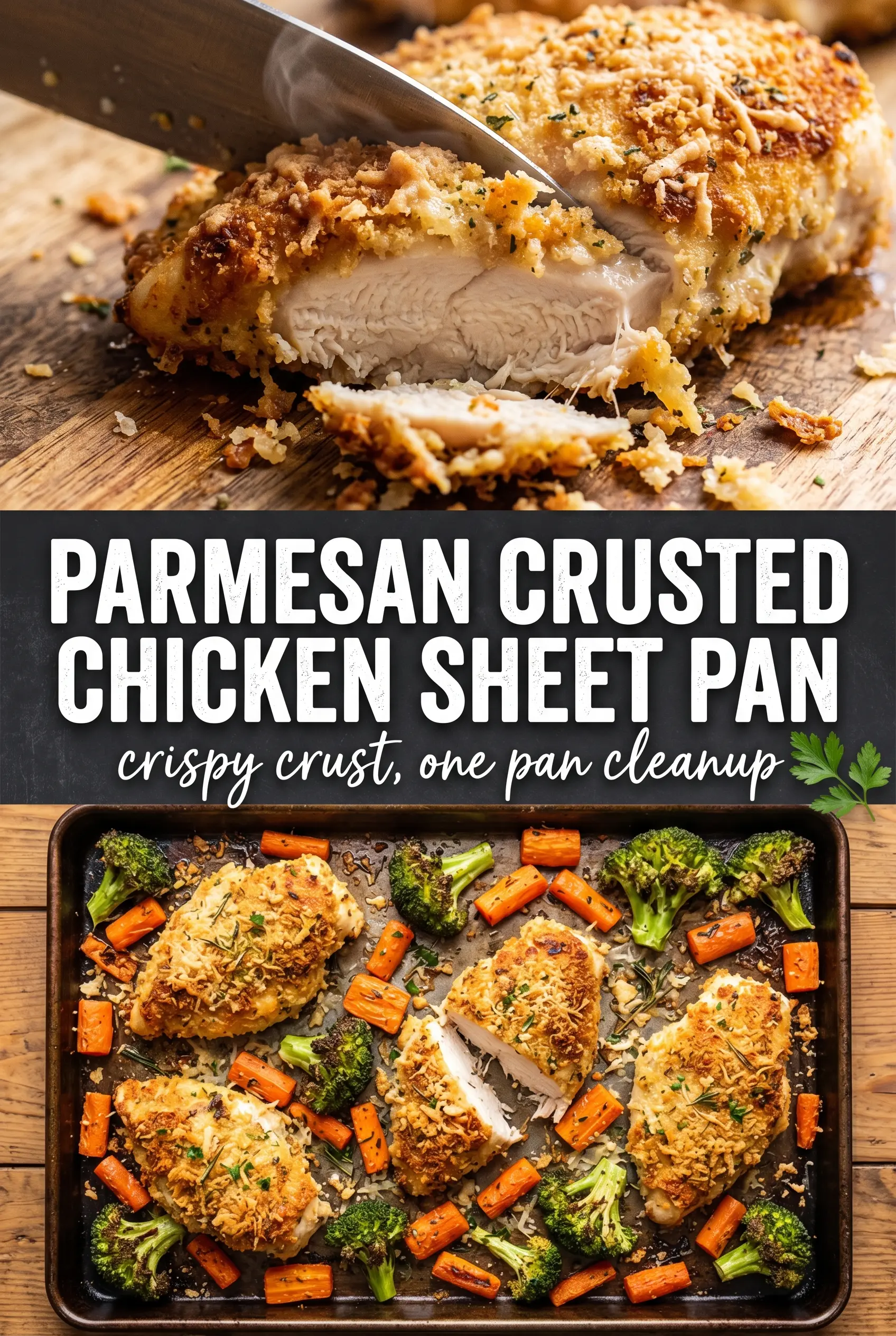
Golden parmesan chicken with a crackling crust is one of those dinners that looks like more work than it is. The chicken stays juicy under a thick, salty topping, while the asparagus roasts right alongside it and the tomatoes collapse into sweet little bursts of juice. Everything lands on one pan, which means the vegetables catch the drippings and the whole tray tastes more put together than the ingredient list suggests.
The trick here is the Dijon and mayonnaise layer under the crumb mixture. It acts like edible glue, so the parmesan and panko stay put long enough to form that deep, bronzed crust instead of sliding off halfway through baking. Using panko keeps the topping lighter and crisper than plain breadcrumbs, and a hot oven does the rest. The vegetables are chosen to finish in the same window as the chicken, so nothing on the pan turns soggy or overcooked.
Below, I’ve included the one detail that keeps the crust from falling apart, plus a few smart swaps if you want to change up the vegetables or make this work with what’s in the fridge.
The coating stayed on the chicken all the way through baking, and the asparagus picked up those buttery parmesan drippings. I was surprised how crisp the top got without frying it first.
Like this Parmesan Crusted Chicken Sheet Pan Dinner? Save it for the nights when you want crispy chicken, roasted vegetables, and one pan to wash.
The Crust Stays Put When You Press It Like You Mean It
Most parmesan-crusted chicken fails for one simple reason: the coating never gets a real chance to bond before it hits the oven. If you dust the chicken lightly and set it on the pan, the topping steams, slides, and leaves you with patchy spots instead of a proper crust. Pressing the chicken firmly into the parmesan mixture builds a thicker layer that actually sticks long enough to brown.
The Dijon and mayonnaise mixture matters more than people think. It adds moisture on the surface, but it also gives the crumbs something to cling to, and the mayonnaise helps the top brown instead of drying out. Bake this on a hot sheet pan and don’t crowd the vegetables too tightly; if the asparagus is buried under the chicken juices, it softens instead of roasting.
What Each Ingredient Is Actually Doing In This Dish
- Parmesan cheese — This is the backbone of the crust. Freshly grated parmesan melts and browns better than the shelf-stable powdery stuff, which can turn sandy instead of crisp. If you can, grate it yourself for the sharpest flavor and the best texture.
- Panko breadcrumbs — Panko keeps the coating light and crunchy. Regular breadcrumbs make a denser crust that can go a little pasty under the cheese. If you need gluten-free, use gluten-free panko and keep the rest of the method the same.
- Dijon mustard and mayonnaise — This combo coats the chicken evenly and helps the topping stick. Dijon adds a little sharpness that cuts through the richness, while mayonnaise protects the chicken from drying out in the oven. Sour cream can work in a pinch, but the crust won’t brown quite as well.
- Asparagus and cherry tomatoes — These vegetables match the chicken’s baking time and give the sheet pan some balance. Asparagus gets tender with browned tips, and the tomatoes burst into a quick sauce on the pan. If your tomatoes are very large, halve them so they roast instead of just wrinkle.
- Lemon wedges — Don’t skip these at serving. The acid wakes up the parmesan and cuts through the richness of the crust, especially if the chicken breasts are on the larger side.
Building The Pan So The Chicken Finishes Before The Vegetables Overcook
Mix the crust first
Stir the parmesan, panko, garlic powder, and Italian seasoning together before you touch the chicken. That keeps the coating even, so you don’t end up with one breast covered in seasoning and another one mostly plain crumbs. The mixture should look sandy with little flecks of herbs throughout.
Coat the chicken with purpose
Brush the Dijon and mayonnaise over the top of each breast in a thin, even layer, then press the top side straight into the parmesan mixture. Use your fingers to pat the crumbs on firmly. If the coating feels loose before baking, it will fall away in the oven, so this is the moment that decides whether you get a full crust or a few stray bits.
Roast everything on the same tray
Toss the asparagus and cherry tomatoes with olive oil, salt, and pepper, then spread them around the chicken in a single layer. Leave some open space so the vegetables roast instead of steaming. Bake until the crust is deep golden and the chicken reaches 165°F in the thickest part; if the top is browning too fast before the center is done, tent loosely with foil for the last few minutes.
Finish with lemon while it’s hot
Let the pan rest for a couple of minutes after it comes out of the oven, then serve with lemon wedges. The crust will settle and firm up a touch as it cools, which makes it slice cleaner. A squeeze of lemon right at the end keeps the parmesan from tasting heavy and brings the tomatoes to life.
How To Change The Vegetables Or Make This Work For Your Table
Make It Gluten-Free
Swap the panko for gluten-free panko or crushed gluten-free crackers. You’ll still get a crisp top, but the texture may be a little more delicate, so press it on well and don’t skip the mayo-Dijon layer underneath.
Swap In Different Vegetables
Broccoli florets, green beans, or sliced zucchini can stand in for the asparagus. Broccoli and green beans hold up best at the same roasting time; zucchini cooks faster and should be cut thick so it doesn’t turn soft before the chicken is done.
Use Chicken Cutlets Instead
Thin chicken cutlets cook faster and make dinner feel a little lighter. They’ll be done sooner than full breasts, so start checking a few minutes early; if you overbake cutlets, the crust can still look good while the chicken underneath dries out.
Storage and Reheating
- Refrigerator: Store leftovers in an airtight container for up to 3 days. The crust softens a bit, but the flavor holds up well.
- Freezer: It freezes best before baking. After cooking, the crust loses its crunch in the freezer, so I don’t recommend freezing finished leftovers.
- Reheating: Warm in a 375°F oven or air fryer until heated through. The mistake to avoid is using the microwave, which turns the crust soggy and makes the chicken rubbery.
Questions I Get Asked About This Recipe
Parmesan Crusted Chicken Sheet Pan Dinner
Ingredients
Equipment
Method
- Preheat oven to 425°F and line a large sheet pan with foil.
- Mix parmesan, panko, garlic powder, and Italian seasoning together until evenly combined.
- Brush chicken breasts with Dijon mustard and mayonnaise, then press firmly into the parmesan mixture to coat the top so it clings thickly.
- Place coated chicken on the sheet pan with space around the breasts for roasting.
- Toss asparagus and cherry tomatoes with olive oil, salt, and pepper, then arrange them around the chicken in a single layer.
- Bake for 22–25 minutes at 425°F until the crust is deeply golden and crackling and the chicken is cooked through; serve with lemon wedges tucked at the edges.