Paula Deen lasagna soup brings all the comfort of a baked lasagna into one pot, and the best part is how the broth turns rich and tomatoey while the noodles soak up every bit of flavor. The finish is what makes people go back for another bowl: buttery sausage broth, tender pasta, and a big cloud of ricotta and mozzarella melting into the top.
What makes this version work is the layering. Browning the sausage and beef first builds a deep base, and the butter gives the broth that signature roundness without needing a long simmer. Tomato paste gets cooked with the onions and garlic before the liquids go in, which takes away that raw edge and gives the soup a fuller, slower-cooked taste.
Below, I’ve included the timing that keeps the noodles from turning mushy, plus a few ways to adapt the cheese topping if you want a lighter bowl or need to work with what’s already in the fridge.
The noodles stayed tender without falling apart, and the ricotta-mozzarella topping melted into the broth just like lasagna filling. I made it on a Tuesday and my husband asked if there was enough for lunch the next day.
Save this Paula Deen lasagna soup for nights when you want buttery tomato broth, broken noodles, and a heaping ricotta topping in one pot.
The Broth Needs to Taste Finished Before the Noodles Go In
The biggest mistake with soup-style lasagna is treating it like plain tomato soup and hoping the pasta and cheese will carry everything at the end. They won’t. The broth needs enough seasoning and depth before the noodles go in, because those noodles absorb salt, garlic, basil, and broth as they cook. If the liquid tastes flat at the start, it tastes flat at the table.
Cooking the tomato paste with the onions and garlic matters too. That short step removes the raw, tinny taste and gives the soup a thicker, more concentrated base. If you dump it straight into the broth, the flavor stays sharp instead of rounded out.
- Browned meat gives the soup its savory base. If you skip the browning, the broth tastes one-note.
- Butter softens the tomato edge and gives the broth the rich finish people expect from this style of lasagna soup.
- Broken lasagna noodles work better than smaller pasta here because they hold a little chew and look like the dish they’re imitating.
- The cheese topping should be generous. A small spoonful disappears into the broth; a big one gives you the creamy, lasagna-like bite that makes the soup memorable.
What Each Ingredient Is Actually Doing in This Bowl
- Italian sausage brings seasoning, fat, and that familiar lasagna flavor in one ingredient. Mild sausage works well, and hot sausage gives the bowl more bite.
- Ground beef makes the soup heartier and keeps it from tasting too sausage-heavy. If you only have one meat, use all beef, but the flavor won’t be quite as layered.
- Crushed tomatoes plus diced tomatoes give you both body and texture. The crushed tomatoes create the broth, while the diced tomatoes add little bursts of tomato in each spoonful.
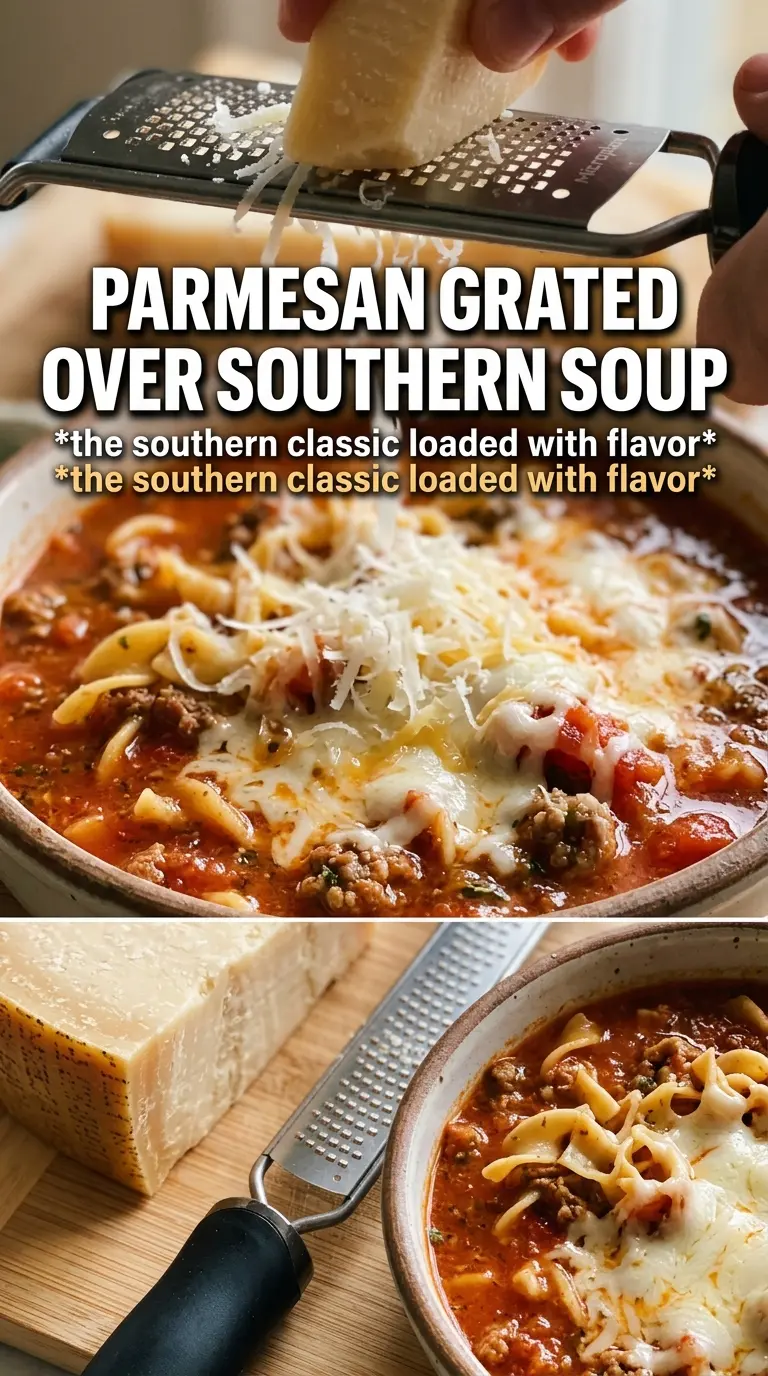
- Ricotta, mozzarella, and parmesan are the topping that makes this feel like lasagna instead of ordinary tomato soup. Whole milk ricotta gives the best creamy texture, and pre-shredded mozzarella works fine if that’s what you have.
- Lasagna noodles need to be broken by hand so they cook unevenly in the best way — some pieces stay silky, some stay a little chewy, and that makes the bowl feel rustic instead of uniform.
Building the Soup So the Noodles Stay Tender
Brown the meat first
Start the sausage and beef in a large pot with the butter and cook until the meat is no longer pink and the edges begin to brown. That browning is where the flavor comes from, so don’t rush it just to move on. Drain off the excess fat, but leave a little behind for the onions. If the pot looks greasy, the soup can taste heavy instead of rich.
Cook the onions and tomato paste together
Add the diced onion to the meat and cook until it softens and turns translucent, then stir in the garlic and tomato paste. Let that cook for about 2 minutes so the paste darkens slightly and smells sweet instead of sharp. If the garlic starts to brown hard, the heat is too high and the broth will pick up a bitter note.
Simmer before adding pasta
Pour in the tomatoes, broth, Italian seasoning, and basil, then bring everything to a boil before lowering it to a steady simmer. This gives the broth time to come together before the noodles start absorbing liquid. Add the broken noodles only after the soup is fully seasoned, because once they go in, they keep drinking the broth until they’re done.
Finish with the cheese topping
Cook the noodles just until tender, about 10 to 12 minutes, then taste and adjust the salt and pepper. The soup should be brothy enough to ladle but thick enough that the noodles settle into it instead of floating in plain tomato liquid. Mix the ricotta, mozzarella, parmesan, and basil together, then pile it high on each bowl right before serving so it melts into creamy streaks instead of disappearing into the pot.
How to Adjust This When You Need a Lighter Bowl or a Different Pantry
Swap in all beef for a simpler flavor
If you don’t have Italian sausage, use 2 pounds of ground beef and add an extra 1 teaspoon Italian seasoning plus a pinch of fennel seed if you keep it around. The soup will be a little less seasoned and slightly less rich, but it still lands in lasagna territory.
Make it gluten-free with a sturdy pasta swap
Use your favorite gluten-free lasagna noodles or a short sturdy gluten-free pasta, and cook it just until tender. Gluten-free pasta can go from firm to mushy quickly, so start checking early and keep a little extra broth nearby in case it drinks up more liquid than expected.
Lighten the cheese topping without losing the lasagna feel
Use part-skim ricotta and reduce the mozzarella a little if you want a less heavy bowl. The topping won’t be as lush, but it still melts into the broth and gives you that creamy finish people expect from this recipe.
Storage and Reheating
- Refrigerator: Store the soup for up to 4 days. The noodles will keep absorbing broth, so expect it to thicken in the fridge.
- Freezer: Freeze the soup base without the noodles and cheese topping for best results. Pasta turns soft after thawing, so add fresh noodles when you reheat.
- Reheating: Warm the soup gently on the stove over medium-low heat with a splash of broth or water. If you boil it hard, the noodles can break down and the cheese topping won’t melt as nicely.
Answers to the Questions Worth Asking

Paula Deen Lasagna Soup
Ingredients
Equipment
Method
- In a large pot, cook the Italian sausage and ground beef together with the unsalted butter over medium-high heat until browned, 8-10 minutes. Drain excess fat so the soup stays rich but not greasy.
- Add the diced onion to the pot and sauté for 4 minutes. Stir in the minced garlic and tomato paste and cook for 2 minutes.
- Add the crushed tomatoes, diced tomatoes, chicken broth, Italian seasoning, and dried basil to the pot. Bring to a boil, then keep stirring occasionally as bubbles start to break across the surface.
- Add the broken lasagna noodles and reduce to a simmer. Simmer for 10-12 minutes, stirring occasionally, until the noodles are tender.
- Season generously with salt and pepper to taste. Taste and adjust so the broth reads fully seasoned alongside the meat and tomatoes.
- In a bowl, mix the whole milk ricotta, shredded mozzarella, parmesan, and fresh basil to combine. Stir until the mixture looks cohesive and thick for topping.
- Ladle the soup into bowls. Top each bowl with a very large, heaping spoonful of the cheese mixture so it begins to melt into the hot broth.