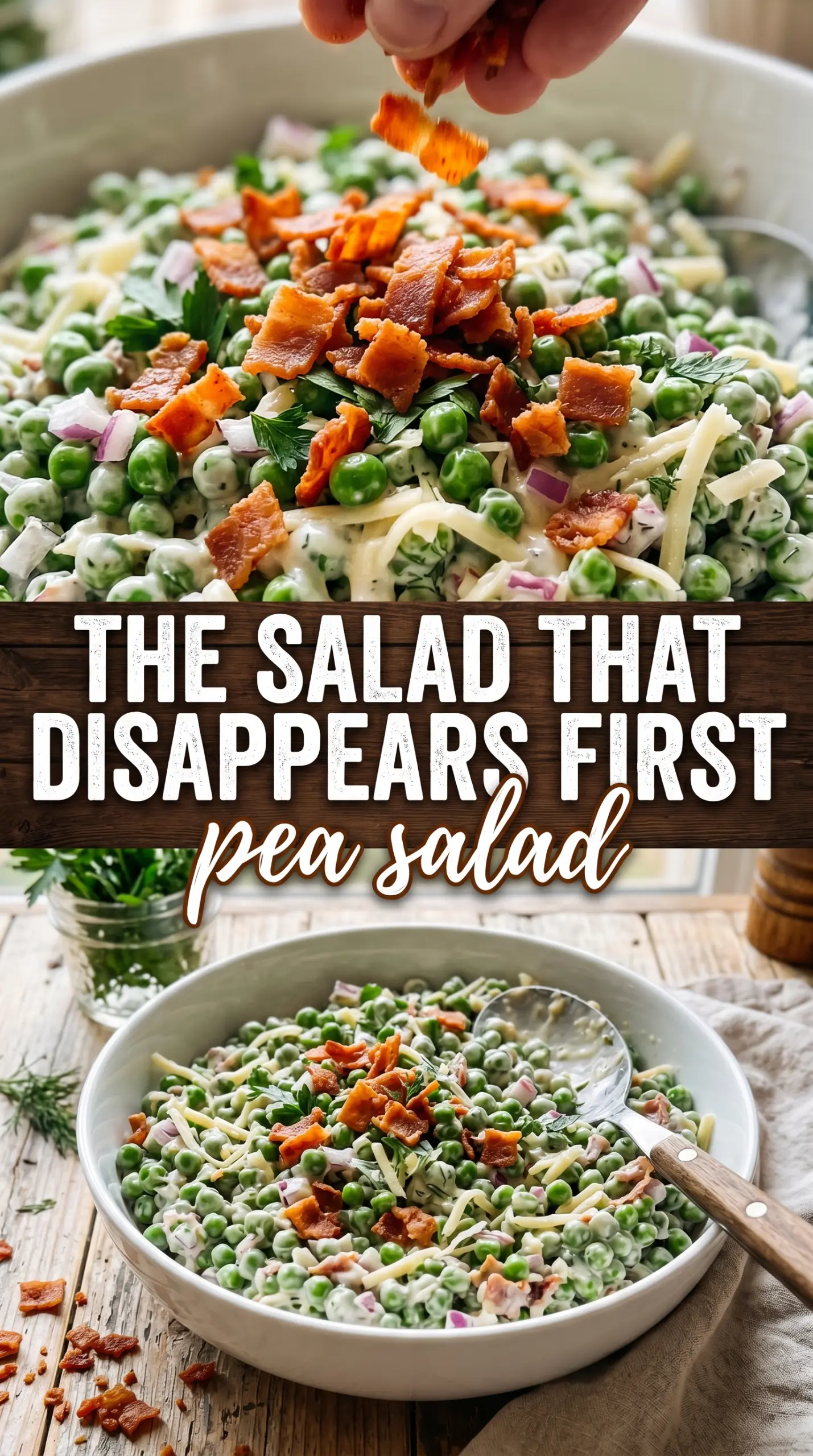
Cold pea salad works because the peas stay sweet and firm while the dressing turns creamy, tangy, and just sharp enough to keep every bite interesting. The bacon brings crunch and salt, the cheddar adds little rich pockets, and the red onion cuts through the richness so the whole bowl doesn’t taste flat.
The part that makes this version hold up is moisture control. Frozen peas need to be thawed completely and patted dry, or the dressing loosens and slides to the bottom of the bowl after an hour in the fridge. A little sour cream gives the dressing a cleaner tang than mayonnaise alone, and the splash of apple cider vinegar keeps the salad tasting bright even after chilling.
Below, I’ll walk through the small details that matter most, including the best way to keep the peas from getting watery and how to adjust the salad if you want it a little more creamy, a little more tangy, or easier to make ahead.
I chilled it for an hour like you said, and the dressing thickened up instead of getting runny. The bacon stayed crisp enough for a picnic, and the peas still had that fresh pop.
Save this creamy pea salad with bacon and cheddar for potlucks, cookouts, and make-ahead side dishes that need an hour in the fridge to settle in.
The Peas Need to Be Dry, Not Just Thawed
This salad fails when the peas go into the bowl still carrying meltwater. The dressing looks fine at first, then turns loose and watery after chilling, and the bacon loses its crisp edges in the process. Patting the peas dry takes a minute, but it keeps the dressing clinging to each pea instead of pooling at the bottom.
The other thing that matters is the chill time. The salad tastes good right away, but after an hour in the fridge the onion softens a little, the vinegar rounds out, and the dressing settles into the peas instead of sitting on top. That rest makes the texture tighter and the flavor more balanced.
- Frozen peas — Frozen peas work better than canned here because they stay sweet and hold their shape. Thaw them completely, then dry them well; that step matters more than brand.
- Bacon — Cook it until crisp enough to crumble, but don’t take it to the point of bitterness. Slightly thicker bacon gives you better texture after chilling.
- Sharp cheddar — Sharp cheddar keeps the salad from tasting too soft and creamy. Cube it small so you get little bursts of cheese in every scoop instead of one heavy clump.
- Red onion — Finely diced red onion gives bite without overpowering the peas. If raw onion feels too strong, soak the diced onion in cold water for 10 minutes, then dry it before mixing.
What Each Ingredient Is Actually Doing in This Recipe
- Primary ingredient (the star) — Quality matters most. Choose the best you can find.
- Cooking medium (oil, butter, or broth) — This carries flavors and prevents dryness.
- Seasonings (salt, pepper, spices, herbs) — Layer flavors so nothing overpowers. Build depth gradually.
- Aromatics (garlic, onion, herbs) — Cook with fat to bloom flavors. Become the foundation.
- Supporting ingredients — Complement the main ingredient without overpowering it.
- Sauce or liquid (if applicable) — Brings flavors together. Balance richness with acid.
- Acid (lemon, vinegar, wine, or other) — Brightens and prevents flat-tasting results.
- Final finish (garnish, glaze, or sauce) — Prevents one-dimensional taste and adds visual appeal.
Building the Creamy Dressing Without Making the Salad Heavy
The dressing is short on ingredients, so each one has a job. Mayonnaise gives body, sour cream loosens it just enough, and apple cider vinegar keeps the whole bowl from tasting one-note. Sugar doesn’t make the salad sweet; it softens the sharp edges so the vinegar and onion taste bright instead of harsh.
Whisk the dressing until it’s completely smooth before it touches the peas. If you see little streaks of mayo or sour cream, keep whisking for a few more seconds because those spots don’t coat evenly. Once the dressing is mixed in, fold gently. Hard stirring bruises the peas and smears the cheese.
Extra Tang and Less Mayo
Swap 1 tablespoon of the mayonnaise for more sour cream if you want a sharper, lighter-tasting dressing. The salad will be a little less rich and a little more tart, which works well when you’re serving it next to smoky or salty mains.
A Vegetarian Version That Still Tastes Complete
Leave out the bacon and add a little extra cheddar plus a pinch of smoked paprika or a handful of chopped toasted sunflower seeds. You lose the bacon fat flavor, but you keep the salty crunch and the salad still feels finished instead of flat.
Make-Ahead for Potlucks
You can mix this salad up to a day ahead, but hold back a spoonful of the dressing if you want it extra creamy after chilling. Stir it in right before serving if the salad has tightened up in the fridge, because peas absorb moisture and the dressing will thicken as it sits.
Lighter Sweetness
Use just 1/2 teaspoon of sugar if you prefer a more savory salad. The sugar is there to round out the vinegar, not make the dish dessert-like, so reducing it slightly still keeps the balance intact.
Storage and Reheating
- Refrigerator: Store covered for up to 3 days. The peas soften a little and the dressing thickens, but the flavor stays good.
- Freezer: Don’t freeze this salad. Mayonnaise and sour cream separate after thawing, and the peas turn mushy.
- Reheating: This salad is served cold, so don’t heat it. If it has thickened in the fridge, stir in a spoonful of mayo or sour cream and let it sit at room temperature for 10 minutes before serving.
Answers to the Questions Worth Asking
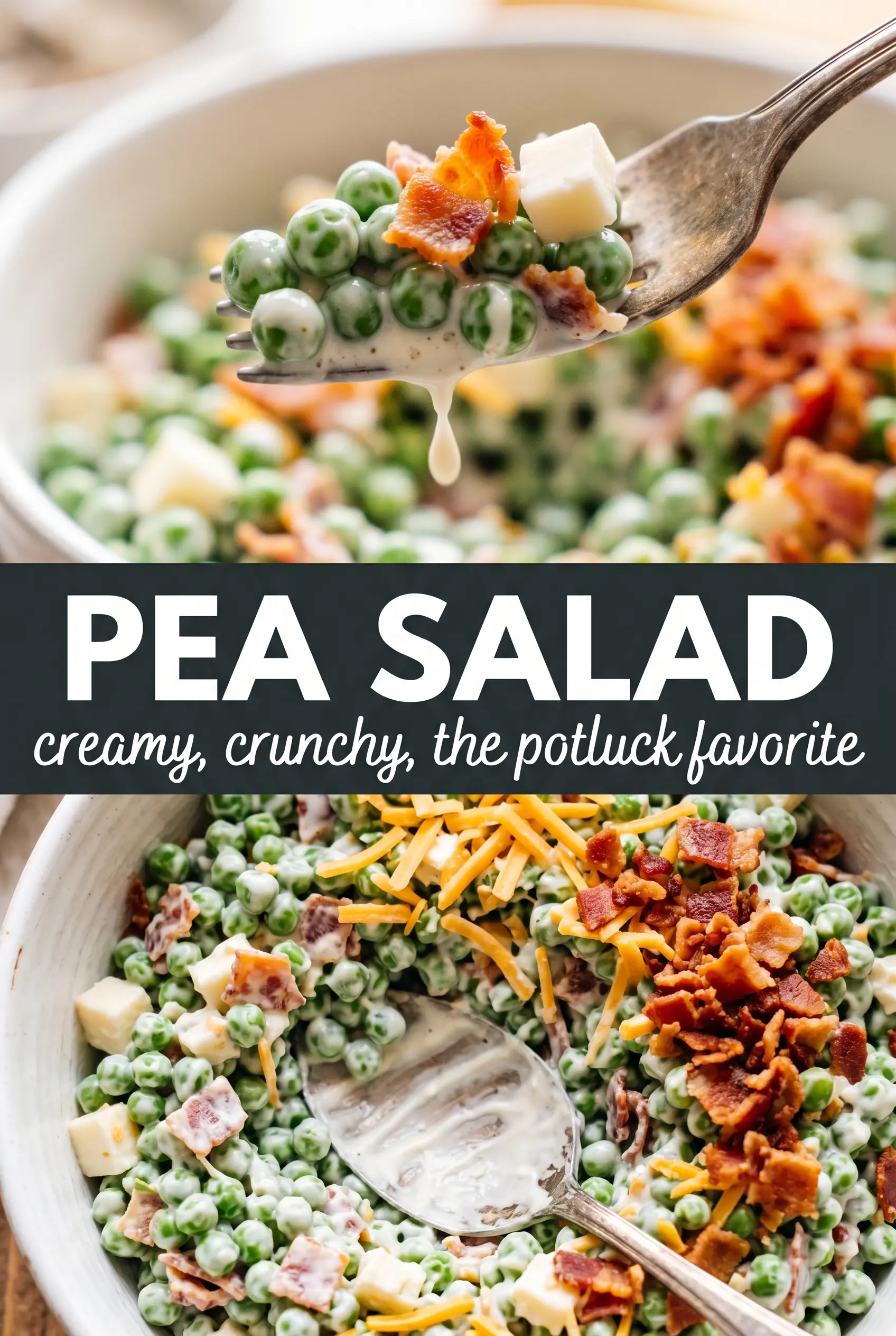
Pea Salad
Ingredients
Method
- Thaw the frozen peas completely, then pat them dry with paper towels to remove excess moisture. Visual cue: the peas should look less wet and not clump together.
- In a large bowl, combine the peas, crumbled bacon, cheddar cubes, and red onion. Visual cue: bright green peas with specks of bacon and yellow cheddar throughout.
- Whisk together the mayonnaise, sour cream, apple cider vinegar, sugar, salt, and black pepper until smooth. Visual cue: the dressing looks glossy and fully combined, with no visible sugar streaks.
- Pour the dressing over the pea mixture and fold gently until everything is evenly coated. Visual cue: all peas are lightly coated with a creamy green-tinted dressing.
- Cover and refrigerate for at least 1 hour to let the flavors develop. Visual cue: after chilling, the salad looks thicker and the coating clings to the peas.
- After chilling, stir and taste for seasoning, adjusting salt and black pepper if needed. Visual cue: the final flavor balances creamy richness with tangy bite.