Green pesto clings to every twist of pasta in a pesto pasta salad that eats like a proper side dish, not an afterthought. The dressing coats the noodles without turning greasy, the cherry tomatoes burst with sweet acidity, and the mozzarella pearls soften just enough to make each bite feel balanced and complete. After an hour in the fridge, the whole bowl tastes brighter and more settled, with the pesto mellowing into the pasta instead of sitting on top of it.
The trick is tossing the pasta with pesto while it’s still warm. That gives the sauce a head start and helps it work into the ridges of fusilli or penne. A little lemon juice wakes everything up, especially if your pesto leans rich or cheesy, and the cold rinse keeps the salad from turning gummy while it chills. Pine nuts bring crunch, but they’re there for contrast, so toast them if you can; the flavor is worth the extra minute.
Below, you’ll find the ingredient details that matter, the one step that keeps the salad from drying out, and a few simple ways to adapt it for different diets and leftovers.
The pesto coated the pasta beautifully and the lemon kept it from tasting heavy. I made it in the morning, chilled it for lunch, and the tomatoes still tasted fresh instead of watery.
Save this pesto pasta salad for potlucks, picnics, and easy make-ahead lunches with bright basil flavor.
The Cold Salad Mistake That Makes Pesto Turn Clumpy
Pesto pasta salad only works when the sauce has something to grip before it gets chilled. If you rinse the pasta and dump the pesto on once it’s ice-cold, the oil can sit on the noodles instead of coating them, and the salad starts out uneven. Tossing the pasta while it’s still warm lets the basil, garlic, cheese, and oil settle into the ridges of the pasta before everything firms up in the fridge.
The other thing that changes the final texture is how much liquid is hanging around. Cherry tomatoes release juice as they sit, which is good in moderation but messy if the pasta is wet to begin with. That’s why draining well matters more here than in a hot pasta dish. You want the bowl to taste glossy, not soupy.
- Warm pasta — Helps the pesto spread evenly and cling instead of beading up.
- Cold rinse — Stops the cooking fast and keeps the pasta from softening into mush while it chills.
- Lemon juice — Brightens a rich pesto and keeps the salad tasting fresh after refrigeration.
- Toasted pine nuts — Add a nutty crunch that plain raw nuts just can’t match.
What Each Ingredient Is Actually Doing in This Bowl
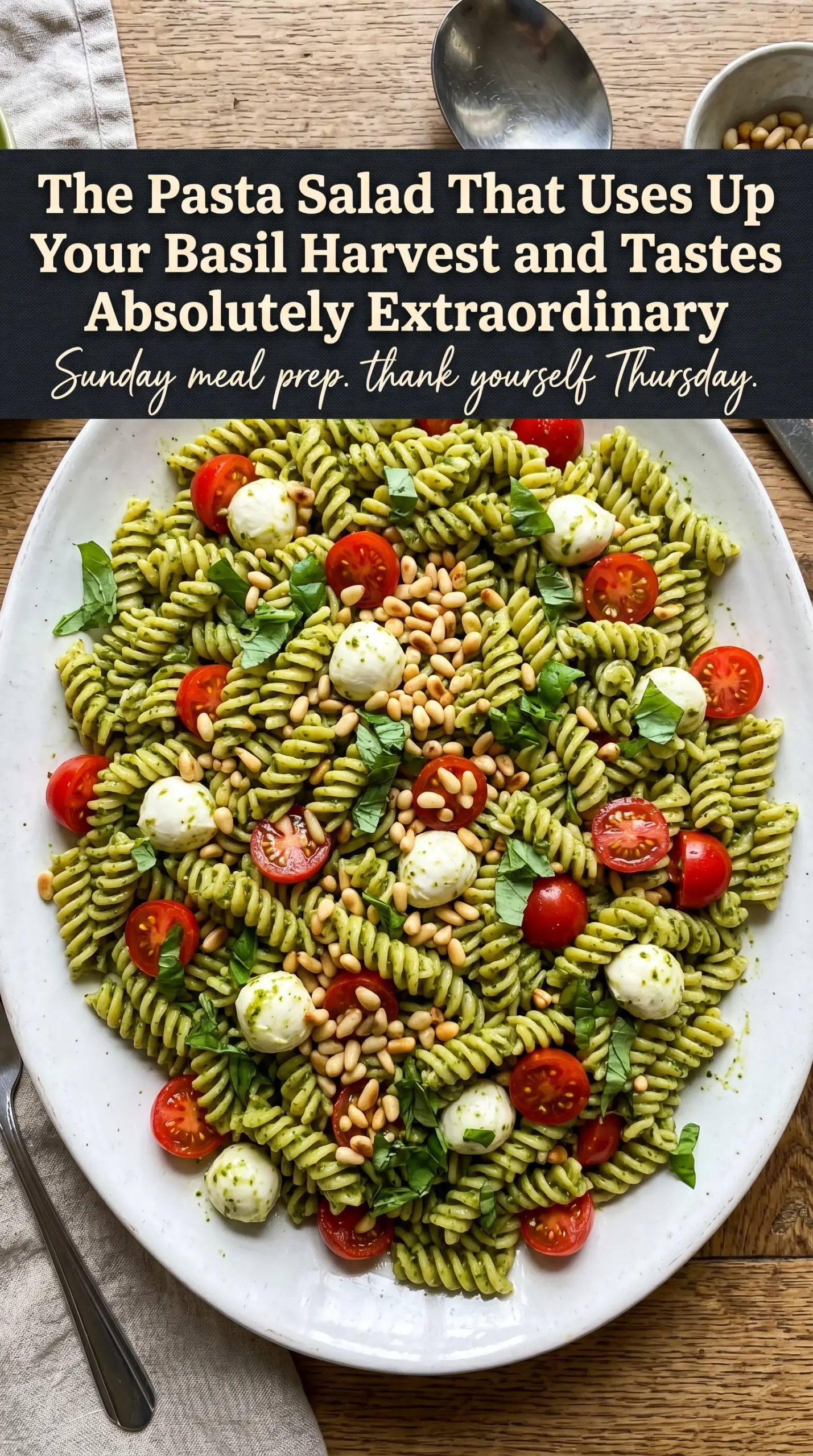
- Fusilli or penne — Both shapes hold pesto well. Fusilli gives you more nooks for the sauce, while penne keeps the salad a little sleeker. Use a sturdy pasta shape; delicate noodles get heavy once the pesto and cheese go in.
- Basil pesto — This is the backbone, so use the best one you can get. Store-bought works fine, but if it tastes flat, a squeeze of lemon and a little extra Parmesan usually wakes it up. If your pesto is thick, loosen it with a spoonful of pasta water before tossing.
- Cherry tomatoes — They bring the juicy, acidic bite that keeps the salad from feeling one-note. Halve them so their juices mingle with the pesto instead of rolling around whole in the bowl.
- Fresh mozzarella pearls — These give you soft, cool bites that balance the herbiness. Regular mozzarella can work if you cube it small, but pearls mix in more evenly and look better in the finished bowl.
- Pine nuts — Toasting matters here. Raw pine nuts taste mild; toasted ones bring the buttery crunch that makes each forkful feel finished.
- Parmesan cheese — Adds saltiness and depth. Finely grated Parmesan blends into the pesto coating more easily than big shreds.
- Lemon juice — A small amount sharpens the pesto and keeps the whole salad tasting fresh after chilling.
The 20 Minutes That Matter Most
Cooking the Pasta to the Right Bite
Boil the pasta in well-salted water until it’s just tender with a firm center, then drain it right away. Pasta for salad should lean a touch firmer than pasta for a hot dinner because it keeps softening as it chills and absorbs the dressing. Rinse it under cold water to stop the cooking and shake off as much water as you can; extra moisture is the fastest way to dilute the pesto.
Tossing the Pesto While the Pasta Is Still Warm
Move the warm pasta to a large bowl and add the pesto first. Toss until every piece looks coated and glossy before anything else goes in. This is the moment that decides whether the salad tastes integrated or patchy, because the warm noodles soak up the sauce better than cold ones ever will.
Adding the Finishers Without Crushing Them
Fold in the tomatoes, mozzarella, pine nuts, Parmesan, and lemon juice with a light hand. If you stir hard, the mozzarella smears and the tomatoes break down too fast, which makes the bowl look muddy instead of fresh. Season at the end with salt and pepper, then chill for at least an hour so the flavors settle and the pesto takes on a fuller, rounder taste.
How to Adjust This Salad for Different Kitchens and Different Crowds
Make It Dairy-Free
Use a dairy-free pesto and skip the mozzarella and Parmesan, or replace them with a good vegan cheese if you like that texture. The salad will taste a little brighter and less rich, so a pinch more salt and an extra squeeze of lemon help keep the balance.
Gluten-Free Pasta Salad
Swap in a sturdy gluten-free pasta made from rice or corn and cook it just until tender. Gluten-free pasta can go soft quickly after chilling, so rinse it well and stop at the early end of the package time to keep the texture from turning gummy.
Add Protein Without Changing the Vibe
Toss in diced grilled chicken, white beans, or chickpeas if you want the salad to eat more like a main dish. Chicken keeps the flavor profile closest to the original, while beans make it vegetarian-friendly and add a little creaminess without asking for extra dressing.
Storage and Reheating
- Refrigerator: Keeps for 3 days in an airtight container. The pasta will absorb some pesto as it sits, so expect the salad to look a little less glossy on day two.
- Freezer: I don’t recommend freezing this one. The mozzarella turns watery and the tomatoes lose their texture once thawed.
- Reheating: Serve it cold or let it sit at room temperature for 15 to 20 minutes. If it seems dry after chilling, stir in a spoonful of pesto or a tiny drizzle of olive oil before serving. Don’t heat it, because warm mozzarella and over-soft pasta are the fastest path to a tired bowl.
Answers to the Questions Worth Asking
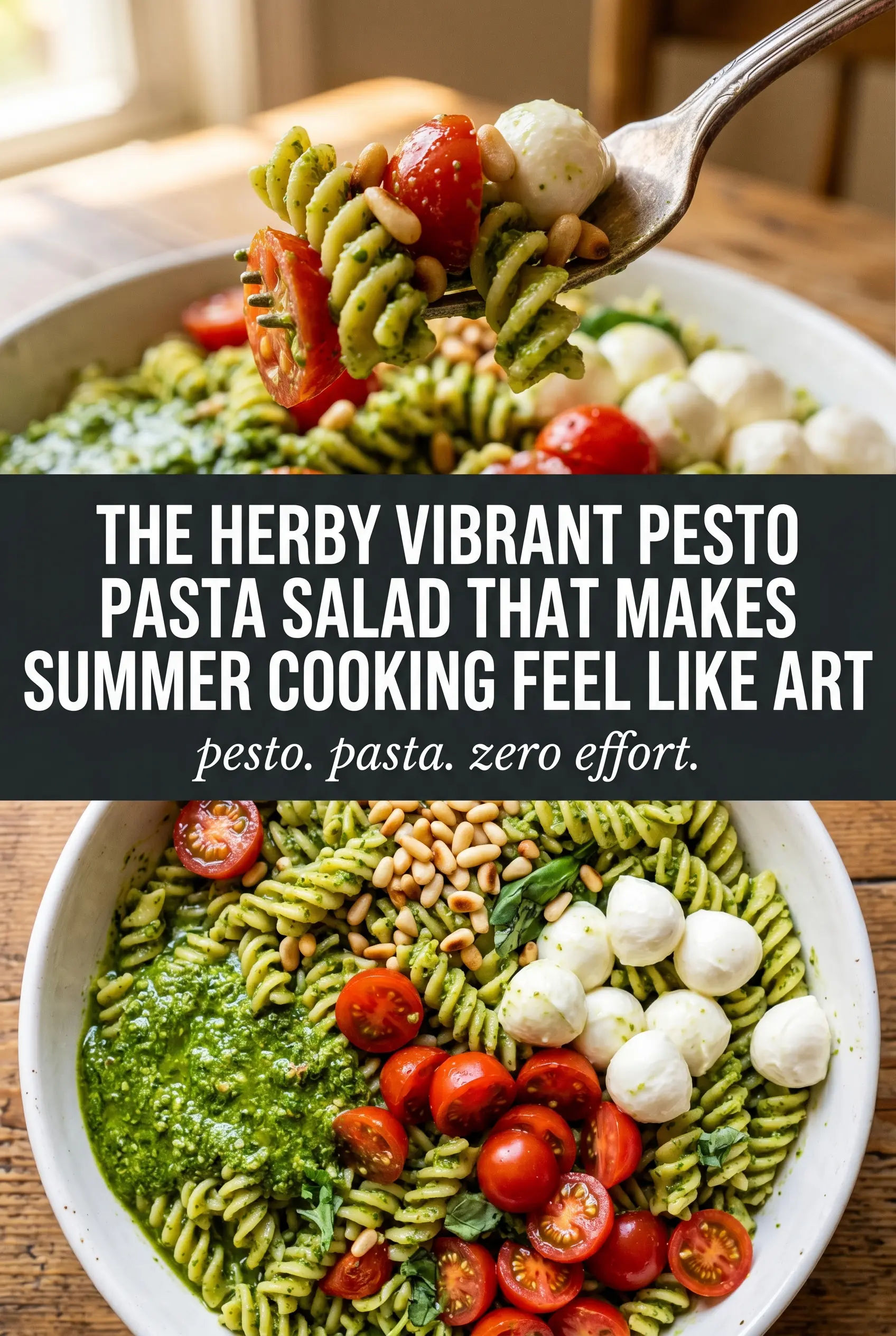
Pesto Pasta Salad
Ingredients
Equipment
Method
- Boil the fusilli or penne pasta in salted water according to package directions until al dente, then drain and rinse with cold water.
- Toast the pine nuts on a sheet pan at 350°F for 5 to 7 minutes, stirring once, until lightly golden.
- In a large bowl, toss the warm pasta with the basil pesto until evenly coated, keeping the pasta warm for better coverage.
- Add the cherry tomatoes, mozzarella pearls, toasted pine nuts, Parmesan cheese, and lemon juice, then toss gently to combine without breaking the cheese.
- Season with salt and pepper to taste, then toss gently again so the seasoning is distributed.
- Refrigerate the salad for at least 1 hour to allow flavors to develop and the pesto to cling to the pasta.
- Right before serving, garnish with fresh basil leaves for color and fresh aroma.