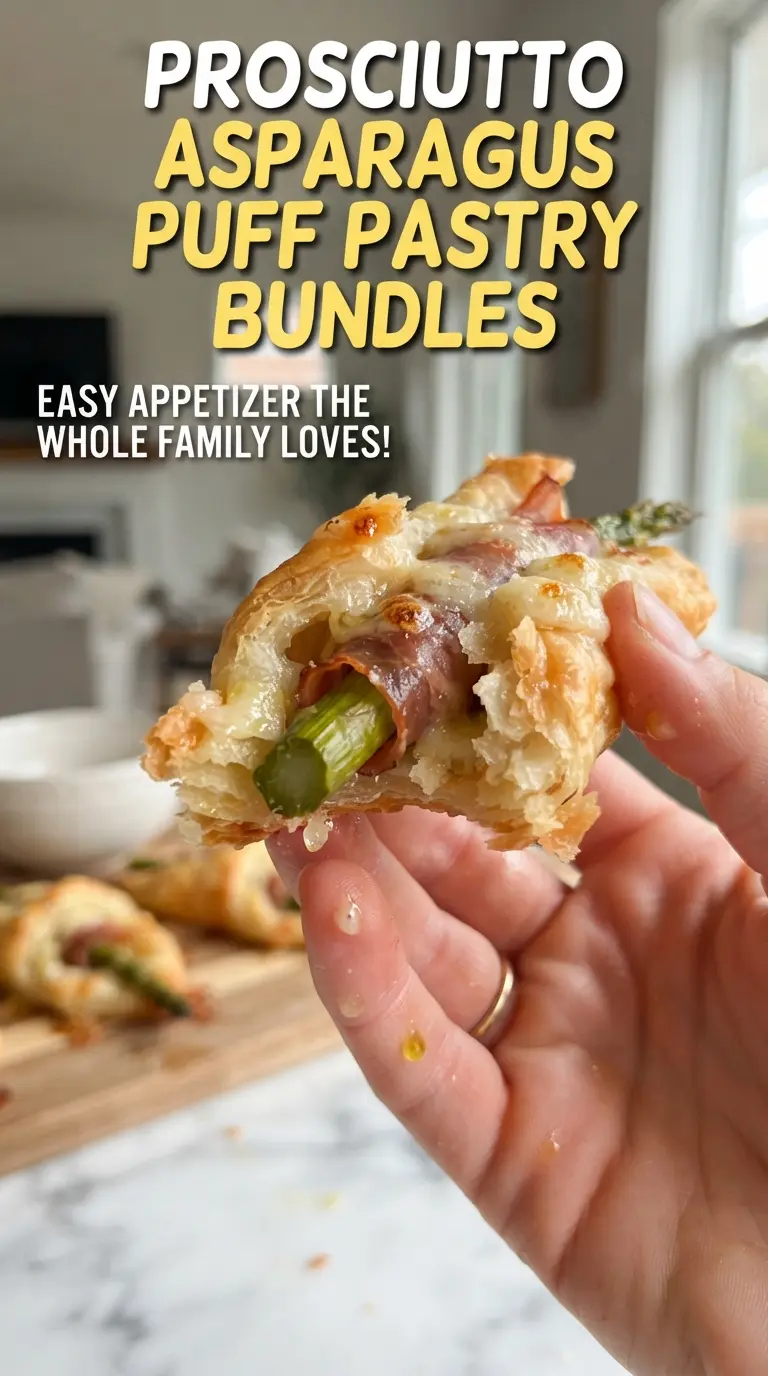
Prosciutto asparagus puff pastry bundles come out crisp, flaky, and salty in the best way, with tender asparagus tucked inside and a golden shell that shatters when you bite into it. They look fancy on a platter, but they’re built from a short list of ingredients and a method that keeps the pastry from going soggy before it reaches the table.
The key is balance. The asparagus needs to be trimmed well so the spears soften at the same pace as the pastry, and the cheese layer needs to stay thin enough that it melts into the spiral instead of leaking out. Prosciutto brings salt and structure, while the lemon zest at the end wakes everything up and keeps the bundles from tasting heavy.
Below, I’ll walk through the part that matters most: how to keep the puff pastry crisp while the filling stays neatly wrapped. I’ve also included a few smart swaps for different cheeses and a make-ahead note that’s useful when you’re serving these for guests.
The pastry came out crisp on the bottom and the asparagus stayed tender instead of turning mushy. I loved the lemon zest at the end — it kept the prosciutto and cheese from feeling too rich.
These prosciutto asparagus puff pastry bundles are the kind of appetizer that disappears while the tray is still warm.
The Reason the Pastry Stays Crisp Instead of Going Soggy
Puff pastry only works here if the filling stays restrained. The most common mistake is piling on too much cheese or wrapping the asparagus in a thick layer of prosciutto, which traps steam and softens the pastry before it has a chance to lift. This version keeps the cheese as a thin spread, so it melts into the dough instead of pooling underneath it.
The other thing that matters is how the pastry gets wrapped. Spiraling the strip around the wrapped spear leaves enough exposed pastry for it to puff, while still securing the filling. If the strips overlap too heavily, the layers glue together and you lose that light, flaky texture that makes these worth serving.
- Puff pastry — Thawed pastry rolls out without cracking and bakes into the crisp shell you want. If it’s still cold in the center, let it sit a few more minutes; if it gets too warm, the layers get sticky and harder to handle.
- Asparagus — Thin spears cook fast enough to match the pastry. Thick asparagus can work, but blanch it briefly first so the stalks don’t stay crunchy while the pastry browns.
- Prosciutto — This gives salt, savoriness, and a little structure around the asparagus. Ham will work in a pinch, but it’s heavier and won’t wrap as neatly.
- Boursin or garlic herb cheese — This adds creaminess and flavor without needing extra seasoning. Any soft herb cheese works; just keep the layer thin so it doesn’t ooze out during baking.
- Parmesan — Parmesan sharpens the filling and helps dry out any extra moisture. Pre-grated is fine here, though freshly grated melts and tastes a little cleaner.
- Egg wash — This is what gives the pastry its lacquered, deep golden finish. Don’t skip it unless you want a paler, duller crust.
What Each Ingredient Is Actually Doing in This Recipe
- Primary ingredient (the star) — Quality matters most. Choose the best you can find.
- Cooking medium (oil, butter, or broth) — This carries flavors and prevents dryness.
- Seasonings (salt, pepper, spices, herbs) — Layer flavors so nothing overpowers. Build depth gradually.
- Aromatics (garlic, onion, herbs) — Cook with fat to bloom flavors. Become the foundation.
- Supporting ingredients — Complement the main ingredient without overpowering it.
- Sauce or liquid (if applicable) — Brings flavors together. Balance richness with acid.
- Acid (lemon, vinegar, wine, or other) — Brightens and prevents flat-tasting results.
- Final finish (garnish, glaze, or sauce) — Prevents one-dimensional taste and adds visual appeal.
How to Wrap the Bundles So They Bake Evenly
Cutting the Pastry into Clean Strips
Roll the pastry into a neat rectangle and cut it into even strips so every bundle bakes at the same pace. Uneven strips create uneven browning, and the thin ones tend to split before the asparagus is wrapped. If the pastry starts shrinking while you cut, it’s warming up too much; slide it back into the fridge for a few minutes.
Layering the Filling Without Overloading It
Spread a thin line of herb cheese down each strip, then add a little Parmesan and black pepper. The cheese should coat, not mound, because the filling will spread once it hits the heat. If you use too much, it escapes from the sides and softens the pastry underneath.
Wrapping and Spacing for a Full Puff
Wrap each asparagus spear in prosciutto first, then spiral the pastry around it with the cheese side facing in. Place the bundles on parchment with a little space between them so air can move around the edges. Crowding the pan traps steam, and steam is the fastest way to lose the flaky layers.
Baking to Deep Gold
Bake until the bundles are puffed and deeply golden, not just lightly colored. Pale pastry usually means the center is still underbaked, especially under the spiral where the layers need time to crisp. Finish with lemon zest and flaky salt while the bundles are still hot so the topping sticks instead of rolling off.
How to Adapt These Bundles for Different Guests
Dairy-Free Version
Swap the herb cheese for a dairy-free garlic spread and leave out the Parmesan. You’ll lose a little of the salty tang, so finish with a touch more flaky salt and lemon zest to bring the filling back into focus.
Gluten-Free Option
Use a gluten-free puff pastry that bakes well from chilled. The texture won’t be exactly the same, but the method stays identical, and the egg wash still helps it brown.
Making Them Ahead for a Party
Assemble the bundles up to 6 hours ahead, cover them tightly, and refrigerate until baking time. Wait to brush on the egg wash until right before they go into the oven, or the pastry can get tacky and bake with a duller finish.
Swapping the Cheese
Cream cheese mixed with garlic and herbs works if that’s what you have, but it’s denser and a little less airy than Boursin. Keep the layer thinner so it doesn’t melt out before the pastry finishes browning.
Storage and Reheating
- Refrigerator: Store leftovers in an airtight container for up to 2 days. The pastry softens a bit, but it still reheats well.
- Freezer: Freeze after baking only if you need to; the pastry won’t stay as crisp as fresh, but it works for quick snacks. Wrap tightly and thaw in the fridge before reheating.
- Reheating: Warm in a 375F oven or toaster oven until the pastry crisps back up, about 6 to 8 minutes. The microwave will soften the layers and make the asparagus limp, which is the one thing to avoid.
Questions I Get Asked About This Recipe
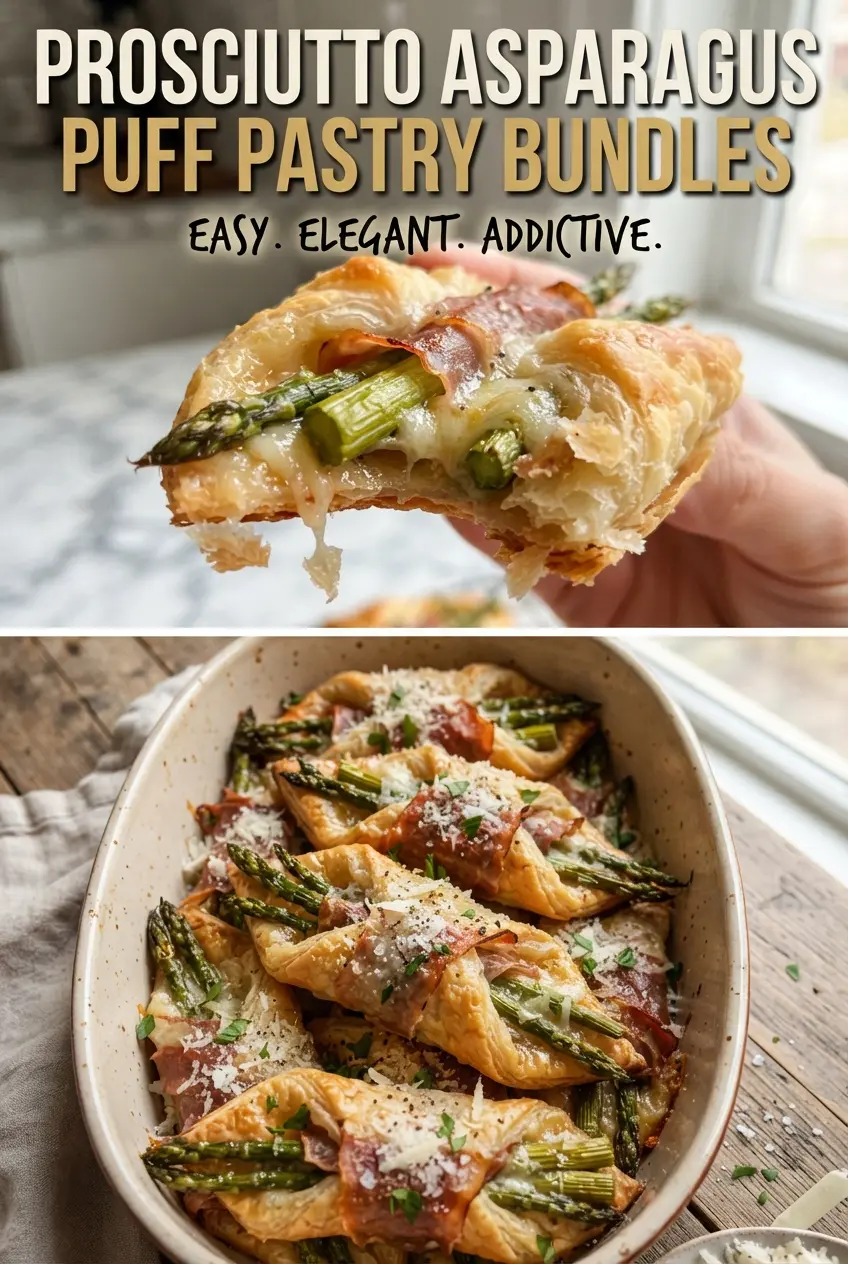
Prosciutto Asparagus Puff Pastry Bundles
Ingredients
Equipment
Method
- Preheat the oven to 400F, then line a baking sheet with parchment paper.
- Roll the puff pastry into a 10x12-inch rectangle and cut into 12 strips about 1 inch wide.
- Spread a thin layer of herb cheese on each pastry strip.
- Sprinkle Parmesan and black pepper over the cheese on each strip.
- Wrap each asparagus spear in a half slice of prosciutto.
- Wind a pastry strip in a spiral around each wrapped spear, cheese side in, then place the bundle on the prepared baking sheet.
- Brush the pastry with the egg wash.
- Bake at 400F for 16-18 minutes until puffed and deep golden brown, with a visible, flaky rise.
- Finish with lemon zest and flaky salt, then serve warm.