Protein packed Thai pasta salad lands in that sweet spot between fresh and filling. The chewy pasta, crisp cabbage, tender chicken, and creamy peanut-ginger dressing all pull in the same direction, so every bite tastes balanced instead of heavy. It holds up well after chilling, which means the flavors deepen instead of going flat.
What makes this version work is the dressing. Peanut butter gives it body, soy sauce brings salt, rice vinegar sharpens it, and ginger keeps the whole bowl from tasting muted. Thin the sauce with a little water until it coats the pasta instead of clumping on top, and toss it while the noodles are fully cooled so the vegetables stay crisp.
Below you’ll find the small details that matter most: which pasta texture works best, how to keep the dressing creamy after chilling, and the one step that keeps the salad from drying out in the fridge.
The peanut dressing coated everything evenly after an hour in the fridge, and the chickpea pasta stayed pleasantly firm instead of turning mushy. I packed the leftovers for lunch and the lime at the end made it taste fresh again.
Save this protein packed Thai pasta salad for a high-protein lunch with creamy peanut dressing and crisp vegetables.
The Chilling Step That Keeps This Pasta Salad Creamy, Not Clumpy
The biggest mistake with a peanut pasta salad is dressing warm noodles and calling it done. Warm pasta keeps absorbing sauce as it cools, which leaves you with a dry bowl on the second serving and a thick paste at the bottom. Rinse the pasta under cold water, drain it well, and let it cool all the way before the dressing goes in.
This recipe also works because the vegetables bring contrast, not just color. Red cabbage stays crunchy, carrots keep some snap, and bell pepper adds sweetness that plays well with the ginger and lime. If the salad tastes flat after chilling, it usually needs more acid, not more salt, so the lime wedges at serving matter.
What Each Ingredient Is Doing in the Bowl
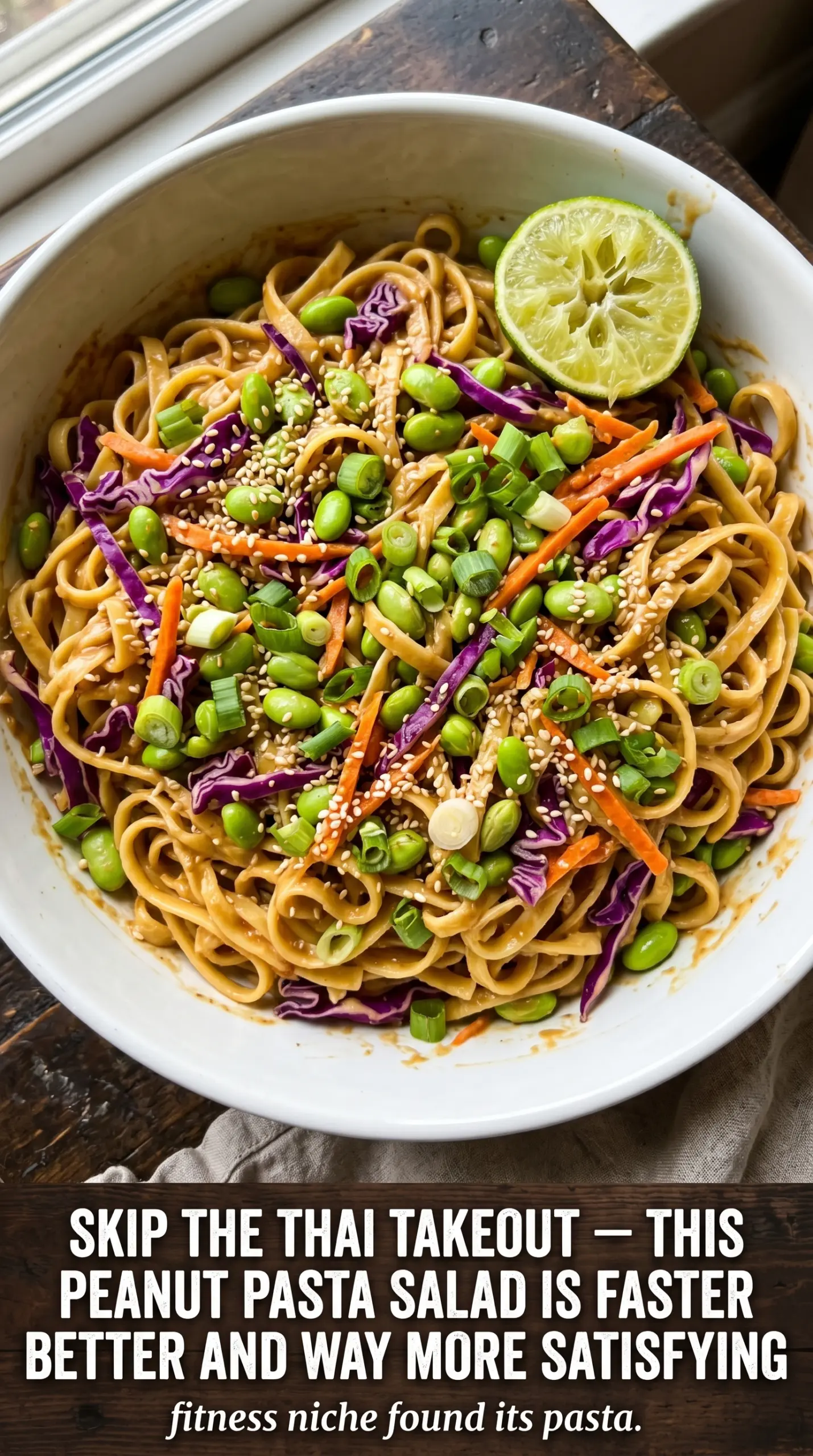
- Protein pasta — Edamame or chickpea pasta gives this salad its sturdy, high-protein base. It holds up better than regular pasta after chilling, though it can go soft if you overcook it by even a minute or two.
- Peanut butter — This is the body of the dressing. Natural peanut butter works fine, but it can separate a little more, so whisk patiently and add the water gradually until the sauce turns silky.
- Soy sauce — It seasons the dressing and gives it the savory backbone it needs. Low-sodium works if that’s what you keep on hand; just taste before adding extra salt anywhere else.
- Rice vinegar and lime — Rice vinegar builds the dressing, but lime at the end wakes everything up after chilling. That final squeeze matters because cold peanut dressing can taste dull straight from the fridge.
- Shredded chicken — Use cooked chicken breast that’s been cooled before mixing. Rotisserie chicken works when you need speed, but plain poached or roasted chicken gives you cleaner flavor and less extra moisture.
- Red cabbage, carrots, and bell pepper — These are the crunch and color that keep the salad interesting. Slice them thin so they mingle with the pasta instead of falling out of every forkful.
Building the Dressing So It Stays Smooth After Chilling
Whisk the peanut base first
Start with the peanut butter, soy sauce, rice vinegar, honey, ginger, and garlic before any water goes in. The mixture will look thick and stubborn at first, and that’s normal. Once the flavor base is combined, the dressing thins evenly instead of turning watery around the edges and thick in the middle.
Add water in small splashes
Use water a tablespoon at a time and whisk after each addition. You’re looking for a sauce that falls off the whisk in a ribbon and coats the pasta without pooling at the bottom of the bowl. If you dump in too much water at once, the dressing can go thin before the peanut butter fully loosens.
Toss after the pasta cools
Combine the pasta, chicken, and vegetables only after the noodles are fully cool and well drained. If there’s extra water clinging to the pasta, it dilutes the dressing and makes the cabbage taste soggy by the next day. Toss until every piece looks lightly coated, then refrigerate so the flavor can settle in.
Make it vegetarian with edamame and extra crunch
Skip the chicken and add shelled edamame or diced tofu. Edamame keeps the same high-protein feel, while tofu adds a softer bite and absorbs more of the peanut dressing. Press the tofu well before using it so it doesn’t water down the salad.
Make it gluten-free without changing the texture
Use chickpea or edamame pasta and swap in a gluten-free tamari for the soy sauce. The flavor stays close to the original, and the pasta still gives you that chewy, sturdy bite. Just watch the cook time closely since gluten-free protein pastas can go from firm to soft fast.
Add heat without overpowering the peanut dressing
Stir in a little chili crisp, sambal, or a pinch of crushed red pepper. Keep it light at first; the goal is a slow warmth that follows the peanut and ginger, not a dressing that burns past the other flavors. A small amount goes a long way once the salad chills.
Storage and Reheating
- Refrigerator: Store for up to 4 days. The noodles will absorb some dressing, so it may look thicker on day two.
- Freezer: Don’t freeze this salad. The vegetables lose their crunch and the peanut dressing turns grainy after thawing.
- Reheating: This salad is best eaten cold or at cool room temperature. If it tightens up in the fridge, loosen it with a spoonful of water or a squeeze of lime and toss again instead of heating it.
Answers to the Questions Worth Asking
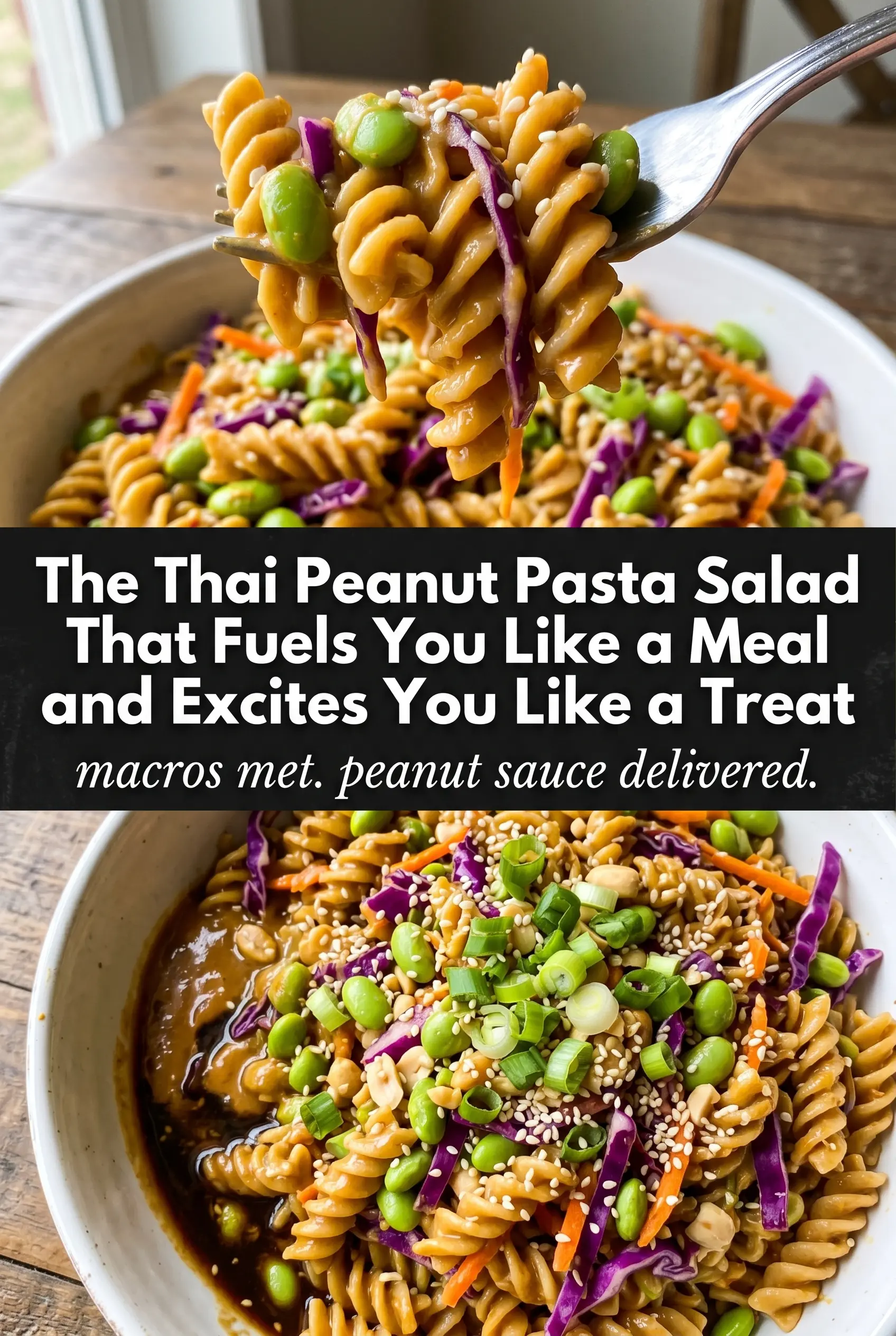
Protein Packed Thai Pasta Salad
Ingredients
Equipment
Method
- Bring a pot of water to a boil and cook the protein pasta according to package directions, until tender. Drain and rinse with cold water to stop cooking and keep it from clumping.
- Whisk peanut butter, soy sauce, rice vinegar, honey, ginger, and garlic in a bowl. Add water a little at a time until the dressing is pourable and coats the back of a spoon.
- In a large bowl, combine pasta, shredded chicken breast, shredded red cabbage, shredded carrots, and thinly sliced red bell pepper. Toss until the vegetables and chicken are evenly distributed.
- Pour the peanut dressing over the salad and toss thoroughly to coat every ingredient. Refrigerate for at least 1 hour so the flavors meld and the pasta absorbs the sauce.
- Top the chilled salad with crushed peanuts and chopped cilantro. Serve with lime wedges on the side and squeeze just before eating.