Deeply spiced pumpkin bundt cake lands on the table with a tight, tender crumb and that glossy cream cheese glaze running down every ridge. The flavor is warm and familiar, but the texture is what keeps people going back for another slice: plush from the pumpkin and sour cream, sturdy enough to slice cleanly, and rich without feeling heavy.
This version works because the batter is built for structure. The butter and sugar are beaten until pale and airy, which gives the cake lift before the pumpkin and sour cream bring in moisture. A measured hand with the flour matters here too; overmixing turns a bundt cake dense, and this one stays light if you stop as soon as the dry streaks disappear.
Below, I’ve included the part that saves most bundt cakes from a sticky disaster: getting the pan prepped so the cake releases in one piece, plus the glaze consistency that actually drapes instead of sliding off.
The cake came out with a perfect crumb and the glaze was thick enough to stay on the ridges instead of soaking in. I used a good bundt pan release and it turned out clean on the first try.
Save this pumpkin bundt cake for the kind of dessert that slices neatly, stays moist for days, and finishes with a thick cream cheese glaze.
The Reason Pumpkin Bundt Cakes Stick in the Pan
The pan is the make-or-break step here. Bundt cakes fail when the details are sloppy: not enough grease in the grooves, flour dusted unevenly, or the cake unmolded too soon while the structure is still fragile. This cake has enough moisture to stay tender, so you need a pan coating that leaves nothing for the batter to cling to.
That 20-minute rest in the pan matters. Pulling it out too early can cause the center to collapse, but leaving it in for too long traps steam and makes the crust sweat onto the pan. The sweet spot is when the cake has set enough to hold its shape but is still warm enough to release cleanly.
- Greasing the pan well — Use softened butter or baking spray with flour and get into every ridge. A thin, even coat beats a heavy patchy one.
- The cooling window — Let the cake rest 20 minutes, no more and no less. That gives the crumb time to firm up without sticking hard to the pan.
- Mixing the batter just until combined — Once the flour goes in, stop as soon as the dry streaks disappear. Overmixing tightens the crumb and makes the cake bake up heavy.
What Each Ingredient Is Actually Doing in This Cake
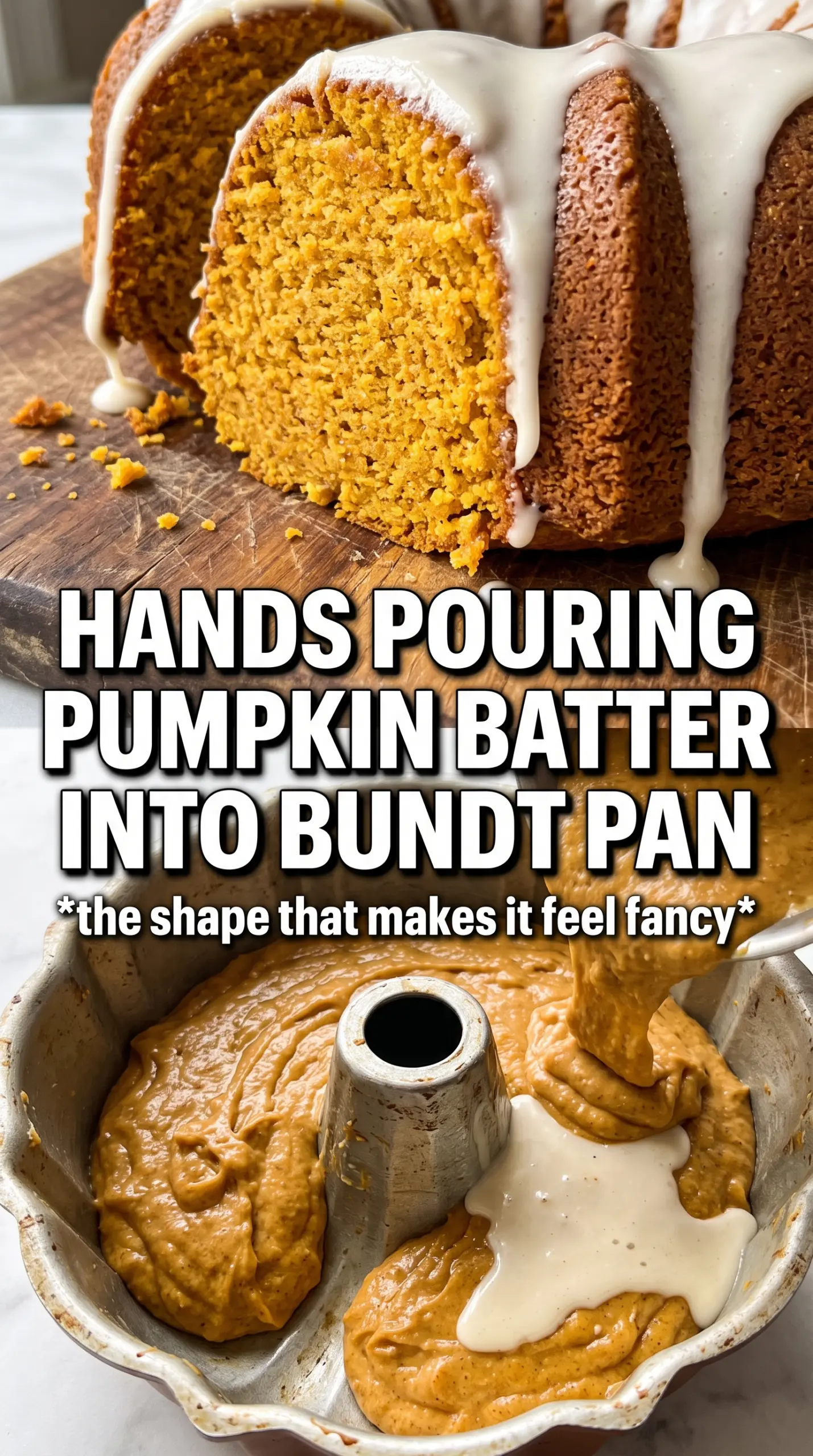
- Pumpkin puree — This brings the signature flavor and keeps the crumb moist without making the cake greasy. Use canned puree, not pumpkin pie filling, which is already sweetened and spiced.
- Sour cream — This is the ingredient that gives the cake that soft, plush texture. Plain full-fat yogurt can step in if needed, but sour cream gives a slightly richer finish.
- Butter and sugar — Beating them until light traps air into the batter, which helps the cake rise in the bundt pan. Don’t rush this part; the mixture should look pale and fluffy before the eggs go in.
- Cream cheese glaze — The cream cheese gives the glaze body, while the milk lets you control the thickness. Start with less milk than you think you need so the glaze stays thick enough to cling to the cake.
Building the Batter and Finishing the Glaze
Whisk the dry ingredients first
Whisk the flour, baking powder, baking soda, pumpkin pie spice, cinnamon, and salt together until the color looks even. That keeps the leaveners and spices distributed through the batter instead of leaving one bite flat and the next bite overly spiced. If you see clumps of cinnamon, break them up now before they end up streaky in the cake.
Beat the butter, sugar, and eggs until airy
Beat the softened butter and sugar until the mixture turns noticeably lighter in color and looks fluffy around the edges of the bowl. Add the eggs one at a time so the batter stays smooth and emulsified. If the mixture looks curdled after an egg, it usually just needs a few more seconds of mixing before the pumpkin goes in.
Fold in the pumpkin mixture gently
Add the pumpkin puree, sour cream, and vanilla and mix until the batter looks thick and smooth. Then add the dry ingredients and stop as soon as there are no visible flour streaks. The batter will be dense, and that’s normal; what you don’t want is overworked batter, which turns the finished cake tough instead of tender.
Bake until the center sets
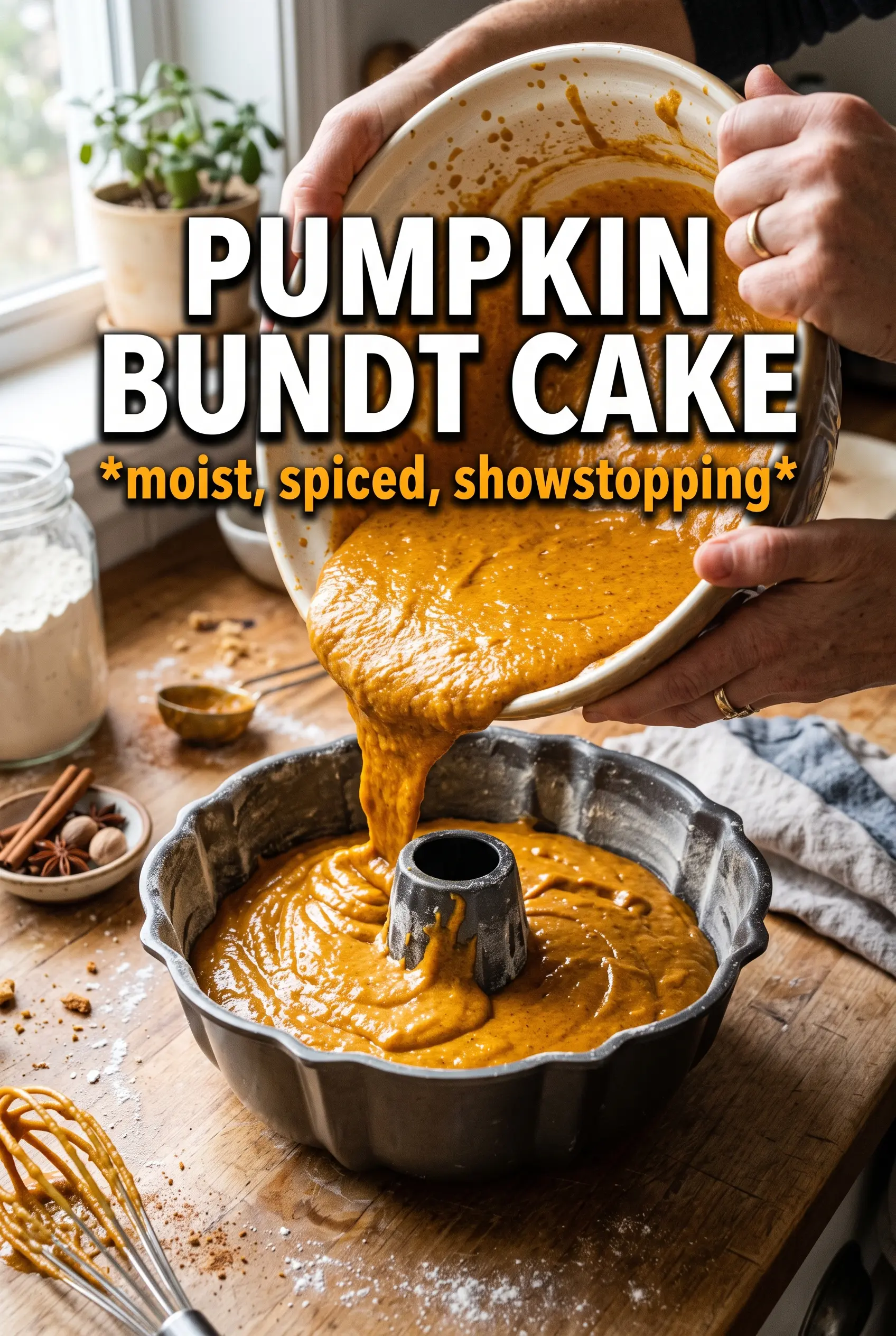
Scrape the batter into the prepared bundt pan and smooth the top before baking. Start checking near the 60-minute mark; the cake is done when a toothpick comes out clean or with a few moist crumbs, not wet batter. If the top browns too fast before the center is done, tent it loosely with foil for the last stretch.
Cool before glazing
Let the cake cool in the pan for 20 minutes, then invert it onto a rack and cool completely. If you glaze while it’s warm, the icing melts and disappears into the cake instead of sitting on top. The cake needs to be fully cool so the glaze sets into those thick drips people actually want to see.
Make the glaze thick enough to hold
Beat the cream cheese until smooth before adding the powdered sugar, milk, vanilla, and cinnamon. Add the milk a tablespoon at a time until the glaze ribbons off the spoon but still looks substantial. If it gets too thin, it will run straight off the bundt instead of staying put on the ridges.
How to Adjust This Pumpkin Bundt Cake Without Losing the Good Part
Make it dairy-free
Use dairy-free butter and a thick plain plant-based yogurt in place of the sour cream. For the glaze, choose a dairy-free cream cheese alternative, but expect a softer set and a slightly tangier finish.
Skip the glaze and go for a simple dusting
If you want a lighter finish, dust the cooled cake with powdered sugar instead of glazing it. You lose the tangy cream cheese contrast, but the cake still tastes rich and the spice comes through more clearly.
Turn it into muffins
Divide the batter among lined muffin cups and bake until the centers spring back and a tester comes out clean. You’ll lose the dramatic bundt presentation, but you gain faster baking and easy grab-and-go portions.
Storage and Reheating
- Refrigerator: Store covered for up to 5 days. The cake stays moist, and the glaze holds up well, though it will firm a bit in the cold.
- Freezer: Freeze the unglazed cake tightly wrapped for up to 2 months. Thaw overnight in the fridge, then glaze after it comes back to room temperature.
- Reheating: Warm individual slices for 10 to 15 seconds in the microwave. Too much heat melts the glaze and makes the crumb gummy, so keep it brief.
Questions I Get Asked About This Recipe
Pumpkin Bundt Cake
Ingredients
Equipment
Method
- Preheat oven to 325°F, then grease and flour a 10-inch bundt pan very well.
- Whisk all-purpose flour, baking powder, baking soda, pumpkin pie spice, cinnamon, and salt until evenly combined.
- Beat unsalted butter and granulated sugar until very light and fluffy, then add eggs one at a time and beat after each addition.
- Add pumpkin puree, sour cream, and vanilla, then fold in the flour mixture until just combined (do not overmix).
- Pour the batter into the prepared bundt pan and bake 60–70 minutes, until a toothpick comes out clean.
- Cool in the pan 20 minutes, then invert onto a rack and cool completely.
- Beat cream cheese until smooth, then add powdered sugar and beat again until creamy.
- Mix in milk, vanilla, and cinnamon until the glaze is thick but drizzleable.
- Drizzle the cream cheese glaze generously over the cooled bundt cake.