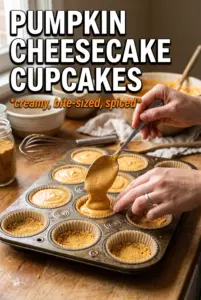
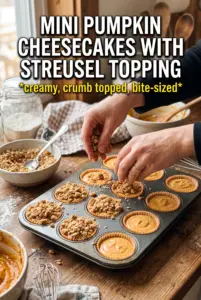
Pumpkin cheesecake cupcakes bake up with the kind of creamy center and spiced cookie crust that makes people reach for a second one before they’ve finished the first. Each bite has that contrast you want in a fall dessert: a firm gingersnap base, a smooth pumpkin filling, and a chilled cheesecake finish that feels richer than a standard cupcake but easier to serve at a party.
The crust matters here. Gingersnap crumbs bring built-in spice and enough structure to hold up under the filling, and pressing them firmly into the liners keeps the bottoms from crumbling when you peel the wrappers away. The cheesecake batter also needs a gentle hand. Once the eggs go in, mix only until smooth, then stop. Overbeating adds air, and air is what causes cheesecake cupcakes to puff, crack, and sink as they cool.
Below, I’ll show you how to keep the filling silky, how to tell when they’re done without overbaking them, and a few smart swaps if you need to adjust the crust or make them a little more pantry-friendly.
The centers set up perfectly after chilling, and the gingersnap crust stayed crisp instead of getting soggy. I topped them with cinnamon whipped cream and they disappeared fast.
Pumpkin cheesecake cupcakes with gingersnap crust are the kind of make-ahead dessert that tastes even better after a good chill.
The Secret to Cheesecake Cupcakes That Don’t Sink in the Middle
The biggest mistake with cheesecake cupcakes is treating them like standard cupcakes and baking them until the tops look fully set and dry. That’s how you end up with cracked surfaces and a dry edge around the rim. These are done when the centers still have a slight wobble and the tops look matte, not shiny. They finish setting as they cool, then tighten completely in the fridge.
The other thing that keeps the texture right is temperature. Softened cream cheese blends smoothly with the sugar, but cold cream cheese leaves tiny lumps that never disappear. Once the eggs go in, keep the mixer on low and stop as soon as the batter is uniform. That gives you a dense, creamy cheesecake texture instead of a puffy one that collapses later.
- Don’t overbake for color. A pale top with a little movement in the center is exactly what you want.
- Cool them slowly. A sudden temperature drop can cause the centers to crack or fall.
- Chill before topping. Whipped cream holds its shape best on fully chilled cheesecake.
What Each Ingredient Is Actually Doing in These Cupcakes
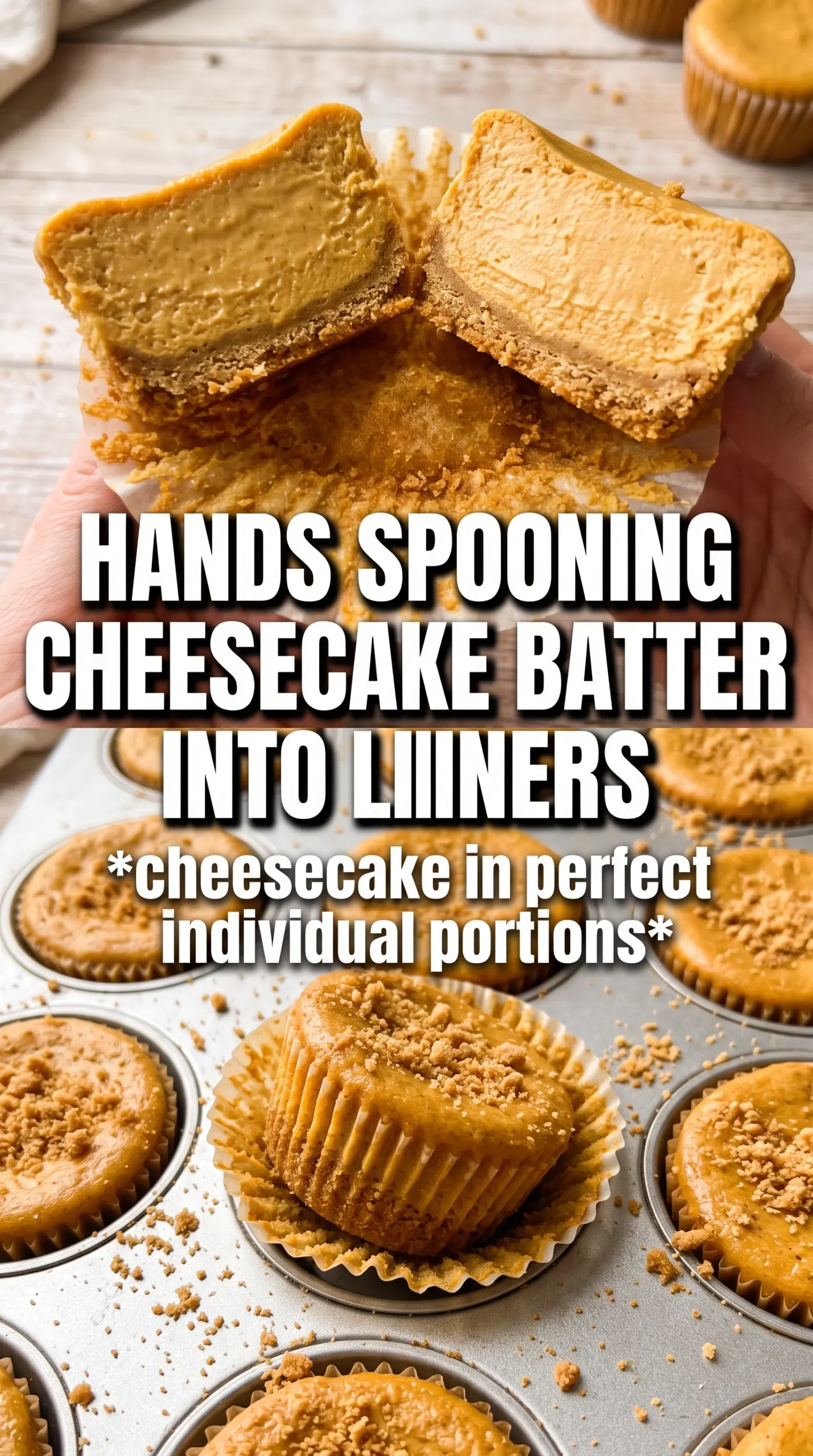
- Gingersnap crumbs — These give you the best crust because they bring spice and a little bite without needing extra seasoning. Graham crackers work in a pinch, but the flavor gets softer and less distinct.
- Melted butter — This binds the crumbs and helps the crust firm up after baking. Use enough to make the mixture look like damp sand; if it’s too dry, the base will crumble when you unwrap the cupcakes.
- Cream cheese — Full-fat cream cheese gives the filling its dense, classic cheesecake texture. Low-fat versions can work, but they tend to bake up looser and a little grainier.
- Pumpkin puree — Use plain pumpkin puree, not pumpkin pie filling. Pie filling already contains sugar and spices, which throws off the balance of the batter.
- Sour cream — This keeps the filling tangy and softens the richness of the cream cheese. Greek yogurt can substitute, but it adds a sharper flavor and a slightly firmer set.
- Pumpkin pie spice and cinnamon — These build the warm spice note that makes the pumpkin taste more pronounced. If you only have pumpkin pie spice, use it in place of both and accept a little less cinnamon-forward finish.
Getting the Fill Right, the Bake Right, and the Chill Right
Pressing the crust firmly
Mix the gingersnap crumbs, melted butter, and sugar until every crumb looks evenly moistened, then press a spoonful into each liner with real pressure. A loose crust will break apart when you bite into it, and a firmly packed crust gives you that clean base that holds together under the filling. Bake it just long enough to set the butter, not long enough to darken it much more.
Mixing the cheesecake without whipping air into it
Beat the cream cheese and sugar until the mixture is smooth before adding the eggs. Add the eggs one at a time, mixing just until each one disappears. Once the pumpkin, sour cream, spices, and vanilla go in, scrape the bowl and stop when everything is combined. If you beat it hard at the end, the cupcakes puff too much in the oven and then collapse as they cool.
Watching for the right bake
Fill each liner nearly full, then bake until the centers are just set with a slight wobble. The edges should look firm and the middle should no longer look wet, but it should still move a little if you tap the pan. If the tops start to crack deeply, they’ve gone too far. Pull the pan out, let the cupcakes cool completely at room temperature, and don’t rush them into the fridge while they’re still hot.
Chilling before topping
Give them the full chill time before adding whipped cream. That rest time is what turns the filling from soft and fragile into a true cheesecake texture. Cinnamon dusted over the whipped cream finishes them cleanly, but only after the cakes are cold enough to hold the topping without melting it.
How to Adapt These Pumpkin Cheesecake Cupcakes for Different Needs
Gluten-Free Crust Swap
Use certified gluten-free gingersnaps in place of standard cookies and the texture stays nearly the same. If your cookies are drier than usual, add a little extra melted butter a teaspoon at a time so the crumbs press together without feeling sandy.
Dairy-Free Version
Use dairy-free cream cheese and a thick coconut-based yogurt instead of sour cream. The cupcakes will still set, but the filling will be a little softer and the tang will shift slightly toward coconut, so chill them well before serving.
Mini Dessert Table Version
Bake the batter in smaller paper liners if you want bite-size servings, but cut the bake time down and start checking early. The centers set faster in smaller cups, and overbaking will show up quickly as a dry edge and a sunken middle.
Storage and Reheating
- Refrigerator: Store covered for up to 4 days. The crust stays best on day one through three, though it softens a little after that from the filling.
- Freezer: These freeze well without the whipped cream topping. Wrap them individually and freeze in a sealed container for up to 2 months, then thaw overnight in the refrigerator.
- Reheating: Don’t reheat these. Serve them chilled straight from the fridge, and add the whipped cream only after thawing if you froze them.
Answers to the Questions Worth Asking
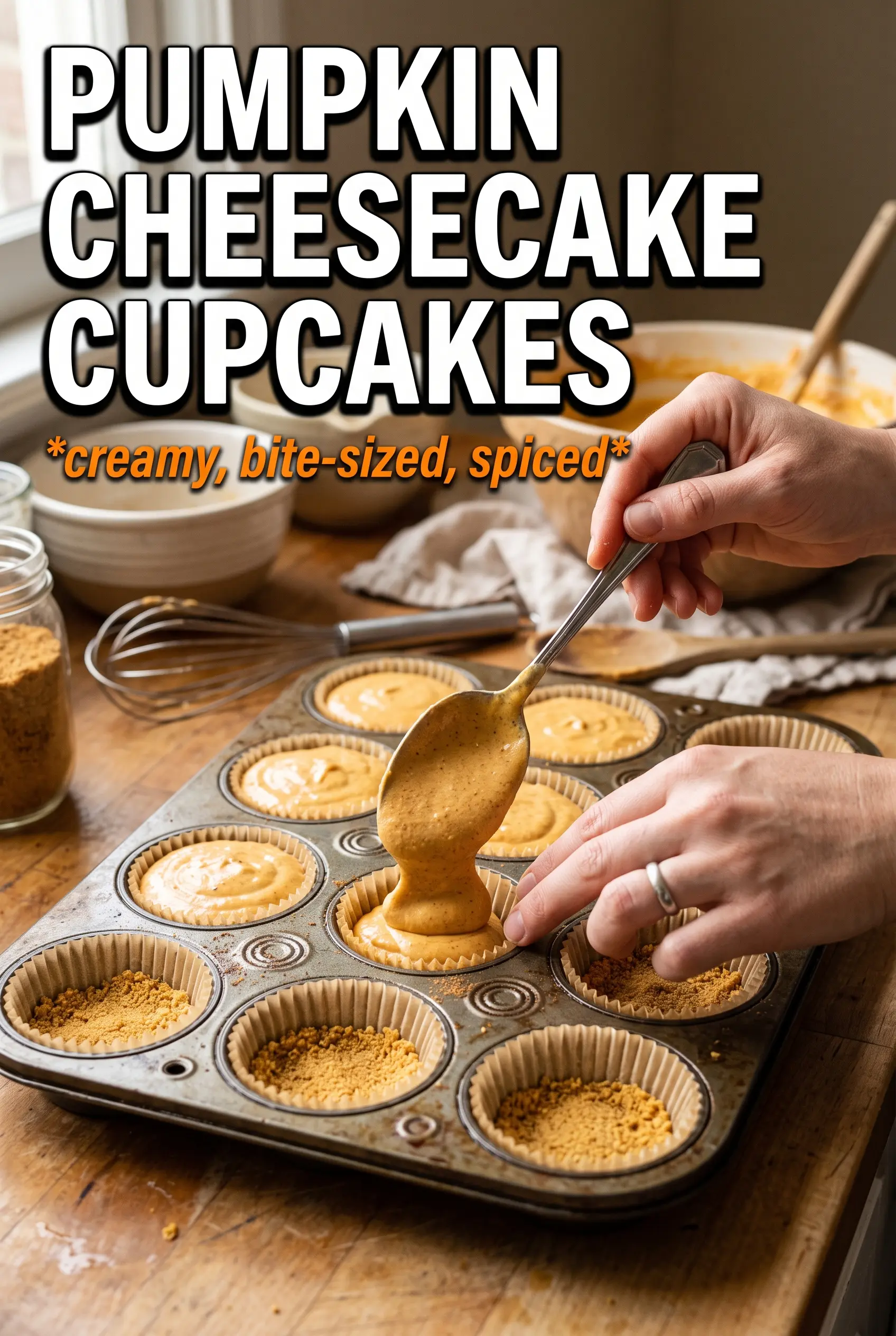
Pumpkin Cheesecake Cupcakes
Ingredients
Equipment
Method
- Preheat the oven to 325°F, then line a 18-cup muffin tin with paper liners.
- Combine gingersnap crumbs, melted butter, and sugar, then mix until the crumbs look evenly coated.
- Spoon about 1–2 tablespoons of crust mixture into each liner and press firmly into the bottom.
- Beat the cream cheese and granulated sugar until smooth, then scrape the bowl as needed.
- Add the eggs one at a time, beating just until each egg is incorporated after the previous one.
- Stir in the pumpkin puree, sour cream, pumpkin pie spice, cinnamon, and vanilla until the batter is smooth and uniform.
- Fill each liner nearly full with pumpkin cheesecake batter.
- Bake at 325°F for 20–22 minutes, until the centers are just set with a slight wobble.
- Cool completely at room temperature before chilling.
- Refrigerate for 3 hours to set the cupcakes.
- Top each cupcake with whipped cream and dust with cinnamon right before serving.