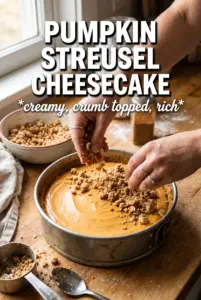
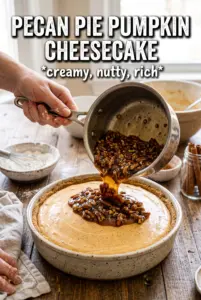
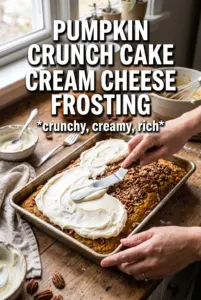
Pumpkin crunch cake comes out with two things that keep people coming back: a soft, spiced pumpkin layer that bakes up like a custard, and a buttery pecan topping that turns crisp in the oven. Add a thick swipe of cream cheese frosting and you get a dessert that lands somewhere between cake, pie, and a coffee-shop slice, which is exactly why it disappears fast at potlucks and holiday tables.
The part that makes this version work is the layering. The pumpkin mixture goes in first so it can set underneath, then the dry cake mix stays mostly on top where the butter can soak through it and turn it into a crumbly crust instead of a gummy one. The pecans matter too; they give the top enough structure and bite to stand up to the frosting. If you rush the cooling step, the whole thing slides, so the rest time below is not optional.
Below, I’ll walk through the little details that keep the crust crisp, the pumpkin layer smooth, and the frosting fluffy enough to spread cleanly or pile high if you flip the cake for a dramatic finish.
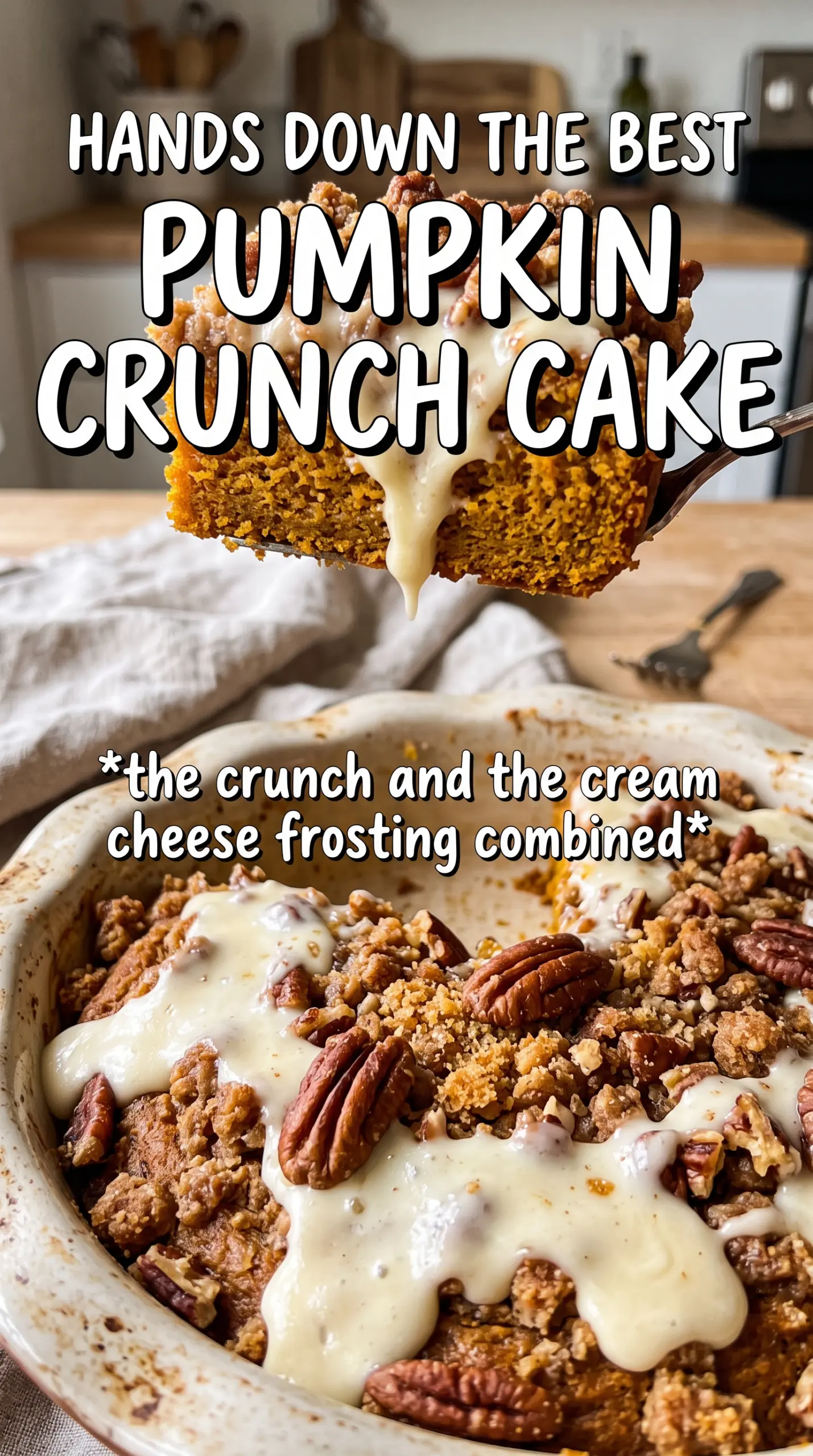
The pumpkin layer set up beautifully and the pecan topping stayed crisp even after chilling overnight. I frosted it right side up, and the cream cheese frosting was the perfect finish without making it overly sweet.
Love the crisp pecan topping and fluffy cream cheese frosting? Save this Pumpkin Crunch Cake With Cream Cheese Frosting for the kind of dessert that slices cleanly and tastes even better the next day.
The Layer Order That Keeps the Bottom Creamy and the Top Crisp
This cake only works if the pumpkin base goes in first and the dry cake mix stays dry long enough for the butter to do its job on top. If you stir the layers together, you lose the contrast that makes the dessert special: the bottom should bake into a soft pumpkin custard, while the top turns into a toasted, buttery crunch.
The other mistake people make is pouring the butter in one heavy stream and hoping it spreads. It won’t. You want the butter drizzled as evenly as possible across the dry mix so more of the surface gets coated. Any patch that stays bone-dry will bake up powdery instead of crumbly and golden.
- Pumpkin puree — Use plain pumpkin puree, not pumpkin pie filling. Pie filling already has sugar and spices added, which throws off the balance and can make the base too sweet and loose.
- Evaporated milk — This gives the pumpkin layer a richer, smoother set than regular milk. Whole milk works in a pinch, but the finished texture won’t be as velvety.
- Yellow cake mix — The mix is what creates the crunchy cap without extra measuring. A spice cake mix is the easiest swap if you want a stronger fall spice note, but it will read sweeter and a little darker.
- Pecans — Chop them enough to spread evenly, but don’t grind them fine. You want visible pieces for texture and for that nutty crunch that survives the frosting.
What Each Ingredient Is Actually Doing in This Recipe
- Primary ingredient (the star) — Quality matters most. Choose the best you can find.
- Cooking medium (oil, butter, or broth) — This carries flavors and prevents dryness.
- Seasonings (salt, pepper, spices, herbs) — Layer flavors so nothing overpowers. Build depth gradually.
- Aromatics (garlic, onion, herbs) — Cook with fat to bloom flavors. Become the foundation.
- Supporting ingredients — Complement the main ingredient without overpowering it.
- Sauce or liquid (if applicable) — Brings flavors together. Balance richness with acid.
- Acid (lemon, vinegar, wine, or other) — Brightens and prevents flat-tasting results.
- Final finish (garnish, glaze, or sauce) — Prevents one-dimensional taste and adds visual appeal.
Building the Cake So the Crust Bakes Instead of Soaks
Mixing the Pumpkin Base
Whisk the pumpkin, evaporated milk, eggs, sugar, spices, and salt until the mixture is smooth and fully blended. You’re looking for a pourable custard with no streaks of egg white or clumps of spice. If it looks grainy here, it will bake unevenly, so take a minute to scrape the bottom and corners of the bowl.
Layering the Dry Topping
Pour the pumpkin mixture into the greased pan, then sprinkle the dry cake mix over the top in an even layer. Don’t press it down or stir it in. The dry mix needs to sit on the surface so the butter can seep through it during baking and form those crisp, craggy bits on top.
Adding Butter and Pecans
Scatter the chopped pecans evenly over the cake mix, then drizzle the melted butter over the whole surface. Try to cover as much of the dry mix as possible, because any dry patches will stay floury after baking. If you see obvious white areas before it goes into the oven, tilt the pan gently and spoon a little of the butter over those spots.
Baking Until the Center Sets
Bake until the top is deep golden and the center only barely jiggles when the pan is nudged. The pumpkin layer should look set around the edges and no longer wet in the middle. If you pull it too early, the base stays loose; if you overbake, the custard gets dry and the topping can turn hard instead of crisp.
Cooling Before the Frosting Goes On
Let the cake cool completely before you flip it or frost it. Warm pumpkin cake will smear the frosting and can collapse when turned out of the pan. If you want the dramatic flipped version, run a thin knife around the edges first and wait until the pan feels fully cool to the touch.
Make It With Spice Cake Mix
Swap the yellow cake mix for spice cake mix if you want a stronger cinnamon-and-clove finish. The result is a deeper fall flavor, but the cake will taste a little sweeter and the spice note will move from background to front and center.
Go Dairy-Free Without Losing the Structure
Use a full-fat canned coconut milk or an unsweetened dairy-free evaporated milk substitute in the pumpkin layer, then replace the butter with a plant-based stick that melts cleanly. The topping won’t taste identical, but it still bakes into a crisp, layered cake if you use a fat that behaves like butter when melted.
Skip the Flip and Frost It Right in the Pan
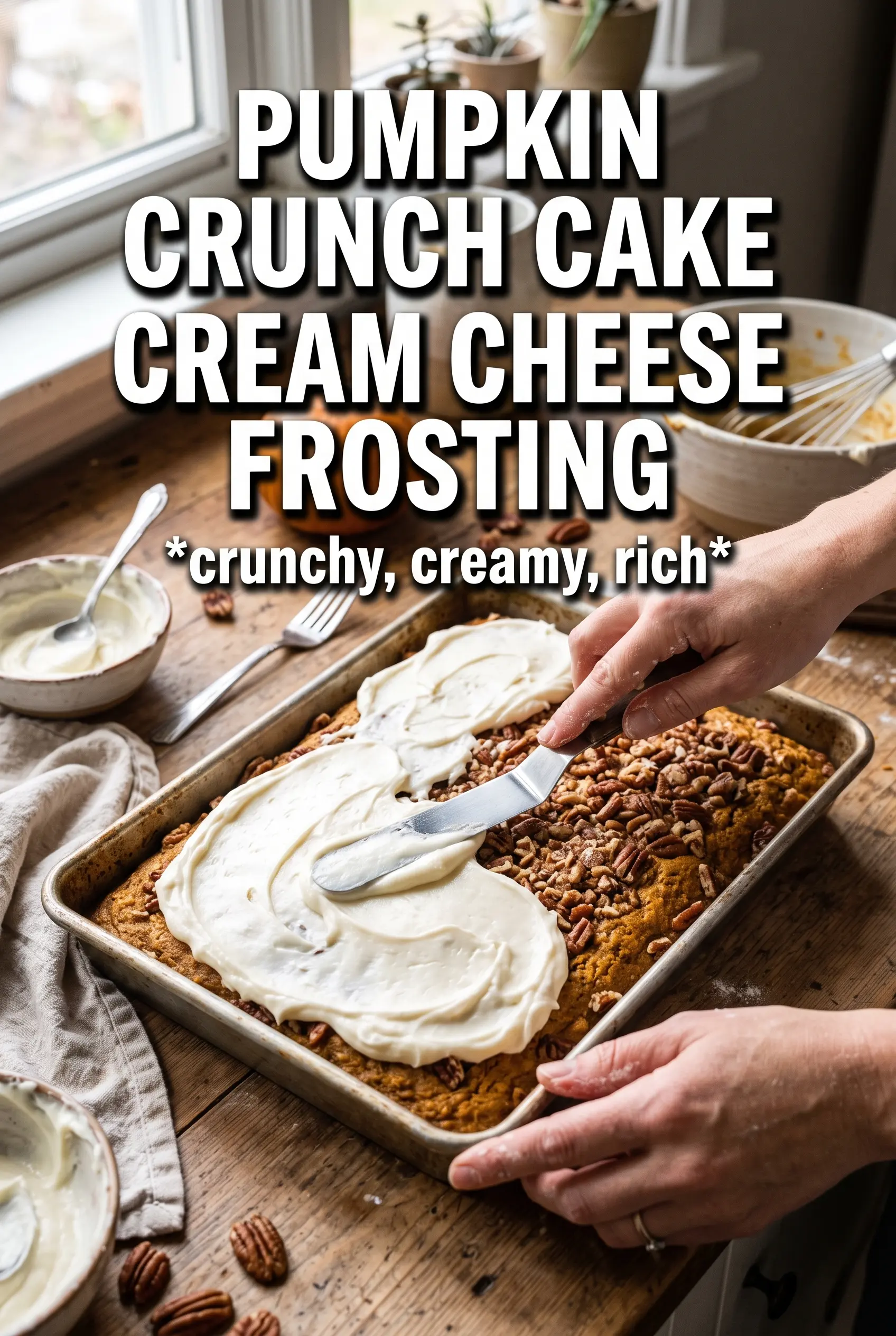
Leave the cake right side up and frost the top generously after it cools. This is the lower-stress version, and you still get all the contrast between the creamy pumpkin base, crunchy pecans, and fluffy frosting without risking a broken flip.
Storage and Reheating
- Refrigerator: Store covered for up to 4 days. The topping softens a little in the fridge, but the flavor stays excellent.
- Freezer: Freeze unfrosted slices tightly wrapped for up to 2 months. Cream cheese frosting can weep after thawing, so add it after defrosting for the best texture.
- Reheating: Warm individual slices gently in the microwave for 15 to 20 seconds if you want them slightly soft, or serve straight from the fridge for cleaner slices. Don’t heat it hard or the frosting will melt and the pumpkin layer can turn watery.
Questions I Get Asked About This Recipe
Pumpkin Crunch Cake With Cream Cheese Frosting
Ingredients
Equipment
Method
- Preheat oven to 350°F, then grease a 9x13 pan so the pumpkin layer releases cleanly.
- In the prepared pan, pour in the pumpkin mixture (pumpkin, evaporated milk, eggs, sugar, pumpkin pie spice, cinnamon, and salt).
- Sprinkle the yellow cake mix evenly over the pumpkin layer to create the crunchy base topping.
- Scatter the chopped pecans across the surface.
- Pour the melted butter evenly over the cake mix and pecans so the top turns golden as it bakes.
- Bake for 50–55 minutes, until the top is golden and the center is set.
- Cool the cake completely, about 1 hour, before flipping for the pecan crunch to be on top.
- Flip the cake onto a board so the pecan side is up, or frost it right side up if you prefer.
- Beat the softened cream cheese and softened unsalted butter until smooth.
- Beat in powdered sugar, vanilla, and cinnamon until the frosting is very fluffy.
- Frost the cake generously, spreading between any visible layers and covering the sides.