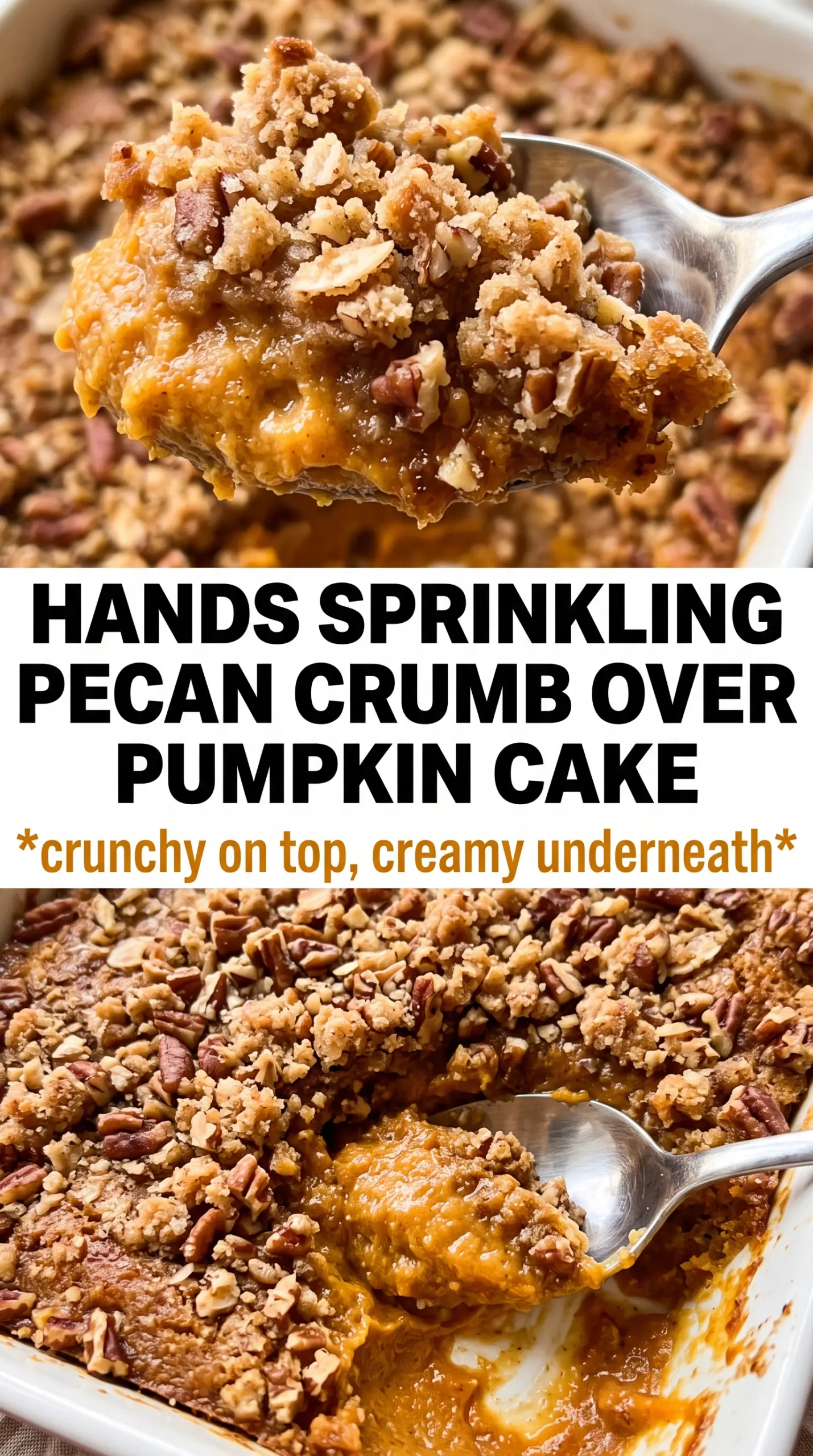
Pumpkin crunch cake lands somewhere between pumpkin pie and a buttery cobbler, with a custard-like pumpkin layer under a crackly pecan topping that bakes up golden and crisp. It’s the kind of dessert that gets scraped clean from the pan because every bite gives you soft pumpkin filling, toasted nuts, and that salty-sweet cake mix crust in one forkful.
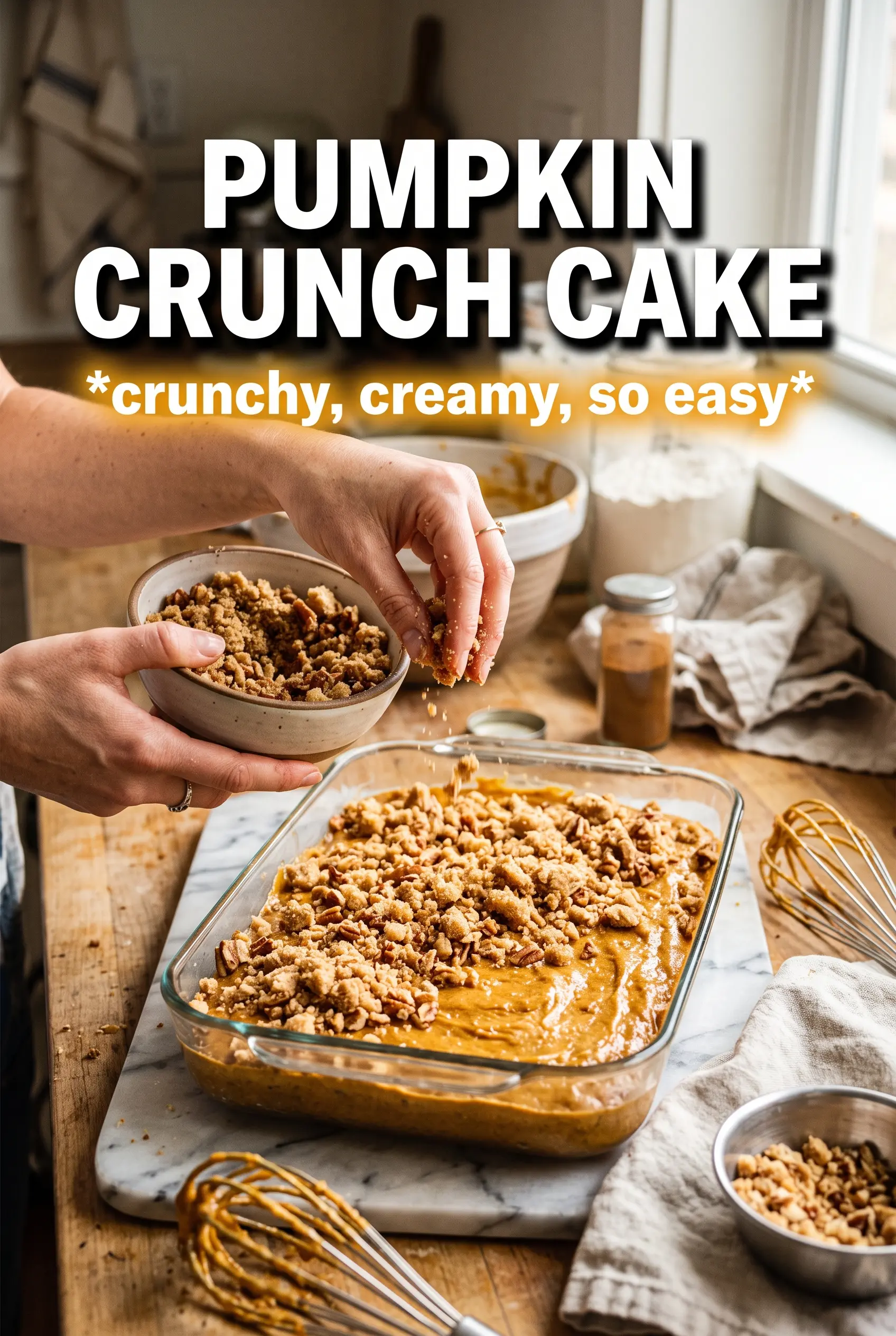
What makes this version work is the layering. The pumpkin mixture stays on the bottom and bakes into a smooth, set custard while the dry cake mix and melted butter form the crunchy top. If you stir the layers together, you lose the contrast that makes the dessert special, so the order matters here. The butter needs to be drizzled as evenly as you can get it, because any dry patches of cake mix will stay floury instead of turning crisp.
Below, I’ve included the small details that keep the topping from clumping, how to know when the center is set, and a few smart swaps if you need to work around what’s in your pantry.
The pumpkin layer set up beautifully and the pecan topping stayed crisp even after cooling. I served it with whipped cream and everyone kept going back for “just one more” square.
Save this Pumpkin Crunch Cake for the dessert nights when you want a buttery pecan crust and soft pumpkin custard in one pan.
The Layering Trick That Keeps the Topping Crunchy
Most pumpkin crunch cakes fail for one of two reasons: the topping gets soggy, or the cake mix stays powdery in patches. The fix is simple, but it has to be followed exactly. The pumpkin layer goes in first and bakes as the moist base, while the dry cake mix sits on top and drinks in the butter as it bakes. That separation is what creates the contrast between soft custard and crisp topping.
Don’t stir after the cake mix goes on. Stirring turns the whole dessert into a dense, pasty bake instead of distinct layers. The other common problem is uneven butter distribution. If you leave dry pockets, those spots bake up floury. Drizzle the butter as evenly as possible over the entire surface, then let the oven do the rest.
- Eggs — These set the pumpkin layer into a sliceable custard. If you skip or reduce them, the center stays loose and spoonable instead of holding together.
- Evaporated milk — This adds body without making the filling heavy. Regular milk works in a pinch, but the texture will be a little thinner.
- Pumpkin pie spice and cinnamon — The spice blend gives you depth, while the extra cinnamon keeps the pumpkin from tasting flat. If your spice blend is old, the cake will taste dull no matter how much you use.
- Yellow cake mix — Boxed mix is the right shortcut here because it bakes into a buttery, crumbly topping. A homemade dry mix won’t behave the same way unless it’s built for a streusel-style finish.
- Pecans — They add the crunch and toast right on top of the butter-soaked cake mix. Walnuts work if that’s what you have, but pecans give the cleanest, sweetest finish.
What Each Ingredient Is Actually Doing in This Recipe
- Primary ingredient (the star) — Quality matters most. Choose the best you can find.
- Cooking medium (oil, butter, or broth) — This carries flavors and prevents dryness.
- Seasonings (salt, pepper, spices, herbs) — Layer flavors so nothing overpowers. Build depth gradually.
- Aromatics (garlic, onion, herbs) — Cook with fat to bloom flavors. Become the foundation.
- Supporting ingredients — Complement the main ingredient without overpowering it.
- Sauce or liquid (if applicable) — Brings flavors together. Balance richness with acid.
- Acid (lemon, vinegar, wine, or other) — Brightens and prevents flat-tasting results.
- Final finish (garnish, glaze, or sauce) — Prevents one-dimensional taste and adds visual appeal.
Getting the Pumpkin Base Set Before the Top Burns
Build the pumpkin layer first
Whisk the pumpkin puree, evaporated milk, eggs, sugar, spices, and salt until the mixture looks smooth and evenly colored. Pour it into a greased 9×13-inch baking dish and spread it into the corners. If you see streaks of egg white, keep whisking a little longer, because those streaks can bake into little curds instead of a smooth base.
Keep the cake mix dry and even
Sprinkle the dry cake mix over the pumpkin layer in an even blanket. Don’t press it down or mix it in. The goal is for the butter to soak through from the top while the pumpkin layer steams gently underneath, and compressed cake mix won’t crisp the same way.
Finish with butter and pecans
Scatter the chopped pecans over the cake mix, then pour the melted butter over the entire surface as evenly as you can. Any dry spots will stay sandy, so aim for complete coverage. Bake until the topping is deeply golden and the center of the pumpkin layer no longer jiggles loosely when you tap the pan. If the top browns before the middle sets, tent it loosely with foil for the last part of baking.
Cool before slicing
Let the cake cool completely before serving. Warm from the oven, the filling can seem underdone even when it’s not, and it won’t cut cleanly. If you want the crunchy pecan side on top, cool it, then carefully flip it onto a board or platter. That flip is easier when the cake has had time to set.
Make It Dairy-Free
Use canned coconut milk or another unsweetened creamy milk in place of the evaporated milk, then swap in a plant-based butter that melts cleanly. The flavor shifts a little, but the dessert still bakes into a custardy base with a crisp top.
Use a Gluten-Free Cake Mix
A gluten-free yellow cake mix works well here as long as it’s a dry mix meant for baking. The topping may bake a touch more delicately, but the crunchy layer still comes through if you keep the butter coverage even.
Skip the Pecans
Leave the nuts off entirely if you need a nut-free dessert, or replace them with toasted pumpkin seeds for a similar crunch. You’ll lose some of the buttery richness from pecans, but the topping still bakes up crisp.
Storage and Reheating
- Refrigerator: Keep covered for up to 4 days. The topping softens a bit after the first day, but the flavor holds up well.
- Freezer: It freezes well in slices. Wrap tightly, then thaw overnight in the refrigerator before reheating.
- Reheating: Warm individual slices in a 300F oven until heated through. The microwave makes the topping soggy fast, so use it only if you don’t care about losing the crunch.
Answers to the Questions Worth Asking
Pumpkin Crunch Cake
Ingredients
Equipment
Method
- Preheat oven to 350F and grease a 9x13 baking dish.
- Whisk pumpkin puree, evaporated milk, eggs, granulated sugar, pumpkin pie spice, cinnamon, and salt until smooth, then pour into the dish.
- Sprinkle yellow cake mix evenly over the pumpkin layer without stirring.
- Scatter pecans over the cake mix.
- Pour melted unsalted butter evenly over the entire surface.
- Bake 50-55 minutes at 350F until the topping is golden and the pumpkin layer is set.
- Cool completely before slicing to ensure the custard sets.
- Serve right side up or flip for the crunchy pecan side on top.
- Top with whipped cream for serving.