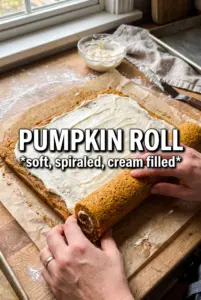
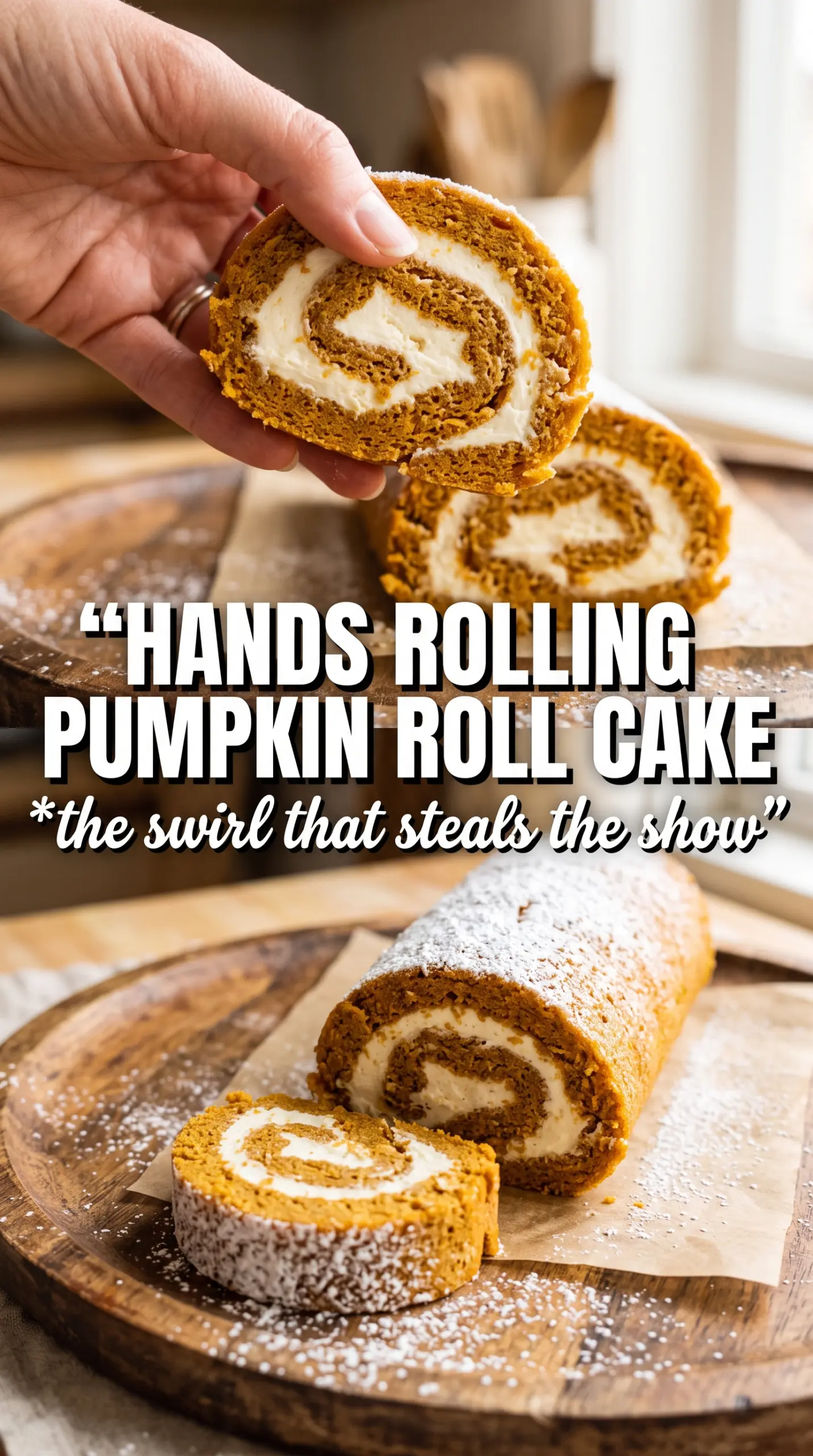
Pumpkin roll earns its place on the dessert table because the cake stays soft and flexible enough to spiral cleanly around a thick cream cheese filling without cracking. The first slice looks like a little bakery trick, but the method is simple once you understand the timing: bake just until the cake springs back, roll it while it's still warm, then chill it before the final slice.
The cake batter is built for that texture. Eggs and sugar are beaten until pale and airy, which gives the cake enough structure without making it dry, and the pumpkin puree brings moisture that keeps the crumb tender even after chilling. The spice balance matters too; cinnamon and pumpkin pie spice should support the pumpkin, not bury it.
Below, I'll walk through the one part that scares most people — rolling the cake without tears — plus the filling texture that spreads cleanly instead of oozing out the sides. Once you've made it once, it gets a lot less intimidating.
The cake rolled up perfectly the first time, and the cream cheese filling stayed thick instead of squeezing out the ends. I chilled it for an hour like you said and the slices held their shape beautifully.
Like this pumpkin roll? Save it to Pinterest for a make-ahead dessert with a neat spiral, soft spice cake, and cream cheese filling.
The Cake Cracks When It's Rolled Too Late
The trickiest part of pumpkin roll isn't the filling. It's the timing. If you wait until the cake is fully cool before the first roll, the surface loses flexibility and starts to split as soon as you try to shape it. Rolling the cake in a powdered sugar-dusted towel while it's still warm trains it to hold that curve, and when you unroll it later, it relaxes instead of fighting back.
- The cake should look set and spring back lightly in the center when touched. If it bakes past that point, it gets brittle fast.
- The towel roll is not optional. It's what keeps the cake from hardening into a flat sheet while it cools.
- Powdered sugar on the towel keeps the cake from sticking. Use enough to coat the surface, especially near the edges.
- Unroll gently and fill once the cake is completely cool. Warm cake melts the filling and turns the spiral sloppy.
What Each Ingredient Is Actually Doing in This Pumpkin Roll
- Pumpkin puree — This gives the cake its moisture and the soft orange crumb people expect from pumpkin roll. Use plain pumpkin puree, not pumpkin pie filling, because the added sugar and spices in pie filling throw off the texture.
- Eggs — The eggs are the structure here. Beating them with the sugar adds air, which helps the cake rise just enough to roll without becoming dense.
- Cream cheese — Full-fat cream cheese gives the filling its tang and firmness. Lower-fat versions can work in a pinch, but they soften more and don't hold the spiral as cleanly.
- Butter — The butter smooths the filling and helps it spread without tearing the cake. It needs to be soft, not melted, or the filling goes slack.
- Powdered sugar — In the filling, it sweetens and thickens at the same time. It also helps the filling set once the roll chills.
- Spices — Pumpkin pie spice and cinnamon should read as warm and balanced, not dusty. If your spice blend is old, the whole cake tastes flatter than it should.
The Roll, Fill, and Chill Sequence That Keeps the Spiral Clean
Whipping the Batter for Lift
Beat the eggs and granulated sugar until the mixture looks pale, thick, and a little fluffy. That air is part of what keeps the cake tender enough to roll, so don't rush this stage. Once the pumpkin and vanilla go in, fold the dry ingredients just until the streaks disappear. Overmixing tightens the batter and makes the cake more likely to crack later.
Baking the Sheet Just to Set
Spread the batter all the way to the corners of the jelly roll pan in an even layer. Bake until the top springs back when lightly pressed and the cake pulls from the edges by a hair, usually 11 to 13 minutes. If it browns deeply, it's already going too far. An overbaked sheet will still taste fine, but it won't bend gracefully.
Rolling While It's Warm
Turn the cake out onto a powdered sugar-dusted towel and peel off the parchment while the cake is still warm. Roll it up from the short end with the towel inside, then set it seam-side down to cool completely. If the cake sticks, it usually means there wasn't enough powdered sugar under it or the parchment was left on too long. Work patiently here; a warm cake is forgiving in a way a cooled one isn't.
Filling and Re-Rolling Cleanly
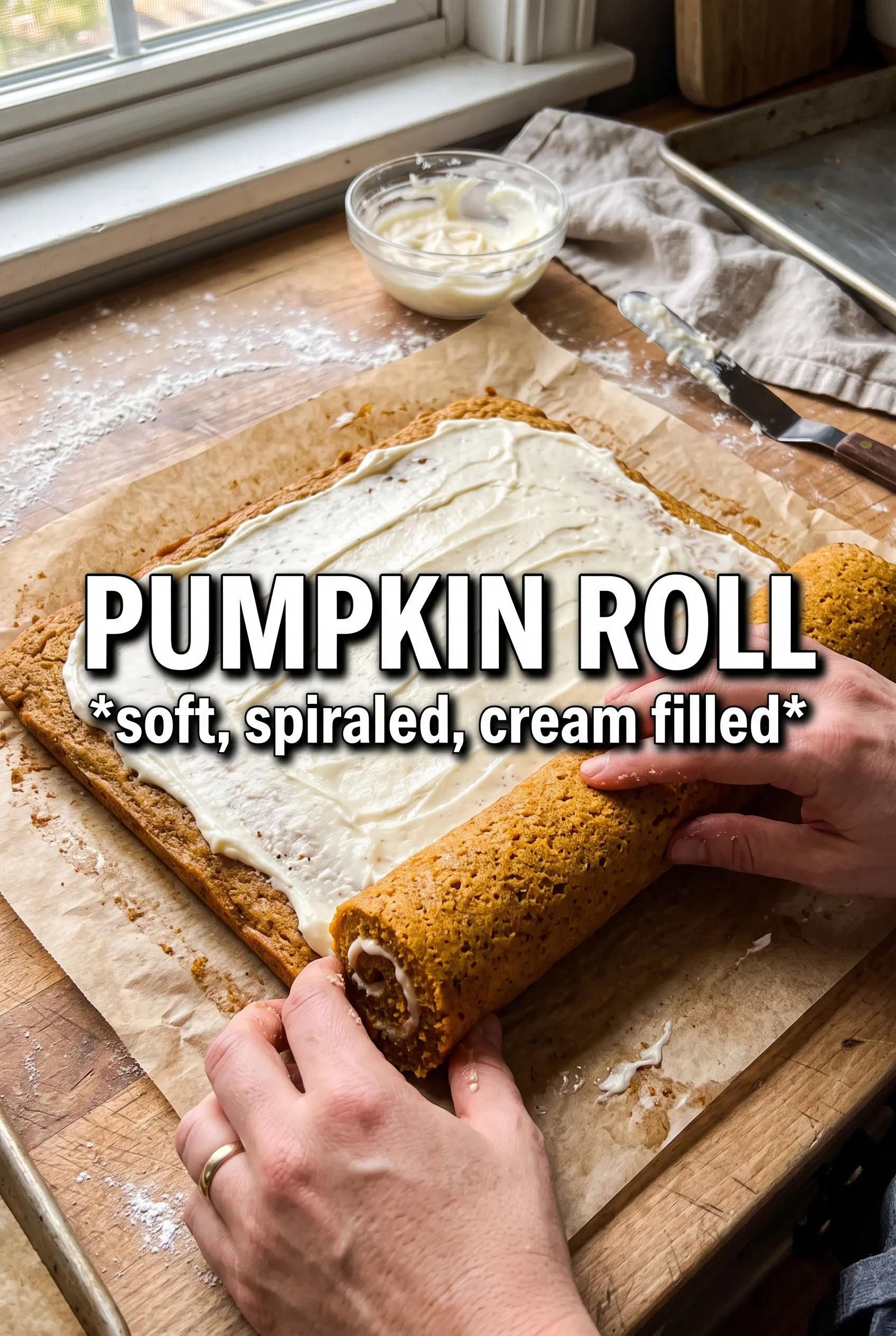
Beat the cream cheese, butter, powdered sugar, vanilla, and cinnamon until smooth and spreadable. Unroll the cooled cake carefully, then spread the filling in an even layer almost to the edges. Leave a small border so the filling doesn't squish out when you roll it back up. Chill the finished roll for at least an hour before dusting with powdered sugar and slicing; that rest is what gives you neat spirals instead of a soft mess.
How to Adapt This Pumpkin Roll Without Losing the Spiral
Gluten-Free Pumpkin Roll
A 1:1 gluten-free baking blend works well here, but pick one that includes xanthan gum so the cake still bends without breaking. The crumb will be a touch more tender and a little less elastic, so roll it while it's warm and don't skip the towel step.
Dairy-Free Filling
Use dairy-free cream cheese and a plant-based butter stick with a firm texture. The filling won't have quite the same tang, but it will still set enough to slice cleanly if you chill it well before serving.
Make-Ahead Dessert for a Crowd
This dessert actually improves after a few hours in the fridge because the filling firms up and the slices sharpen. You can make it the day before, keep it wrapped tightly, and dust with powdered sugar just before serving so it stays bright on the outside.
Storage and Reheating
- Refrigerator: Store covered for up to 4 days. The cake stays soft, and the filling firms up nicely.
- Freezer: Pumpkin roll freezes well. Wrap it tightly in plastic, then foil, and freeze for up to 2 months. Thaw overnight in the fridge before slicing.
- Reheating: Don't reheat slices; this dessert is best served chilled or just slightly cool. If the roll has been frozen, let it thaw slowly so the filling doesn't turn watery.
Answers to the Questions Worth Asking
Pumpkin Roll
Ingredients
Equipment
Method
- Preheat oven to 375F, then grease a 15x10 jelly roll pan and line with parchment; grease again for easy release.
- Beat eggs and granulated sugar until light, then mix in pumpkin puree and vanilla until smooth and glossy.
- Fold in all-purpose flour, baking powder, baking soda, pumpkin pie spice, cinnamon, and salt just until no dry streaks remain.
- Spread batter evenly in the prepared pan, then bake at 375F for 11-13 minutes until the top springs back lightly.
- Invert the warm cake onto a powdered sugar-dusted towel, then peel off the parchment while the surface is still pliable.
- Roll the cake from the short end in the towel and cool completely so it holds the spiral shape.
- Beat cream cheese until smooth, then beat in powdered sugar, unsalted butter, vanilla, and cinnamon until creamy and spreadable.
- Unroll the cooled cake, spread the cream cheese filling evenly over the cake, and reroll without the towel.
- Refrigerate the pumpkin roll for 1 hour, then dust generously with powdered sugar just before slicing.