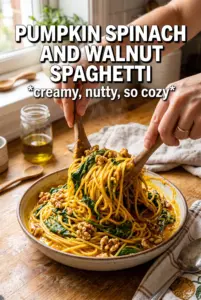
Pumpkin Spinach and Walnut Spaghetti comes out silky, savory, and just rich enough without feeling heavy. The pumpkin turns into a smooth orange sauce that clings to every strand of pasta, the spinach melts in at the end, and the walnuts bring the kind of crunch that keeps each bite interesting. It’s the sort of bowl that looks simple at first glance and then wins people over with how balanced it tastes.
The trick here is treating the pumpkin more like a sauce base than a purée you heat and hope for the best. Cream softens its texture, parmesan sharpens the flavor, and a little pasta water loosens everything into something glossy instead of thick and pasty. Frying the sage in the olive oil first does double duty: it gives you a crisp garnish and leaves behind flavored oil that carries the garlic and pumpkin beautifully.
Below, I’ve added the small details that matter most — when to use pasta water, how to keep the sauce from tightening up, and the easiest swaps if you want to make this dish dairy-free or a little lighter.
The sauce turned silky fast and the pasta water made it coat the spaghetti instead of sitting in the bottom of the bowl. My husband kept talking about the crispy sage and toasted walnuts.
Make a note to save this Pumpkin Spinach and Walnut Spaghetti for a night when you want creamy pasta with crisp sage and toasted walnut crunch.
The Trick to Keeping Pumpkin Sauce Glossy Instead of Thick and Gluey
Pumpkin puree can turn heavy fast if it’s heated too hard or left without enough liquid. The goal is a sauce that coats the spaghetti in a smooth layer, not one that sits on top like mashed squash. That’s why the cream goes in with the pumpkin, and the pasta water comes in at the end only as needed.
Parmesan also needs a little respect here. Add it once the sauce has lowered to a gentle simmer, not a hard boil, or it can turn grainy and stringy instead of melting in cleanly. If the sauce looks tight before the pasta goes in, loosen it with a splash of pasta water and stir until it turns shiny again.
What Each Ingredient Is Actually Doing in This Pasta
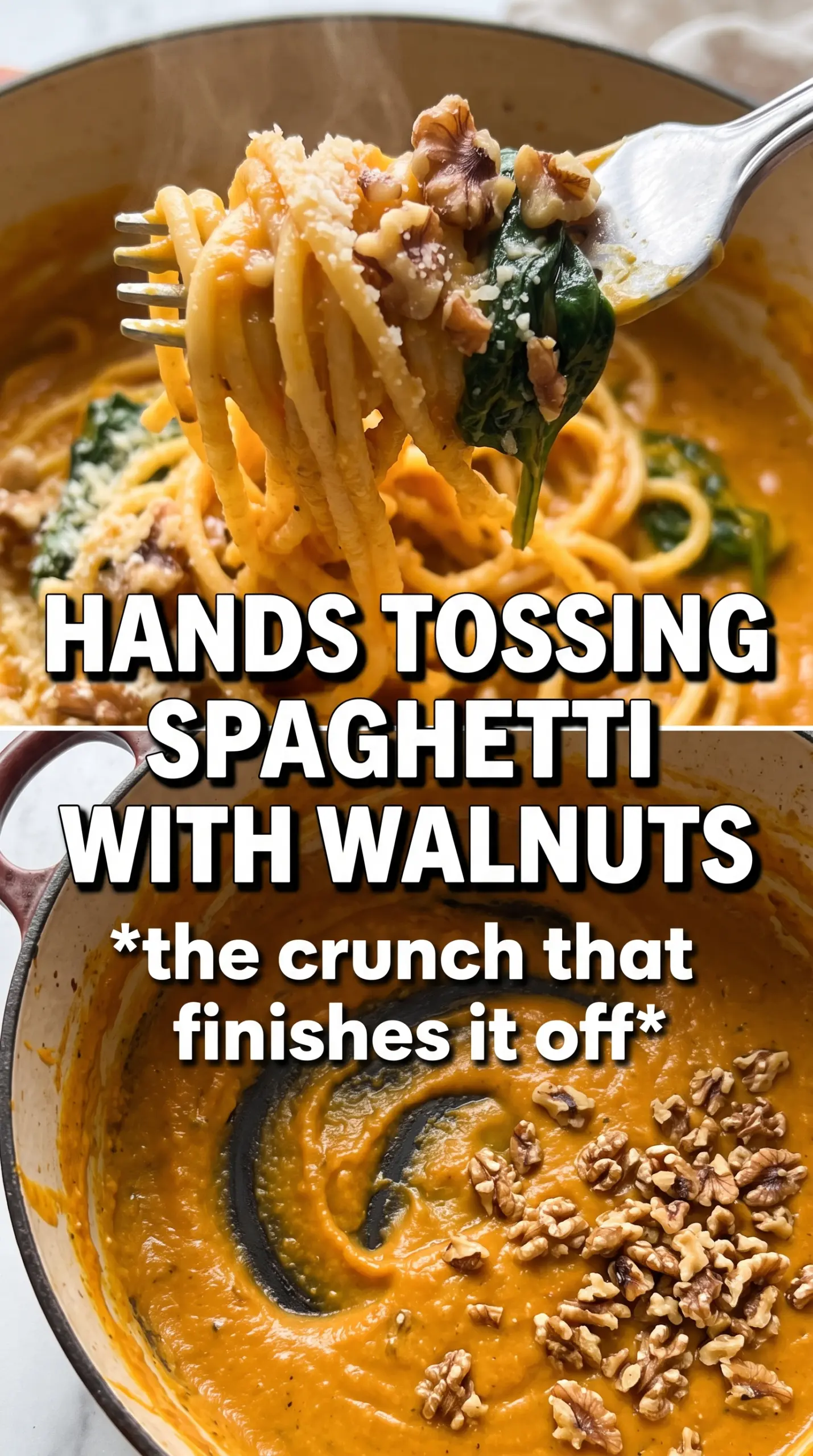
- Pumpkin puree — This gives the sauce its body and its mellow sweetness. Use plain pumpkin puree, not pumpkin pie filling, or the seasoning will be completely off. Canned works beautifully here, and it’s one of those times where convenience doesn’t cost you much.
- Heavy cream — Cream smooths out the pumpkin and helps the sauce cling to the spaghetti. Half-and-half can work in a pinch, but the sauce will be a little thinner and less velvety. If you want dairy-free, full-fat coconut milk is the closest swap, though it brings a faint coconut note.
- Sage and garlic — Frying the sage first infuses the oil and gives you a crisp garnish with a deeper, nuttier edge. Garlic goes into the same pan after the sage comes out, and that flavored oil is what builds the base of the dish. Don’t rush the garlic; one minute is enough before it starts to brown.
- Walnuts — Toasted walnuts are more than a topping here. They cut through the creaminess and keep the dish from feeling one-note. If you skip toasting them, they’ll taste flatter and the contrast will disappear.
- Parmesan — Parmesan adds salt, umami, and a little thickness. Grate it finely so it melts quickly into the sauce. Pre-shredded cheese is more likely to clump, so fresh-grated is worth it.
- Baby spinach — Spinach disappears into the sauce in the best way, adding color and a little freshness without changing the texture. Add it right at the end so it wilts instead of overcooking and turning dark.
Building the Pasta So the Sauce Clings
Start With the Pasta Water
Cook the spaghetti in well-salted water until it’s just shy of fully tender, then reserve plenty of pasta water before you drain it. That starchy water is what gives the sauce its final gloss and helps it move from the pan to the noodles without breaking. If you forget to save it, plain water won’t give you the same body.
Make the Sage Oil First
Heat the olive oil and fry the sage leaves until they darken and crisp, then lift them out right away. The sage should sound faintly active in the oil but not scorch. If it goes too far, the leaves will taste bitter instead of earthy, and the oil will carry that bitterness through the whole dish.
Build the Pumpkin Base Slowly
Add the garlic to the sage oil and cook just until fragrant, then stir in the pumpkin puree, cream, nutmeg, and red pepper flakes. Let the mixture simmer gently for about five minutes so the flavors merge and the raw edge of the pumpkin softens. A hard boil can make the cream separate, so keep the heat low and steady.
Finish With Cheese, Spinach, and Pasta
Stir in the parmesan until it melts, then add the spinach and toss until it’s just wilted. Add the spaghetti and a splash of pasta water, then toss until every strand is coated and glossy. If the sauce feels stiff, another spoonful of pasta water usually brings it back; if it’s too loose, let it sit on the heat for a minute while tossing so it tightens up naturally.
Dairy-Free Pumpkin Pasta
Swap the heavy cream for full-fat coconut milk and use a dairy-free parmesan-style substitute or leave the cheese out entirely. The sauce will be a little softer and less sharp, so a pinch more salt helps bring the flavors into focus. Coconut milk gives the best texture, though you’ll notice a slight coconut finish.
Make It Lighter
Use half-and-half instead of heavy cream and reduce the parmesan a little. The sauce won’t be quite as plush, but it still coats the pasta well if you keep the heat gentle and rely on pasta water for the final texture. This version tastes a little brighter and less rich.
Gluten-Free Version
Use your favorite gluten-free spaghetti and cook it just until tender, since it can turn soft fast. Reserve pasta water as usual, but add it gradually because gluten-free pasta can release less starch and the sauce may need a little more help clinging. The rest of the recipe stays the same.
Add Protein Without Changing the Sauce
Toss in cooked chicken, Italian sausage, or white beans at the end so they warm through without muddying the sauce. Beans keep it vegetarian and make the dish more filling, while sausage adds salt and a little heat that plays well with the pumpkin. Keep the add-ins modest so the pasta still feels like the main event.
Storage and Reheating
- Refrigerator: Store leftovers in an airtight container for up to 4 days. The sauce will thicken as it chills.
- Freezer: This freezes okay, but the cream sauce can lose some of its silkiness after thawing. Freeze in portions if you want to use it later, and expect the texture to be a little less creamy.
- Reheating: Reheat gently on the stove over low heat with a splash of water or milk, stirring often until loosened. The common mistake is blasting it in the microwave, which can dry out the pasta and make the sauce separate.
Questions I Get Asked About This Recipe
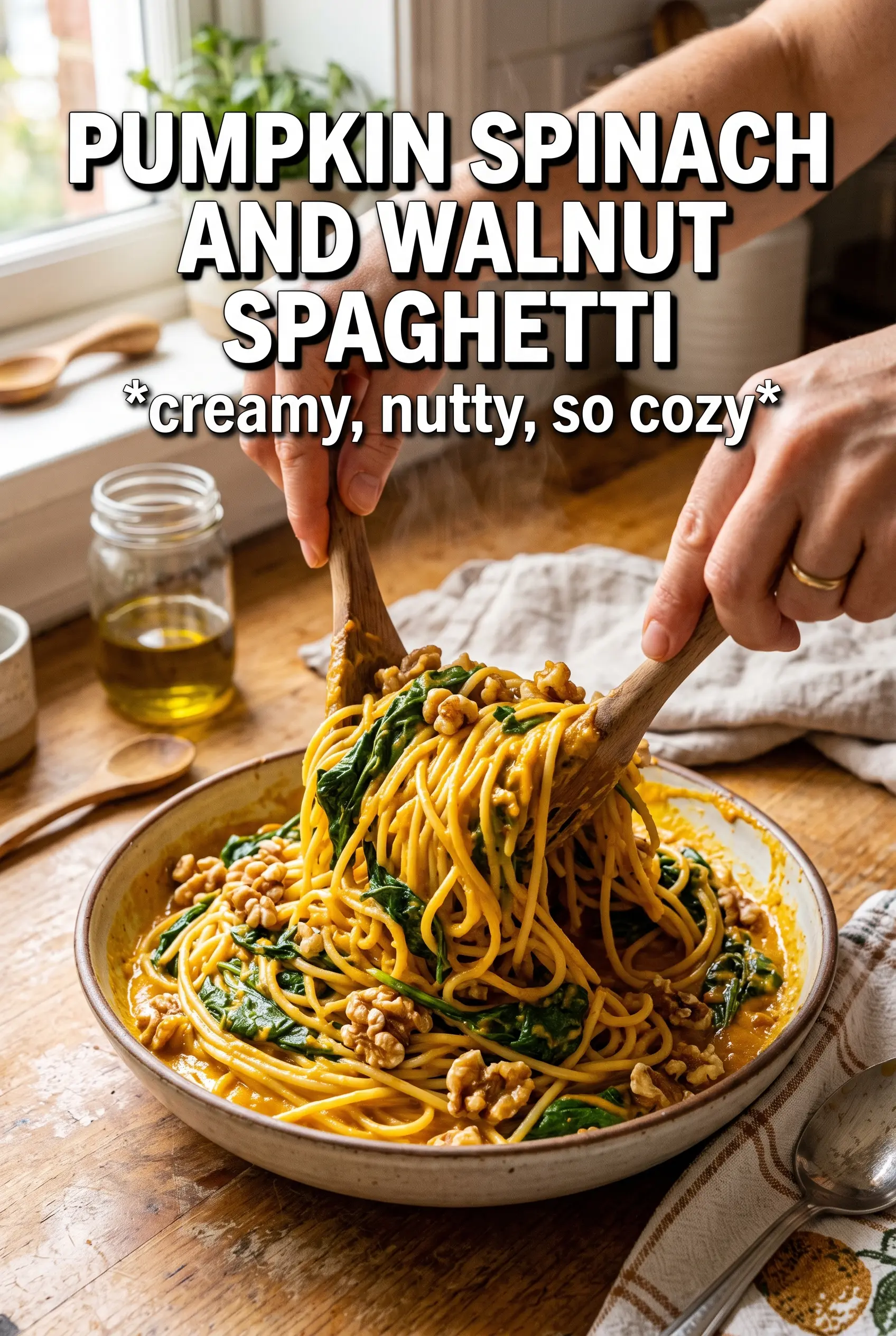
Pumpkin Spinach and Walnut Spaghetti
Ingredients
Equipment
Method
- Bring a large pot of salted water to a boil and cook the spaghetti until al dente, then reserve 1 cup pasta water before draining.
- Set the drained spaghetti aside while you make the sauce, keeping the reserved pasta water within reach.
- Heat the olive oil in a large skillet over medium heat, then fry the sage leaves until crispy, about 1–2 minutes, and remove them to drain.
- Add the minced garlic to the same skillet and cook for 1 minute, stirring, until fragrant but not browned.
- Add pumpkin puree, heavy cream, nutmeg, and red pepper flakes to the skillet and simmer for 5 minutes, stirring until smooth and slightly thickened.
- Stir in the grated parmesan until melted and glossy, about 1 minute.
- Add the baby spinach and toss until wilted, 1–2 minutes, so the sauce turns vibrant and tender.
- Add the cooked spaghetti and toss to coat, adding pasta water as needed to loosen into a silky cling.
- Season with salt and pepper to taste, then divide into bowls.
- Top each serving with the toasted chopped walnuts and crispy fried sage leaves.