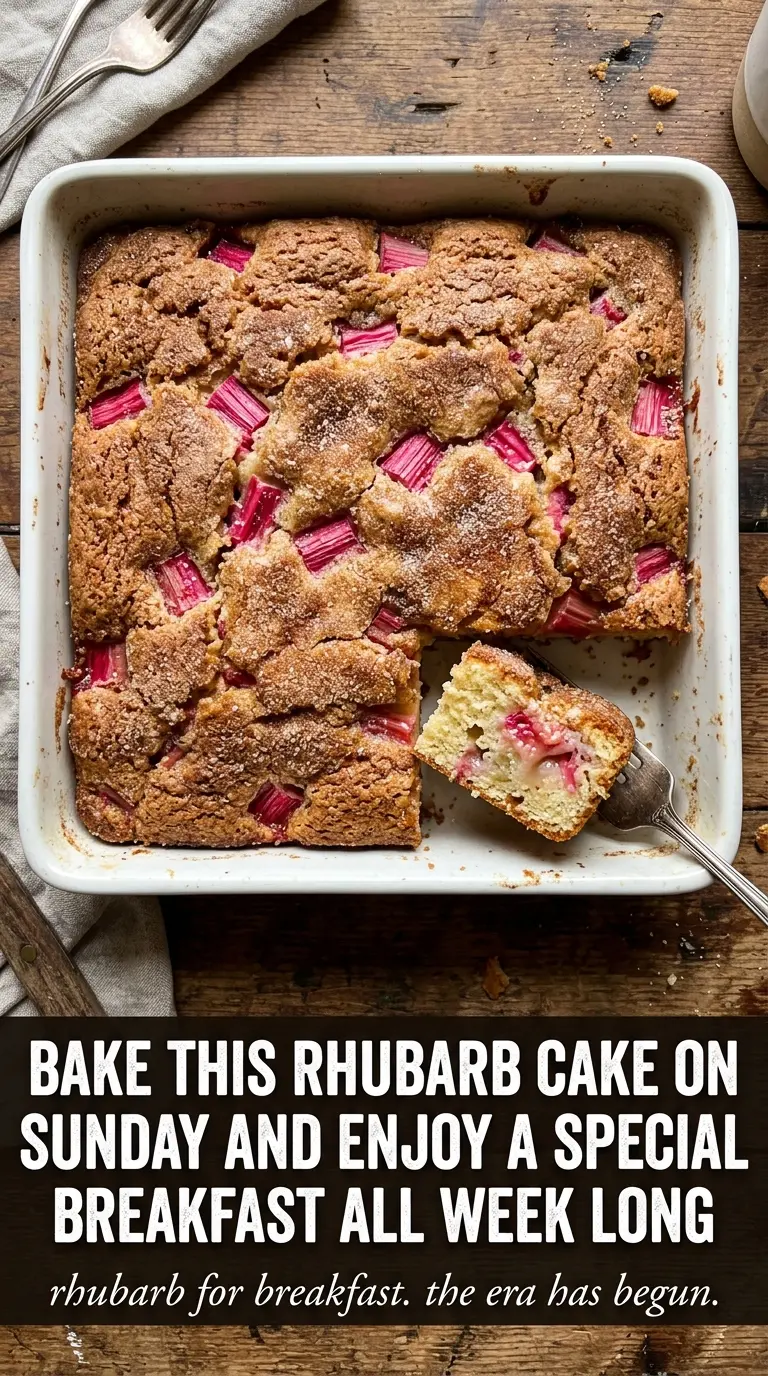
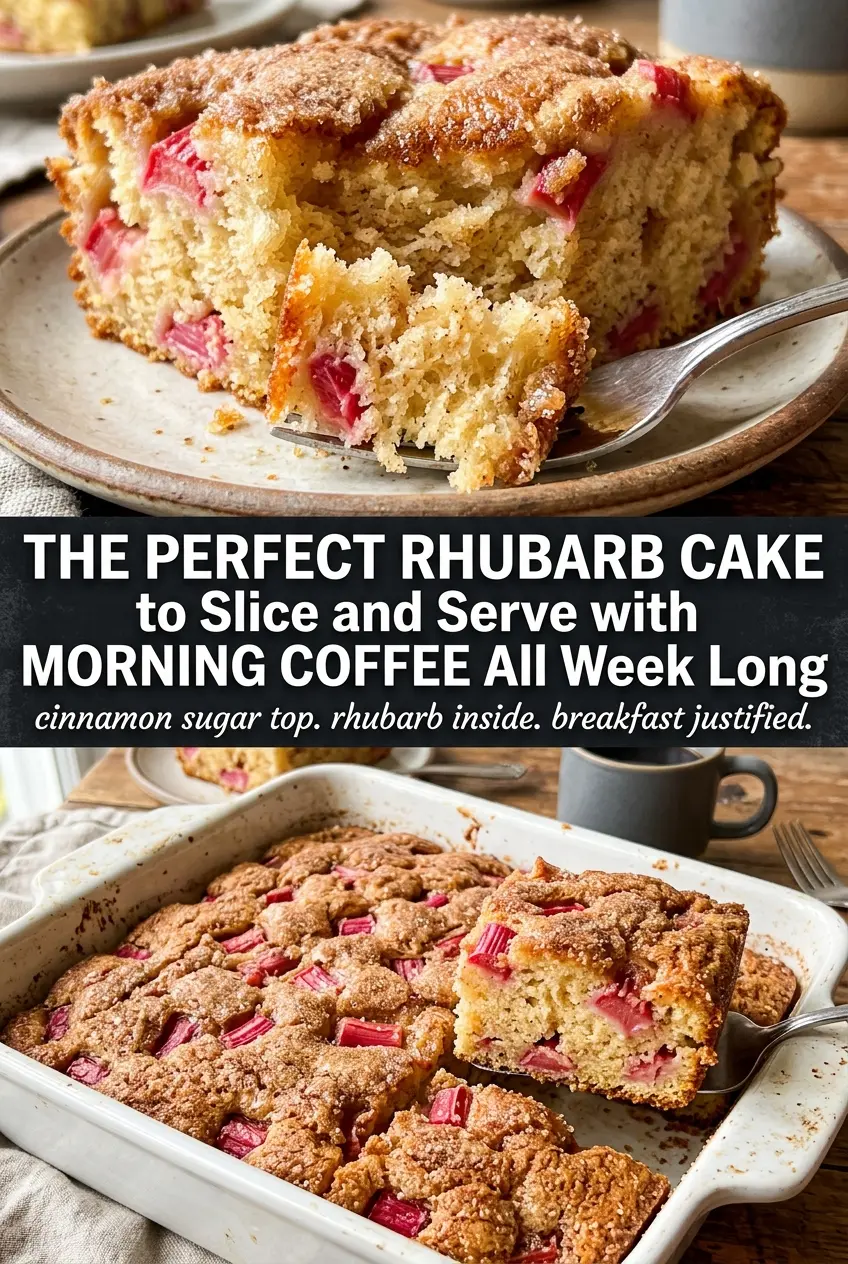
Tender, fragrant, and just tart enough to keep every bite interesting, rhubarb breakfast cake earns its place at the table fast. The crumb stays soft in the center, the edges turn lightly golden, and that cinnamon topping bakes into a sandy, buttery layer that cracks under the fork. It’s the kind of cake that feels at home beside a mug of coffee, but it’s sturdy enough to slice cleanly and pack into lunch the next day.
What makes this version work is the balance: melted butter keeps the batter rich without turning it heavy, and the rhubarb goes in at the very end so it stays in distinct pieces instead of disappearing into the crumb. The batter is intentionally simple, which matters here, because rhubarb brings plenty of sharpness on its own and doesn’t need a fussy base competing with it. The topping uses cold butter cut into the dry ingredients, so you get little crumbles instead of a paste.
Below you’ll find the small details that keep the cake tender, the topping crumbly, and the rhubarb evenly distributed. I’ve also included a few easy swaps and the storage notes I’d want if I were baking this on a Sunday morning and hoping to enjoy it through the week.
The cake baked up with a really tender crumb and the rhubarb stayed bright and separate instead of turning mushy. I loved how the cinnamon topping gave every slice a little crunch.
Save this Rhubarb Breakfast Cake for a tender coffee-cake-style breakfast with a buttery cinnamon crumble.
The Part That Keeps Rhubarb Breakfast Cake Tender Instead of Dense
The biggest mistake with a cake like this is overworking the batter after the wet and dry ingredients come together. Once the flour is moistened, stop stirring. A few streaks are fine, and they’ll disappear when you fold in the rhubarb. Push too far and the cake turns tight instead of soft.
Rhubarb also needs space in the batter. If you chop it too fine, it melts into the crumb and you lose those tart little pockets that make each slice taste lively. Cut it into small but visible dice, then fold it in gently so it stays distributed without breaking down.
- Melted butter — This gives the cake a richer, slightly denser crumb than creaming butter and sugar would, which is exactly what you want in a breakfast cake. It also keeps the mixing simple and fast.
- Fresh rhubarb — Fresh rhubarb holds its shape best and gives you the clean tart bite this cake depends on. Frozen rhubarb can work, but don’t thaw it first or it’ll bleed too much moisture into the batter.
- Cold butter for the topping — Cold butter is what creates the crumble. Warm butter turns the topping pasty, and you’ll lose the sandy texture that bakes into little crisp bits on top.
What Each Ingredient Is Doing in the Pan
- All-purpose flour — This gives the cake enough structure to hold the rhubarb without becoming heavy. Standard all-purpose flour is the right choice here; a softer cake flour would make the crumb too delicate for the fruit.
- Sugar — The batter needs enough sweetness to balance rhubarb’s sharp edge. Brown sugar in the topping adds a little molasses depth, which reads as warmer and more breakfast-like than plain white sugar would.
- Milk — Milk loosens the batter just enough for a tender slice. Whole milk gives the best texture, but 2% works well too if that’s what you keep on hand.
- Vanilla — Vanilla doesn’t make the cake taste like vanilla cake; it rounds out the rhubarb and makes the topping taste more buttery. Don’t skip it unless you have to.
Building the Batter and Topping So They Bake Up Right
Mix the dry base first
Whisk the flour, sugar, baking powder, and salt until the mixture looks uniform and airy. That first whisk matters because it spreads the baking powder evenly, which helps the cake rise without a tunneling or uneven texture. If the dry ingredients aren’t fully combined, you can end up with pockets that taste slightly metallic or overly sweet.
Bring the wet ingredients together gently
Stir the melted butter, egg, milk, and vanilla in a separate bowl until the mixture looks smooth and glossy. The butter should be melted, not hot enough to cook the egg. If it’s steaming, let it cool for a minute first or you’ll get little bits of scrambled egg in the batter.
Fold in the rhubarb at the end
Pour the wet mixture into the dry ingredients and stir only until the flour disappears, then fold in the rhubarb. The batter will look thick, and that’s right. Spread it into the pan without packing it down, because pressing too hard squeezes out air and gives you a compact cake instead of a tender one.
Finish with the crumble and bake until set
Cut the cold butter into the brown sugar, flour, and cinnamon until the mixture looks like coarse sand with a few pea-sized bits. Scatter it evenly over the batter, then bake until the top is golden and a toothpick comes out clean or with just a few moist crumbs. If the center still looks wet when the top is browned, cover loosely with foil for the last few minutes so the topping doesn’t overdarken.
Three Ways to Make This Rhubarb Breakfast Cake Fit What You’ve Got
Dairy-Free Version
Swap the butter for a plant-based baking stick and use an unsweetened dairy-free milk. The cake still bakes up tender, but the topping won’t taste quite as rich, so keep the cinnamon in the crumble for extra warmth.
Make It Gluten-Free
Use a 1:1 gluten-free baking blend in place of the all-purpose flour. The crumb will be a little more delicate, so let the cake cool fully before slicing or it may crumble at the edges.
Add Strawberries for a Sweeter Slice
Replace up to 1 cup of the rhubarb with diced strawberries. The cake turns softer and sweeter, and the berries add juiciness, so don’t go past that amount or the batter can get too wet in the center.
Storage and Reheating
- Refrigerator: Store covered for up to 4 days. The crumb stays moist, and the topping softens a bit after day one.
- Freezer: Freeze individual slices wrapped tightly for up to 2 months. Thaw overnight in the fridge; the cake freezes well, though the crumble loses a little crispness.
- Reheating: Warm slices in a 300°F oven for 8 to 10 minutes or microwave briefly in 15-second bursts. Don’t blast it too long in the microwave or the rhubarb can turn mushy and the cake gets rubbery.
Answers to the Questions Worth Asking
Rhubarb Breakfast Cake
Ingredients
Equipment
Method
- Preheat the oven to 350°F and grease a 9x9-inch baking pan so the cake releases easily.
- Whisk together all-purpose flour, sugar, baking powder, and salt until evenly combined.
- Mix melted butter, egg, milk, and vanilla extract in a separate bowl until smooth.
- Pour the wet ingredients into the dry ingredients and stir until just combined, then fold in the diced rhubarb.
- Spread the batter into the prepared pan and level the top.
- For topping, mix brown sugar, all-purpose flour, and cinnamon, then cut in the cold butter until crumbly.
- Sprinkle the cinnamon crumble evenly over the batter so it bakes into a golden crust.
- Bake at 350°F for 35-40 minutes, until golden and a toothpick comes out clean (about the last 5 minutes check closely).
- Cool the cake for 15 minutes, letting the center finish setting and the crumb hold together.
- Serve warm for the best contrast between tender cake and crunchy crumble.