Pink, fragrant, and sharp in the best way, rhubarb liqueur brings out the fruit’s clean tartness and turns it into something smooth enough to sip but bright enough to wake up a cocktail. The color is part of the appeal, but the real payoff is the balance: just enough sugar to round off the edges, enough vodka to carry the flavor, and a slow infusion that keeps the rhubarb tasting fresh instead of cooked flat.
The trick here is patience with the base and restraint with the syrup. Rhubarb goes into the vodka first so the spirit pulls out flavor before any sweetness gets involved, and the lemon zest adds lift without making it taste citrusy. The vanilla bean softens the tartness in the background, which is what keeps this from tasting thin or one-note.
Below you’ll find the exact timing that gives the cleanest flavor, what to do if your rhubarb looks pale, and a few smart ways to serve it once it has rested. If you’ve only ever used rhubarb for pie, this is the version that might change your mind.
The rhubarb flavor came through beautifully, and the vanilla kept it from tasting sharp. I bottled it after the second week and it was crystal clear with that gorgeous pink color.
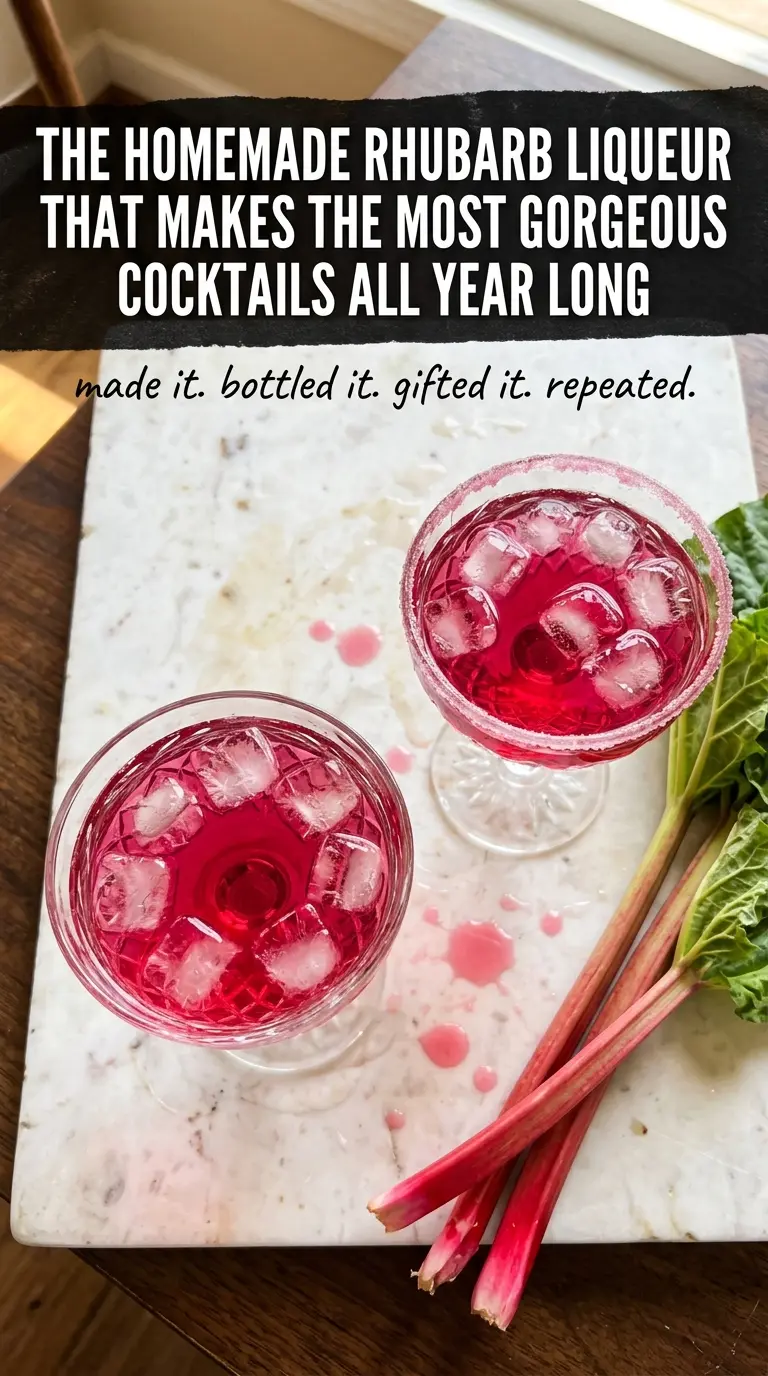
Save this rhubarb liqueur for spring cocktails, dessert pours, and the prettiest homemade gift bottle on the shelf.
The Week-Long Infusion That Keeps Rhubarb From Turning Flat
Rhubarb can lose a lot of its character if you rush it. The first week in vodka is where the flavor gets pulled cleanly into the spirit, and that slow soak matters because it captures the tart, floral edge before heat dulls it. If you skip the rest time or shortcut the infusion, the liqueur tastes more like sweetened alcohol with a vague fruit note than an actual rhubarb drink.
The other mistake is boiling the fruit with the syrup. That sounds efficient, but it strips out the bright top notes and leaves you with a heavier, jammy result. This method keeps the fruit raw in the jar, then adds a cooled simple syrup later, which preserves the color and gives you a smoother finish.
- Vodka — Use a clean, neutral vodka here. You want the rhubarb and vanilla to lead, not the base spirit. A harsher vodka will show up after the infusion, so choose one you’d actually drink.
- Fresh rhubarb — Fresh stalks give the clearest tart flavor and the prettiest pink tone. Pale rhubarb still works, but the liqueur may come out lighter in color. Trim away all leaves completely; they aren’t edible.
- Vanilla bean — This is what rounds the edges and keeps the liqueur from tasting sharp. Vanilla extract can work in a pinch, but the bean gives a deeper, cleaner background note.
- Lemon zest — Zest adds lift without making the liqueur taste lemony. Use only the outer yellow peel and avoid the white pith, which can bring in bitterness.
What Each Ingredient Is Actually Doing in This Rhubarb Infusion
- Rhubarb (fresh or frozen) — The longer rhubarb sits in liquid, the more flavor it releases. Cut into small pieces so more surface area is exposed.
- Sugar — This draws out the rhubarb’s liquid and creates a syrup. Over a week, the sugar becomes fully dissolved and the flavors meld.
- Water or light liquid base — The liquid carries the rhubarb flavor. A week of sitting lets the flavor penetrate deeply instead of just coating the surface.
- Optional: spices like cinnamon or cardamom — These infuse over time and become mellow and integrated. Add them whole so you can remove them after infusing.
- Sealed container — The infusion needs to be sealed to prevent evaporation and contamination. Glass works best so you can see the color developing.
- Room temperature storage — Room temperature allows the flavor to develop faster than cold storage. Don’t refrigerate during the infusion period.
- Stirring occasionally — Gentle stirring helps the flavors distribute. Do this once a day or every few days, not constantly.
- Straining at the end — After a week, strain the liquid and discard the rhubarb. The syrup will be deep red and intensely flavored.
How to Build the Rhubarb Liqueur Base Without Clouding It
Infusing the Vodka First
Pack the chopped rhubarb, vodka, split vanilla bean, and lemon zest into a clean glass jar, then seal it tightly and keep it in a cool, dark place. Shake it once a day to move the fruit around and help the vodka keep pulling color and flavor from the rhubarb. By the end of the week, the liquid should look noticeably pink and smell tart, floral, and a little spicy from the vanilla. If the jar is stored somewhere warm, the flavor can turn muddier and the color less fresh.
Making the Syrup and Combining
Stir the sugar and water in a saucepan over medium heat just until the sugar dissolves, then bring it to a boil for a moment and take it off the heat. Cool it completely before straining in the rhubarb infusion, because adding hot syrup can make the finished liqueur cloudy and push the aroma toward cooked fruit. Strain through a fine mesh strainer, then pour the infused liquid into the cooled syrup and stir gently until everything is uniform.
Bottling and Letting It Settle
Pour the liqueur into a clean bottle and let it sit for another week before serving. That extra rest smooths out the alcohol edge and helps the flavors come together, which is why it tastes better after aging than it does right after bottling. If you taste it too early, it can seem disjointed; the sweetness, tartness, and vodka settle into a more polished balance after that second week.
Make It More Tart
Cut the sugar back slightly if you want a sharper liqueur for cocktails. The result will be less dessert-like and more of a bright mixer, which works well in spritzes or with sparkling wine, but it won’t sip as softly on its own.
Vanilla-Free Version
Leave out the vanilla bean if you want a cleaner, brighter rhubarb profile. You’ll lose some roundness, so the finished liqueur tastes more direct and tart, which is nice in gin cocktails but less mellow for sipping over ice.
Lower-Sugar Option
You can reduce the simple syrup a bit for a drier liqueur, but don’t remove it completely or the infusion will taste harsh and thin. Sugar isn’t just for sweetness here; it also gives the liqueur body and helps the fruit flavor feel full in the glass.
Storage and Reheating
- Refrigerator: Store the bottled liqueur in the fridge for up to 6 months. The flavor stays stable, and chilling helps it taste smoother when served straight.
- Freezer: Freezing isn’t necessary and can dull the aroma. The alcohol content should keep it liquid in the refrigerator, which is the better place for storage.
- Reheating: Don’t reheat this liqueur. Serve it cold or over ice, or use it directly in cocktails and desserts; heating will push out the delicate rhubarb aroma.
Answers to the Questions Worth Asking
Rhubarb Liqueur
Ingredients
Equipment
Method
- Combine chopped fresh rhubarb and vodka in a large glass jar, then add the split vanilla bean and lemon zest.
- Seal the jar and let it infuse in a cool, dark place for 1 week, shaking daily to keep the rhubarb moving.
- Add the sugar and water to a Dutch oven and bring to a boil over medium heat, stirring until the sugar fully dissolves (about 2–3 minutes).
- Let the simple syrup cool completely, about 10 minutes, so it won’t scramble flavor when mixed with the infused vodka.
- Strain the rhubarb mixture through a fine mesh strainer into the cooled syrup, pressing lightly so pink liquid passes through.
- Stir until evenly combined, creating a uniformly pink-tinted liqueur.
- Bottle the liqueur and seal tightly.
- Let it age for another week before serving, for a rounder sweet-tart flavor.
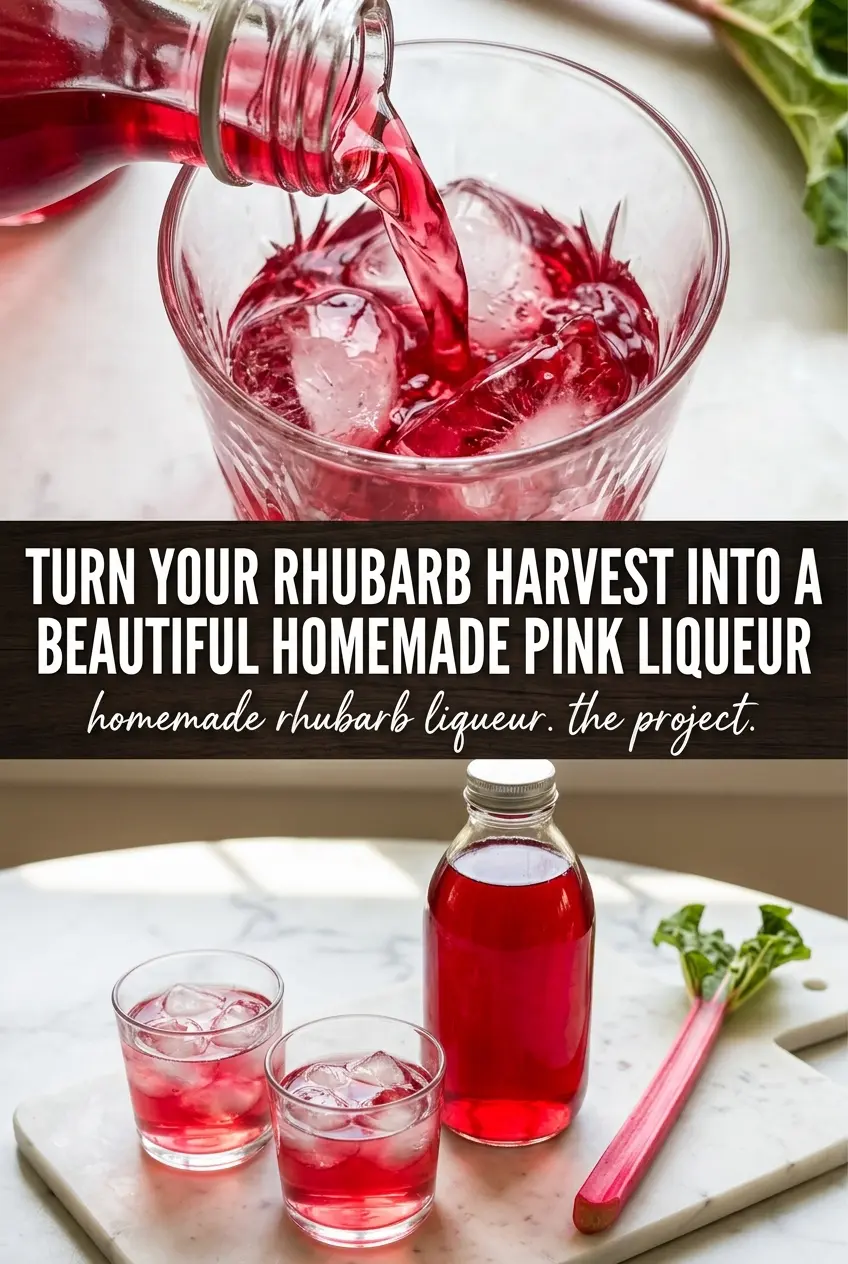
- Serve chilled over ice in small glasses as a digestif or cocktail base.