Scalloped potatoes are the kind of side dish that disappears before the main course gets a fair shot. Thin slices of russet potatoes turn tender in a creamy sauce that settles into every layer, then the top bakes into a golden, lightly browned crust that gives way with a spoon. When they’re done right, the whole pan holds together just enough to serve neatly, but each bite still melts at the edges.
The difference between good scalloped potatoes and watery ones comes down to two things: slicing and sauce. The potatoes need to be cut thin enough to soften evenly, and the sauce has to thicken before it goes into the dish so it clings instead of pooling at the bottom. I also like using russets here because their starch helps the sauce set into that classic creamy texture instead of staying loose.
Below, I’ve laid out the small details that keep the sauce smooth, the potatoes tender, and the top properly browned. If your potatoes have ever come out undercooked in the middle or split into a thin broth, the process section will help you avoid that.
The sauce thickened up perfectly and stayed creamy after baking, and the potatoes were tender all the way through without turning mushy.
Save these scalloped potatoes for the kind of dinner where you want a creamy, browned top and tender layers every single time.
The Reason Scalloped Potatoes Turn Soupy Instead of Creamy
The problem usually starts with the sauce. If the milk and cream go into the dish too thin, the potatoes release starch while they bake and the whole pan can turn loose and watery instead of settling into a creamy sliceable casserole. The flour needs to cook briefly in butter first, then the liquid needs enough time on the stove to thicken before it ever meets the potatoes.
The other trap is rushing the bake. Scalloped potatoes need time under foil first so the potatoes can steam through, then time uncovered so the top browns and the sauce tightens. If you uncover too early, the top can dry out before the center turns tender. If you never uncover it, you’ll get soft potatoes with no color and no contrast.
What Each Ingredient Is Doing in the Pan
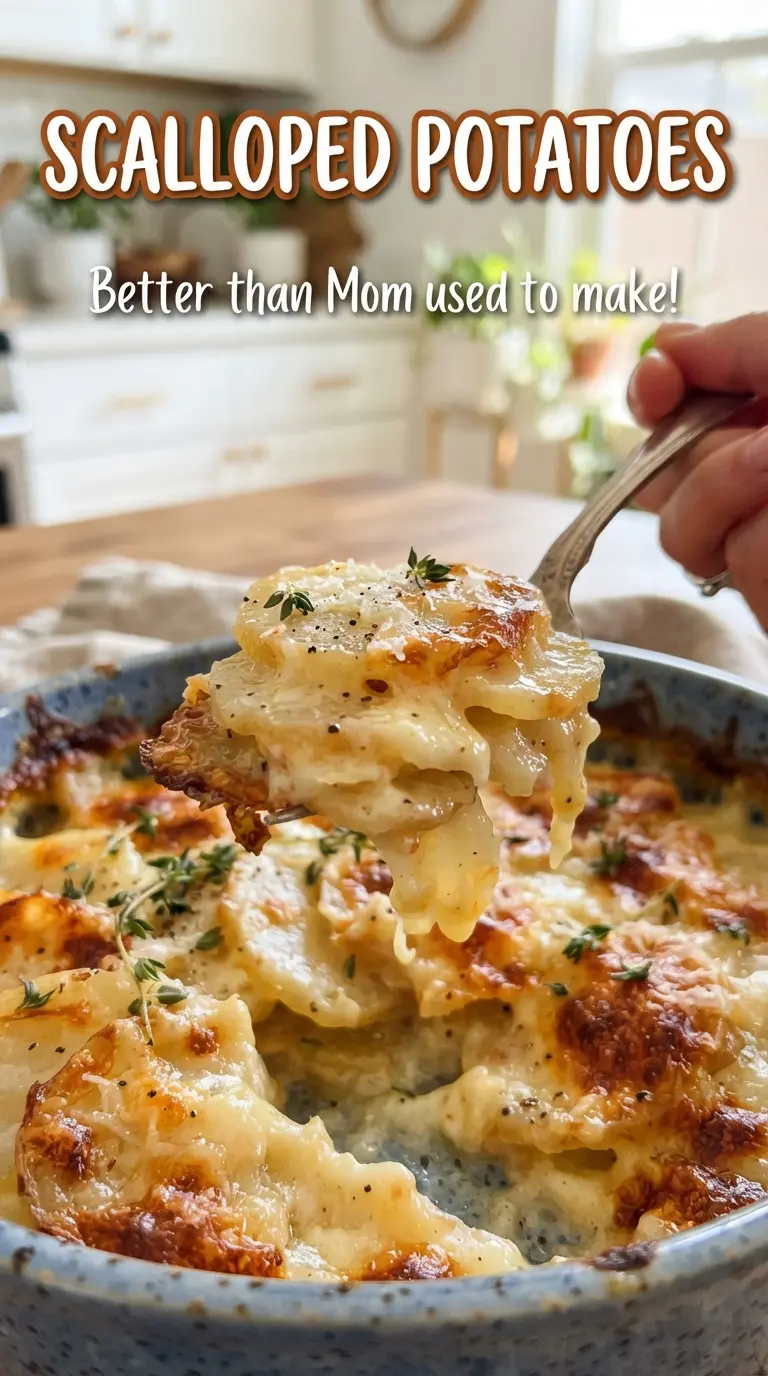
- Russet potatoes — These are the right potato for this dish because their starch helps thicken the sauce as they bake. Waxy potatoes stay firmer, but they don’t give you that classic creamy, cohesive texture.
- Whole milk and heavy cream — The milk gives the sauce enough body to coat the potatoes, and the cream adds richness without making it greasy. Using all milk works in a pinch, but the finished dish will taste lighter and less plush.
- Butter, flour, and garlic — This is the base that turns a pan of dairy into a real sauce. Let the flour cook for a full minute so it loses its raw taste; if you skip that step, the sauce can taste pasty.
- Onion — Thin slices soften between the layers and add sweetness that keeps the dish from tasting flat. Slice it thin enough that it disappears into the casserole instead of staying crunchy.
- Parmesan — This gives the top a salty, nutty finish and helps it brown. A good grated Parmesan matters here because it melts and crisps better than the shelf-stable powdery kind.
- Fresh thyme — Thyme cuts through the richness and makes the sauce taste rounder. Dried thyme can work, but use less because it comes across sharper once baked.
Building the Layers So the Center Cooks Through
Thickening the Sauce First
Melt the butter, cook the garlic just until fragrant, then whisk in the flour until it looks smooth and slightly foamy. Stream in the milk and cream gradually while whisking, or you’ll get lumps that don’t fully disappear. Cook the sauce until it lightly coats a spoon and looks like thin gravy; that thickness matters because it keeps the dish creamy after baking instead of pooling at the bottom.
Layering Without Packing the Dish
Arrange the potato slices in even layers with the onion tucked in between, but don’t press them down hard. The sauce needs room to move around the slices so it can seep through the whole pan. Pour a portion of the sauce over each layer as you go, not just at the end, so every level gets seasoned and coated. If the potatoes are piled too tightly, the center stays stubbornly firm while the edges overcook.
Baking Covered, Then Uncovered
Cover the dish tightly with foil for the first part of the bake so the potatoes steam and soften all the way through. When the fork slips into the center with only slight resistance, take the foil off and add the Parmesan. The last uncovered stretch is where the top turns golden and the sauce settles into that creamy finish; if the top browns too fast, move the pan down a rack rather than covering it back up.
Letting It Rest Before Serving
The 15-minute rest is not optional if you want clean servings. Straight out of the oven, the sauce is still loose and the layers slide apart. As it rests, the starches firm up just enough to hold the slices together, and the flavor gets fuller instead of tasting hot and thin.
How to Adapt Scalloped Potatoes for Different Dinners
Make It Gluten-Free
Swap the all-purpose flour for a gluten-free 1:1 blend that contains xanthan gum, then cook it in the butter the same way. The texture stays close to the original, though the sauce may be a touch looser while hot and will set a little more firmly as it cools.
Use Yukon Golds for a Creamier, Softer Finish
Yukon Gold potatoes give you a buttery texture and hold their shape a little better than russets. The dish will taste a bit richer and look more uniform, but the sauce won’t thicken quite as much from the starch, so don’t expect the same classic fluffy-soft interior.
Go Lighter on the Cream
Replace up to half of the heavy cream with more whole milk if you want a slightly lighter sauce. You’ll lose some richness, but the potatoes still bake up creamy as long as the sauce is thickened on the stove first and the dish gets its full rest after baking.
Add a Smokier Top
A handful of sharp cheddar or a mix of cheddar and Parmesan gives the top a deeper color and a sharper bite. Add it only for the last 20 to 25 minutes or it can over-brown before the center is fully tender.
Storage and Reheating
- Refrigerator: Store leftovers covered for up to 4 days. The sauce will thicken as it chills, and the layers will set more firmly.
- Freezer: It freezes, but the texture softens after thawing. Freeze in portions tightly wrapped, then thaw overnight in the refrigerator before reheating.
- Reheating: Cover with foil and warm at 325F until heated through. Reheating uncovered dries the top before the center comes back to temperature, so keep it covered for most of the time.
Answers to the Questions Worth Asking
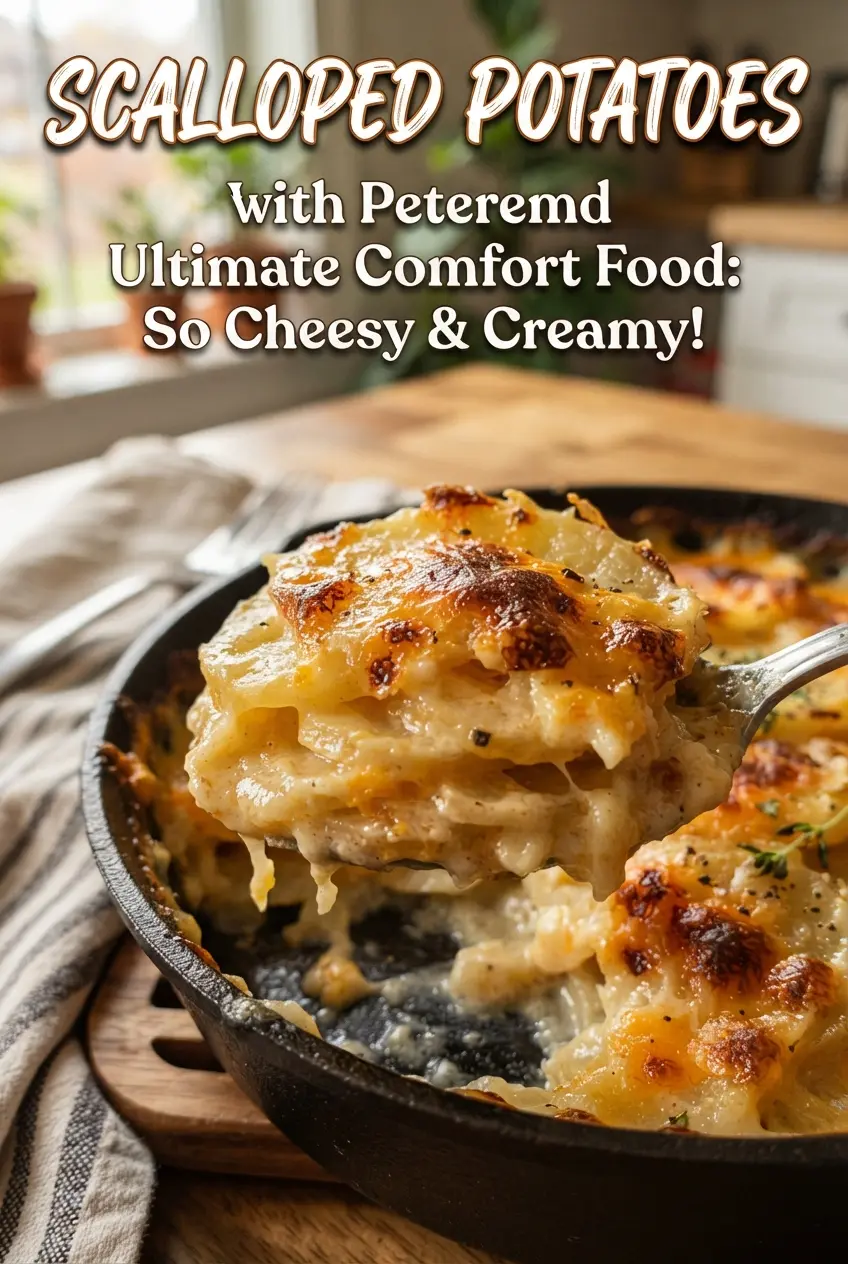
Scalloped Potatoes
Ingredients
Equipment
Method
- Preheat the oven to 375°F and butter a 9x13-inch baking dish (lightly coat all surfaces).
- Peel and slice the russet potatoes into 1/8-inch-thick slices, then thinly slice the onion for layering.
- Melt the butter, then cook the minced garlic for 30 seconds until fragrant.
- Whisk in the flour and cook for 1 minute to remove the raw flour taste.
- Gradually whisk in the whole milk and heavy cream, then simmer until slightly thickened (narrow bubbles and a silky coat).
- Season the sauce with salt, black pepper, and fresh thyme leaves, stirring until evenly combined.
- Layer the potatoes and onion in the baking dish in three layers, pouring sauce over each layer so the slices are coated.
- Cover with foil and bake for 1 hour, until the potatoes are mostly tender when pierced.
- Uncover, sprinkle the grated Parmesan evenly over the top, and bake 25 to 30 minutes until golden and fork-tender (edges bubbling, top browned).
- Rest the scalloped potatoes for 15 minutes before serving so the layers set and the sauce thickens slightly (steam visible but calmer).