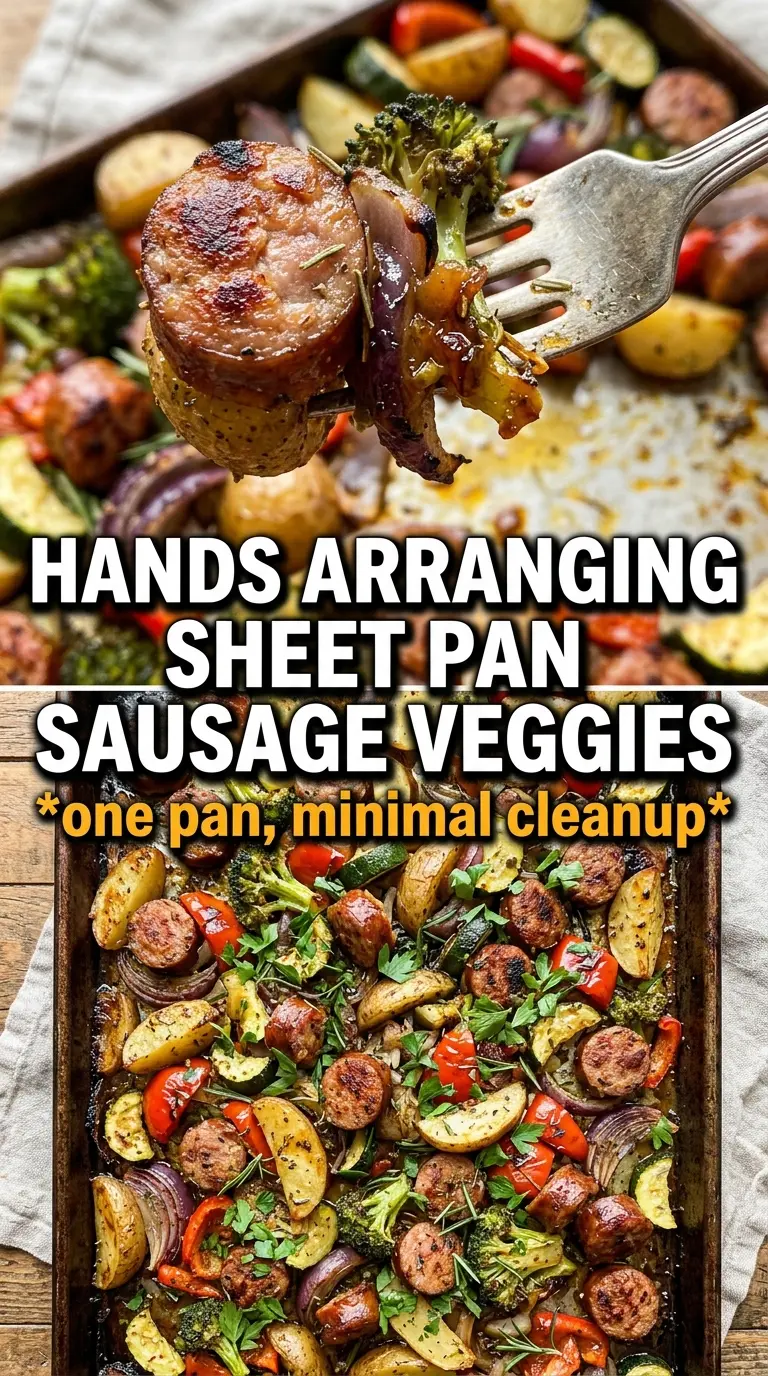
Caramelized sausage, browned edges on the squash, and Brussels sprouts that turn crisp at the tips make this sheet pan dinner the kind of meal people keep coming back to without needing a special occasion. The apple and maple balsamic glaze pulls everything together with a sweet-sharp finish that clings to the roasted vegetables instead of pooling on the pan.
What makes this version work is the balance between hearty sausage and vegetables that roast at a similar pace when they’re cut the right size. The glaze goes on before roasting, which gives the onions, squash, and sprouts time to pick up color instead of steaming in plain oil. A short broil at the end deepens the edges and gives the sausage that sticky, browned finish that makes the whole pan taste like it cooked longer than it did.
Below, I’ll walk through the one timing trick that keeps the vegetables from turning soggy, plus a few swaps that help if you need to work with what’s already in the kitchen.
The squash got caramelized instead of mushy, and the balsamic-maple glaze coated everything without burning. I’ve already made it twice and the leftovers held up great for lunch.
Save this sheet pan sausage and fall veggies dinner for a night when you want caramelized edges, sweet-savory glaze, and one pan to clean.
The Reason the Vegetables Roast Instead of Steam
The biggest mistake with a sheet pan dinner like this is crowding the pan. When the vegetables sit too close together, the moisture they release has nowhere to go, and you end up with soft edges instead of browned ones. Give everything a true single layer and use a large rimmed baking sheet, not a shallow casserole dish.
Cut matters, too. Butternut squash needs to be in small cubes so it can finish in the same window as the sausage and Brussels sprouts. If your squash pieces are too large, the outside will only just be tender when the rest of the pan is already done. The short broil at the end is there for color, not rescue, so the vegetables should already be mostly cooked before it goes in.
- Italian sausage — Pre-sliced sausage rounds give you more browned surface area than whole links, which means more flavor and better texture in the final pan.
- Butternut squash — Fresh squash holds its shape and caramelizes well. Frozen squash turns softer and releases more water, so it won’t brown the same way.
- Brussels sprouts — Halving them exposes the cut side to the pan, which is where you get that deep roasted edge. Tiny sprouts can stay whole; larger ones need the cut.
- Apple — Use a firm apple like Honeycrisp or Fuji. A soft apple breaks down too quickly and disappears into the glaze.
- Balsamic, maple, and Dijon — This is the glue that ties the pan together. Dijon keeps the glaze from tasting flat, and maple gives enough sweetness to help the vegetables brown without turning them candy-sweet.
What Each Ingredient Is Actually Doing in This Recipe
- Primary ingredient (the star) — Quality matters most. Choose the best you can find.
- Cooking medium (oil, butter, or broth) — This carries flavors and prevents dryness.
- Seasonings (salt, pepper, spices, herbs) — Layer flavors so nothing overpowers. Build depth gradually.
- Aromatics (garlic, onion, herbs) — Cook with fat to bloom flavors. Become the foundation.
- Supporting ingredients — Complement the main ingredient without overpowering it.
- Sauce or liquid (if applicable) — Brings flavors together. Balance richness with acid.
- Acid (lemon, vinegar, wine, or other) — Brightens and prevents flat-tasting results.
- Final finish (garnish, glaze, or sauce) — Prevents one-dimensional taste and adds visual appeal.
How to Keep the Sausage Juicy While the Veggies Brown
Whisk the glaze first
Mix the olive oil, balsamic, maple syrup, Dijon, garlic, rosemary, Italian seasoning, salt, and pepper before anything hits the pan. That keeps the seasoning evenly distributed, and it helps the vegetables coat fast without overhandling them. If the garlic sits in one spot on the pan, it can burn before the squash is tender, so the glaze needs to be tossed through rather than dumped on top.
Spread everything out with room to breathe
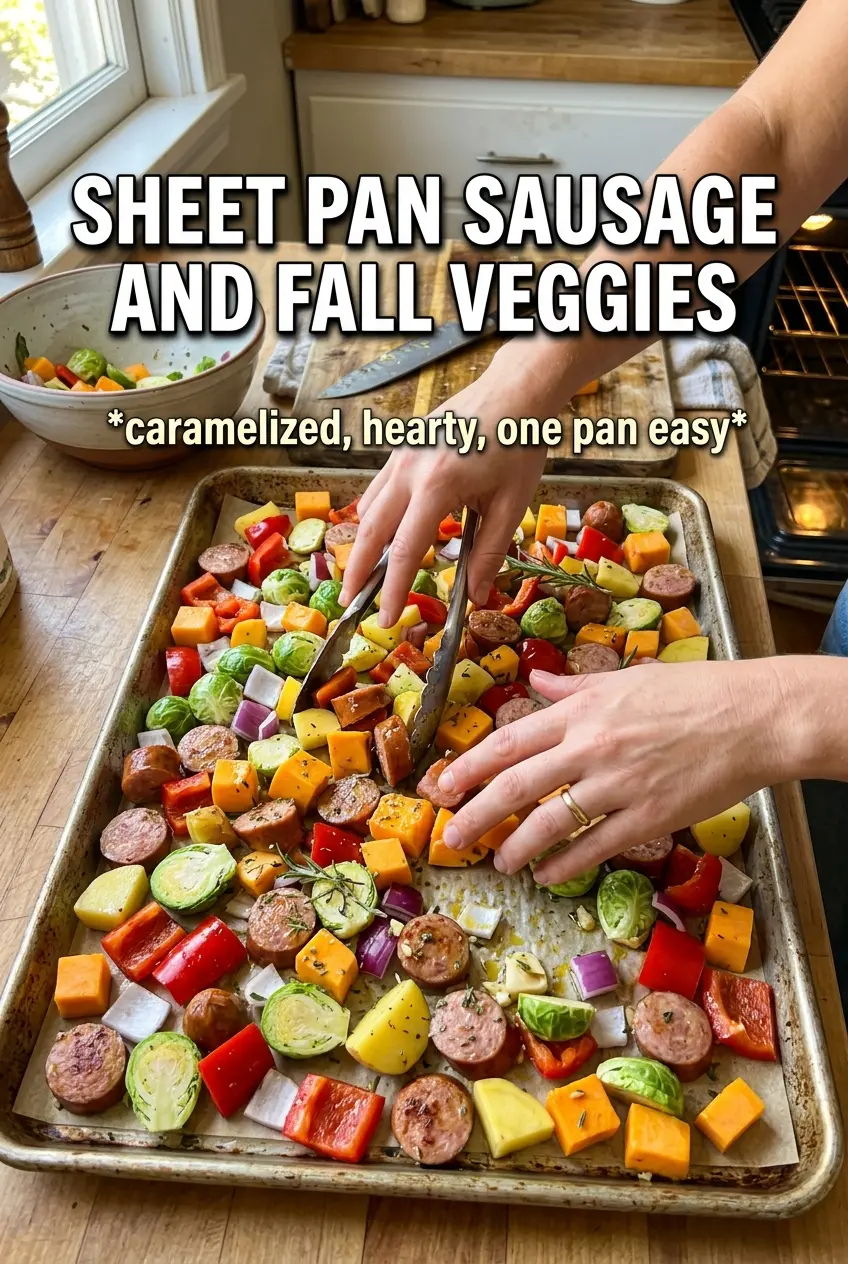
Arrange the sausage, squash, Brussels sprouts, onion, peppers, and apple in an even layer across the baking sheet. If pieces overlap, the ones underneath will steam while the top ones brown, which throws off the whole texture of the dish. Use a second pan if needed; one crowded pan is the fastest way to lose the roast.
Roast until the edges darken, then finish hot
Roast at 425°F for 30 to 35 minutes, stirring once halfway through so the glaze coats the pan evenly. You’re looking for tender squash, browned sausage, and sprouts with crisp, caramelized edges. If you want a deeper finish, broil for 2 to 3 minutes, but stay close because the maple in the glaze can go from browned to burnt quickly.
How to Adjust This Pan Dinner for What’s in Your Kitchen
Make it dairy-free without changing the texture
This recipe is already dairy-free as written, so you don’t need a special swap. That’s one reason the glaze works so well: the richness comes from sausage, olive oil, and the roasted vegetables, not from butter or cream.
Use smoked sausage for a more pronounced savory edge
If you swap in smoked sausage, the pan gets a deeper, saltier flavor and cooks a little faster because the sausage is already fully cooked. Keep an eye on it during the broil so the edges don’t tighten up too much.
Swap the apple based on how sweet you want the finish
A tart apple gives the glaze more contrast, while a sweeter apple leans into the maple and makes the whole pan taste rounder. Use a firm variety either way so the slices stay recognizable after roasting.
Storage and Reheating
- Refrigerator: Store leftovers in an airtight container for up to 4 days. The vegetables soften a little, but the flavor holds up well.
- Freezer: You can freeze it, but the Brussels sprouts and squash will lose some of their roasted texture after thawing. Freeze in portions for up to 2 months if you don’t mind a softer result.
- Reheating: Reheat on a sheet pan in a 375°F oven until hot, about 10 to 15 minutes. The microwave works in a pinch, but it pushes the vegetables toward soggy and dulls the browned edges.
Questions I Get Asked About This Recipe
Sheet Pan Sausage and Fall Veggies
Ingredients
Equipment
Method
- Preheat oven to 425F and line a large rimmed baking sheet with parchment (set it up so nothing sticks and everything roasts evenly).
- Whisk olive oil, balsamic vinegar, maple syrup, Dijon mustard, garlic, fresh rosemary, Italian seasoning, salt, and pepper until the glaze looks smooth and glossy.
- Arrange Italian sausage rounds, butternut squash, Brussels sprouts, red onion wedges, bell peppers, and apple in an even layer so they caramelize instead of steam.
- Drizzle the glaze over everything, then toss until vegetables and sausage are coated with a visible sheen.
- Roast at 425F for 30-35 minutes, stirring once halfway, until vegetables are caramelized and the sausage is cooked through (look for browned edges and softened squash).
- Broil at 425F for 2-3 minutes for extra caramelization, watching closely until the tops look deeply browned.