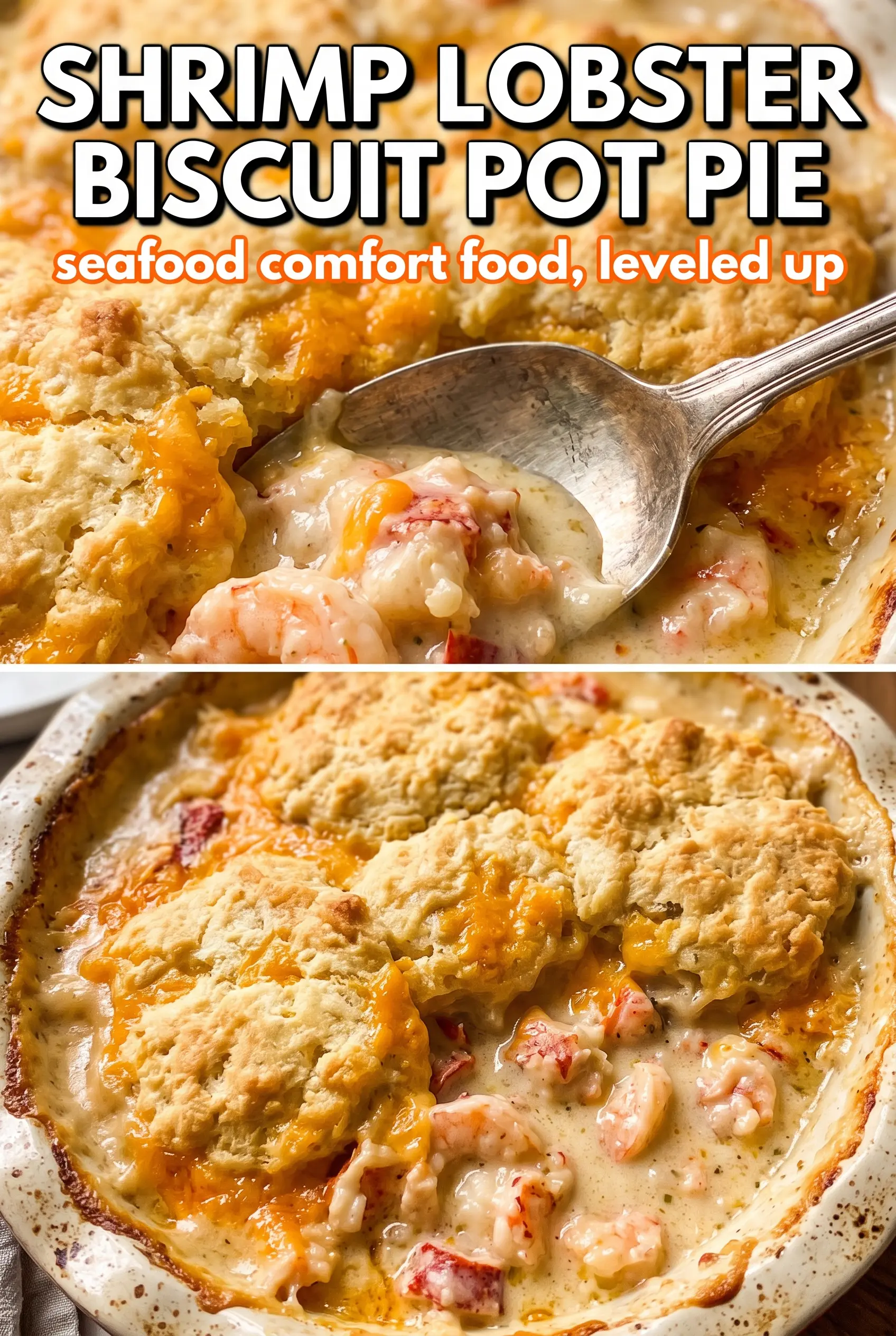
Golden cheddar bay biscuits on top and a bubbling shrimp-and-lobster filling underneath is the kind of dinner that gets scraped clean fast. The biscuits bake up crisp at the edges, tender in the middle, and savory enough to stand up to the creamy seafood base instead of sinking into it. Every spoonful gives you buttery biscuit, sweet shrimp, rich lobster, and that little hit of Old Bay that keeps the whole dish from tasting flat.
The trick is building the filling until it’s thick enough to support the biscuit topping before it ever goes into the oven. If the sauce is too loose, the biscuits steam instead of bake and the pot pie turns soupy. The other place people go wrong is overcooking the seafood before it bakes; shrimp only need a brief simmer because the oven finish takes care of the rest.
Below you’ll find the exact texture cues I watch for, the best swaps when lobster isn’t on hand, and a few variations that keep the dish sturdy, creamy, and worth making again.
The filling thickened up beautifully and the biscuits stayed crisp on top instead of getting soggy. I used the full 5 minutes for the sauce and the texture was spot on.
Save this shrimp and lobster cheddar bay biscuit pot pie for the night you want a creamy seafood dinner with a biscuit topping that bakes up golden, not soggy.
The Sauce Has to Hold the Biscuit Up
The filling in a pot pie like this needs to be thicker than a standard creamy stew. You want it just loose enough to spoon, not pour like soup, because the biscuit topping traps steam and any extra liquid will soften the bottoms before the tops finish browning. The flour has to cook for a full minute in the butter and onion base so the gravy loses that raw starch taste and thickens evenly once the broth and cream go in.
The other reason this works is timing. Shrimp and lobster both overcook fast, and if they simmer for too long before baking, the texture turns rubbery by the time the biscuits are done. Stir them in at the end of the stovetop cook just long enough to take the chill off and start the shrimp turning pink. The oven finish does the rest.
What Each Ingredient Is Actually Doing in the Skillet

- Shrimp — Large shrimp hold their shape better than small ones, and they stay juicy when they only get a short pre-bake simmer. If yours are frozen, thaw them completely and pat them dry so they don’t water down the filling.
- Lobster tails — Fresh cooked lobster gives the dish its richest texture and sweetest bite, but imitation lobster will still work if you want to keep this more budget-friendly. Chop it into bite-size pieces so every scoop gets a little of everything.
- Butter, onion, and garlic — This is the flavor base. The onion softens and sweetens in the butter, and the garlic only needs a brief cook so it stays fragrant instead of bitter.
- Flour — This is what turns the broth and cream into a gravy that can support the biscuits. Cook it for a minute before adding liquid, or the filling can taste pasty.
- Heavy cream and broth — The broth keeps the filling from feeling heavy, while the cream gives it that silky pot-pie texture. Seafood broth is ideal, but chicken broth is a perfectly good backup if that’s what you have.
- Bisquick, cheddar, and milk — Bisquick gives you the fast biscuit topping that bakes up reliably in a skillet. Sharp cheddar matters here because it cuts through the rich filling; milder cheese can disappear.
Building the Biscuit Topping So It Bakes, Not Sinks
Start with the Cream Base
Melt the butter in an oven-safe skillet and cook the onion until it turns soft and translucent, not browned. Add the garlic for just a minute, then whisk in the flour and let it bubble briefly so the raw taste cooks out. When the broth and cream go in, whisk steadily until the mixture looks smooth and begins to thicken around the spoon. If you rush this part, you’ll get a thin filling that won’t support the biscuits.
Add the Seafood at the End of the Stovetop Cook
Stir in the shrimp, lobster, peas, corn, and Old Bay once the gravy has thickened. Keep the heat at a gentle simmer and stop when the shrimp are just beginning to turn pink at the edges. You’re not cooking them through on the stove; you’re building the filling and giving the biscuits a head start in a hot oven. If the seafood looks fully done before baking, it will be overdone by serving time.
Drop the Biscuit Dough, Don’t Spread It
Mix the Bisquick, milk, and cheddar until the dough just comes together, then spoon it over the filling in mounds. Those gaps between the biscuits let steam escape, which helps the tops brown instead of turning pale and damp. Brush with garlic butter as soon as the pot pie comes out of the oven so the biscuits soak up the flavor while they’re still hot and porous.
How to Adapt This for a Different Pantry or a Lighter Plate
Dairy-Free Version
Swap the butter for a good plant-based butter and use an unsweetened dairy-free cream alternative that can handle heat. The filling won’t be quite as rich, but it will still thicken well if you keep the flour step the same. The biscuit topping changes more noticeably here, since the cheddar is doing real work, so expect a less savory crust unless you use a dairy-free shredded cheese with decent melt.
Gluten-Free Adjustment
Use a gluten-free baking mix in place of Bisquick and thicken the filling with a gluten-free flour blend or a cornstarch slurry if your blend doesn’t handle roux-style cooking well. The key is keeping the gravy sturdy enough to hold up under the biscuits. If the mix is on the dry side, add milk a tablespoon at a time so the topping drops cleanly instead of forming a stiff paste.
Budget Seafood Swap
Use imitation lobster or all shrimp if that’s what fits your grocery run. The dish still tastes special because the biscuit topping and the creamy Old Bay sauce carry the same comfort-food feel. Just keep the seafood pieces bite-sized and don’t extend the simmer, since leaner or pre-cooked seafood gets dry fast.
Make It a Little Brighter
Add a squeeze of lemon zest to the filling right before the biscuits go on. That little hit of acid keeps the cream from tasting heavy and makes the seafood taste cleaner. Don’t add a lot of juice, though, or you’ll thin the sauce.
Storage and Reheating
- Refrigerator: Store leftovers covered for up to 3 days. The biscuits soften as they sit, but the flavor stays excellent.
- Freezer: Freeze the filling only for best results. Biscuit-topped portions can be frozen, but the topping loses its crisp edges after thawing.
- Reheating: Reheat covered in a 325°F oven until the center is hot. If you microwave it, the biscuits go rubbery and the seafood can overcook in spots.
Questions I Get Asked About This Recipe
Shrimp and Lobster Cheddar Bay Biscuit Pot Pie
Ingredients
Equipment
Method
- Preheat oven to 400°F. Set out an oven-safe skillet so you can build and bake the pot pie without transferring.
- Melt butter in an oven-safe skillet over medium heat and cook onion for 4 minutes. Stir until the onion is softened and fragrant.
- Add garlic and cook for 30 seconds. Whisk in the flour and cook 1 minute to remove the raw flour taste.
- Gradually whisk in seafood or chicken broth and heavy cream. Simmer until thickened—about 5 minutes—until the mixture coats the back of a spoon.
- Stir in large shrimp, lobster tails, frozen peas, corn kernels, and Old Bay seasoning. Cook 3 minutes until shrimp just begin to turn pink.
- In a bowl, mix Bisquick baking mix, whole milk, and sharp cheddar until just combined. Avoid overmixing so the biscuits stay tender.
- Drop spoonfuls of the biscuit mixture over the seafood filling. Cover as evenly as you can, leaving a few small gaps for steam.
- Bake at 400°F for 18–22 minutes until biscuits are golden. Watch for risen tops with browned edges.
- Brush with garlic butter and sprinkle with fresh parsley immediately out of the oven. Let rest 5 minutes before serving so the filling thickens.