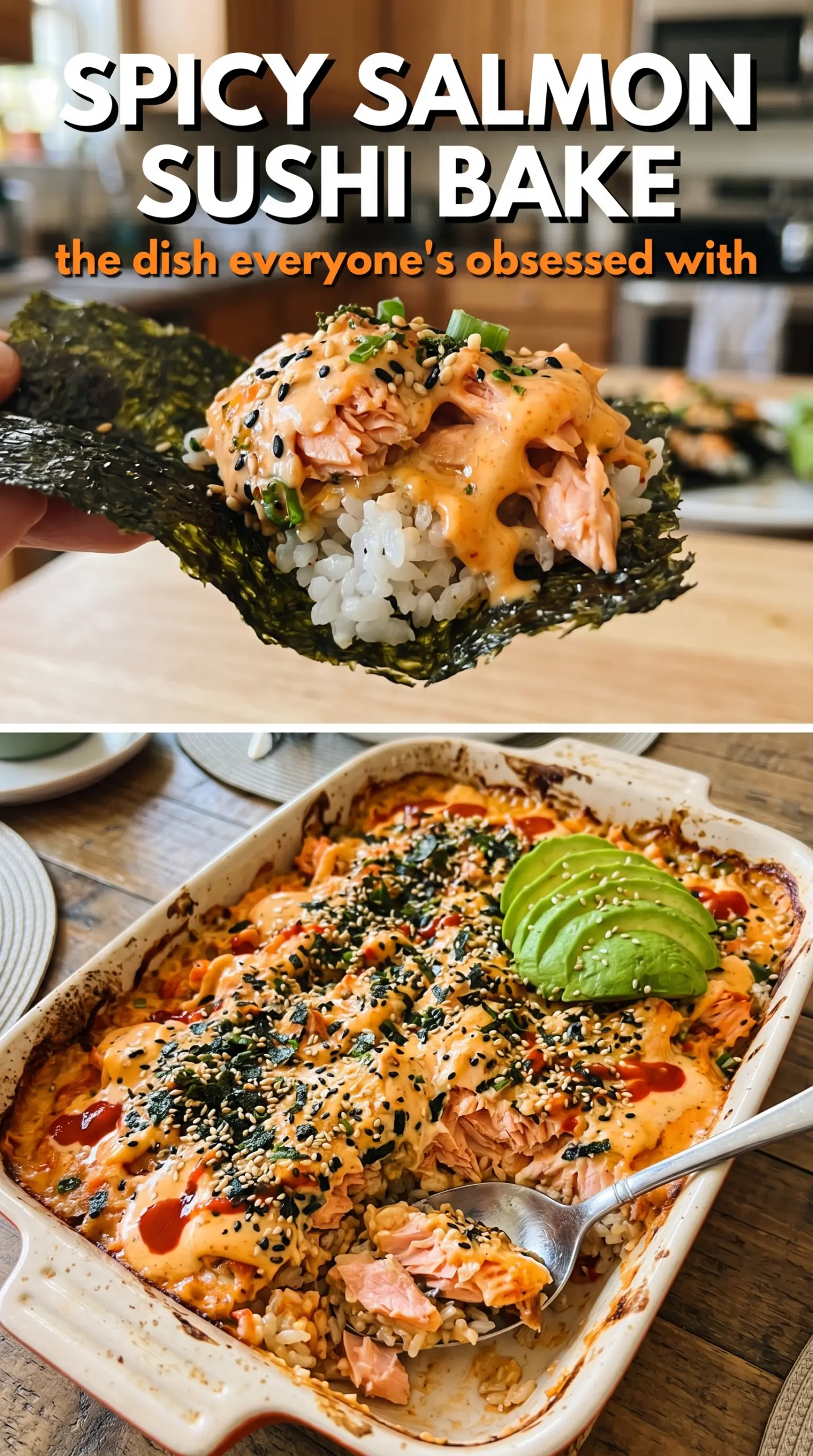
Spicy salmon sushi bake lands in that sweet spot between comfort food and takeout-style sushi night. The rice gets seasoned like sushi rice, then baked under a creamy salmon topping that turns golden at the edges and stays soft in the center. What comes out of the oven is rich, savory, a little spicy, and built for scooping with nori sheets.
The part that makes this version work is the balance: the rice needs enough vinegar to taste like sushi rice, but not so much that it turns sharp after baking. The salmon mixture also matters. Softened cream cheese and Japanese mayo give it body and keep it from drying out in the oven, while sriracha and soy sauce bring the heat and salt without making the topping heavy.
Below, I’m walking through the small details that matter most, including how to keep the rice from getting mushy and how to adjust the heat so it still tastes clean, not one-note.
The rice stayed tender but not mushy, and the salmon topping baked into this creamy, spicy layer that my kids kept scooping with the nori sheets.
Love the creamy spicy salmon layer and crispy-edged rice? Save this sushi bake for an easy deconstructed sushi night.
The Part That Keeps the Rice From Turning Soft and Gummy
The rice is the backbone of this dish, and it needs to be seasoned while it’s still warm so the vinegar mixture sinks in instead of sitting on top. If the rice is too wet or packed down hard in the pan, the bake turns dense under the salmon. Spread it into an even layer with a light hand and stop there.
The other mistake is overbaking the rice layer before the topping has a chance to shine. This isn’t a casserole that needs long oven time to set up. You’re warming the salmon mixture through, browning the surface a little, and letting the edges crisp against the pan.
What Each Ingredient Is Actually Doing in This Recipe
- Primary ingredient (the star) — Quality matters most. Choose the best you can find.
- Cooking medium (oil, butter, or broth) — This carries flavors and prevents dryness.
- Seasonings (salt, pepper, spices, herbs) — Layer flavors so nothing overpowers. Build depth gradually.
- Aromatics (garlic, onion, herbs) — Cook with fat to bloom flavors. Become the foundation.
- Supporting ingredients — Complement the main ingredient without overpowering it.
- Sauce or liquid (if applicable) — Brings flavors together. Balance richness with acid.
- Acid (lemon, vinegar, wine, or other) — Brightens and prevents flat-tasting results.
- Final finish (garnish, glaze, or sauce) — Prevents one-dimensional taste and adds visual appeal.
What the Salmon, Cream Cheese, and Kewpie Are Each Doing
- Cooked flaked salmon — Use salmon that’s already cooked and fully flaked so it folds into the topping evenly. Leftover salmon works well here, and it’s one of the best ways to give it a second life. Just pull out any skin or bones before mixing.
- Japanese mayonnaise — Kewpie has a richer, rounder taste than standard mayo, and that matters because it carries the spice instead of letting the filling taste flat. If you only have regular mayonnaise, add a tiny pinch of sugar and a little extra soy sauce to get closer to that balance.
- Cream cheese — Softened cream cheese helps the salmon mixture bake into a thick, spreadable topping instead of a loose salad. Cold cream cheese leaves little lumps, so let it sit out before mixing. That small step changes the texture a lot.
- Furikake — This is the seasoning that makes the top taste like more than spicy mayo on rice. It adds sesame, seaweed, and salt in one move. If you don’t have it, crumbled toasted nori with sesame seeds is the closest backup, but it won’t be exactly the same.
Building the Layers So the Bake Comes Out Hot and Golden
Seasoning the Rice
Mix the rice vinegar, sugar, and salt into the cooked sushi rice while the rice is still warm enough to absorb it. The grains should look glossy and evenly seasoned, not wet or soupy. If the rice is too hot, it gets sticky and hard to spread; if it’s too cold, it won’t take on the seasoning as well. Spread it into a greased 9×13 dish and press just enough to even it out.
Making the Salmon Topping
Stir the flaked salmon with softened cream cheese, Japanese mayo, sriracha, and soy sauce until the mixture looks creamy and uniform. You want a thick spread, not a loose mixture that runs across the rice. If the cream cheese is still cold, the topping stays streaky and won’t bake evenly. Let the pan warm on the counter while the oven heats if needed.
Baking Until the Edges Bubble
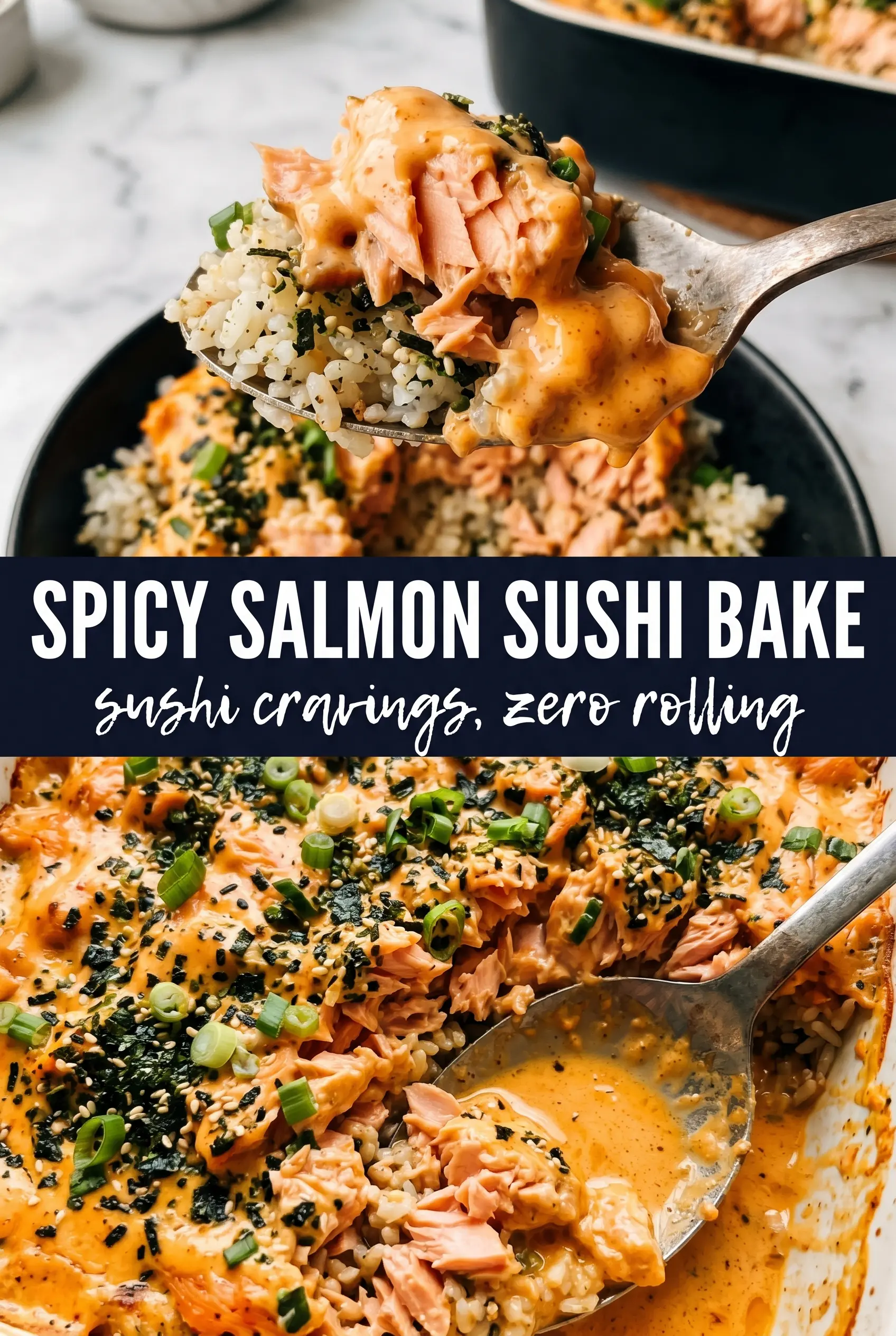
Spread the salmon mixture over the rice, sprinkle on the furikake, and bake at 400°F until the top is hot and the edges are bubbling. The center should look set and lightly golden, not dry or browned all over. If you leave it in too long, the salmon tightens up and the rice edges get hard. Pull it when the top still looks creamy in the middle.
Finishing With the Right Toppings
Drizzle with extra sriracha mayo and scatter green onions over the top right before serving. The nori sheets should stay separate so everyone can scoop their own bites without the seaweed going soft too soon. This dish is best served immediately while the contrast between warm rice, creamy salmon, and crisp toppings is still intact.
How to Make This Sushi Bake Fit Different Tables
Less spicy, same creamy texture
Cut the sriracha down to 1 tablespoon and keep the soy sauce the same. You’ll still get the tang and the color, but the bake will land softer on heat and work better for anyone who wants the flavor without a strong burn.
Gluten-free version
Use a gluten-free soy sauce or tamari and check that your furikake is certified gluten-free. The texture stays the same, and the bake still tastes balanced because the main flavor drivers are the salmon, mayo, and rice seasoning.
No salmon on hand
Cooked crab, imitation crab, or chopped shrimp can stand in for the salmon. Crab gives you the closest sushi-style result, while shrimp brings a firmer bite. Keep the same sauce ratio and taste before baking, since different seafoods need slightly different salt levels.
Make-ahead assembly
You can assemble the rice and salmon layers a few hours ahead, then cover and refrigerate until baking time. Hold the green onions, extra mayo, and nori until the end. Baking it straight from the fridge may need a few extra minutes, and that’s better than letting it sit out until the texture turns dull.
Storage and Reheating
- Refrigerator: Store leftovers in an airtight container for up to 3 days. The rice firms up as it chills, but the flavor stays good.
- Freezer: It freezes, but the rice texture gets softer after thawing, so I only do this if I have a lot left. Wrap portions tightly and thaw in the fridge before reheating.
- Reheating: Warm it covered in the oven at 325°F until heated through, or microwave in short bursts with a damp paper towel over the top. Don’t blast it on high heat, or the salmon dries out before the center warms.
Questions I Get Asked About This Recipe
Spicy Salmon Sushi Bake
Ingredients
Equipment
Method
- Season cooked sushi rice with rice vinegar, sugar, and salt, then spread evenly in a greased 9x13 baking dish.
- Sprinkle 1 tablespoon furikake over the rice layer.
- Mix flaked salmon with softened cream cheese, Japanese mayonnaise (Kewpie), sriracha, and soy sauce until combined, then spread evenly over the rice.
- Sprinkle the remaining furikake over the top.
- Bake at 400°F for 15–20 minutes until the top is golden and bubbling at the edges, then pull the dish out to rest briefly.
- Drizzle with extra sriracha mayo, top with sliced green onions, and serve immediately with nori sheets for scooping.