Ruby strawberries tucked into a flaky, golden crust are the kind of dessert that disappears fast, and this galette has that crisp-edged, jammy center thing nailed down. The fruit softens just enough to turn glossy and spoonable, while the folded pastry keeps its edges rustic and deeply browned instead of fussy. A final dusting of powdered sugar makes the whole thing look like it came from a bakery window, even though it comes together with straightforward pantry ingredients.
The small details matter here. Cold butter keeps the dough tender and layered, and the cornstarch matters because strawberries release a lot of juice as they bake. Cardamom brings a warm, floral note that keeps the filling from tasting flat or overly sweet, especially when the berries are in peak season. Letting the dough rest before rolling also makes it easier to handle, which is half the battle with galette pastry.
Below, I’ve included the little things that keep the crust from getting soggy and the filling from running all over the pan. There’s also a few smart variations if you want to lean into different fruits or work around what’s in your pantry.
The crust came out crisp on the bottom and the strawberries stayed in place instead of flooding the pan. The cardamom made it taste a lot more special than a regular berry tart, and even the leftovers held up well the next day.
Save this strawberry cardamom galette for the days when you want a fruit dessert with crisp pastry and a fragrant, not-too-sweet filling.
The Trick to Keeping a Galette from Going Soggy
Galettes look relaxed, but the crust still needs a plan. The biggest mistake is piling juicy fruit onto dough that hasn’t been protected with enough starch, or baking it until the filling is done but the bottom still looks pale. Strawberries leak fast, and once that juice hits the pastry, the center softens before the edges have time to brown.
Here, the cornstarch works with the sugar to turn those strawberry juices into a thick, glossy sauce as the galette bakes. The parchment also helps because you can slide the whole thing onto a hot sheet pan, which gives the bottom crust a better head start. If the dough feels warm and sticky before baking, chill the shaped galette for a few minutes so the butter stays cold long enough to puff and crisp.
What the Butter, Cardamom, and Strawberries Are Each Doing Here
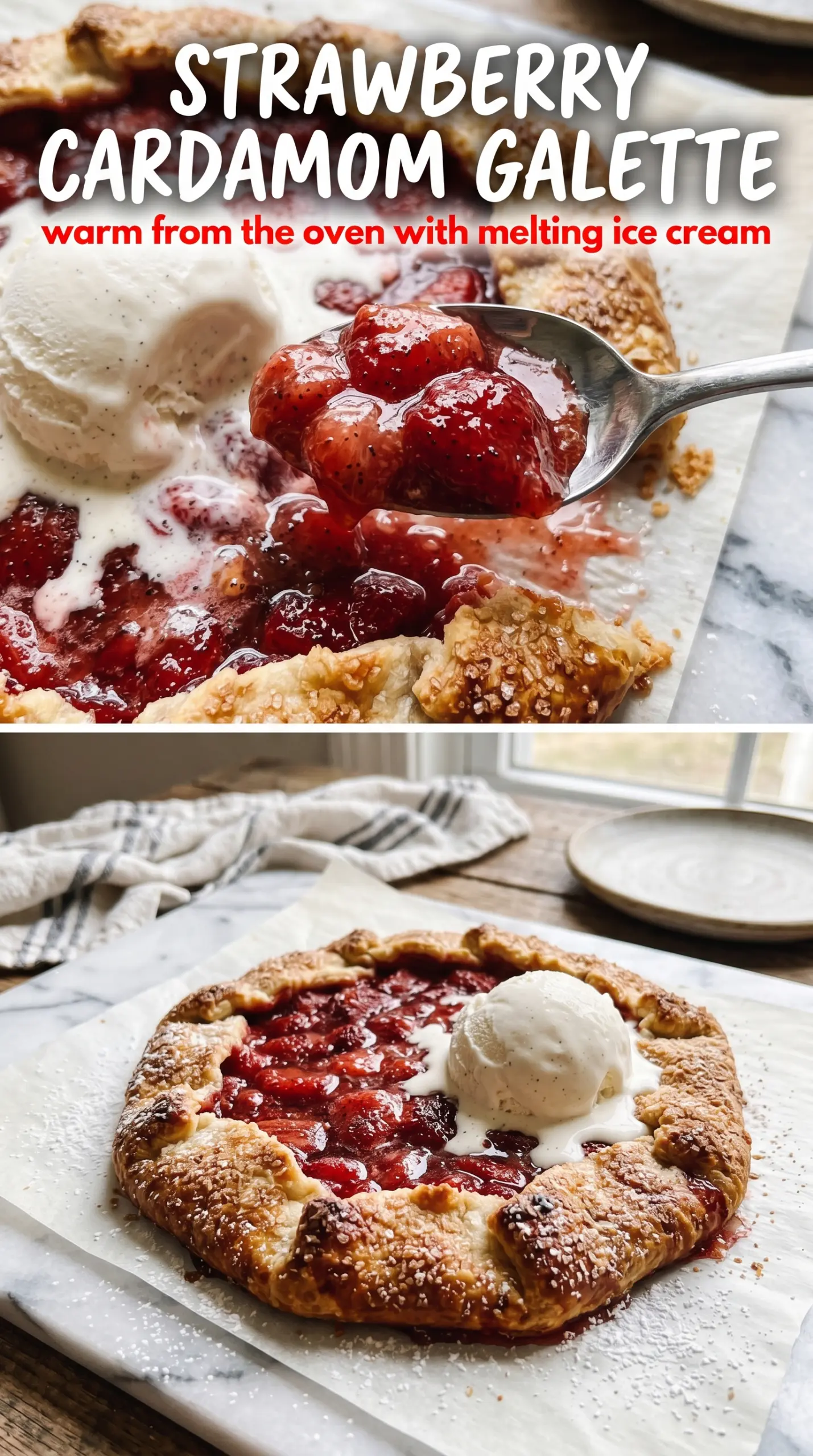
- Cold butter — This is what gives the crust those flaky layers and crisp edges. If the butter softens before it goes into the oven, the dough bakes up denser and more cookie-like. Keep the cubes cold, and stop cutting them in when the mixture still has some visible butter bits.
- Ice water — Use just enough to bring the dough together. Too much water makes the crust tough, while too little leaves it crumbly and impossible to roll. Add it gradually so you can stop the second the dough holds when pressed.
- Strawberries — Fresh berries matter here because frozen strawberries release too much liquid and can make the galette collapse into a puddle. If your berries are large, cut them into even halves so they bake at the same rate and sit neatly in the center.
- Cardamom — This is the ingredient that makes the filling taste deliberate instead of just sweet. Ground cardamom is fine here, but use a fresh jar if yours has been sitting around for months; stale cardamom disappears in the oven.
- Cornstarch — Don’t skip it. It thickens the strawberry juices as they bake and keeps the filling from running everywhere when you slice the galette. Flour won’t give the same clean, glossy result.
Building the Galette So the Crust Stays Crisp
Mixing the dough without warming the butter
Combine the flour and salt, then cut in the cold butter until the mixture looks like coarse crumbs with a few larger pieces scattered through it. Those bigger butter pieces are a good sign; they melt in the oven and create flakiness. Add the ice water a little at a time and stop as soon as the dough clumps when you pinch it. If it feels wet or sticky, it’ll shrink and bake up tough.
Shaping the fruit so the center bakes evenly
Toss the strawberries with sugar, cardamom, and cornstarch until every piece is lightly coated and a little glossy. Roll the dough into a rough 12-inch circle on parchment, then leave a clean border around the edges so you have room to fold. Pile the fruit in the center without spreading it all the way to the edge; if the filling reaches the rim, it’ll leak before the crust can seal.
Folding and baking until the edges turn deeply golden
Fold the pastry up over the fruit in overlapping sections, letting it pleat naturally rather than forcing a perfect pattern. Brush the crust with beaten egg for shine and color, then bake until the pastry is deeply golden and the filling is bubbling through the center. If the edges brown before the bottom looks set, your oven is running hot; move the pan to a lower rack for the last few minutes. Let the galette cool for 15 minutes before dusting with powdered sugar so the juices settle instead of running everywhere.
Ways to Adapt the Filling Without Losing the Texture
Gluten-Free Crust Swap
Use a good 1:1 gluten-free baking flour blend in place of the all-purpose flour. The dough will be a little more delicate to roll, so chill it well and roll it between sheets of parchment. You’ll still get a crisp, rustic crust, just with a slightly more tender bite.
Make It Dairy-Free
Swap the butter for a solid plant-based butter that behaves like regular butter when cold. The flavor will be a little less rich, but the texture can still be flaky if you keep everything chilled and don’t overwork the dough. Avoid soft tub-style spreads; they melt too fast and the crust will spread instead of puff.
Swap in Other Fruit
Blueberries, raspberries, or sliced peaches all work here, but wetter fruit may need an extra teaspoon of cornstarch. Keep the same method and watch the filling: it should be bubbling and thick, not watery. If you use peaches, slice them thin so they soften before the crust overbakes.
Storage and Reheating
- Refrigerator: Store leftovers covered for up to 3 days. The crust softens a bit, but the flavor stays excellent.
- Freezer: Freeze baked slices tightly wrapped for up to 1 month. The texture is better after freezing than the whole unbaked galette, which can turn watery once thawed.
- Reheating: Warm slices in a 325°F oven until the crust crisps again. The microwave will make the pastry limp and the filling loose, so skip it if you want the best texture.
Answers to the Questions Worth Asking
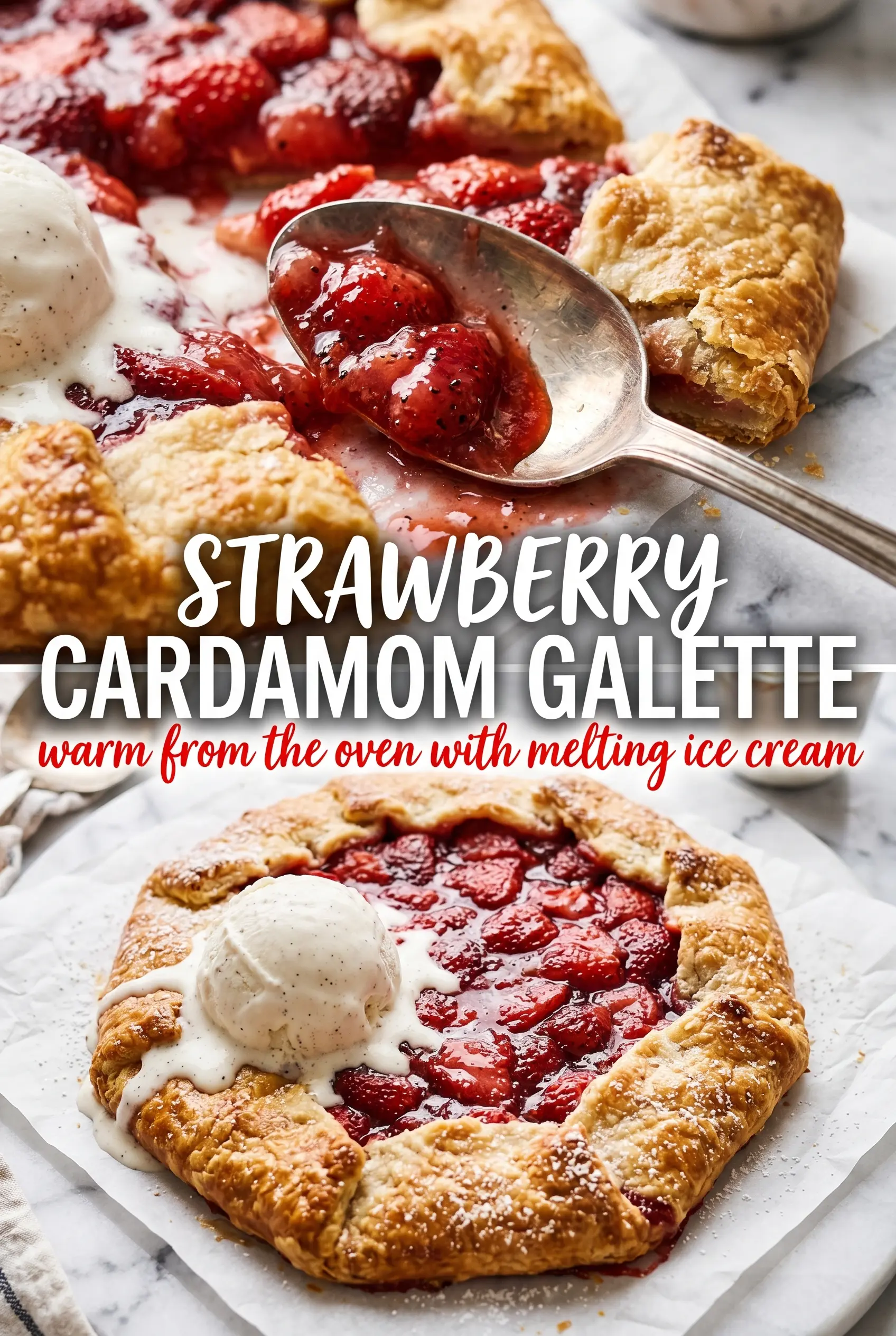
Strawberry Cardamom Galette
Ingredients
Equipment
Method
- Mix the all-purpose flour and salt, then cut in the cold butter until the mixture resembles coarse breadcrumbs.
- Add the ice water a little at a time until the dough just comes together, then shape into a disk and wrap in plastic.
- Refrigerate the dough for at least 30 minutes to firm it up.
- Toss the fresh strawberries with the granulated sugar, ground cardamom, and cornstarch until the berries are evenly coated.
- Roll the dough into a 12-inch circle on parchment paper, then arrange the strawberries in the center, leaving a 2-inch border.
- Fold the dough edges up and over the strawberries to form a rustic shape, keeping the filling mostly exposed.
- Brush the folded crust with the beaten egg for egg wash.
- Bake at 400°F for 35 minutes until the crust is golden and the filling is visibly bubbly.
- Cool the galette for 15 minutes so the juices thicken slightly.
- Dust with powdered sugar right before serving.